
MS Explains: What is Neptune at Opposition?
Neptune will reach opposition on 26 Sept, giving stargazers one of the best opportunities of the year to catch a good glimpse of the most distant planet in our solar system.
But what exactly does “opposition” mean? Why does it make outer planets easier to observe? And can you see Neptune with the naked eye?
What does it mean to be at opposition?
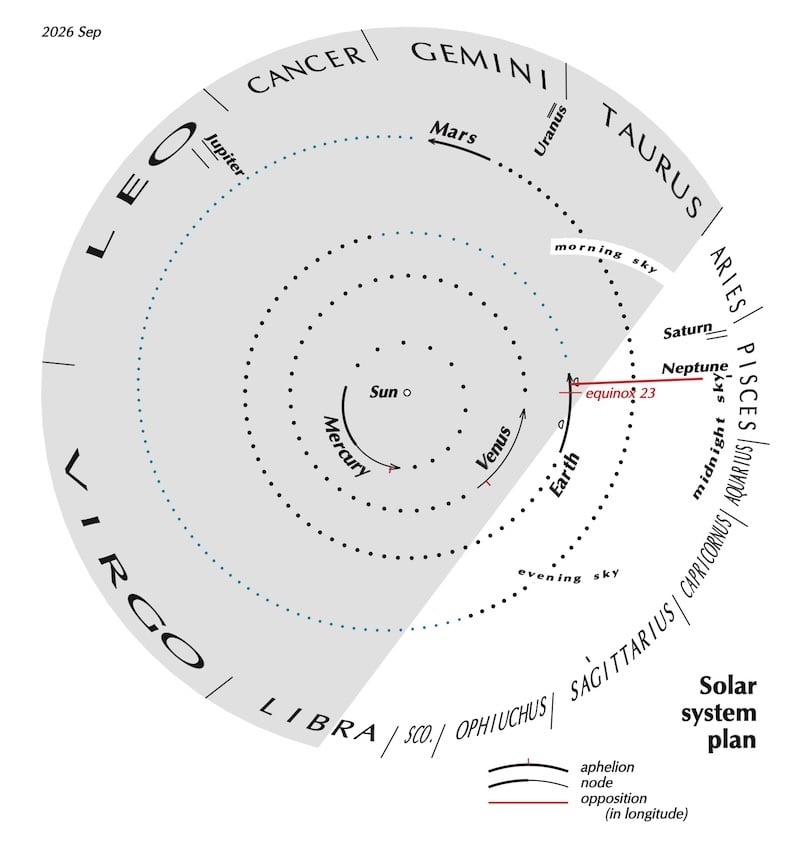
A planet is at opposition when Earth passes between that planet and the Sun.
This makes it so that the planet at opposition will appear on opposite sides of the sky from our perspective.
As the Sun sets in the west, the planet rises in the east.
It then remains visible throughout much of the night, reaching its highest point in the sky around midnight.
Source: EarthSky
A common example of this (albeit not a planet) is the Full Moon, when the Moon appears opposite the Sun in our sky.
By definition, only planets that orbit the Sun beyond Earth’s orbit can be at opposition. These include Mars, Jupiter, Saturn, Uranus and Neptune.
Most of these planets reach opposition roughly once a year. Mars, however, is a special case because its orbit is relatively close to Earth’s and it takes about 687 days to complete one orbit around the Sun.
As a result, Mars is only at opposition once every two to three years.
Source: EarthSky
Meanwhile, Neptune orbits the Sun at a much slower pace — approximately 165 Earth years to complete a single orbit around the Sun, according to the Science Centre Observatory.
More importantly, during opposition, the planet will appear at its largest and brightest in the night sky.
That is why 26 Sept will be one of the best times of the year to observe Neptune.
Can I see the planet with the naked eye?
Despite it being the best time of the year to catch Neptune in the night sky, due to its distance from Earth, Neptune is still too faint to be seen with the naked eye.
According to the Science Centre Observatory, stargazers will require optical equipment to locate it.
“A telescope is recommended for viewing Neptune, which will appear as a small, blue-hued point or disc depending on the telescope and observing conditions,” they said.
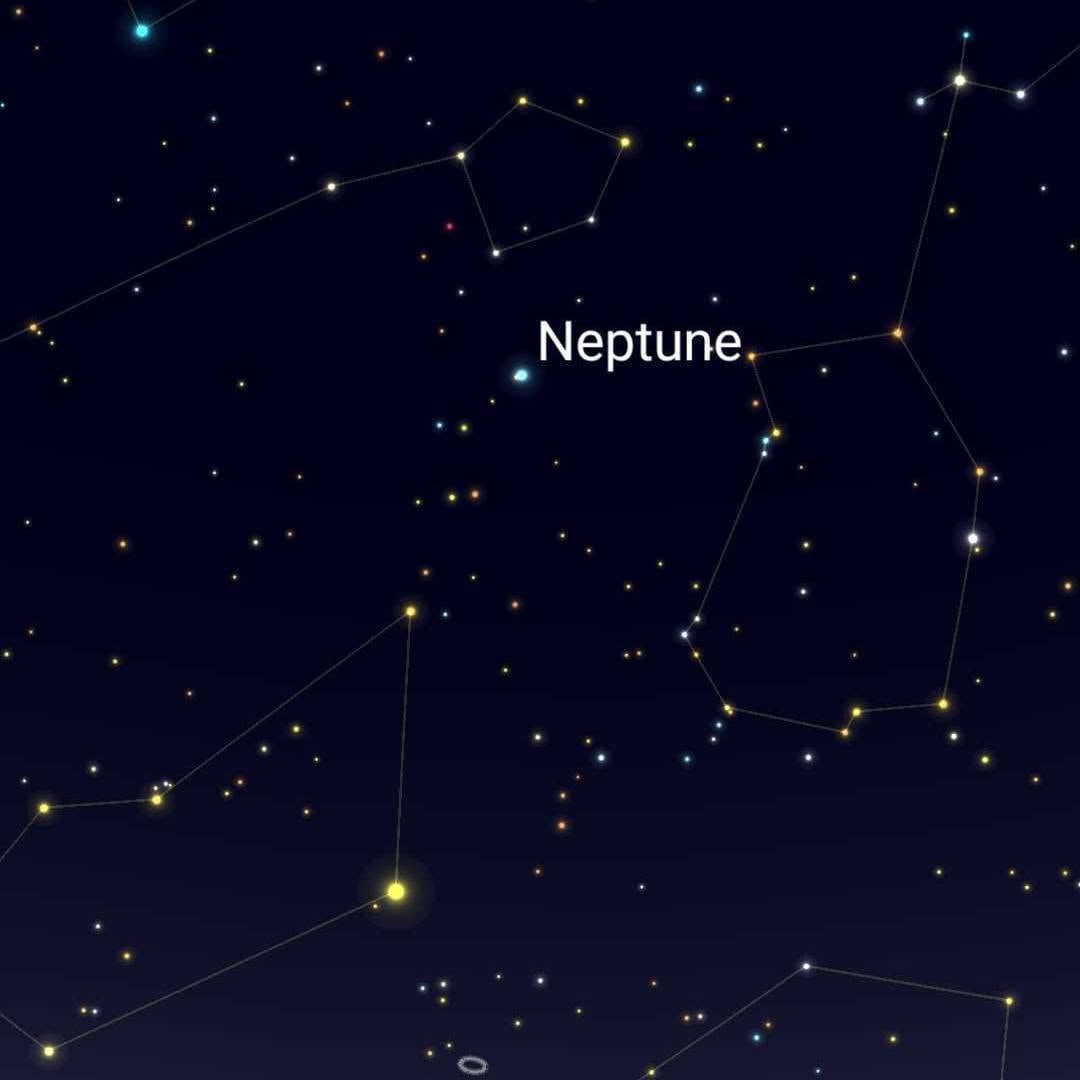
“A sky chart or astronomy application can also help observers locate the planet against the surrounding stars.”
This year, Neptune will be located in the constellation Pisces during opposition.
Source: High Point Scientific on Facebook
Where to best see Neptune in Singapore?
The Science Centre Observatory recommends seeking a location with minimal artificial lighting, clear skies and an unobstructed view of the night sky. This means that parks, beaches, and reservoirs are your best bet.
“In Singapore, suitable locations include East Coast Park, Marina Barrage or the Southern Ridges,” they pointed out.
Additionally, they also noted that stargazers should avoid bright screens before trying to view Neptune to allow their eyes to adjust to the dark.
“Through most amateur telescopes, Neptune will appear as a very small, blue or blue-green disc, rather than displaying the level of detail commonly visible when observing planets such as Jupiter or Saturn,” they added.
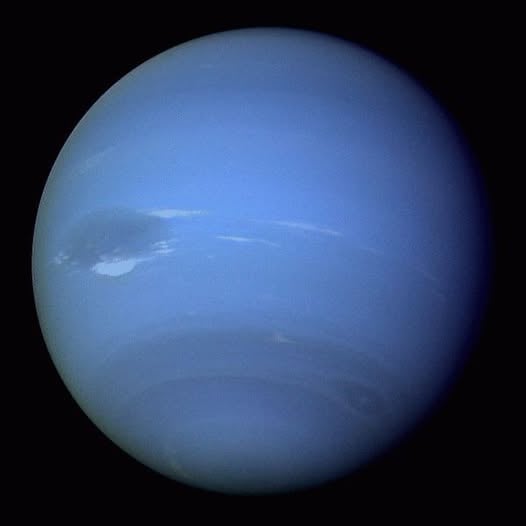
The colour is due to the composition of Neptune’s atmosphere, which comprises mostly hydrogen and helium, with a smaller amount of methane.
With sufficiently powerful equipment, and a dash of luck, observers may even be able to spot Triton — Neptune’s largest moon.
So if you’re up for some stargazing (and proving that Singapore isn’t as boring as some may claim), why not try catching a glimpse of Neptune next Saturday?
Also read: Why did S’pore end up demolishing the Sentosa Merlion statue?
Why did S’pore end up demolishing the Sentosa Merlion statue?
Have news you must share? Get in touch with us via email at news@mustsharenews.com.
Featured image adapted from Vera Makarenko on Canva and EarthSky. Images are for illustration purposes only.