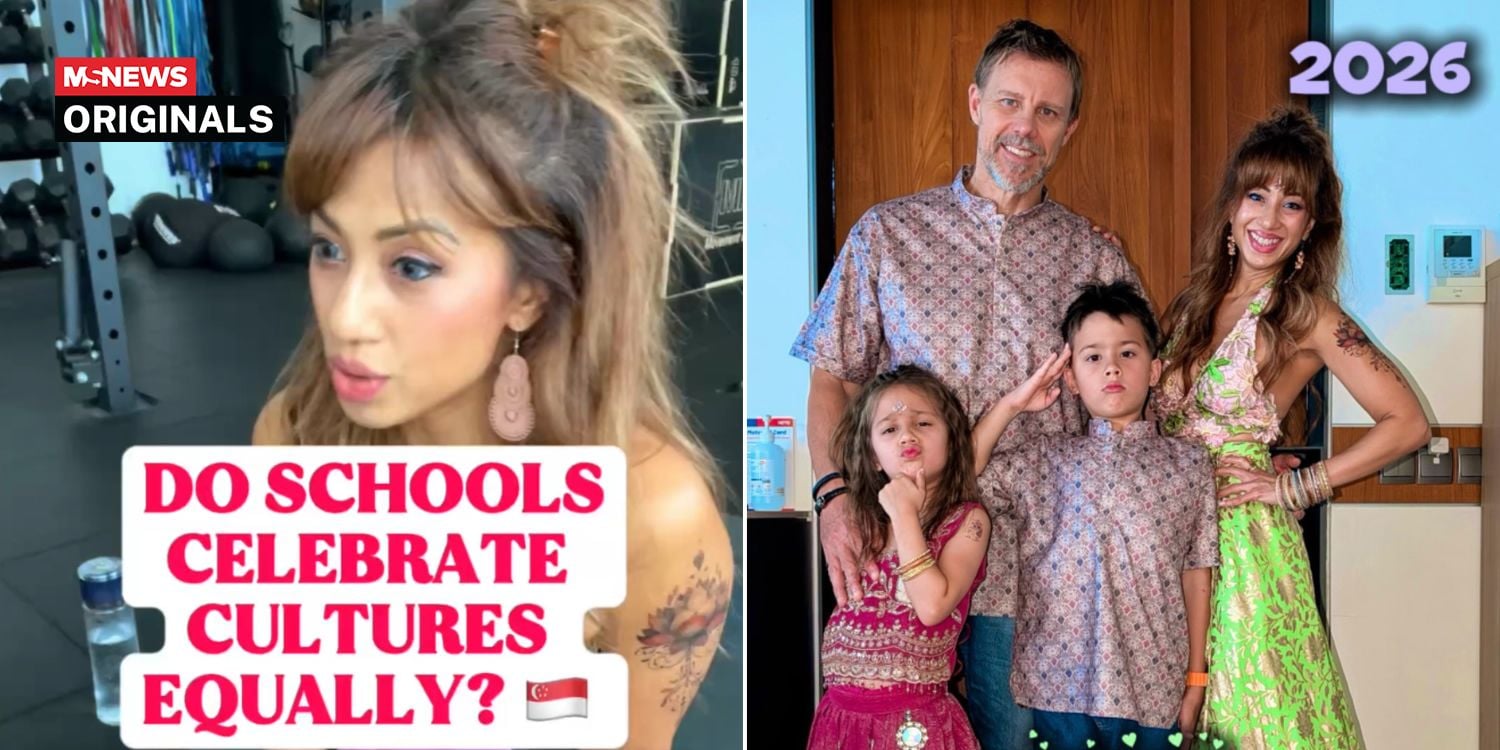

Singaporean mum agrees to help school with Deepavali celebrations
A Singaporean mother of two has agreed to help her son’s school plan its future Deepavali celebrations.
This comes after school leaders apologised for creating the perception that they “did not give due recognition” to Deepavali and Hari Raya.
Lalitha, a 49-year-old yoga teacher and former lawyer, had questioned the stark difference between the school’s Chinese New Year and other cultural celebrations.
She shared her concerns publicly in a series of TikTok posts.
Her videos documented her email to the primary school, as well as her subsequent meeting with the principal and vice-principal.
Speaking to MS News, Lalitha clarified that the school had not ignored Deepavali or Hari Raya entirely.
Instead, she questioned the unequal emphasis given to each festival, such as students being “strongly encouraged” to dress up only for Chinese New Year.
School strongly encouraged traditional dress only for Chinese New Year
Lalitha mentioned that her son enrolled in Primary 1 at the school in 2025, noting that her observations only cover the past two years.
During the Chinese New Year period, a circular went out informing parents that the school would hold a celebration.
The notice stated that students were “strongly encouraged” to come dressed in traditional Chinese attire.
The event included a half-day dismissal, traditional snacks, games, and activity booths manned by parent volunteers.
However, parents received no similar instruction for Deepavali, meaning children wore their school uniforms as usual.
This contrast stood out even more as her daughter, who attends kindergarten, dressed up in traditional Indian attire during the Deepavali period.
Troubled by comparatively small scale of celebrations
Lalitha noted that her son’s school held only modest activities for Deepavali.
These included a morning assembly sharing by Hindu students and a word search in the library at recess.
Feeling troubled by this, she emailed the school to urge leaders to make their cultural celebrations more inclusive.
She highlighted that many people still mistakenly confuse Hari Raya with “Malay New Year” or Deepavali with “Indian New Year”.
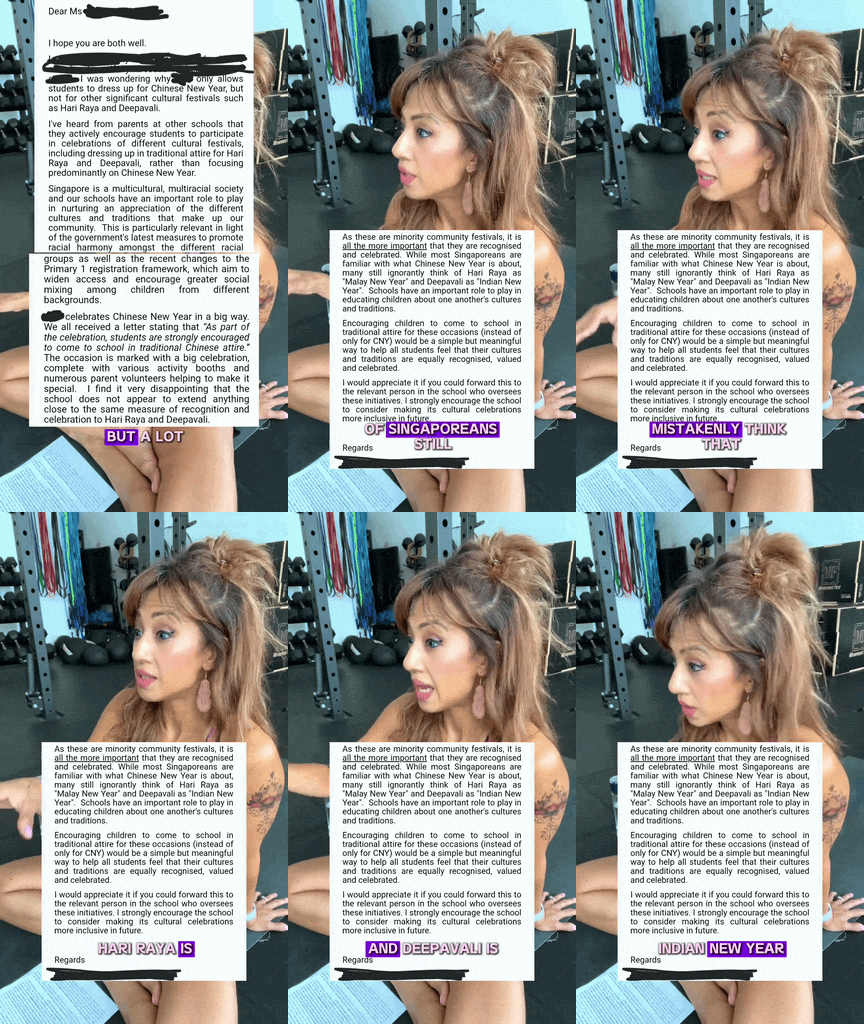
Source: fairyfitmama on TikTok
Schools, she said, play a vital role in educating children about one another’s cultures and traditions.
Met with school leaders to share perspectives
Following her email, her son’s teacher arranged a meeting between Lalitha, her husband, the principal, and the vice-principal.
During the discussion, Lalitha shared her perspective as part of an interracial family that celebrates Chinese New Year, Deepavali, and Christmas.
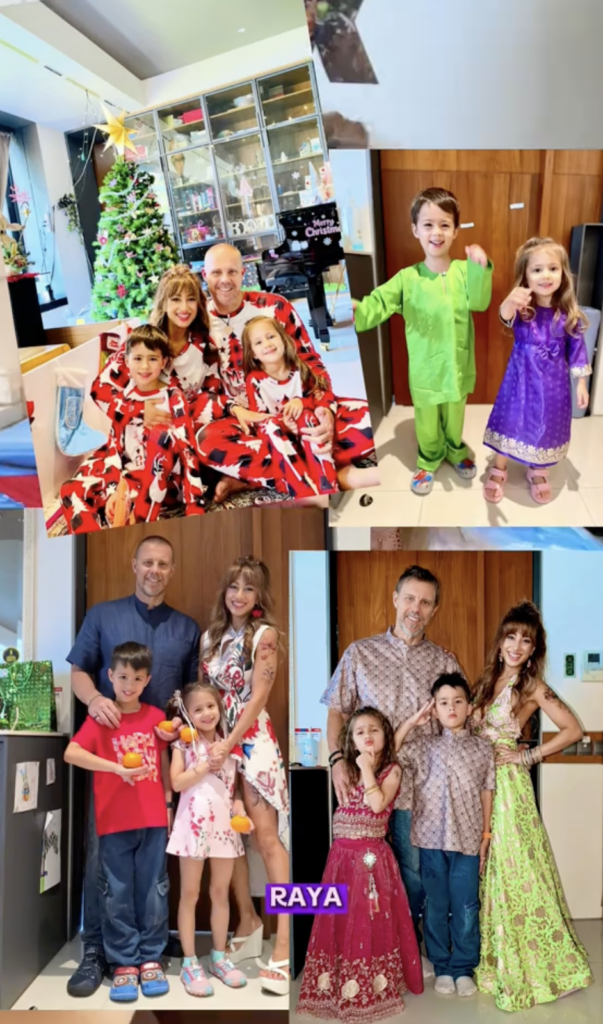
Source: fairyfitmama on TikTok
She added that if missionary schools “can separate the religious aspects of Chinese New Year, like ancestor worship, from its cultural celebrations, then they can do the same for Deepavali and Hari Raya”.
She also recounted facing overt racism as a primary school pupil, remembering how a teacher frequently referred to her as “that Indian girl”.
Lalitha recalled that this happened to the point that she felt she had to explain to others that she is actually half-Chinese, “as if that was [her] better half”.
She used this example to illustrate how schools have the power to educate younger generations better.
School leaders apologise & welcome parent involvement
The school leaders assured Lalitha that they value children of all races and cultures equally.
They apologised for the “perception that they did not give due recognition to Deepavali and Hari Raya”.
School leaders explained that this was unintentional, committed to taking her feedback on board, and invited her family to help prepare for next year’s celebrations.
Lalitha agreed to assist.
She also revealed that at least one other parent had met with the principal and vice-principal over the same issue.
Family awaiting details on upcoming celebrations
While Lalitha’s family has agreed to help, they have yet to map out specific plans.
This is because the school has not provided details on what it intends to organise or what assistance it needs.
“We will consider our plans for this once they do,” she told MS News.
Nonetheless, she considers the school’s response a positive step towards equal recognition, provided leaders follow through.
She also wondered on social media whether the Ministry of Education should mandate equal celebrations for the three main cultural festivals, rather than leaving it to individual schools.
Early education helps break down cultural stereotypes
Lalitha hopes the conversation encourages schools to actively bridge cultural gaps across Singapore.
She acknowledged that people naturally gravitate towards their own traditions, especially within majority communities.
However, she believes education must broaden such perspectives.
True multiculturalism should be more than just living in the same country as other races.
She added that lessons learned in school by children will also naturally ripple outward to parents, much like environmental habits do.
Leaving cultural education to chance or strictly to families risks passing down racial stereotyping and misconceptions.
Lalitha points to the xenophobic and insensitive comments left by some local netizens after the Nepal floods earlier this year.
She sums up her thoughts on cultural education:
This needs to be actively nurtured and schools are the best place to start.
Also read: TikToker calls out livestream viewers for casual racism during his exploration of Little India
TikToker calls out livestream viewers for casual racism during his exploration of Little India
Have news you must share? Get in touch with us via email at news@mustsharenews.com.
Featured image adapted from @fairyfitmama on TikTok.