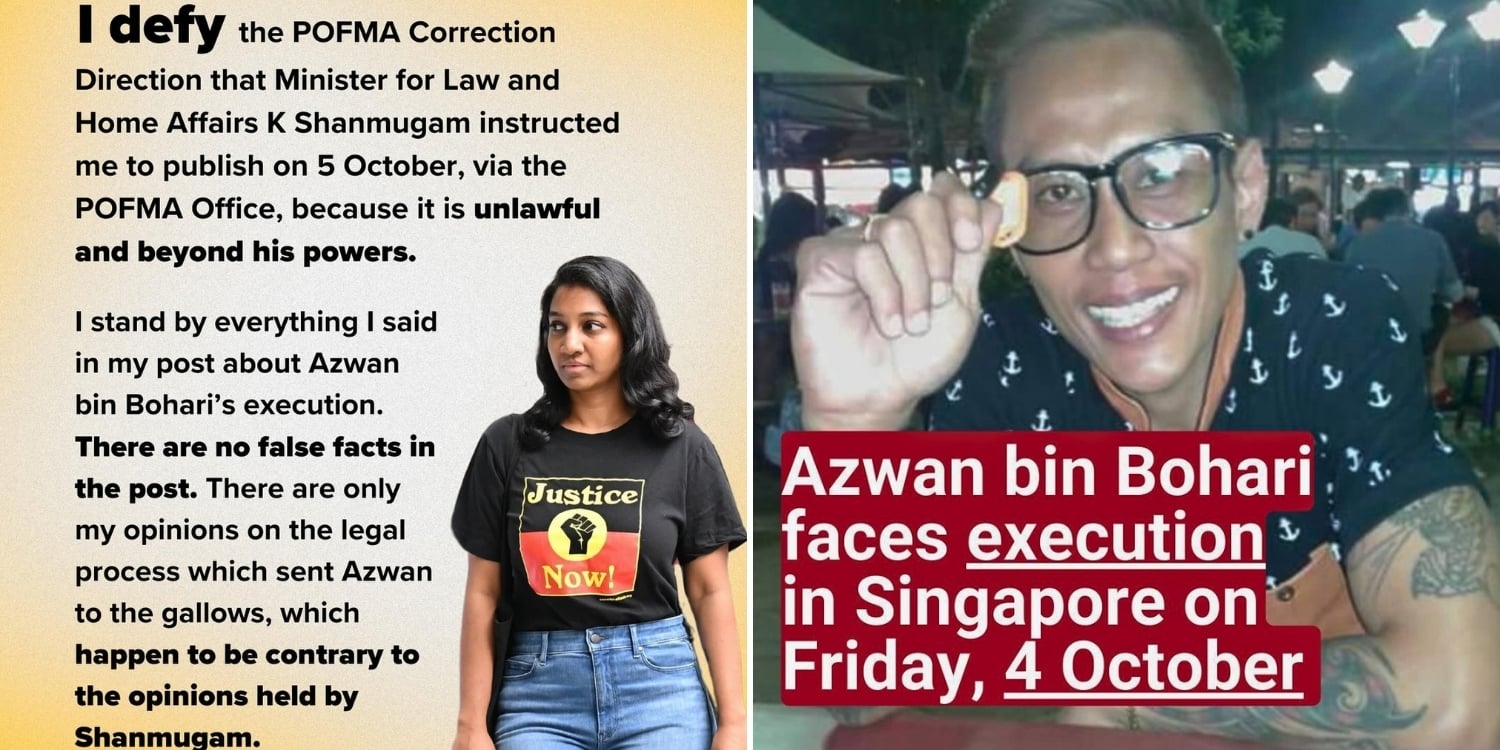

‘A straightforward case of deliberate non-compliance’: Activist goes on trial for allegedly defying POFMA correction direction
Activist Kokila Annamalai went on trial on Wednesday (7 Oct) for allegedly failing to comply with a correction direction issued under Singapore’s Protection from Online Falsehoods and Manipulation Act (POFMA).
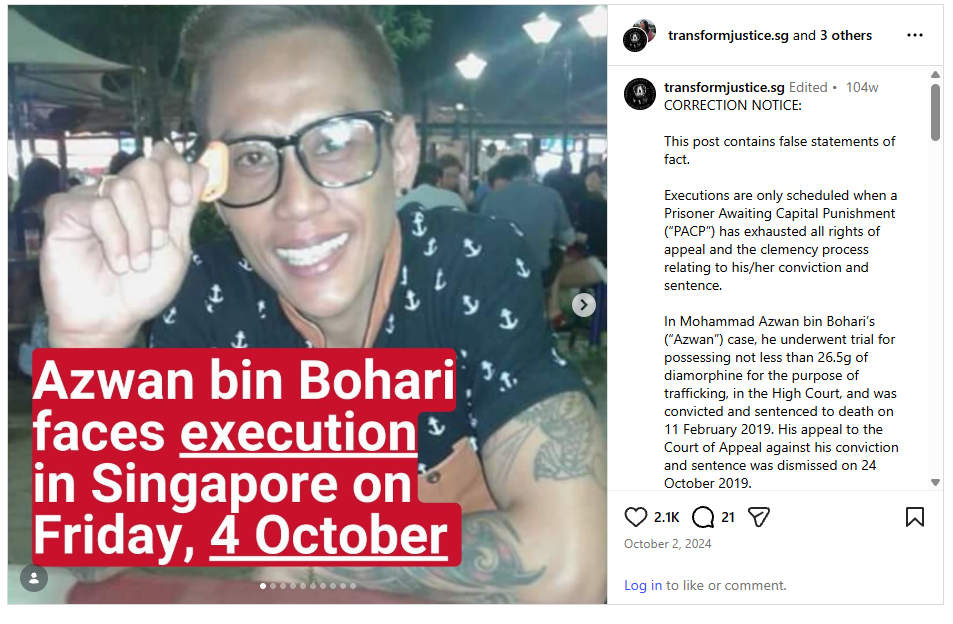
The 38-year-old Singaporean allegedly failed to comply with the direction over social media posts she made in Oct 2024 about a drug trafficker on death row.
Source: @learningfromthemargins on Instagram
This is the first trial of its kind under POFMA since the law came into effect in 2019.
POFMA direction concerned two statements
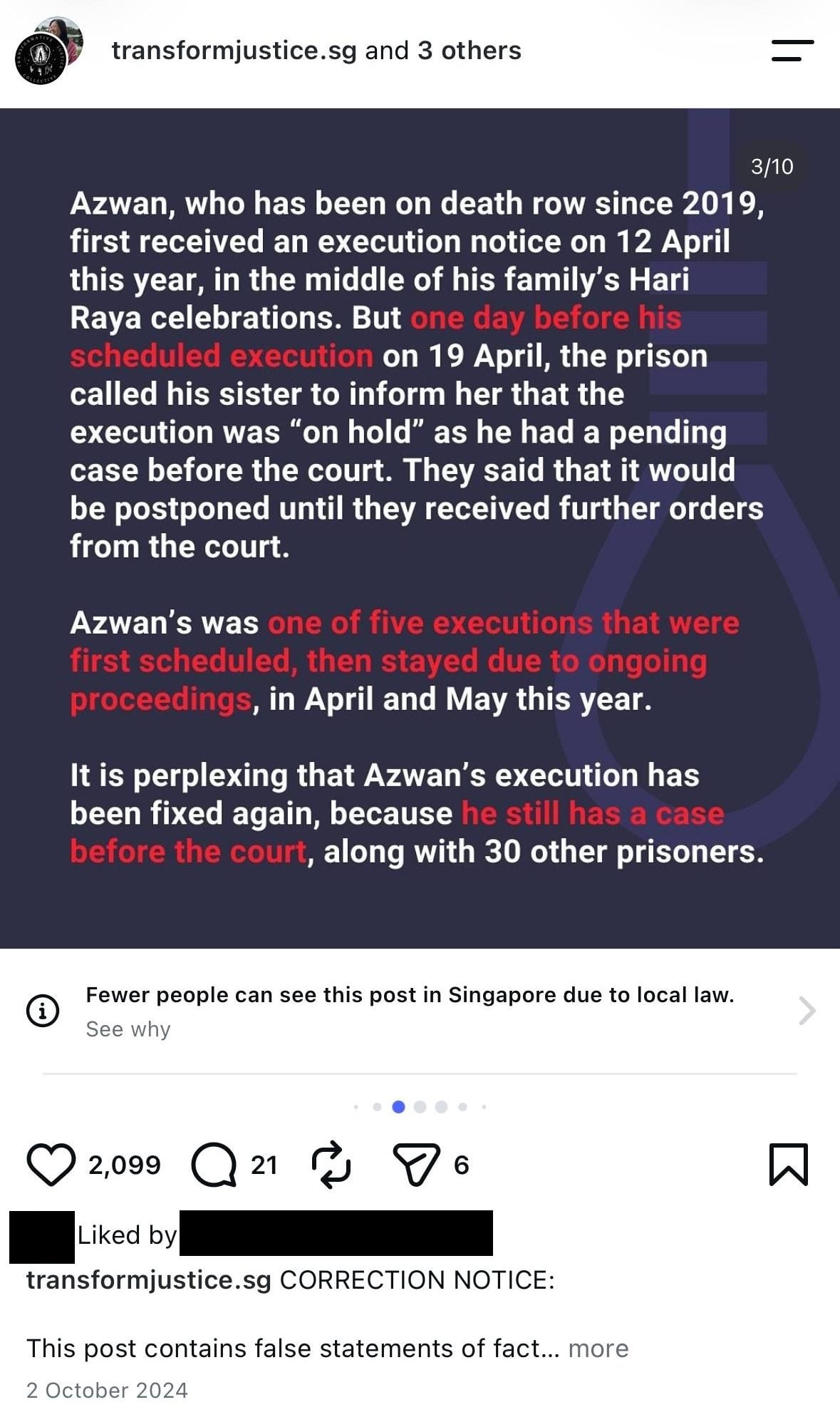
According to CNA, the POFMA Office said Annamalai’s posts contained two false statements.
The first was that the Government schedules and stays executions “arbitrarily and without regard for due legal process”.
Source: @learningfromthemargins on Instagram
The second was that the state does not bear the legal burden of proving a drug trafficking charge against an accused person.
The correction direction was issued by the POFMA Office on the instruction of then Home Affairs and Law Minister K Shanmugam.
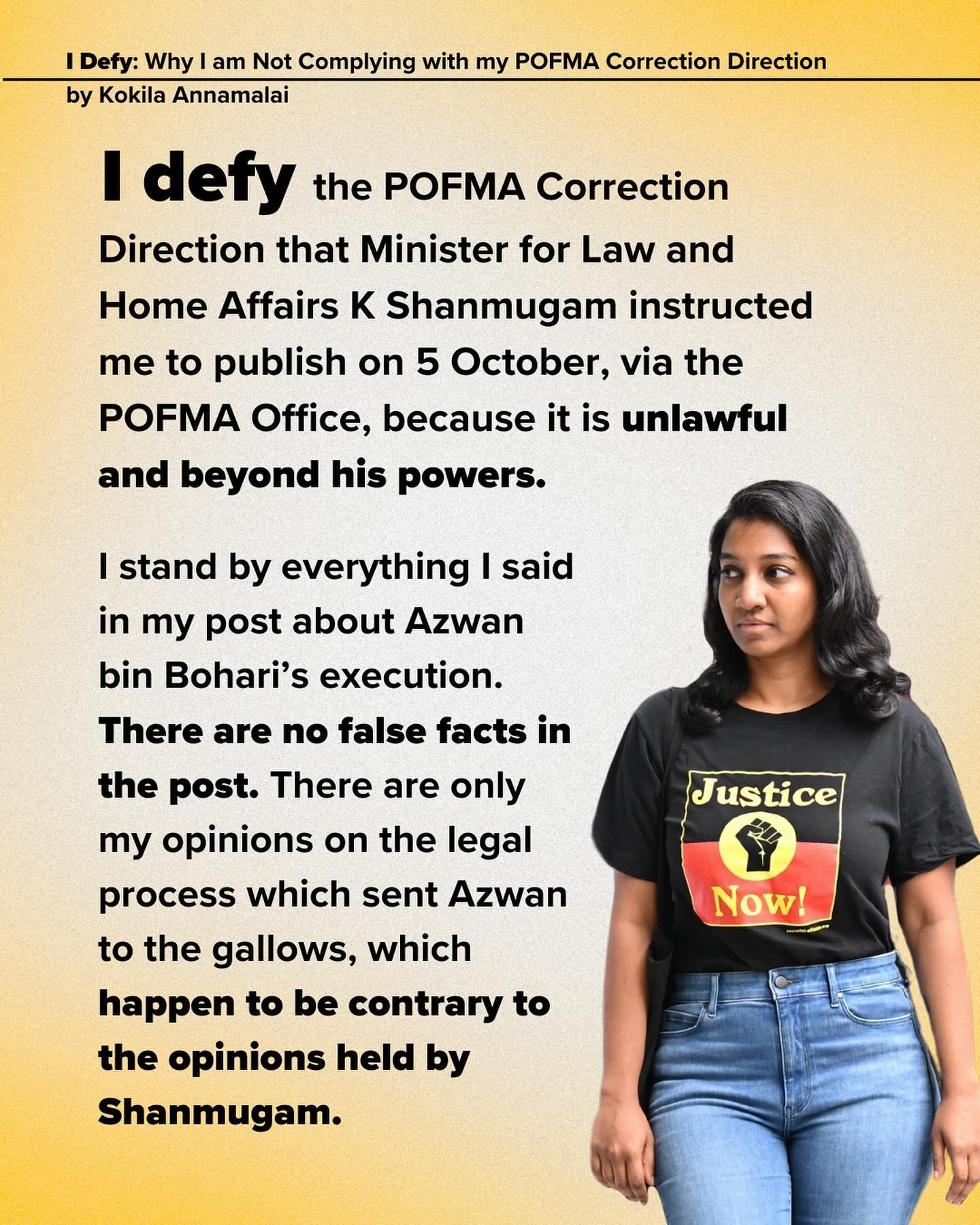
After receiving it, Kokila Annamalai allegedly published a post stating that she was defying the correction direction.
Under POFMA, recipients of correction directions must first comply by putting up a correction notice before challenging the direction.
They can appeal to the minister and, if unsuccessful, appeal to the High Court.
The prosecution said Annamalai did not use these avenues and has not complied with the direction to date.
Source: @learningfromthemargins on Instagram
Prosecution calls it ‘deliberate non-compliance’
Deputy Public Prosecutors Timotheus Koh and Stephanie Koh described the case as a “straightforward case of deliberate non-compliance”, the Straits Times (ST) said.
The prosecution said Annamalai knew about the correction direction and the available avenues to challenge it.
However, she allegedly chose not to comply.
The prosecutors said the purpose of a correction notice was to give members of the public access to both the original post and the Government’s response.
This would allow them to “form their own conclusions”, they said.
The prosecution also referred to an article Annamalai later published titled “I Defy: Why I am not complying with my POFMA Correction Direction”.
Its sub-heading read, “I said what I said.”
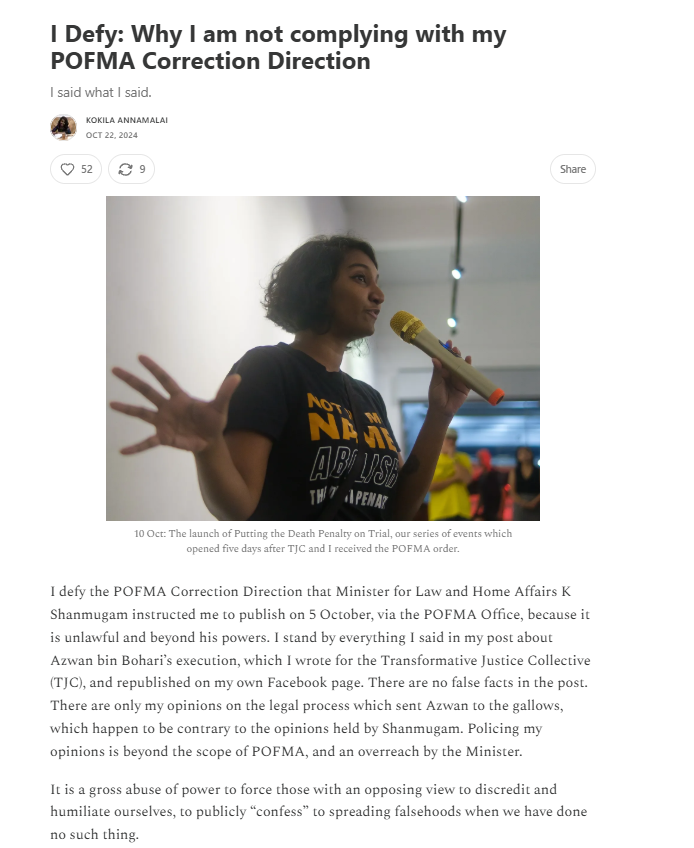
Source: I Defy: Why I am not complying with my POFMA Correction Direction website
Ms Koh argued that Annamalai should not be allowed to use the criminal trial as a “backdoor challenge” to the correction direction.
“A recipient who receives a correction direction must comply with it first, then challenge it through the proper channels, not the other way around,” she said.
“The accused is well aware of that.”
The prosecution also urged the court to reject what it called attempts to introduce “irrelevant and unrelated issues”.
“She’s trying to use this criminal trial for her own publicity, and we urge the court to reject this,” Ms Koh said.
Upon hearing this, Annamalai smiled and looked towards the public gallery, CNA reported.
The gallery was filled with her supporters, including actors Lim Kay Siu and Neo Swee Lin.
The pair were also charged alongside Annamalai over a separate Public Order Act case involving an assembly at the State Courts.
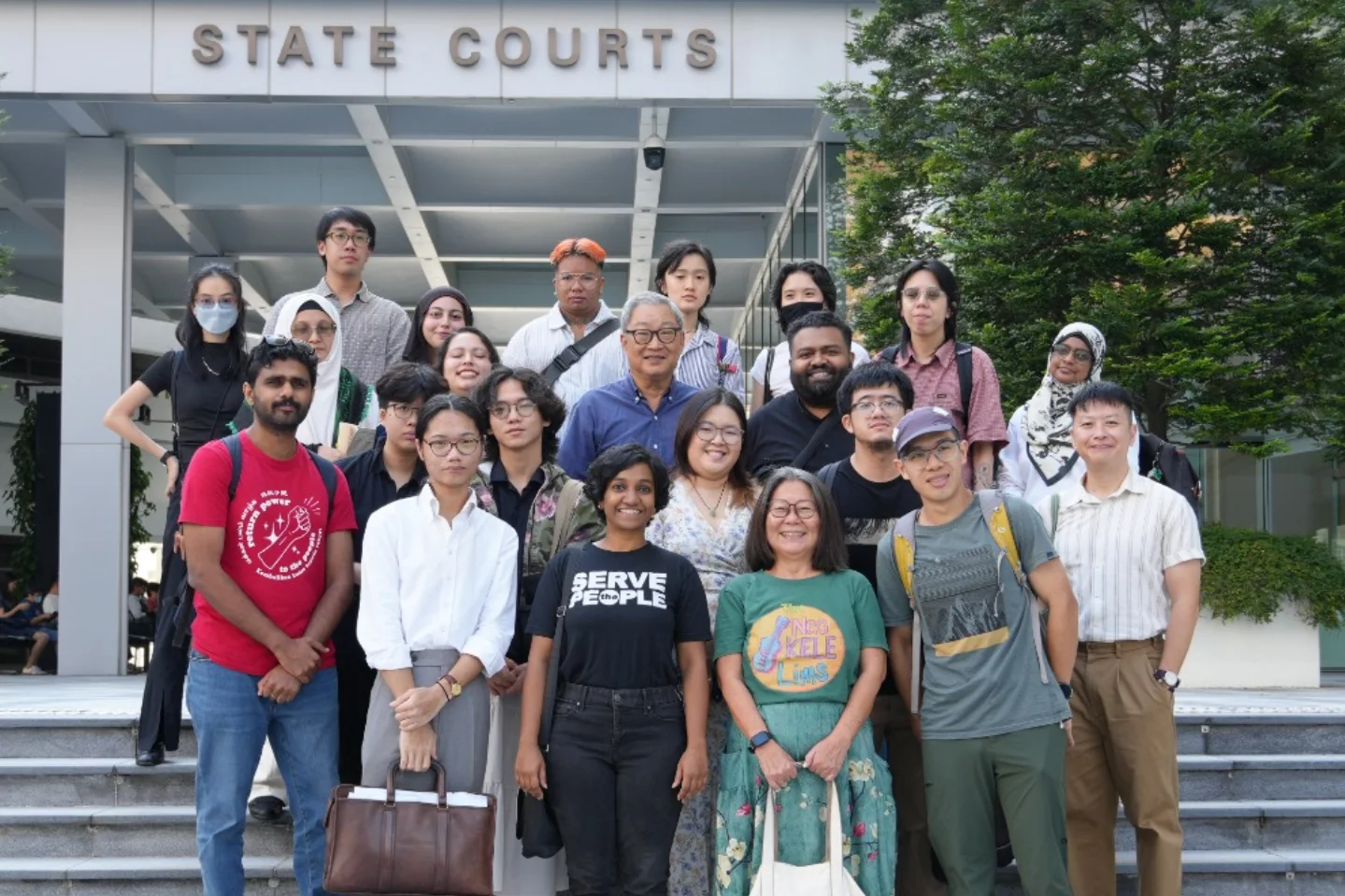
Source: @we.defy.pofma on Instagram
Defence says correction direction ‘invalid on its face’
Annamalai is represented by lawyers Tham Lijing and Too Xing Ji.
Mr Tham argued that POFMA was not intended to apply to Annamalai’s statements.
He said the defence’s position was that the correction direction was “invalid on its face”.
The defence has three main arguments.
First, POFMA does not apply to statements that are true or to opinions, Mr Tham said.
Second, Annamalai’s posts did not contain the statements identified by the POFMA Office as false.
Third, he argued that the 330-word correction notice exceeded the powers granted under POFMA, the Straits Times (ST) reported.
“Section 11 of POFMA grants the Government the right of reply, the opportunity to set the record straight,” Mr Tham said.
“Section 11 does not authorise the Government to put a 330-word essay on a person’s own online space.”
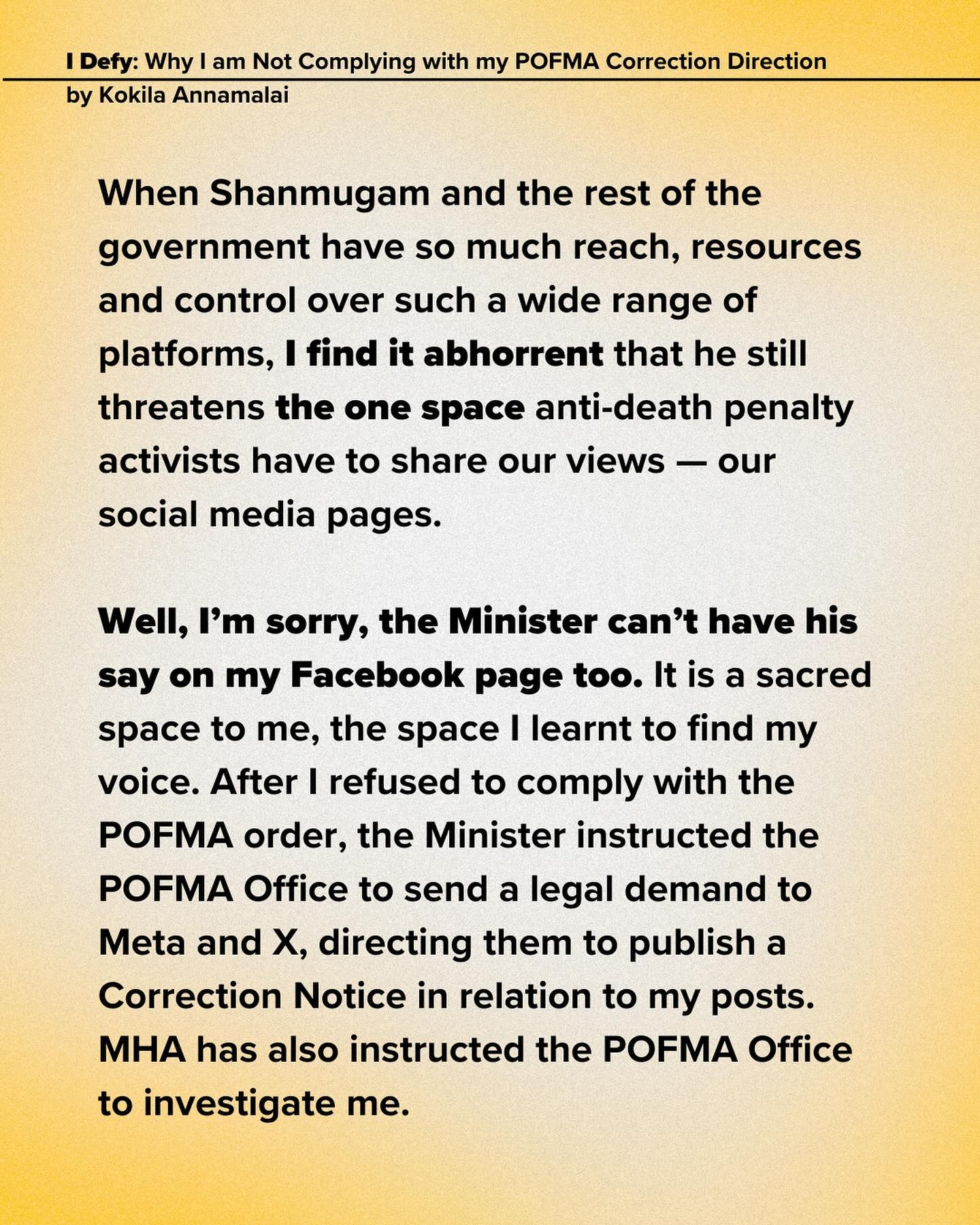
Source: @learningfromthemargins on Instagram
The defence said it would ask the court to find that the correction direction was invalid.
“And if it is invalid, then the charge must fail,” Mr Tham said.
Annamalai granted permission to travel to Chennai
Earlier on Wednesday (7 Oct), the court granted Annamalai permission to travel to Chennai, India, from 10 Oct to 7 Nov to visit family.
An additional S$5,000 bail was imposed on top of her existing S$5,000 bail, ST said.
She must provide her travel itinerary, remain contactable, and surrender her passport within 24 hours of returning to Singapore.
Annamalai was first charged in April 2026 over the alleged POFMA non-compliance.
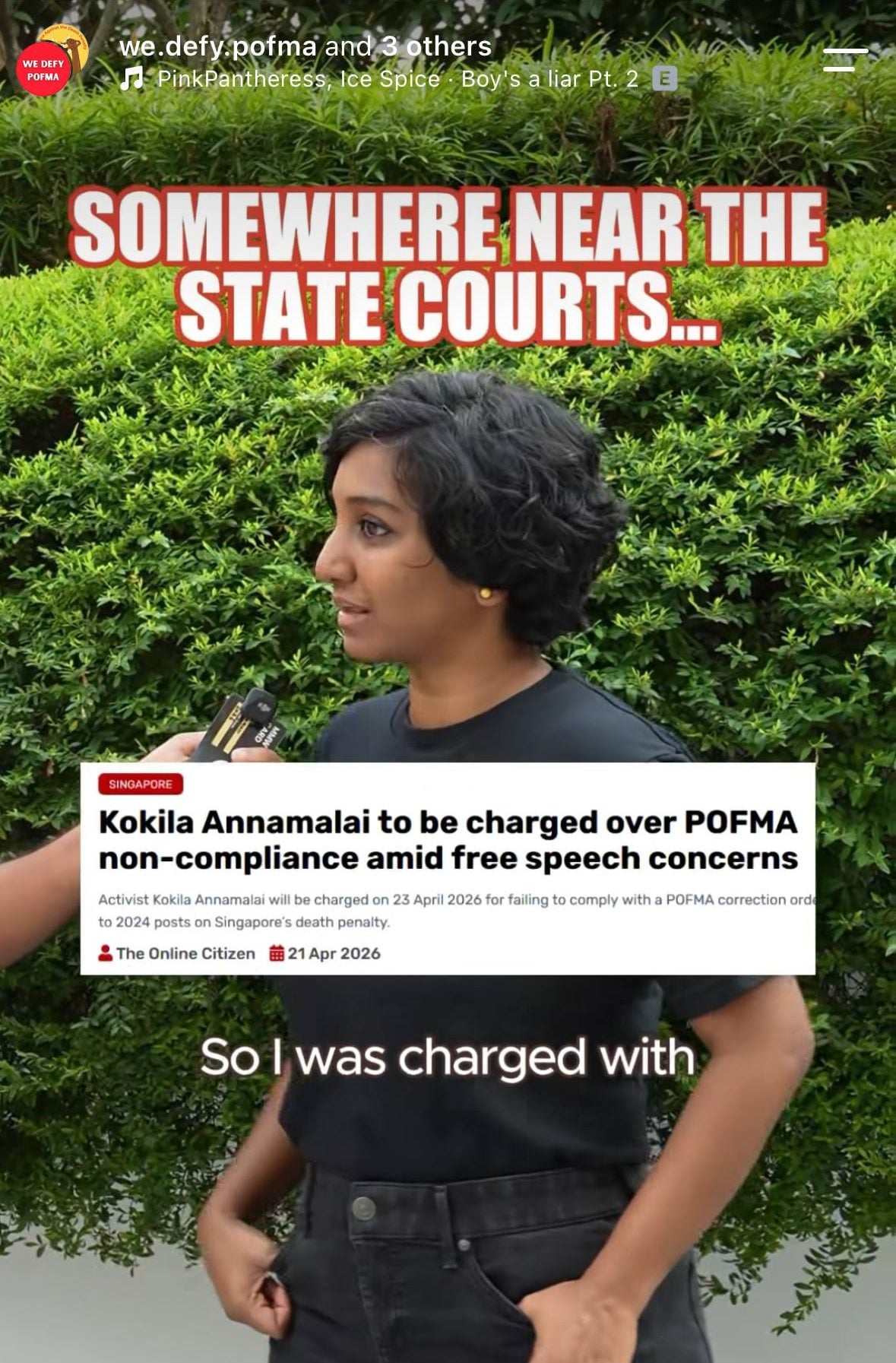
Source: @we.defy.pofma on Instagram
She also faces a separate charge under the Public Order Act for allegedly taking part in an assembly publicising the cause of abolishing capital punishment in Singapore.
That charge was stood down while the POFMA-related trial takes place.
If convicted of failing to comply with a correction direction without reasonable excuse, Annamalai can be jailed for up to 12 months, fined up to S$20,000, or both.
Have news you must share? Get in touch with us via email at news@mustsharenews.com.
Featured image adapted from @learningfromthemargins on Instagram and @learningfromthemargins on Instagram.