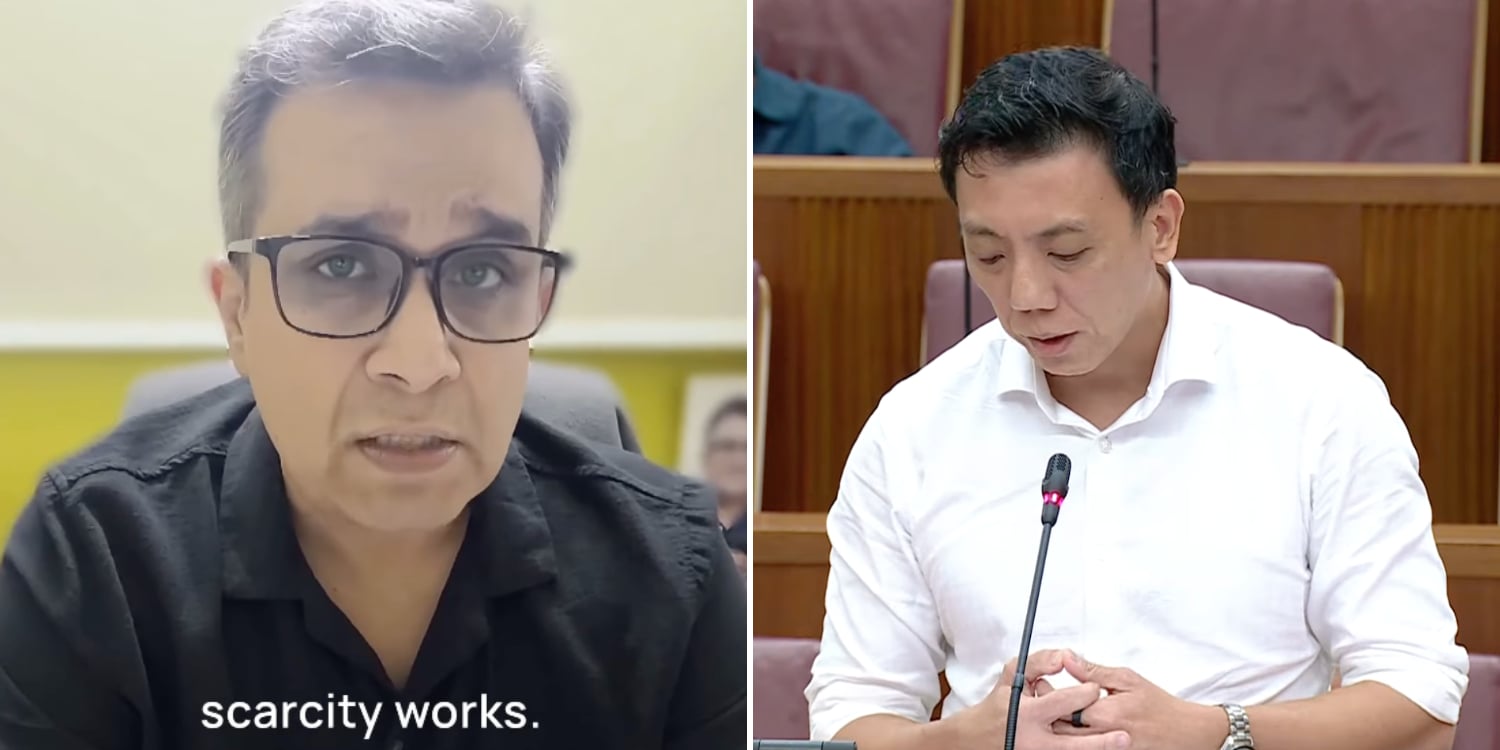

Ravi Philemon says COE system favours wealthy buyers
Red Dot United (RDU) secretary-general Ravi Philemon has criticised Singapore’s Certificate of Entitlement (COE) system, arguing that it favours wealthy buyers over working families.
In a Facebook video posted on Thursday (5 Nov), he responded to transport minister Jeffrey Siow’s comments in Parliament on Wednesday (4 Nov) about a proposed transport grant for larger families.
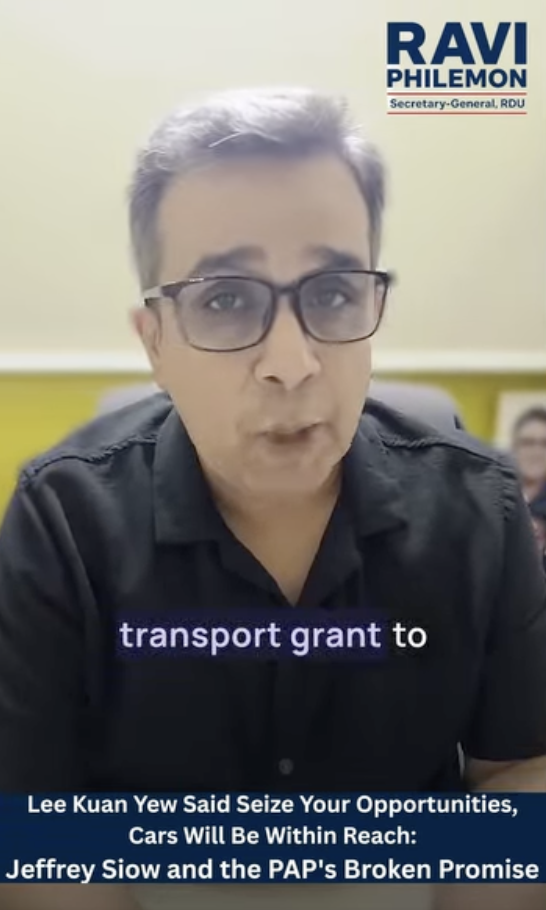
Source: Ravi Philemon on Facebook
Mr Philemon said Mr Siow appeared to understand how Singapore’s transport system works.
However, he questioned whether he understood why some families wanted to own cars in the first place.
He argued that the issue was not simply Singapore’s limited land and car supply, but whether the COE system fairly allocates access to vehicles.
Ravi Philemon says COE system prices working families out of car ownership
Mr Siow said in Parliament on Tuesday (3 Nov) that the Government was studying a transport grant for larger families.
He recognised that families with young children could find travelling together on public transport difficult.
The grant would be designed to support families more generally, including those who do not own cars and rely on public transport, taxis or private-hire vehicles.
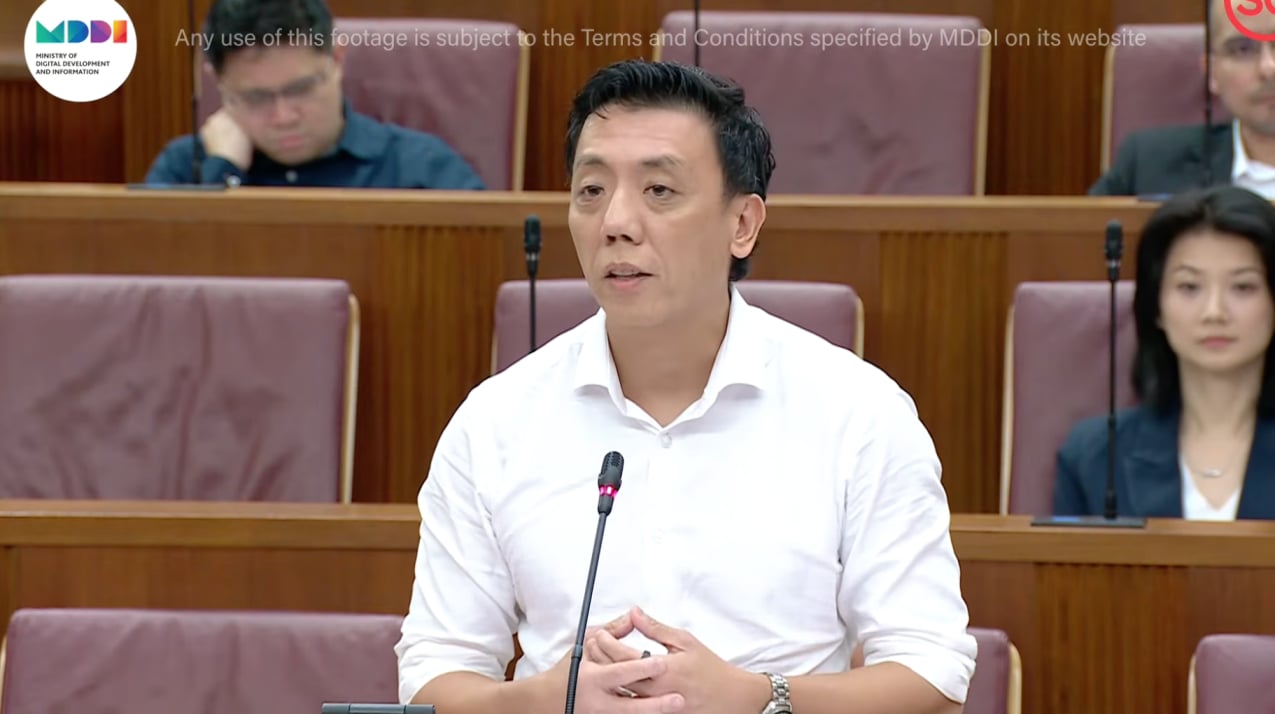
Source: MDDI Singapore on YouTube
In response, Mr Philemon said a transport grant could help families cope with the existing system, but would not necessarily address what he considered its underlying unfairness.
He argued that wealthy households could afford to bid for multiple COEs, while working families might struggle to secure even one.
Mr Philemon cited figures shared by Mr Siow in Parliament, saying about one in five new Category A and B COEs went to individuals from households that already held at least two COEs.
He also referred to figures from Sept 2025 showing that about 20,000 HDB households owned at least two cars, compared with 46,000 households living in private properties.
Among households with at least three cars, 9,000 lived in private properties, while 2,000 lived in HDB flats.
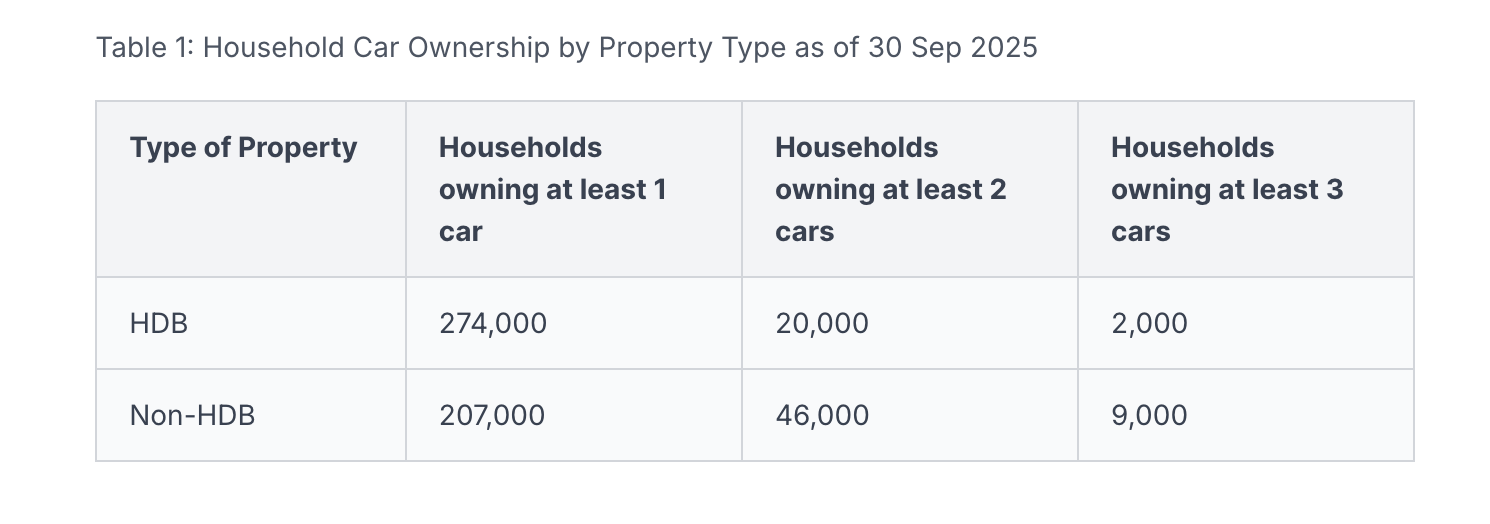
Source: Ministry of Transport website
Mr Philemon acknowledged that not every household with multiple cars was wealthy or lacked legitimate reasons for owning them.
However, he said the figures raised questions about how access to cars was distributed across different economic circumstances.
Working mother with three children says car is a need, not a want
Mr Philemon also shared the experience of a mother of three young children who had spoken to his team during a walkabout in Holland-Bukit Timah GRC.
The woman reportedly told the team that a car was a need rather than a want for her family.
Before starting work each day, she had to drop one child at nursery, another at primary school, and her toddler at her parents’ home.
Mr Philemon said the woman believed a car would make a significant difference to her daily routine, but high COE prices had put ownership beyond her reach.
She also described seeing landed homes in Holland Grove with multiple cars parked in their garages, sometimes sitting unused throughout the day.
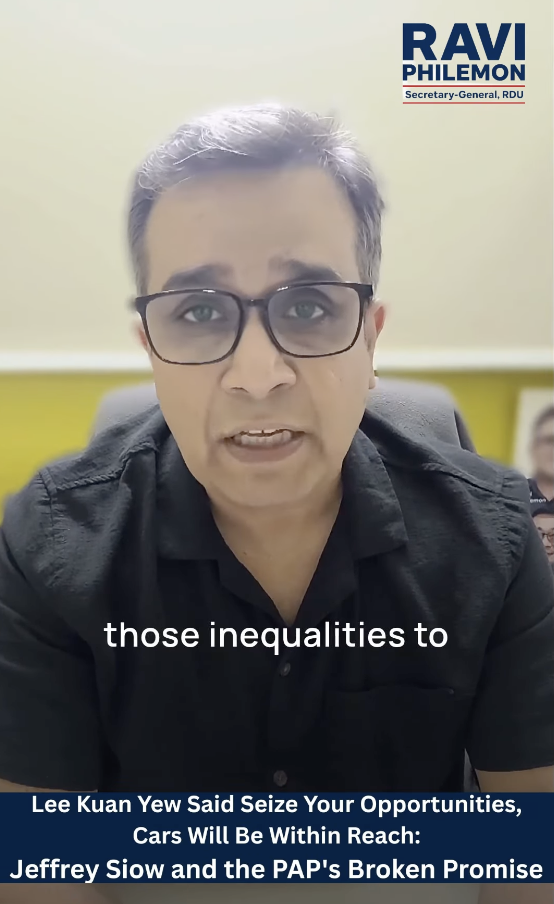
Mr Philemon contrasted the situation of the working mother with households that could afford several cars.
Source: Ravi Philemon on Facebook
He said the COE auction did not distinguish between someone buying a first car to manage family responsibilities and someone purchasing a fourth car.
Instead, the system awarded the COE to the highest bidder.
“The market can discover a price; it cannot determine what is just,” he said.
RDU proposes protected COE access for essential mobility needs
Mr Philemon said the Government should consider changing how car entitlements are distributed, rather than relying only on transport grants.
He referred to RDU’s 22-page Progressive Mobility Framework, which the party had submitted to the Land Transport Authority (LTA).
The proposal includes giving people with essential mobility needs protected access to COEs, helping working Singaporean families afford their first modest car, and requiring those who can afford additional cars to pay progressively more.
Mr Philemon said the proposal was designed to keep government COE-related revenue broadly unchanged.
He also reiterated the party’s commitment to free public transport for everyone, stressing that RDU was not advocating car ownership for every household.

Source: Ravi Philemon on Facebook
He said families who could not afford to buy and maintain cars should also be considered for assistance with taxis and private-hire vehicles.
Mr Philemon also questioned how much the proposed transport grant would provide, who would qualify and whether it would account for families’ actual transport needs.
He added that the Government should explain why a grant was the only way to help larger families, instead of also examining how COEs were allocated.
Ravi Philemon questions whether policymakers understand working families’ needs
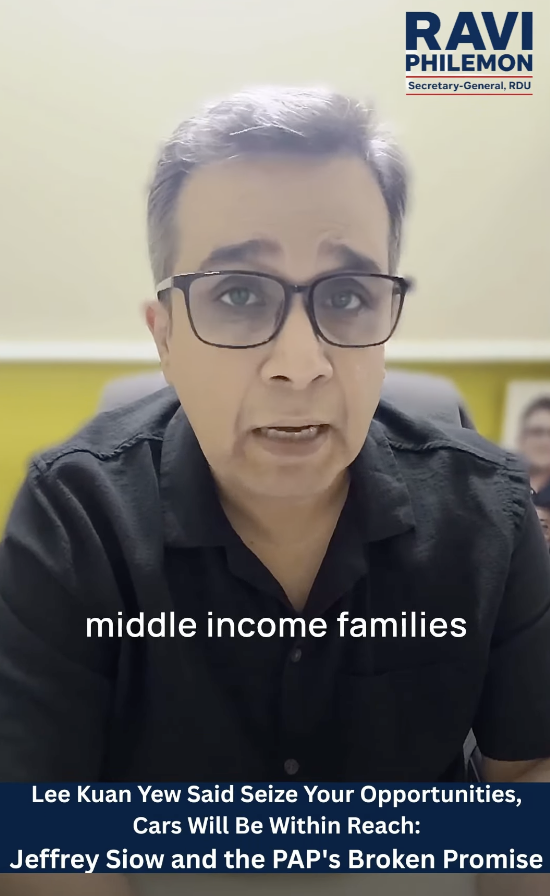
Mr Philemon further criticised what he described as a lack of willingness among policymakers to reconsider the principles behind the COE system.
He pointed to Mr Siow’s previous comments in Parliament in Sept 2025, when the minister described a needs-based COE system as “subjective, divisive, and benefiting too few people”.
Mr Philemon acknowledged that determining eligibility based on factors such as household income, the number and ages of children, and changing family circumstances could be challenging.
However, he questioned whether those administrative difficulties were sufficient reason to retain a system that primarily allocates COEs based on purchasing power.
Source: Ravi Philemon on Facebook
He also raised concerns about what he described as groupthink within Singapore’s political establishment.
Referring to Mr Siow’s career in the civil service before entering politics, Mr Philemon questioned whether people who had spent years working within government institutions could independently challenge the systems they were responsible for overseeing.
He said he was not claiming that Mr Siow had personally exchanged his independence for money, but questioned whether the incentives within the political system encouraged ministers to challenge existing policies.
Ravi Philemon recalls Lee Kuan Yew’s remarks about car ownership
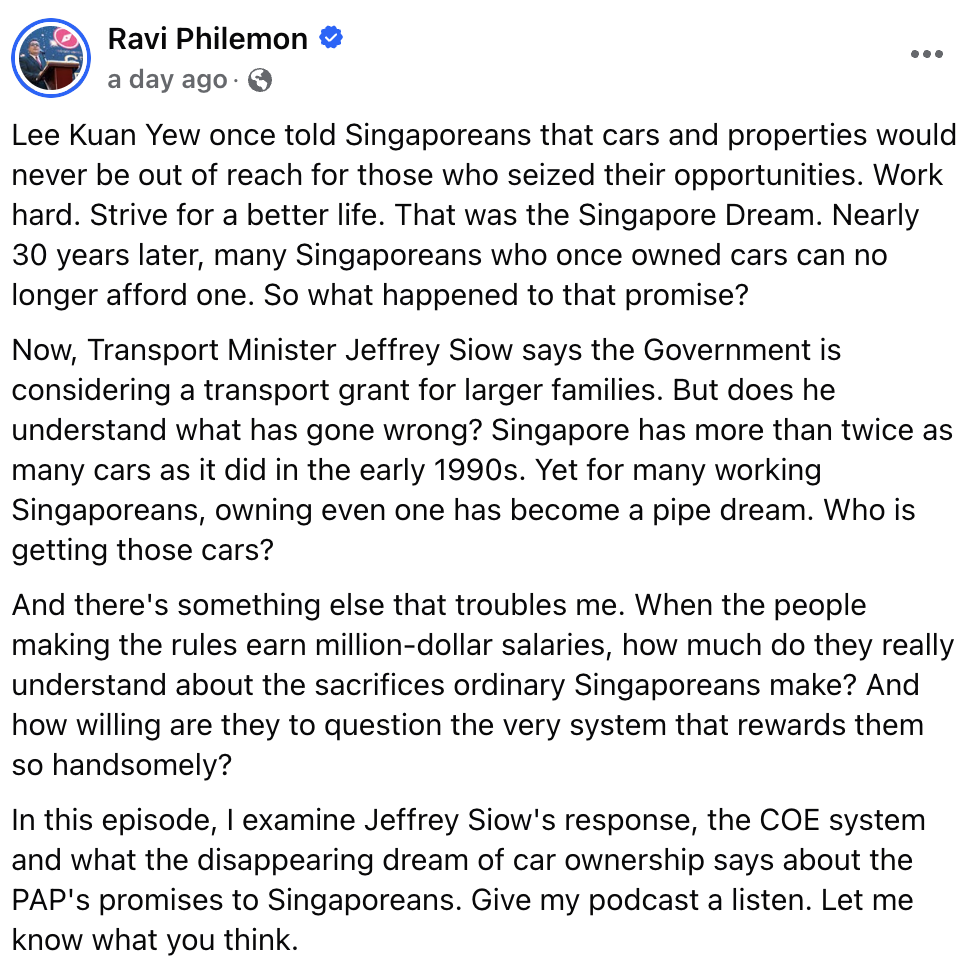
Towards the end of the video, Mr Philemon returned to comments made by Singapore’s founding Prime Minister Lee Kuan Yew in 1996.
Mr Lee had said that properties and cars would never be out of reach of those who seized their opportunities.
Source: Ravi Philemon on Facebook
Mr Philemon said car ownership had become increasingly difficult for many working and middle-class Singaporeans, despite the country having more cars today than in the early 1990s.
He cited figures showing that Singapore had about 280,000 cars in the early 1990s, compared with around 660,000 today.
He questioned whether the COE system still reflected the promise of a better standard of living for Singaporeans who worked hard.
Mr Philemon concluded that the Government should reconsider the principles behind the system, arguing that the allocation of a scarce public resource was ultimately a political choice.
He urged Mr Siow to consider whether the current system was fair to ordinary working families, rather than relying solely on market mechanisms to determine who could afford a car.
Have news you must share? Get in touch with us via email at news@mustsharenews.com.
Featured image adapted from Ravi Philemon on Facebook and MDDI Singapore on YouTube.