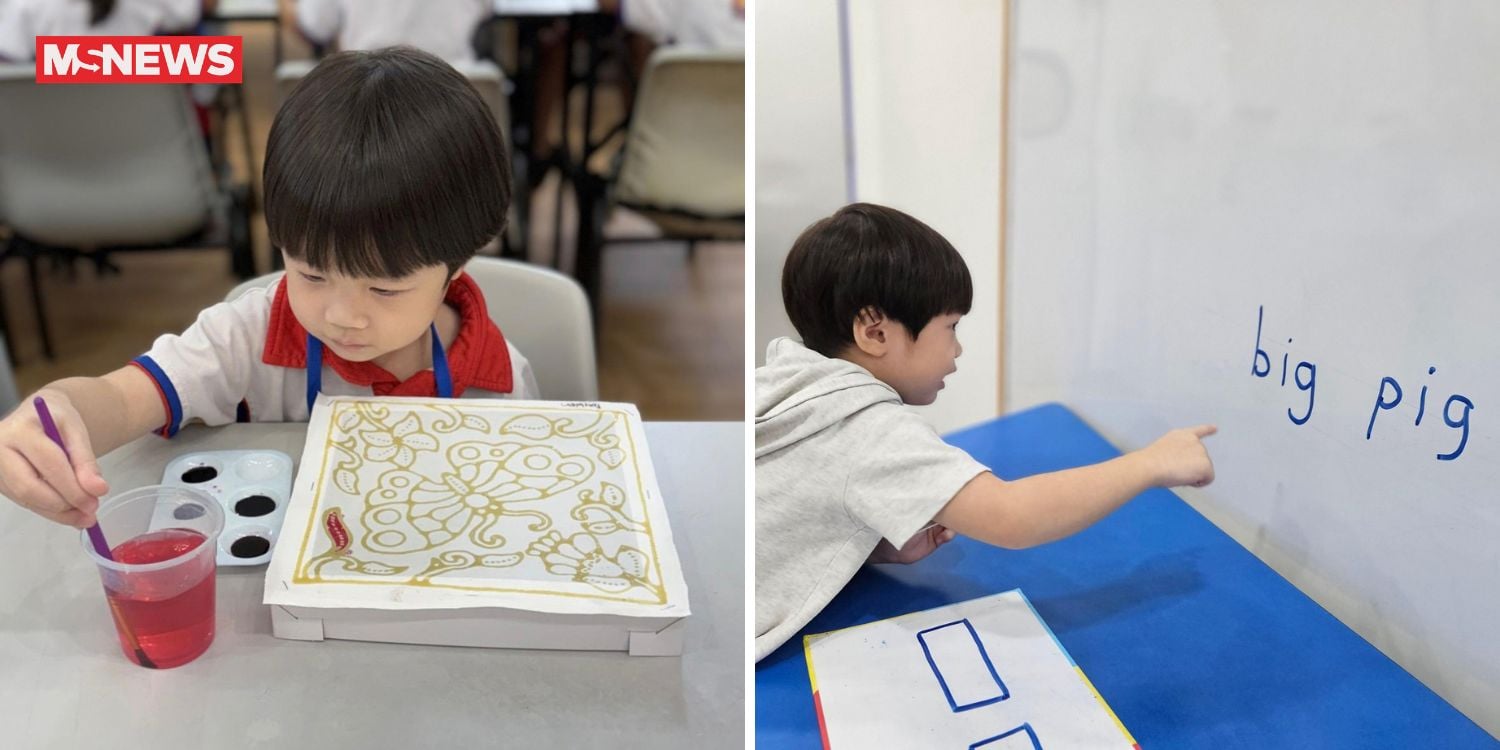

Developmental Language Disorder is more common than autism, but most of us have never heard of it
Most of us are familiar with developmental conditions like autism and know that therapy and other forms of support can greatly help children diagnosed with them.
However, there’s another condition that’s more common than autism but far less well known.: Developmental Language Disorder (DLD), which, despite often going unnoticed in classrooms, workplaces, communities, and even within families, affects one in 14 people.
Ahead, we break down what DLD is, some signs to look out for, and how children can be supported. There’s also a free event at Our Tampines Hub on 17 Oct 2026, where families and experts will be sharing more about DLD and what living with it can look like.
What is DLD?
DLD is a lifelong neurodevelopmental condition that affects how a person understands and uses language, even though there is no known medical cause behind these difficulties.
You can think of DLD as a difficulty in processing spoken language, in the same way dyslexia relates to difficulties processing written language. In fact, individuals with DLD often have co-occurring challenges like dyslexia or ADHD.

Source: Sasiistock on Canva, for illustration purposes only
Common signs can include difficulty learning and retaining new words, having a more limited vocabulary than expected for their age, or speaking in shorter, incomplete sentences.
Some children may also find it difficult to recount events, follow instructions with several steps, or grasp less literal forms of language such as jokes, sarcasm, idioms, and vague phrases.
These challenges can affect school performance, literacy, and social interactions, and may also lead to greater anxiety and frustration for both the child and their caregivers.
How to support children with DLD at home
The good news is that there are plenty of ways to make everyday communication easier for children with DLD. Just as with many other developmental conditions, parents can support them at home by making language learning more interactive and giving them ample opportunities to practise using language.
This can include using visual cues, such as pointing to what is being referred to while speaking, and encouraging the child to practise using a new word several times throughout the day in meaningful contexts to help it stick.
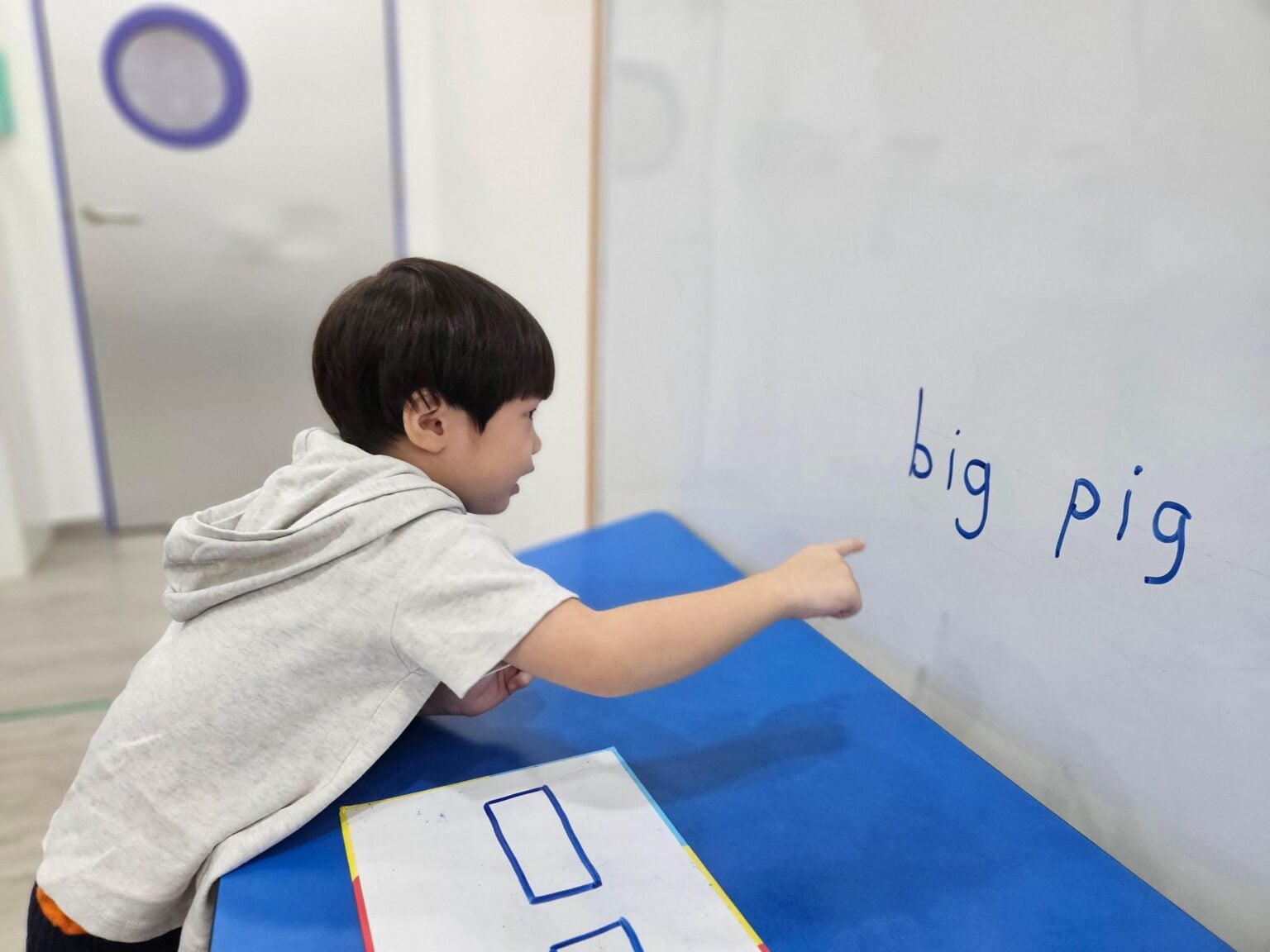
Image courtesy of THKMC
That kind of everyday reinforcement can make a real difference. In one THKMC case, a young boy named Faybien initially communicated mostly in short two- to three-word phrases and found it difficult to take turns in conversation.
Alongside therapy, his caregiver was taught simple techniques to use at home, such as giving him more time to respond and building on what he was trying to say. Over time, he progressed from making basic requests to expressing fuller thoughts and ideas.
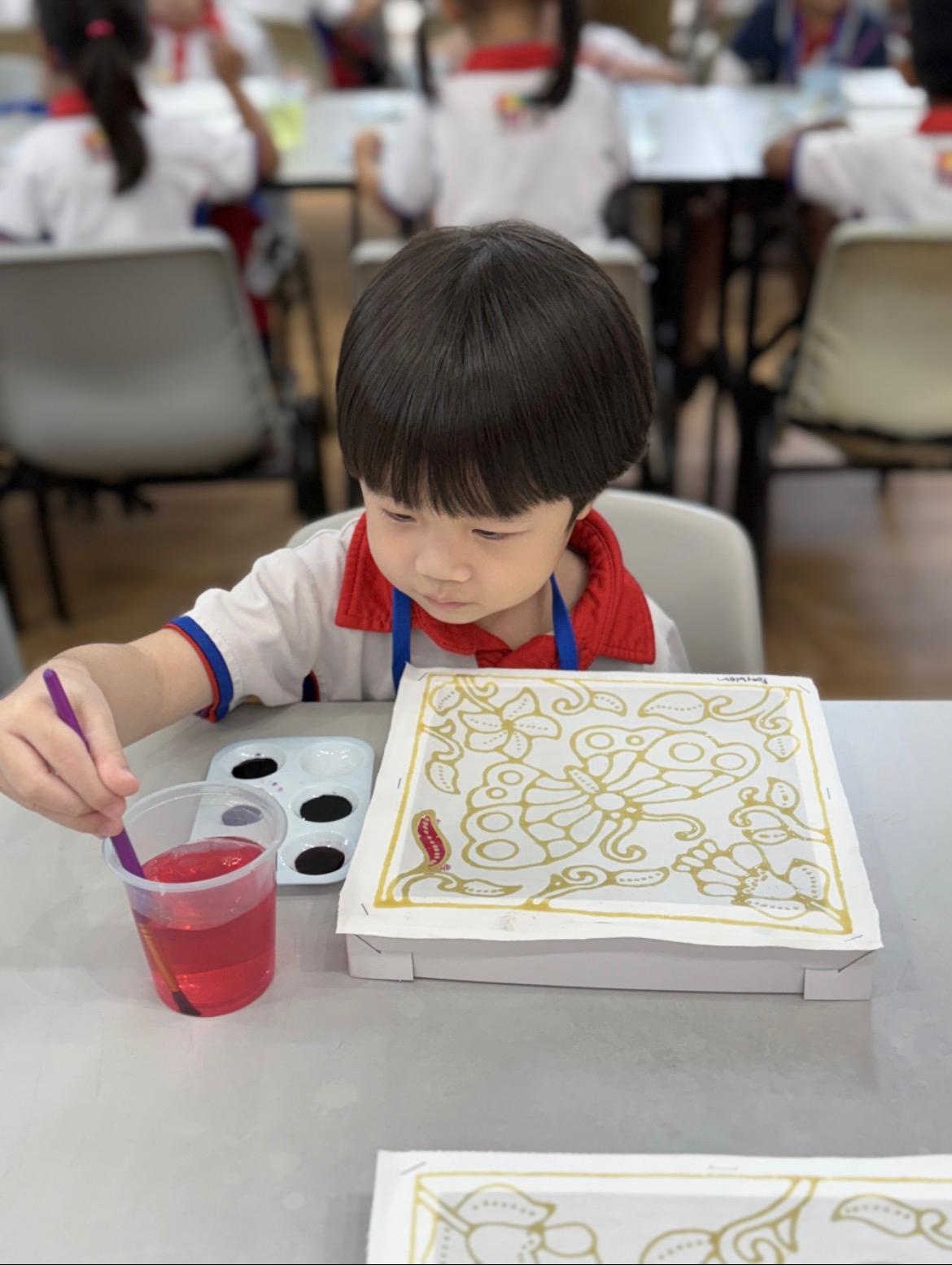
Image courtesy of THKMC
Similar approaches can also be used at home. If a child’s meaning is unclear, caregivers can repeat what was said slowly, or help expand on their thoughts by restating them as a complete sentence using clear, age-appropriate language.
When to seek professional help for DLD
While at-home strategies can help, some children may also benefit from professional support. It may be worth consulting a speech-language therapist if a child often struggles to understand what others are saying, follow instructions, communicate with other children, or pick up new words.
Concerns raised by teachers about their language development can also be a sign that further assessment may be helpful.
A DLD diagnosis is made by a speech-language therapist, although someone with DLD may also require support from other health professionals. In Singapore, speech-language therapists are qualified professionals who undergo continuous training to diagnose language disorders and provide individualised intervention for people with these difficulties.

Source: Aflo Images on Canva, for illustration purposes only
While it can be tempting to assume that a child will eventually outgrow their language difficulties, DLD persists into adulthood. Fortunately, people with DLD can receive therapy and other forms of support at different stages of life.
It’s also important to remember that people with DLD have their own strengths and can be just as bright, creative, and capable as anyone else; they simply face additional challenges with understanding and using language.
With the right support tailored to their strengths and needs, people with DLD can thrive.
Tune in to fireside chats with experts and parents of kids with DLD
If you’d like to learn more about DLD directly from experts and families, Thye Hua Kwan Moral Charities (THKMC) is marking Developmental Language Disorder Day with a free event at Our Tampines Hub on 17 Oct 2026.
The event is billed as Singapore’s first public event dedicated to sharing about DLD, and will feature experts from THKMC, KK Women’s and Children’s Hospital (KKH), the National Institute of Education (NIE), and Singapore Institute of Technology (SIT).
From 11.45am to 12.15pm at Festive Plaza, the first fireside chat will unpack what DLD is and why recognising it matters.
The session will feature Dr Sylvia Choo, a senior consultant at KKH, THKMC Head of Therapy Services Ms Karen Lee, and speech-language therapist Ms Teo Chiewgee. A parent of a child with DLD will also share her family’s lived experience of supporting her son with the condition.
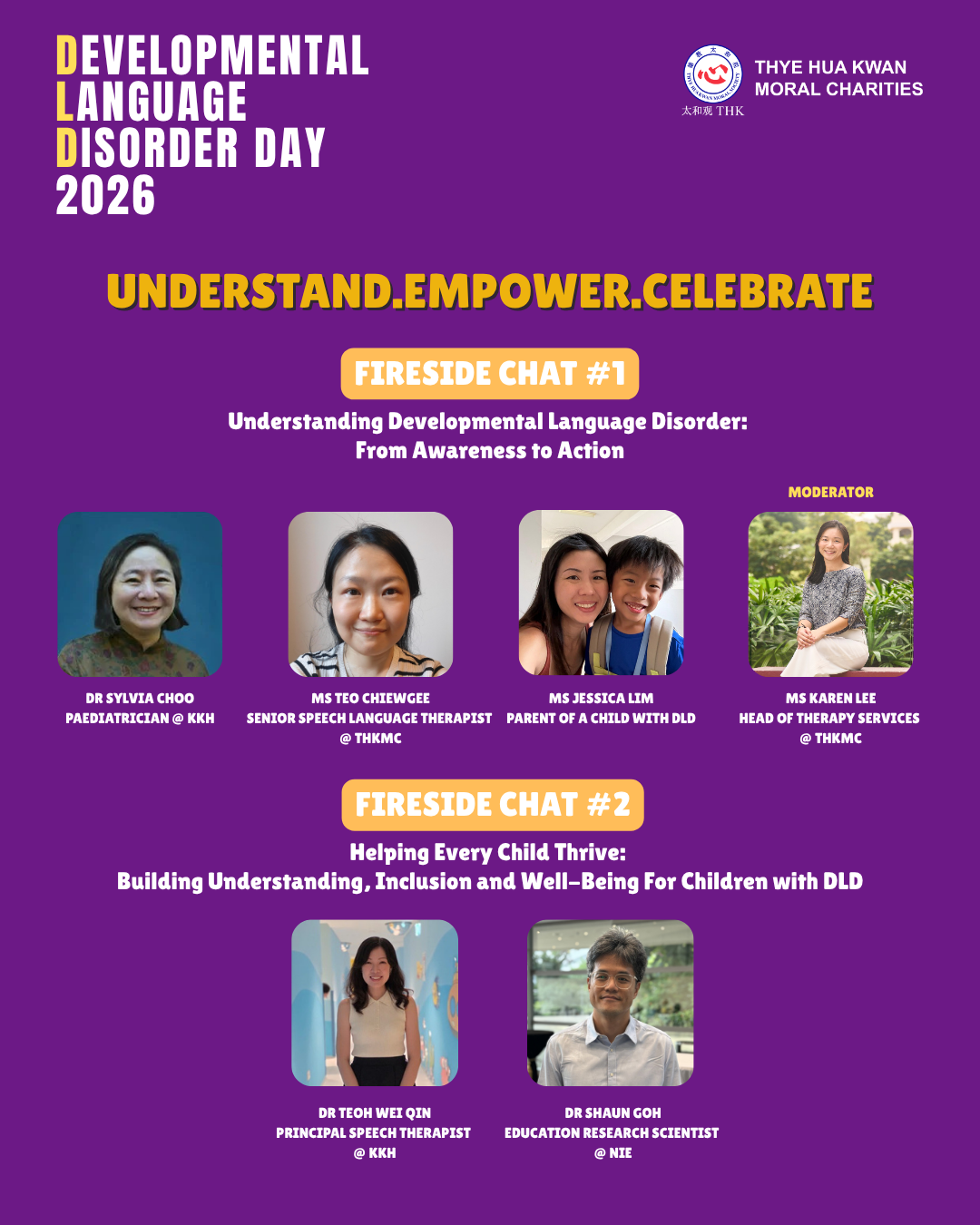
Image courtesy of THKMC
Meanwhile, a second fireside chat from 12.35pm to 12.50pm will be led by Dr Shaun Goh from the National Institute of Education, Nanyang Technological University and Dr Teoh Wei Qin, a speech therapist from KKH.
They will explore how DLD can affect a child’s emotional and social well-being, along with practical changes that can help children feel understood, included, and supported.
Stand a chance to score a free Speech Language Assessment for kids
The event isn’t just for adults. Kids and grown-ups alike can take part in interactive activities designed to educate visitors about DLD at the booths at Our Tampines Hub’s Festive South zone.
Attendees will also have a chance to receive storybooks designed by a team of NIE researchers to promote children’s vocabulary learning and storytelling skills.
Additionally, THKMC will be giving away three complimentary Speech Language Assessments, each worth up to S$280, for children aged 18 and below who may benefit from an evaluation of their language comprehension and use.
To stand a chance to win one, follow THKMC’s social media accounts, reshare the DLD Day 2026 post, and tag a friend.
Raising a child with developmental needs can come with its share of challenges, but having support from professionals and the wider community can make the journey easier to navigate.
Here are the details you need to know to plan your trip to the event:
Developmental Language Disorder Day
Venue: Our Tampines Hub, 1 Tampines Walk, Singapore 528523
Date: 17 Oct 2026
Time: 11am – 1pm (Main Stage Event at Festive Plaza), 11am – 7pm (Booths at Festive South)
Nearest MRT station: Tampines
For more information about the support THKMC provides for neurodivergent individuals, the elderly, and families facing social challenges, visit the organisation’s website. You can also follow THKMC on Facebook and Instagram for all the latest information and updates.
This article was brought to you in collaboration with THKMC.
Featured image courtesy of THKMC and adapted from Thye Hua Kwan Moral Charities on Facebook, for illustration purposes only.