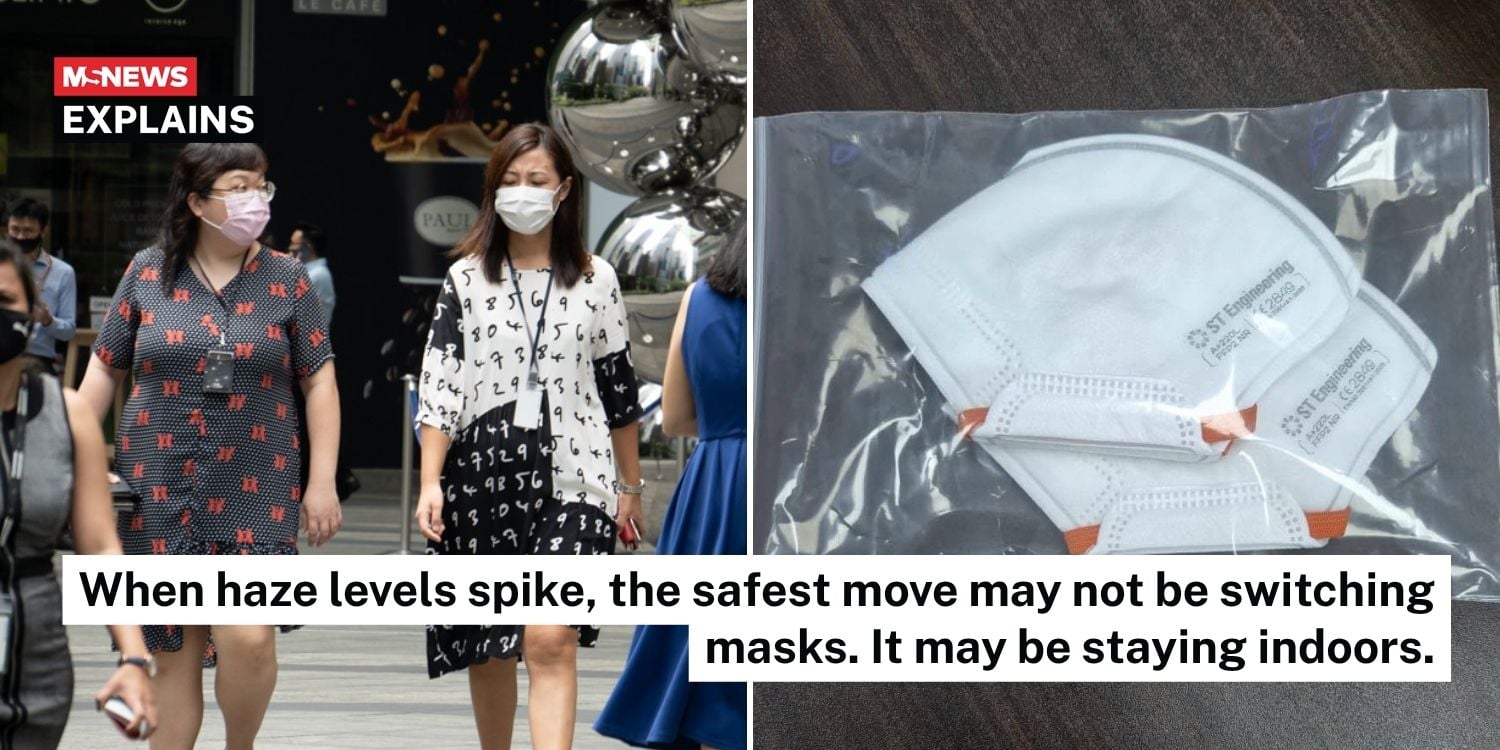

Haze hits Singapore, and when the PSI hits unhealthy levels, should you wear an N95 mask instead of a regular one?
The haze is back, and with it comes a familiar question: Is the mask in your drawer enough to protect your lungs?
Throughout October, the haze situation seemed to have been deteriorating, with Singapore’s hourly PM2.5 reading rising to as high as 288 in the western region at 3pm on 14 Oct.
While air quality has recently improved, the haze has not completely cleared.
Singapore’s 24-hour Pollutant Standards Index (PSI) currently ranges from 81 to 125, keeping the west and central regions in the Unhealthy band.
When Singapore’s skies turn hazy, reaching for a surgical mask might seem like an easy precaution. After all, many people kept their masks from the Covid-19 pandemic. But not all masks offer the same protection against the fine particles lurking in polluted air.
N95 masks are designed to filter these tiny particles, while regular surgical masks are generally better suited for blocking larger droplets and splashes.
So, when should you actually wear an N95? And can wearing one protect you from everything in the haze?
MS News spoke to Dr Leslie Koh, Senior Consultant ENT Surgeon at The ENT Practice – Adult & Child Specialist, to find out.
N95 vs surgical masks: What’s the difference?
The main difference lies in how much they filter out and how closely they fit the face.
| Feature | N95 mask | Surgical mask |
|---|---|---|
| Filtration | Filters at least 95% of airborne particles under specified testing conditions | Designed mainly to block larger droplets and splashes |
| Fit | Designed to fit snugly around the nose and mouth | Usually looser, allowing air to enter through gaps |
| Protection against haze | Offers better protection against fine particles such as PM2.5 when properly fitted | Not designed to provide equivalent protection against fine PM2.5 particles |
| What to check | Ensure it fits properly and is not damaged, dirty or distorted | Ensure it covers the nose and mouth |
| Key limitation | Does not filter out gases and chemical vapours | Provides less protection against fine airborne haze particles |
N95 respirators are designed to filter at least 95% of airborne particles under the relevant certification testing conditions. These include fine particles that can be inhaled deep into the respiratory system.
Surgical masks, meanwhile, are designed primarily to block larger droplets and splashes. Their looser fit means polluted air can enter through gaps around the edges.
Dr Koh said surgical masks do not provide meaningful protection against fine haze particles, making N95 respirators or suitable certified equivalents more appropriate when particulate protection is needed.
The certified equivalents of the N95 masks include KN95, FFP2 and KF94.
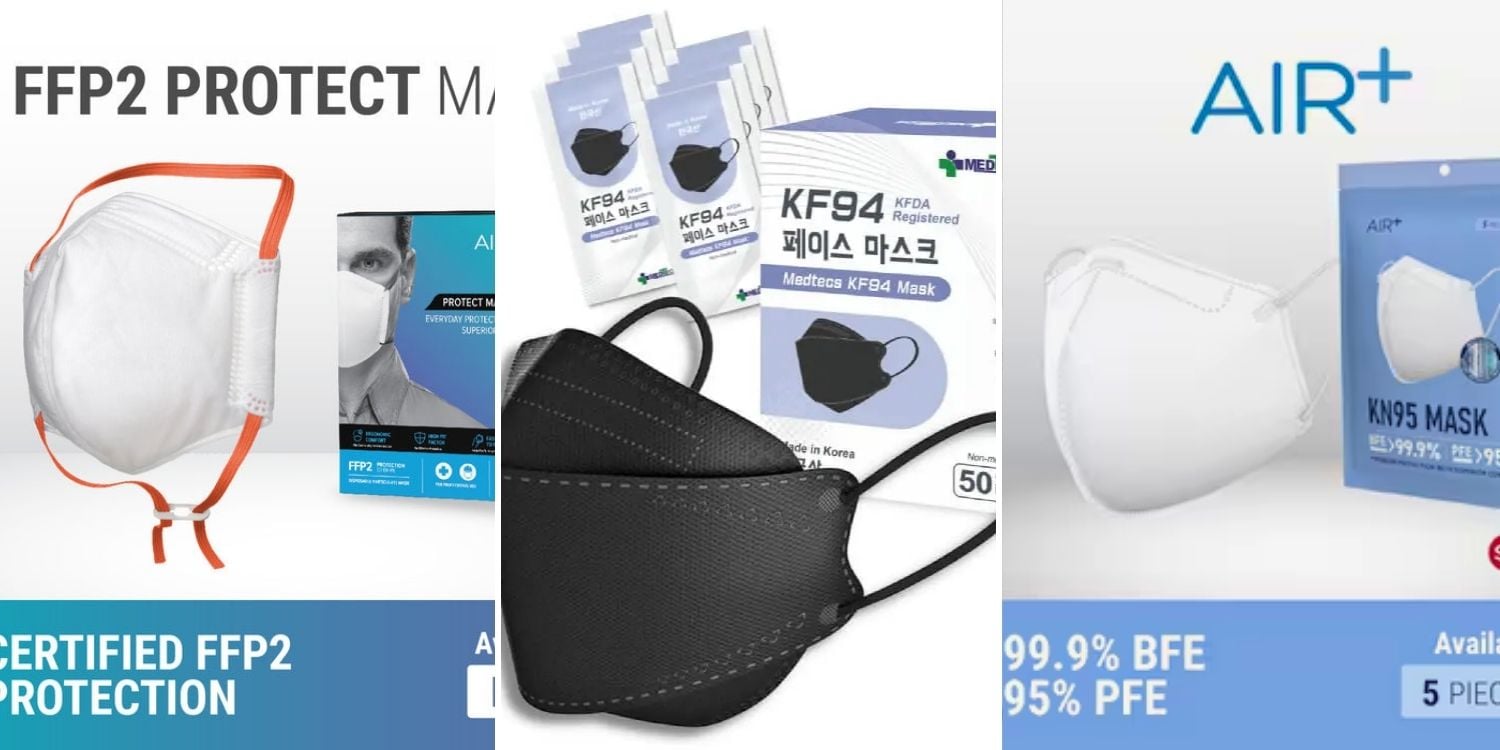
Source: Airplus website, Medtecs website, Watsons website
When should you mask up for the haze?
The answer depends on more than whether the skies look grey. Air quality readings, how long you spend outdoors and your health all matter.
Singapore uses the Pollutant Standards Index (PSI) to indicate overall air quality. A 24-hour PSI reading of 101 to 200 is considered Unhealthy, while readings above 300 are Hazardous.
One-hour PM2.5 readings, on the other hand, track concentrations of fine particulate matter measuring 2.5 micrometres or less in diameter over a shorter period.
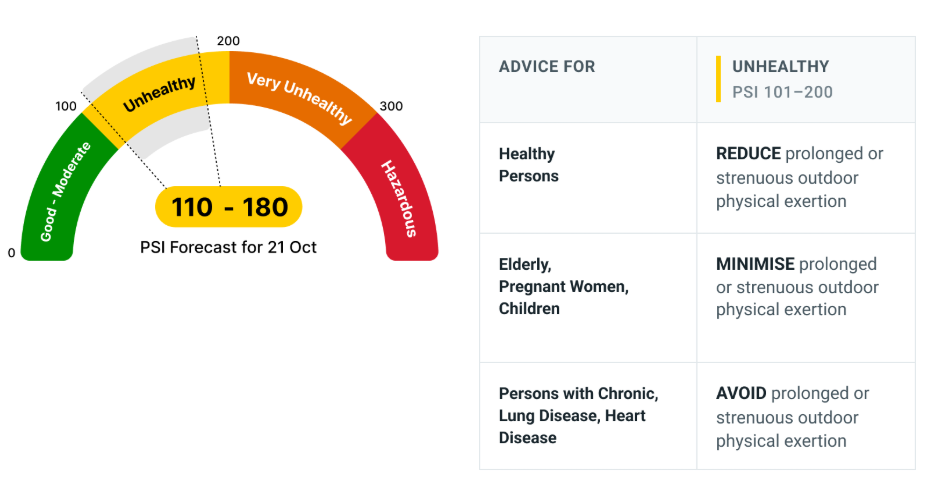
Source: National Environment Agency website
According to Dr Koh, N95 masks or equivalent respirators are generally recommended when air quality reaches dangerous levels, such as when the 24-hour PSI exceeds 300 or one-hour PM2.5 concentrations enter the High or Very High bands.
For vulnerable people who must go outdoors, respiratory protection becomes particularly important. Healthy individuals may also need it during prolonged outdoor exposure under these conditions.
However, an N95 is not necessary for every short trip outside.
During periods of less severe haze, at the Unhealthy band of 101-200, healthy individuals can focus on reducing prolonged or strenuous outdoor activity and following the latest advisories from the National Environment Agency (NEA).
People with chronic heart or lung conditions, older adults, pregnant women and children should take extra care as they may be more susceptible to the effects of air pollution.
On 14 Oct, after the hourly PM2.5 levels reached the Very High range and the 24-hour PSI forecast was at risk of entering the Very Unhealthy range, authorities began distributing N95 masks to more vulnerable individuals.

Source: @gongyuanmama on Reddit
When pollution levels become very high, staying indoors is often more effective than relying on a mask alone.
An N95 mask doesn’t protect you from everything
While an N95 mask may filter fine particles, it is not a universal shield against all pollutants.
Dr Koh noted that these respirators do not filter out toxic gases such as sulphur dioxide and carbon monoxide, or volatile organic compounds that may be present in smoke or chemical haze.
This means that even a properly fitted N95 mask cannot eliminate every risk associated with polluted air.
According to Dr Koh, the most effective precaution when air quality drops is to reduce exposure.
“Practical steps include staying indoors as much as possible with windows and doors shut. Air purifiers sized appropriately for the room, with high-efficiency particulate air (HEPA) filters should also be used,” she added.
Individuals should also avoid strenuous outdoor exercise.
If you need to exercise, consider moving your workout indoors until conditions improve.
Your N95 is only as good as its fit, and layering masks lowers effectiveness
Even the right mask can offer less protection when not fitted properly.
An N95 works by directing inhaled air through its filtration material. If there are gaps between the mask and the face, polluted air can bypass the filter.
“The fit of the N95 mask is key. It needs to cover the nose and chin snugly, with the nose clip pressed firmly against the bridge of the nose to eliminate gaps,” Dr Koh said.
“Exhaling and inhaling sharply to check for air leaks around the edges as a seal check should be performed after putting on the mask every time.”
Facial hair can also prevent the respirator from sealing properly, reducing its effectiveness.
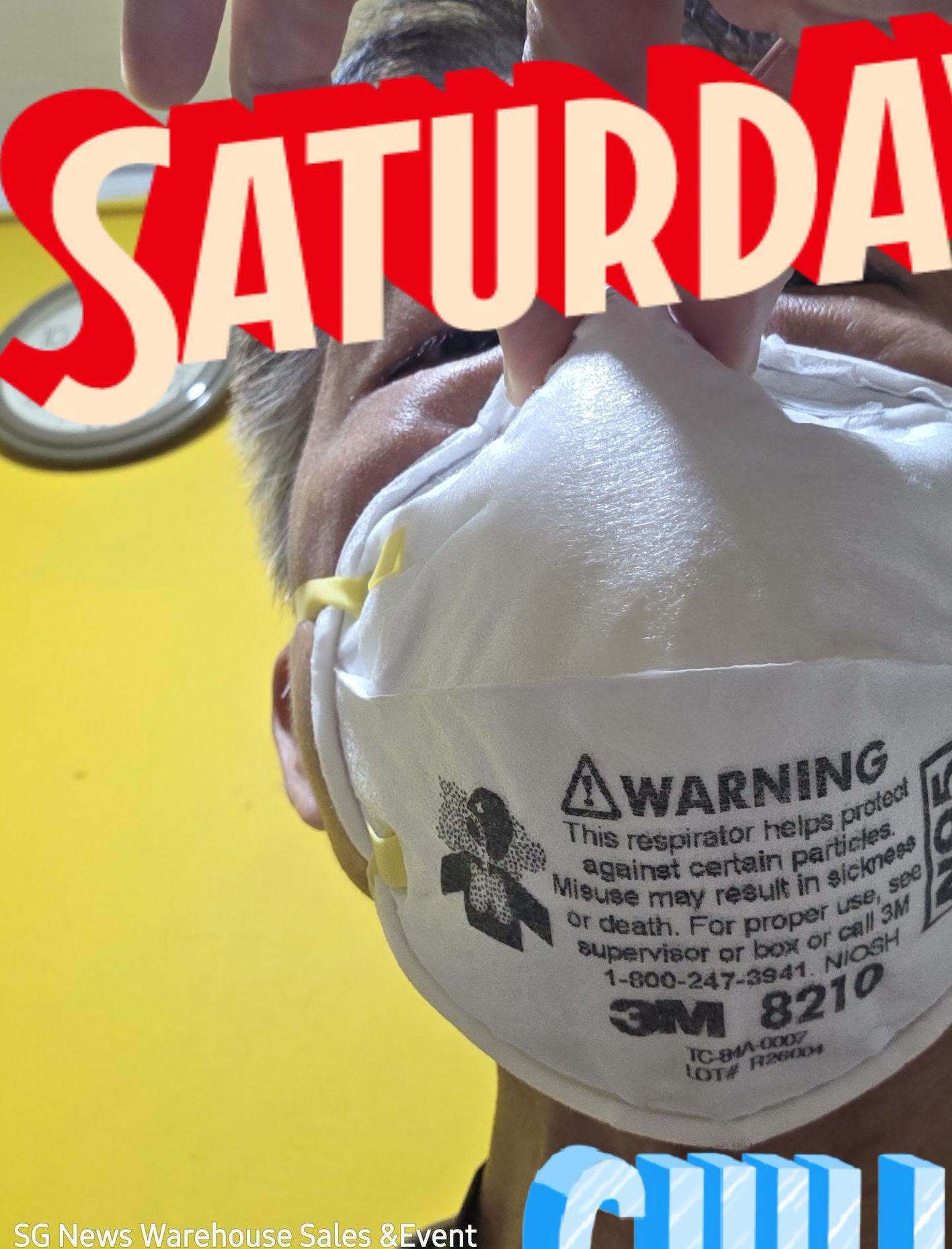
Source: SG News Warehouse Sale & Events on Facebook, for illustrative purposes only
If you have kept a box of N95 masks from a previous haze episode, check the expiry date and inspect each mask for tears, deformation or other damage.
The straps should remain elastic, and the nose clip should be intact.
Wearing two masks, such as placing a surgical mask beneath an N95, does not provide better protection either.
“Layering masks does not allow the N95 mask to seal well, lowering its overall effectiveness,” Dr Koh said.
Can wearing an N95 for too long be harmful?
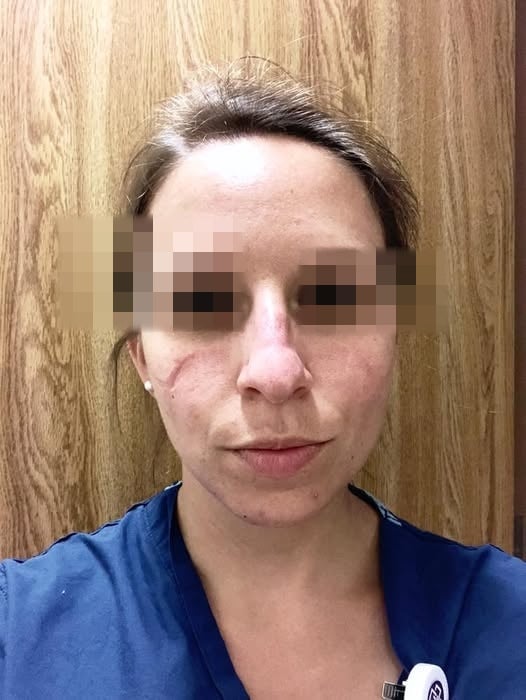
Although N95 respirators offer better filtration, wearing one for extended periods can be uncomfortable.
Dr Koh said the resistance created by the filtration material increases the effort required to breathe. Prolonged use may also cause heat and humidity to build up, leading to fatigue, headaches and skin irritation.
Source: Facebook, for illustrative purposes only
Older adults, pregnant women and people with chronic respiratory or cardiovascular conditions should consult their doctors before using an N95 if they have concerns about whether they can tolerate it.
“Anyone experiencing breathing difficulty or acute discomfort should immediately take a break from wearing the mask,” Dr Koh said.
For those who struggle to wear one, staying indoors and reducing outdoor exposure are important alternatives. People with existing medical conditions should seek personalised advice rather than assuming that a respirator is suitable for them.
Haze is not an allergy, but can make allergy symptoms worse
The effects of haze can begin with what seems like a minor irritation: an itchy throat, watery eyes or a nose that will not stop running.
Fine particles and chemical irritants can inflame the mucous membranes lining the upper airways.
Dr Koh added that people with allergic rhinitis, nasal congestion or existing sinus problems may experience more pronounced symptoms.
Dr Ong Yew Kwang, a medical director and senior consultant ENT specialist, similarly noted in an article published on 2 Oct that haze can aggravate nasal inflammation and make existing allergy and sinus symptoms more noticeable.
“Haze is not an allergy itself, but airborne pollutants can aggravate nasal inflammation and make existing symptoms more noticeable,” he wrote.
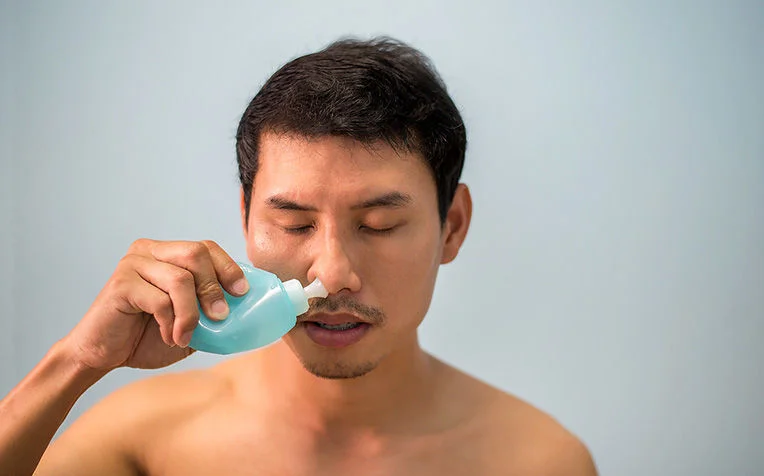
Saline nasal sprays or rinses may help flush trapped particles from the nasal passages.
Anyone using a nasal rinse should follow the product instructions and use an appropriate water source rather than untreated tap water.
Source: Health Xchange website, for illustrative purposes only
When should you seek medical attention?
Not every bout of sneezing during the haze requires a doctor’s visit. But symptoms that persist after you move indoors and rest should not be ignored.
Dr Koh advised seeking medical attention for warning signs such as persistent chest pain or tightness, severe shortness of breath, sudden wheezing, dizziness, confusion, fainting or severe coughing fits.
Children, older adults and people with existing respiratory or cardiovascular conditions should consult a doctor early if they feel unwell.
Ultimately, choosing the right mask can help reduce exposure to fine haze particles, but it is only one part of protecting your health.
Check the latest PSI and one-hour PM2.5 readings, limit time outdoors when advised, and keep indoor air as clean as possible.
When the haze becomes severe, the safest choice may not be a better mask, but spending less time breathing the polluted air in the first place.
Also read: Ang Mo Kio residents face long queues for N95 mask collection, concerns over haze rise
Have news you must share? Get in touch with us via email at news@mustsharenews.com.
Featured image by MS News and adapted from Dinesh Vasu Dash on Facebook.