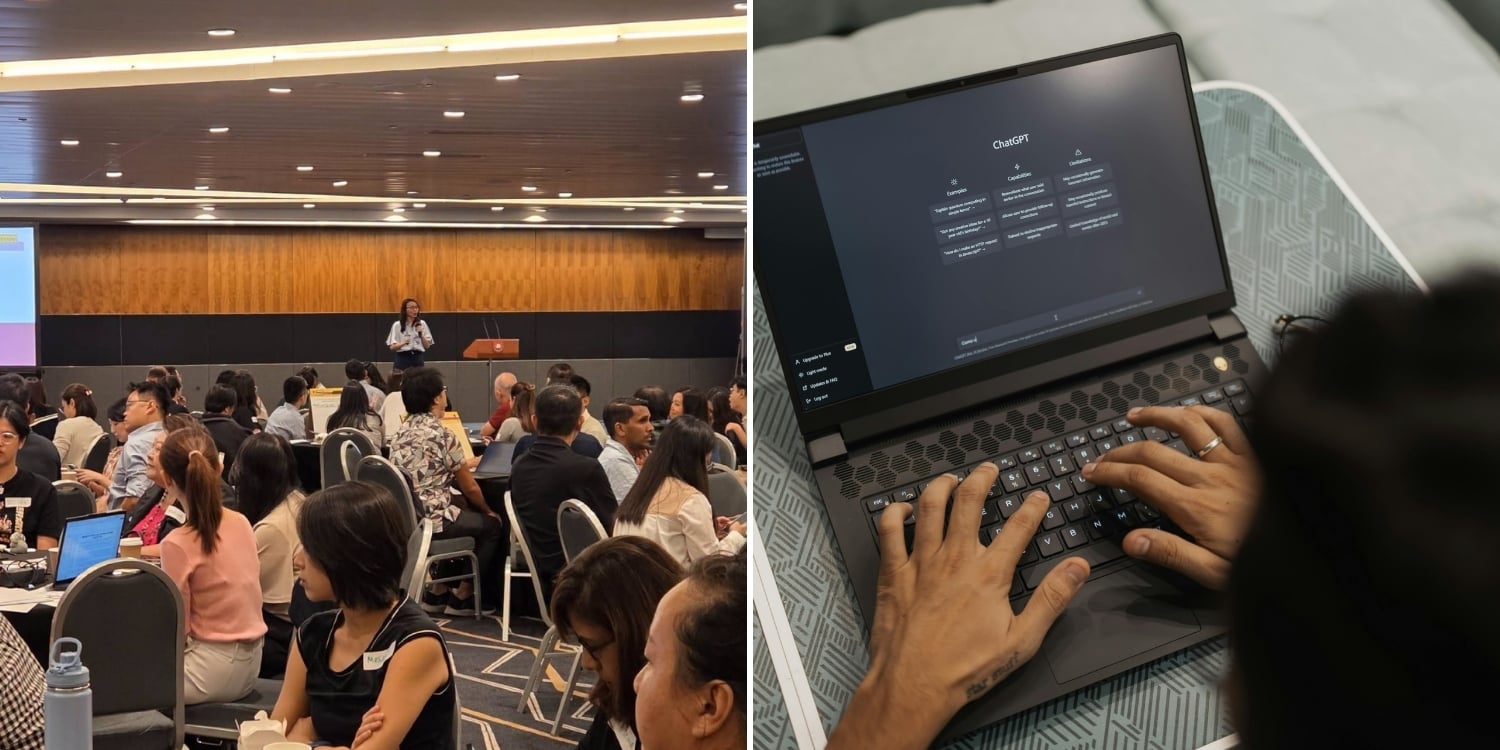

Singapore teachers to complete one compulsory AI training module by end 2026, two others highly recommended to complete by end 2027
All teachers in Singapore’s primary and secondary schools and junior colleges (JCs) are to take training modules on artificial intelligence (AI) by the end of 2027.
This comes after the Ministry of Education (MOE) launched its Teacher AI Literacy Professional Learning Roadmap in August.
The roadmap lays out the knowledge and skills teachers need as AI becomes more common in education.
Source: MOE website
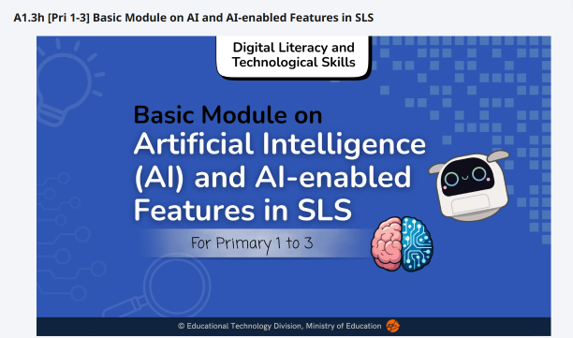
The first module covers the basics of AI, including ethical considerations, safety and responsible use.
Teachers will have to complete this by the end of 2026.
The remaining two modules, on the other hand, cover topics such as appropriate use of AI across different age groups, how AI can affect students’ thinking, and ways AI can support deeper learning.
Teachers are encouraged to complete these by the end of 2027.
Each module is conducted online and takes around 30 to 45 minutes to finish.
Teachers to learn when AI should, and should not, be used
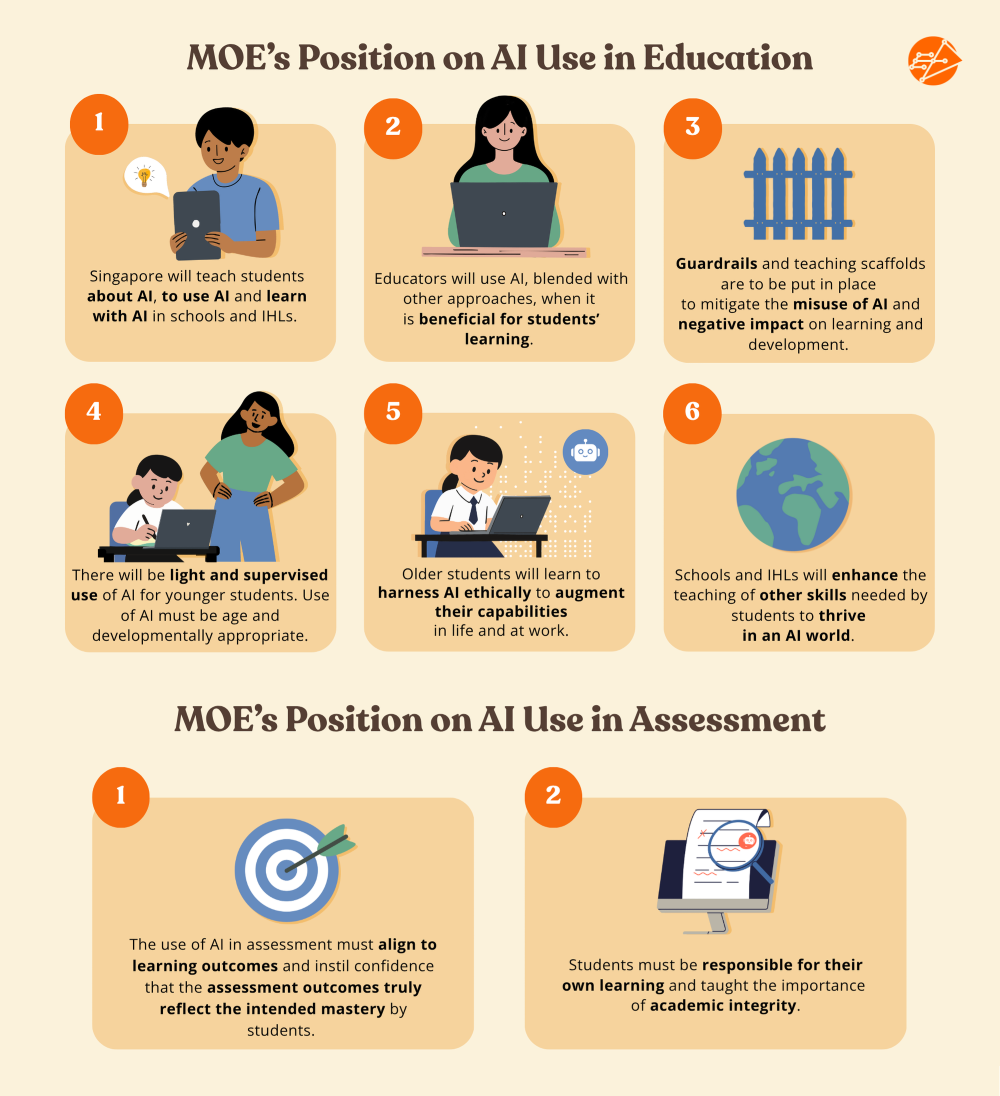
The compulsory modules are part of MOE’s broader efforts to ensure AI enhances learning rather than becomes a shortcut for students.
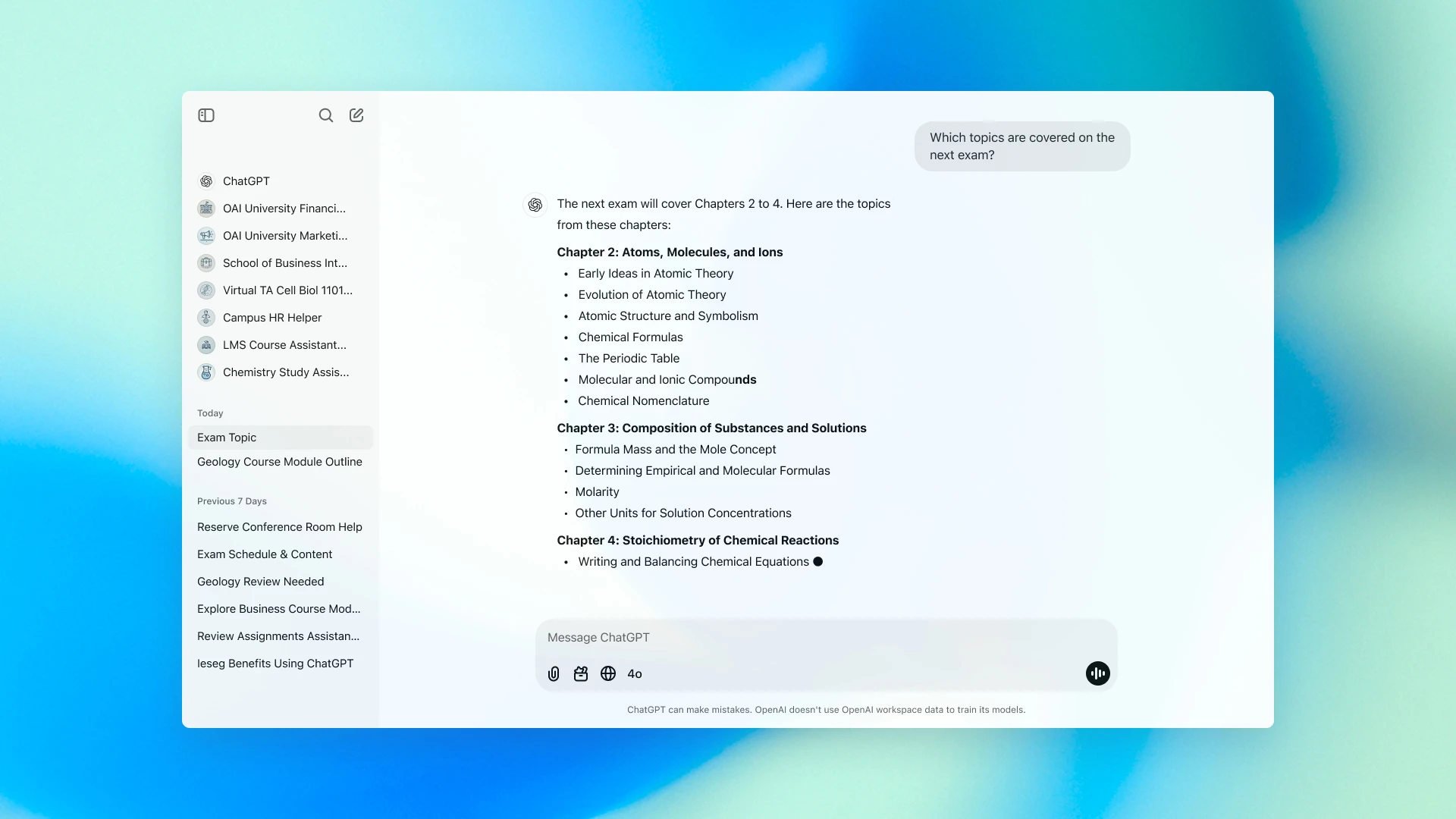
According to The Straits Times (ST), Samuel Tan, lead specialist at MOE’s Educational Technology Division, said the roadmap was developed as teachers began experimenting with AI tools after generative AI tools like ChatGPT became widely available in late 2022.
Source: MOE website
The roadmap aims to give teachers clearer guidance on the knowledge, skills and ethical considerations needed when using AI in education. This is while allowing individual schools to decide how best to support their teachers’ learning.
Beyond the compulsory modules, teachers will also be able to take more advanced, subject-specific AI courses from 2027.
Teachers can also learn from colleagues who have already experimented with AI through sharing sessions and learning networks organised by the Academy of Singapore Teachers (AST) and school clusters.
Source: ChatGPT website
AI to be progressively introduced to students
MOE has said AI will be introduced progressively in schools, taking into account students’ age, development and learning needs.
For Primary 1 to 3 pupils, learning remains largely hands-on and print-based.
Students may learn about what AI is and how it appears in everyday life, but will not be tasked with using chatbots.
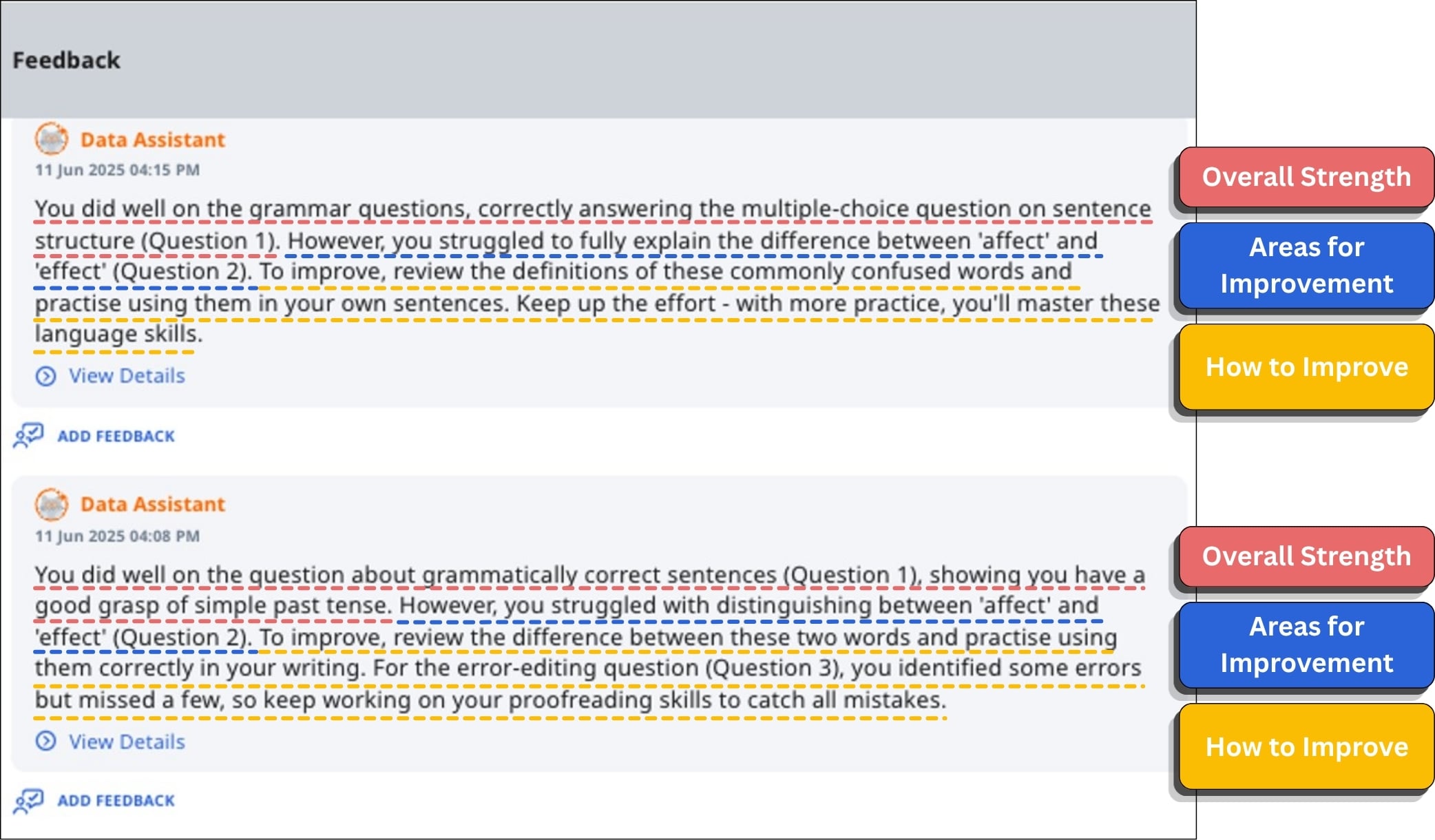
From Primary 4 onwards, students can begin using AI tools specifically designed for education, particularly those in the Singapore Student Learning Space (SLS), under teacher supervision.
MOE assured that AI-enabled features in the Singapore Student Learning Space (SLS) include “guardrails” to support responsible use.
In secondary schools and pre-university education, students progressively take greater ownership of their AI use in learning.
They are taught to evaluate AI-generated answers, check whether the information is accurate, acknowledge when AI has been used where required, and maintain academic integrity.
Source: MOE website
In related news, students and staff from the National University of Singapore (NUS) will get access to ChatGPT Edu and Codex, OpenAI’s coding agent.
Teachers still key despite rise of AI
MOE’s new roadmap comes amid concerns that students could become overly reliant on AI, using it as a shortcut to fulfil their requirements instead of developing their own reasoning and critical-thinking skills.
Candice Seet, a master teacher for history, said teachers can design lessons that require students to question AI-generated information and verify it against trusted sources, ST reported.
This can help develop students’ ability to reflect on how they think and learn.
“It’s important that they engage in deep reflection, especially when they’re using AI as part of their learning experience… And teachers play a critical role in helping students exercise discernment,” she said.
Ms Seet said she does not expect AI to dominate classrooms even as teachers become more familiar with the technology.
Instead, she expects educators to become better at deciding when AI can genuinely improve a lesson and when it is better left out.
Source: Matheus Bertelli from Pexels, for illustrative purposes only
“There are some things that we can’t outsource to AI, such as discernment, reasoning and exercising judgment,” she said.
Teaching is fundamentally a human endeavour
As of 2024, there were 29,605 teachers across Singapore’s primary schools, secondary schools and JCs.
MOE said its approach to AI in education is part of the broader EdTech Masterplan 2030, which aims to use technology to complement teaching while preparing students for a rapidly changing world.
Also read: NUS students & staff to get free ChatGPT Edu & Codex access for learning, research & coding
NUS students & staff to get free ChatGPT Edu & Codex access for learning, research & coding
Have news you must share? Get in touch with us via email at news@mustsharenews.com.
Featured image courtesy of Ministry of Education, Singapore on Facebook and Matheus Bertelli from Canva. Both pictures for illustrative purposes only.