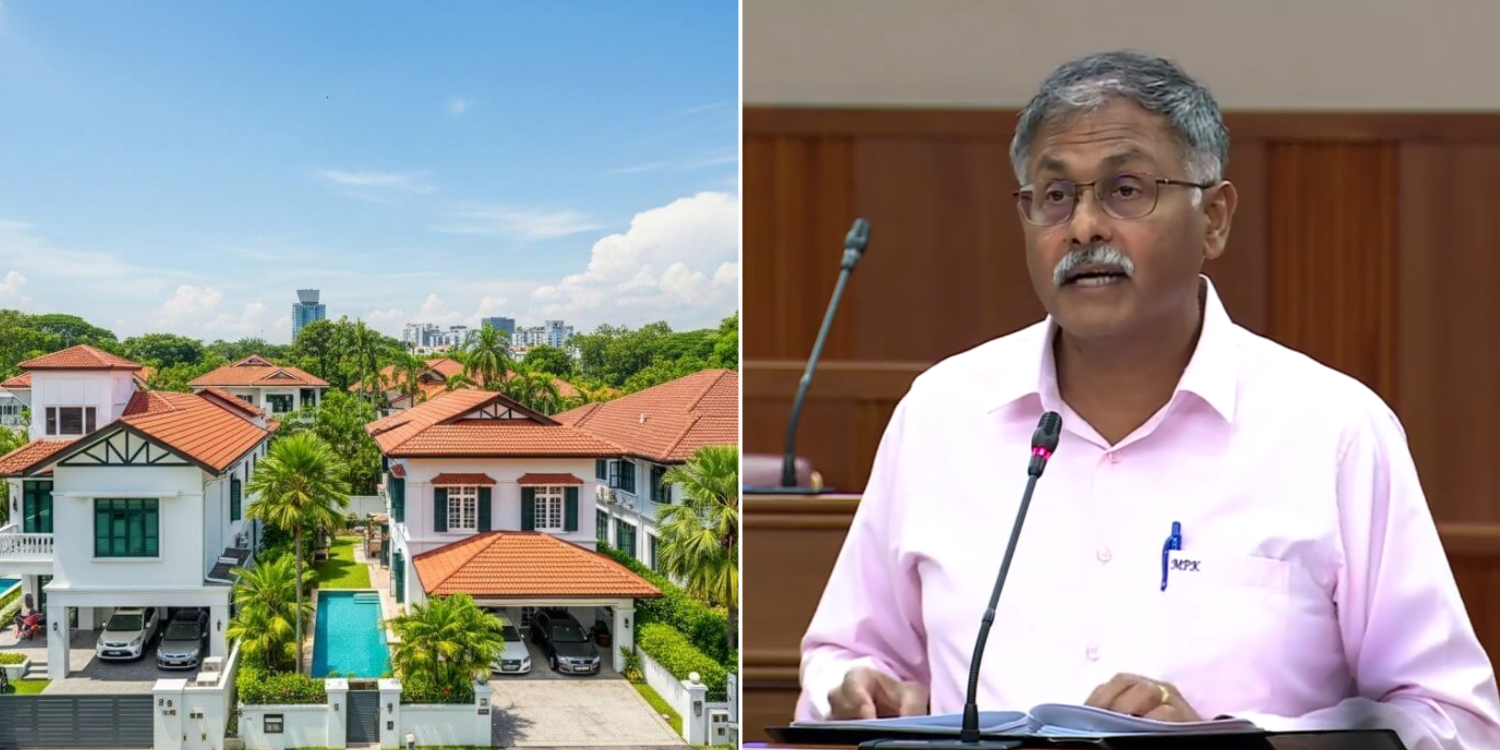

Rent fraud investigation brought up in Parliament
On 4 Nov, Senior Minister of State for Law Murali Pillai spoke in Parliament about a rent fraud case.
He was responding to questions about landlord safeguarding measures against uncooperative tenants.
The case involved an American, Anthony Thomas Price, who used shell companies to rent three landed homes in Singapore for him and his family to live in.
Mr Pillai said that the court found that Price had devised a scheme to rent the house without intending to pay rent.
Previously, Price and his companies have also been involved in two tenancy disputes over landed homes.
The offence of cheating is punishable with a prison sentence of up to 10 years, and a fine or caning, or both.
“The official receiver is also investigating possible fraudulent trading and wrongful trading offences, and the Accounting and Corporate Regulatory Authority is also looking into potential breaches of the Companies Act by the relevant entities and individuals,” said Mr Pillai.
He added that as investigations were ongoing, he would not say more.
Nothing I have said should be taken as a view on whether an offence should be committed.
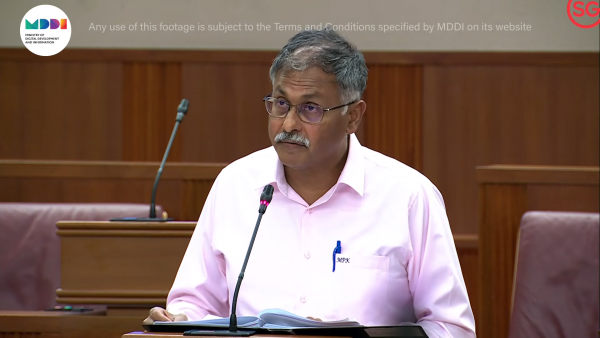
Source: MDDI Singapore via YouTube
Background behind Price’s fraudulent actions
According to a report by The Straits Times, Price was a director and shareholder of Noranth Ventures.
Between 2019 and 2026, he used the company name and its subsidiary Bundleluxe to enter separate agreements with different landlords.
After moving in, Price stopped paying rent. He embroiled his landlords in legal processes to stall eviction.
Price had used Noranth Ventures, a company with $200 in paid-up capital, to rent a semi-detached house in Lengkong Dua in Kembangan. The landlords were an elderly couple in their 80s.
He paid half the deposit and only one month’s rent in May.
Price proceeded to file a court application to stop his landlords from repossessing the property.
On 7 Oct, District Judge Chiah Kok Khun ruled that Price had clearly breached several terms of the tenancy agreement, calling it a “plain abuse of process of the court”.
The defendants were fully entitled to their counterclaim for recovering the property, unpaid rent with interest and other outstanding sums.
Balancing fraud prevention with genuine transactions
Louis Chua, a member of the Workers Party and a Member of Parliament for the Sengkang GRC, was present.
He asked Mr Pillai whether the Ministry of Law would consider expediting the repossession of properties for landlords if tenants failed to pay rent for a specified period of time, especially with a company-signed tenancy agreement.
Mr Chua also requested figures on the number of residential tenancy claims involving companies that failed to pay rent, and how many of the cases involved unrecovered judgment sums.
In response, Mr Pillai stated that simplified processes already exist for residential leases of up to two years.
For instance, the Small Claims Tribunals (SCT) can order payment of rental arrears, as well as vacant possession if it is within the Small Claims limit.
A landlord with a clear case can also obtain vacant possession without a full trial, as seen in Price’s case.
Under the Distress Act, the landlord can go to court without notice to claim a raise in rent for subsisting tenancies.
The court can issue a writ of distress to distrain the tenant’s property, allowing the assets to be subsequently sold.
Mr Pillai maintained that it was unfair to adopt property repossession as the default response to failure to pay rent.
Some tenants might be facing genuine financial hardship or have legitimate reasons to dispute rental claims.
“Not every tenant who falls behind on rent is acting in bad faith,” said the Senior Minister of State for Law.
He also shared that the courts do not track data on companies that failed to pay rent or whether judgment sums are recovered.
Based on data from the SCT filing system, there were about 1,100 to 1,840 claims about residential leases each year from 2021 to 2025.
Of these, about one to two per cent involved cases where the claimant indicated “rental arrears”, and the respondent party was a company or other entity.
Safeguarding measures to hold tenants accountable
Representing Yio Chu Kang GRC, Mr Yip Hon Weng enquired about the possibility of holding company directors personally liable for unpaid rent, or mandating personal guarantees when companies enter residential tenancy agreements.
He also asked about measures to prevent individuals from exploiting corporate structures to delay eviction and property recovery.
Mr Pillai stated that many companies lease residential properties for legitimate reasons. This included housing employees posted to Singapore.
A blanket rule would take away this flexibility.
He said: “It would restrict genuine arrangements landlords and tenants can enter into and impose unnecessary burdens on legitimate transactions.”
Furthermore, Mr Pillai said that such requirements might not deter individuals determined to commit fraud. They could appoint a director with no assets to provide the guarantees.
He reiterated that the company is liable for rent rather than directors or shareholders.
However, the court can hold individuals personally responsible for a company’s debt in cases such as fraudulent or wrongful trading.
Mr Pillai encouraged landlords to conduct their due diligence before entering into a tenancy agreement.
For instance, the Council for Estate Agencies (CEA) has a checklist for residential rental transactions that is publicly available online. Before renting to a corporate tenant, landlords must verify the company’s registration details, legal existence and ownership structure with the Accounting and Corporate Regulatory Authority (ACRA).
Also read: S’pore HDB landlord terminates tenancy after tenant allegedly breaches visitor rules repeatedly
S’pore HDB landlord terminates tenancy after tenant allegedly breaches visitor rules repeatedly
Have news you must share? Get in touch with us via email at news@mustsharenews.com.
Featured image adapted from Penang Travel Tips (left) and MDDI Singapore via YouTube (right).