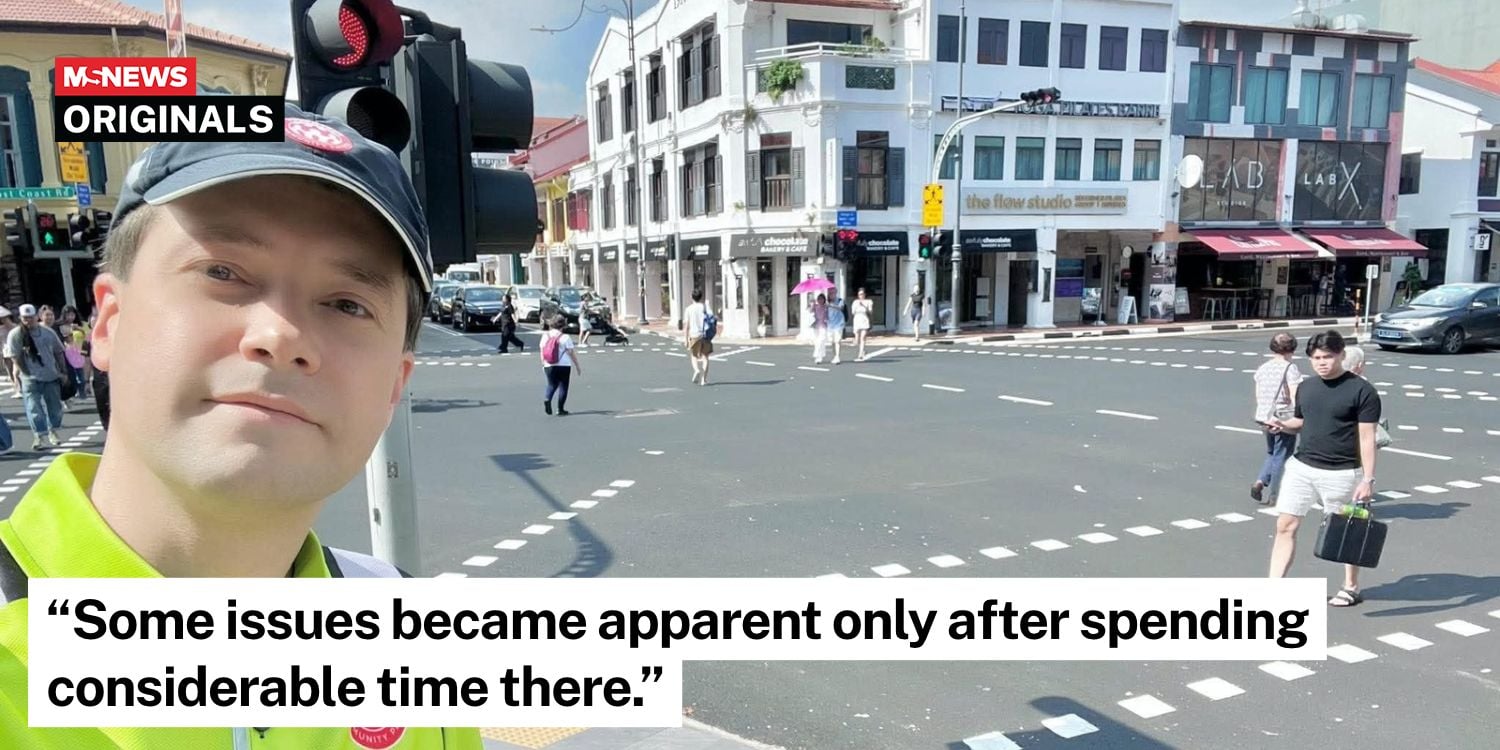

Volunteer conducts 5-hour patrol at new Joo Chiat scramble crossing
A volunteer patroller in Singapore has offered practical suggestions to improve the new scramble crossing at the junction of Joo Chiat Road and East Coast Road.
The Land Transport Authority (LTA) recently launched a three-month trial for the pedestrian crossing arrangement.
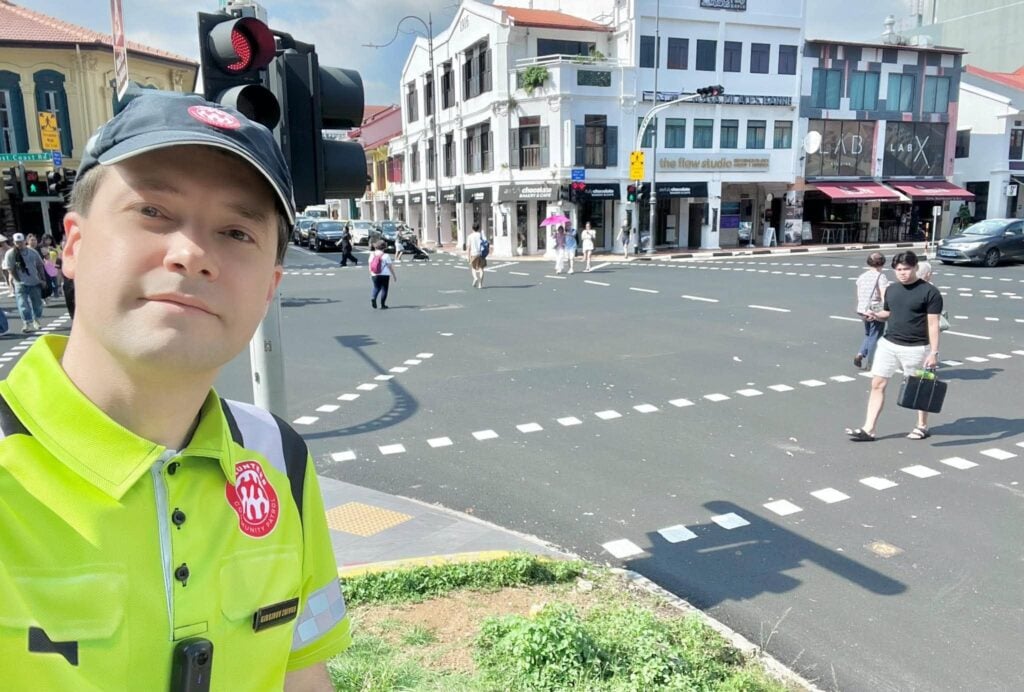
Courtesy of Zhivko Girginov
Zhivko Girginov, founder of Volunteer Community Patrol (VCP), decided to patrol and observe the junction, spending five hours doing so on his own from 3pm to 8pm.
He uploaded a post to the VCP page on Facebook on 18 Nov, outlining his actionable feedback from his day spent observing the junction to enhance safety and convenience for pedestrians and motorists.
Key safety and operational concerns
In the post, Mr Girginov listed seven key points of safety and operational concerns he noticed during his observation.
- Review the measured 30-second pedestrian green phase against actual crossing times, especially for slower-moving pedestrians and intersecting cycling paths.
- Increase the safety clearance interval before vehicular movement starts from five seconds to seven seconds.
- Improve the visibility of the “No Right Turn” sign using an illuminated LED border or advance warning signage.
- Install a countdown timer showing the remaining waiting time so pedestrians can plan their movements and wait in the shade.
- Provide canopies or awnings at exposed pedestrian waiting areas without blocking lines of sight or walking paths.
- Manage corner congestion caused by parked bicycles, repair damaged pavement, and designate safer roadside drop-off points.
- Enhance nighttime lighting in the centre of the crossing and verify camera effectiveness under low-angle sunlight.
Already had questions in mind regarding the new crossing
MS News was also able to speak with Mr Girginov for further insight.
He explained that he went into this effort “already [having] several questions in mind”.
Mr Girginov anticipated that there would be some issues surrounding the crossing duration and how pedestrians would interact with one another when moving diagonally from different directions.
He was also concerned about how the new traffic arrangement would affect motorists.
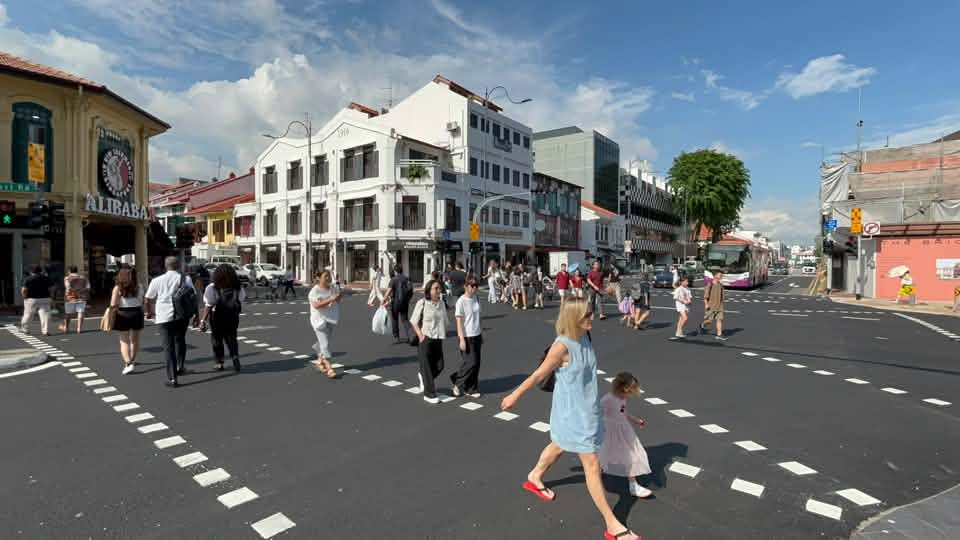
Courtesy of Zhivko Girginov
However, he stressed that his approach was “to observe the junction as a whole, identify potential problems as they emerged, assess their significance and consider possible improvements”.
“I did not follow a rigid checklist,” he said.
Mr Girginov observed that “some issues became apparent only after spending considerable time there”.
He cited how the time of day and the position of the sun had a dynamic impact on visibility in the crossing.
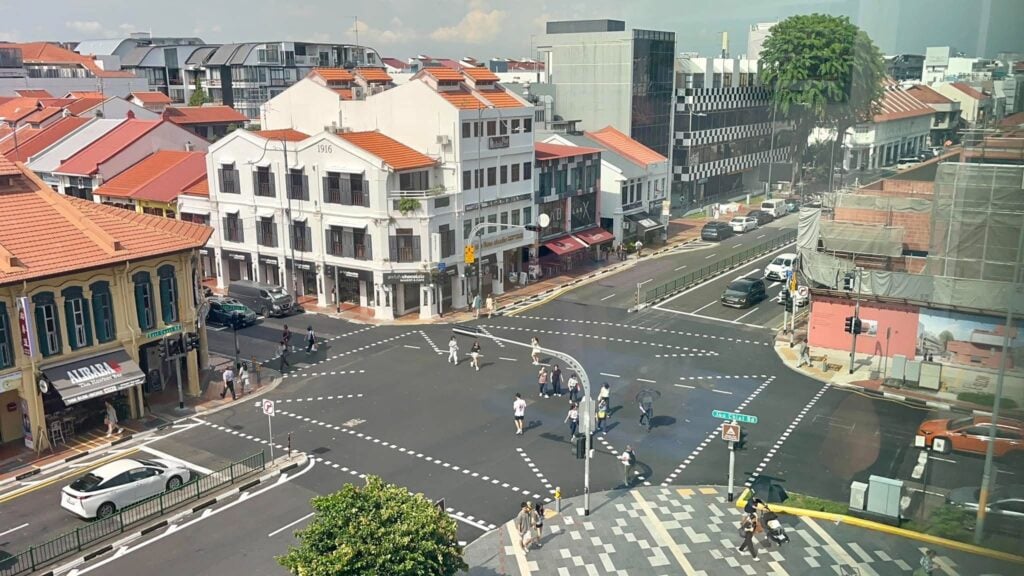
Courtesy of Zhivko Girginov
Elderly pedestrian stranded after green light ends
Mr Girginov noted that some pedestrians experienced difficulty when trying to complete their crossing within the signal time.
He measured the traffic signal timings, finding that the green phase lasted just 30 seconds.
Mr Girginov observed that many pedestrians had to hurry or run to complete their crossing as a result.
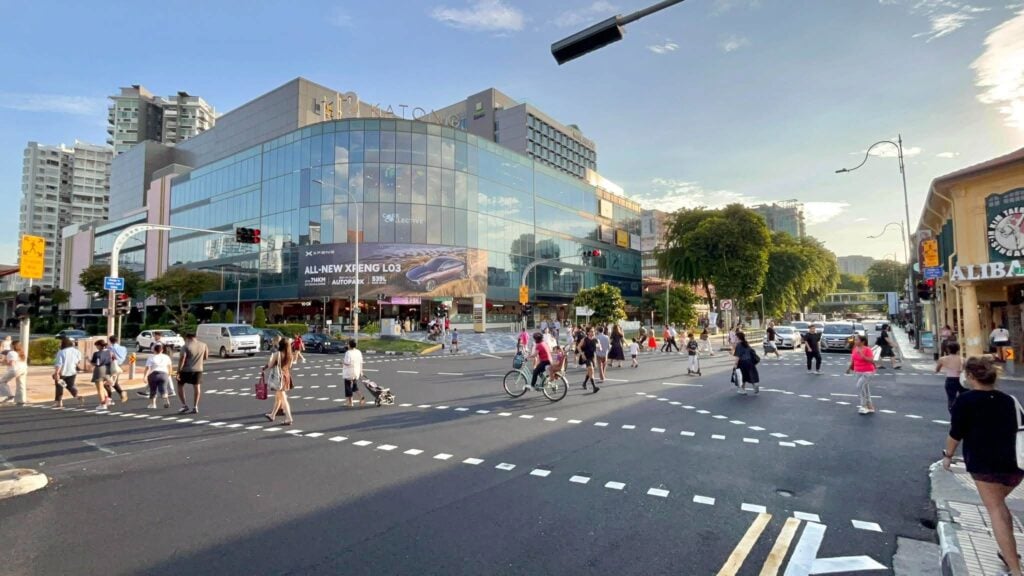
Courtesy of Zhivko Girginov
This proved to be a particularly concerning issue for one pedestrian, a very elderly woman, and was a “striking” experience for Mr Girginov.
He recounted how this woman struggled to finish crossing the road before the traffic lights turned red again.
“The signal had already been red for approximately 10–12 seconds by the time we reached the opposite side,” he explained, sharing that he stepped in to guide the woman across.
“This was a real-life example of why crossing times should be assessed against the needs of slower moving pedestrians.”
Direct interventions and preventive measures
By taking the time to help pedestrians, including providing them shade with an umbrella, Mr Girginov could get a better sense of their experience.
He also “experimented with several ways of communicating with motorists” who were not aware of the new “no right turn” rules.
Mr Girginov found that the sign installed indicating this new rule was relatively small.
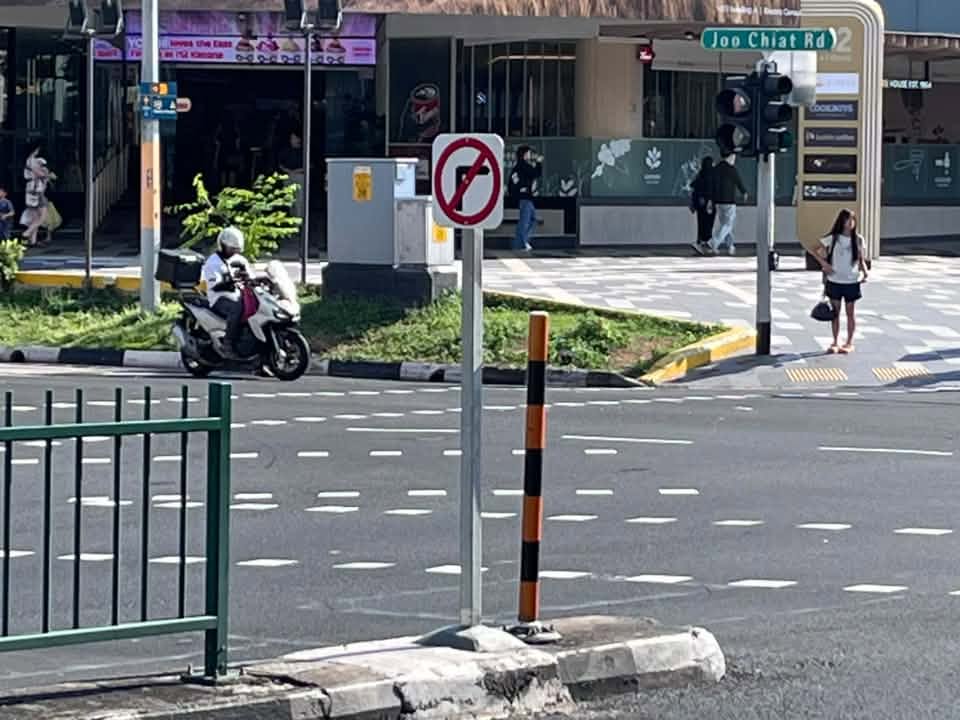
Courtesy of Zhivko Girginov
Thus, he stepped in to signal to motorists himself many times during the patrol, sometimes even quickly speaking directly to drivers of stationary vehicles as he passed them.
Mr Girginov also noted that one corner of the intersection was too small for pedestrians, easily becoming overcrowded.
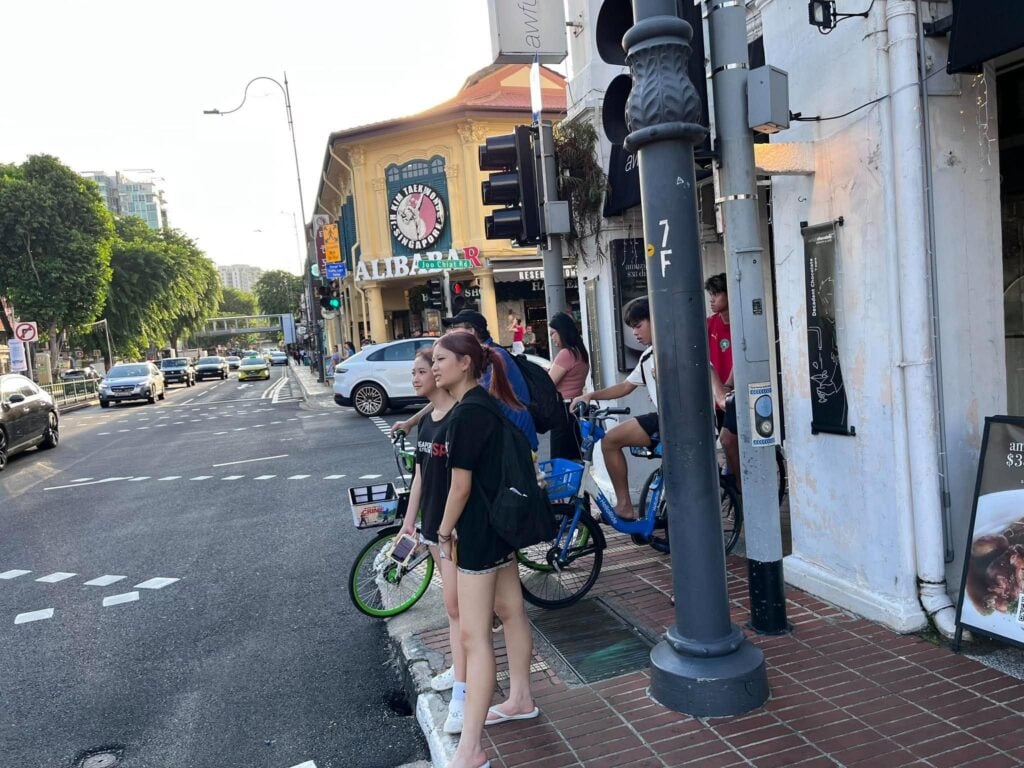
Courtesy of Zhivko Girginov
At the same corner, he spotted that the pavement was damaged and promptly reported it via the OneService app.
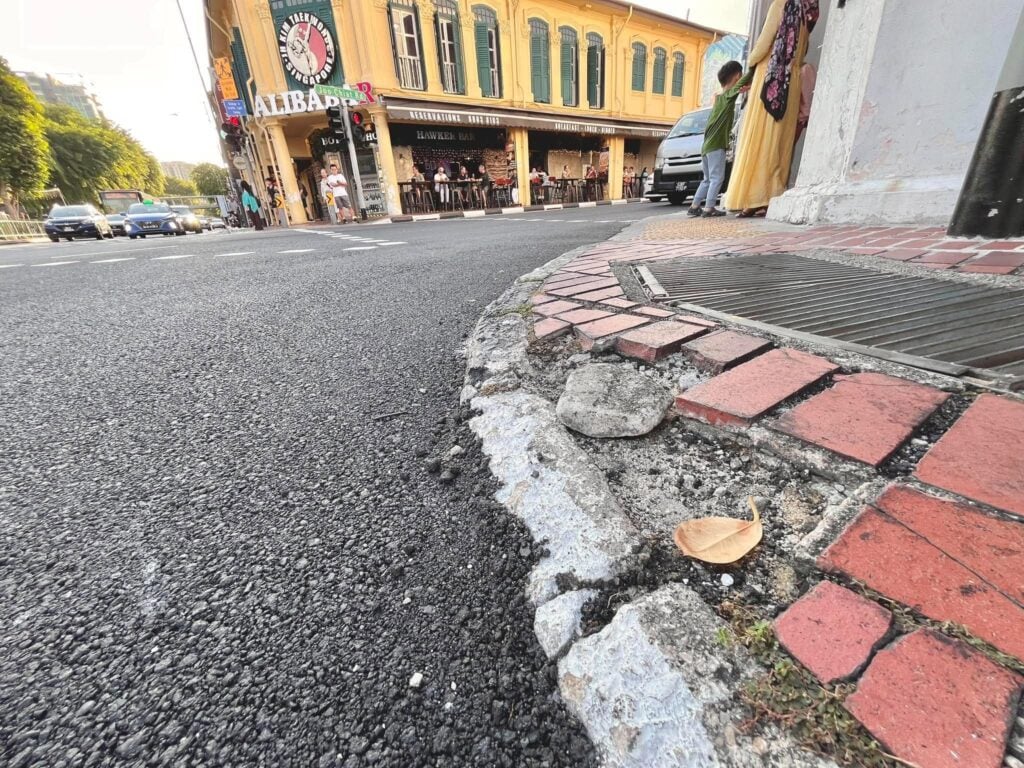
Courtesy of Zhivko Girginov
Feedback already put into action
On 23 Nov, Mr Girginov shared another update on Facebook.
Following his feedback that the road signs for “no right turn” were not visible enough, especially in the dark, he was glad to find that LTA had installed illumination on the signs.
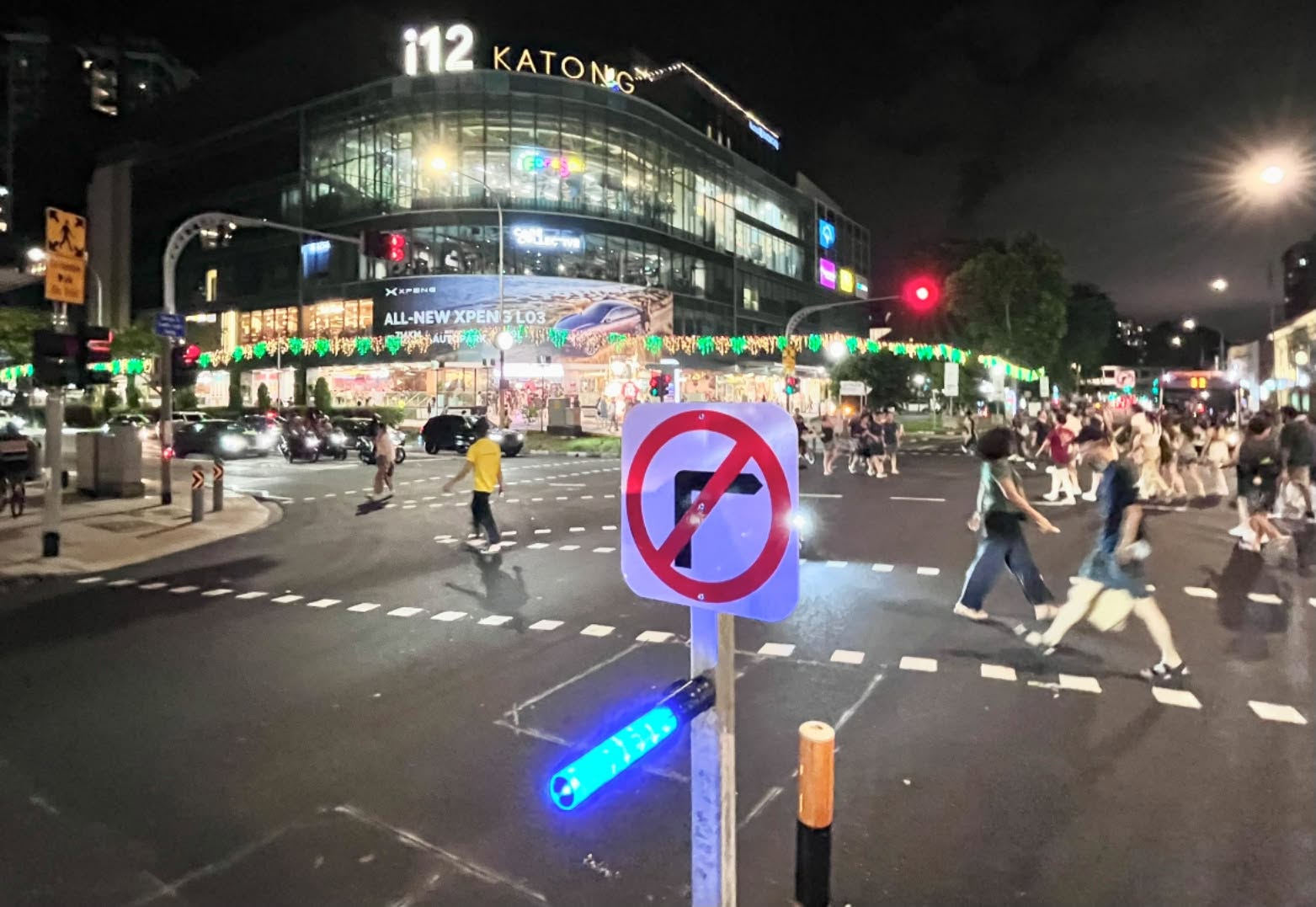
Source: Volunteer Community Patrol on Facebook
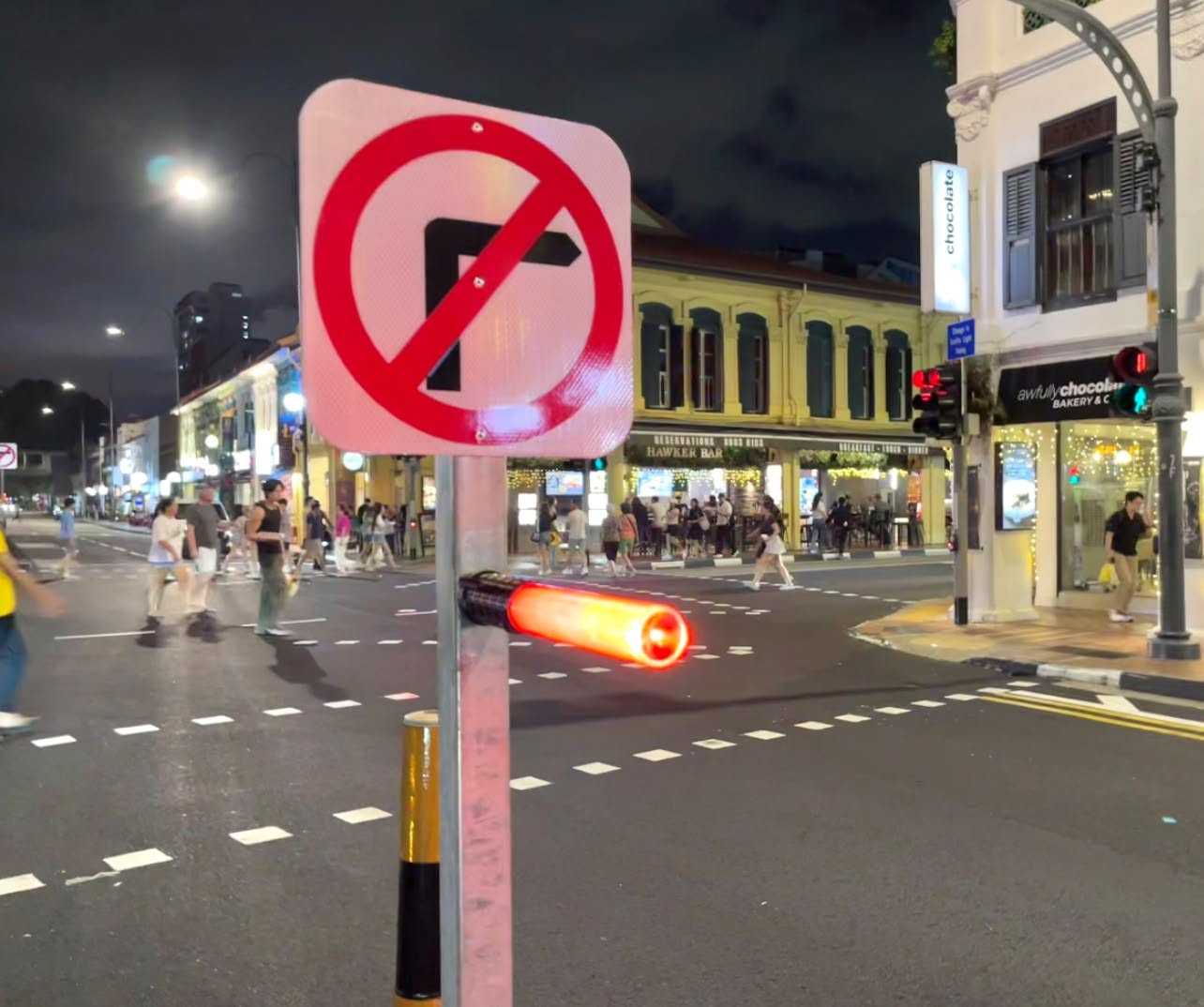
Source: Volunteer Community Patrol on Facebook
Mr Girginov reported that on his second observation of the crossing on 22 Nov, there were no drivers attempting to make a right turn.
He welcomes this positive change in behaviour, and thanks LTA for being quick to bring his feedback on board and implement tangible changes.
Role is demanding, but “not too much” for volunteer
Mr Girginov shared that he had invited others to join his patrol six days beforehand.
However, no one showed up to join him.
He said that had there been more volunteers, tasks could have been divided, allowing them to observe different aspects of the junction simultaneously.
“This might have allowed us to gather more information and produce an even more comprehensive analysis,” he said.
Nevertheless, Mr Girginov described the experience as “demanding”, but also “rewarding”.
Assisting pedestrians, communicating with motorists, and addressing several smaller safety concerns were highly valuable to him.
He was able to turn those observations into a detailed analysis and constructive proposals.
Mr Girginov also said:
[By the way], I’ve also done whole day patrols before (from morning to evening), so 5 hours is not too long for me.
Concept has much potential
Mr Girginov also expressed much enthusiasm for the trial concept.
He supports considering them at suitable locations, albeit not as a one-size-fits-all solution, “because every junction has different characteristics”.
Mr Girginov also opined:
What matters most is not whether Singapore introduces more scramble crossings but whether each arrangement genuinely improves safety, accessibility and convenience while maintaining a reasonable balance with traffic efficiency.
Have news you must share? Get in touch with us via email at news@mustsharenews.com.
Featured image courtesy of Zhivko Girginov.