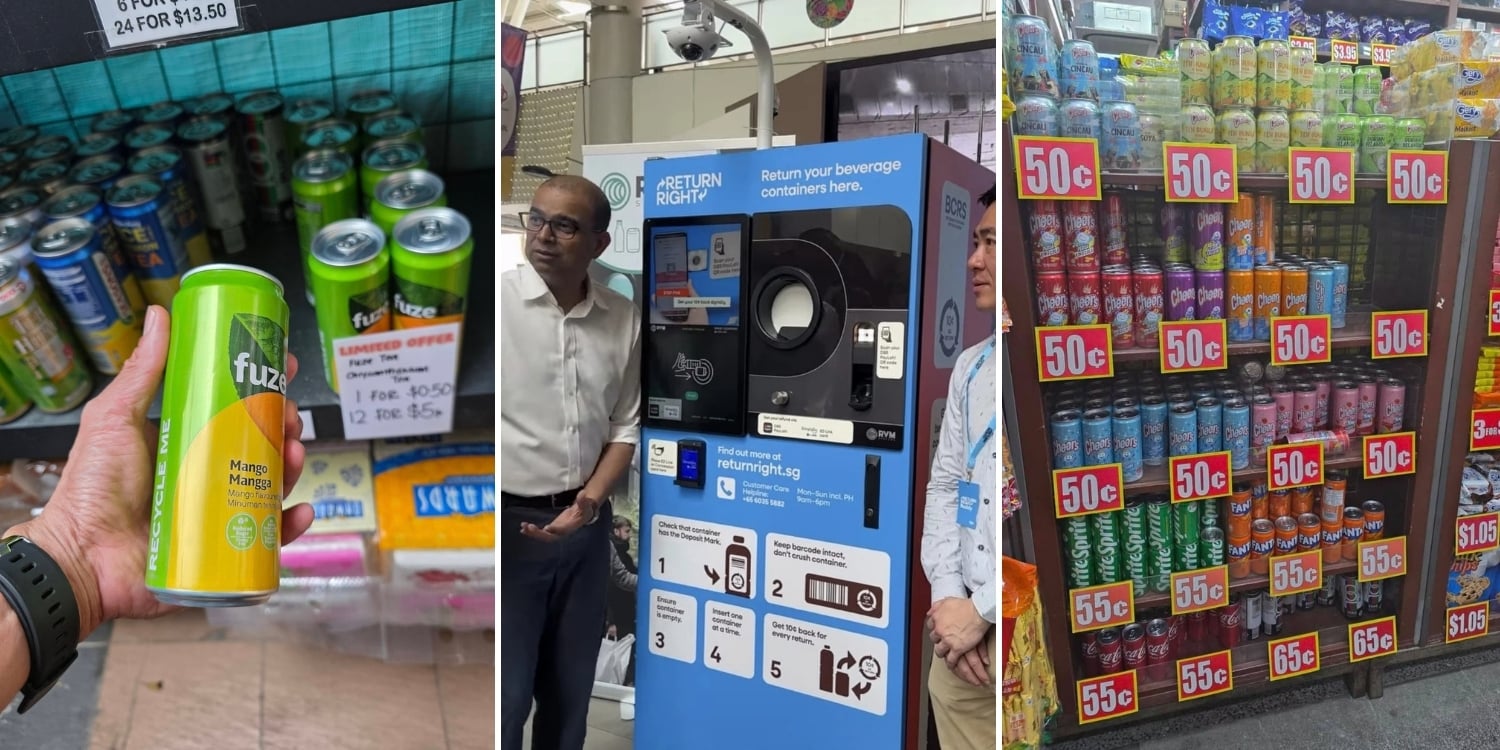

Netizens question whether BCRS could affect small and parallel importers, if intended benefits are ‘proportionate to the economic costs and unintended consequences’
Singapore’s Beverage Container Return Scheme (BCRS) is set to enter full implementation on 1 Oct, but one netizen has questioned whether the scheme could have unintended effects on small and parallel beverage importers and competition.
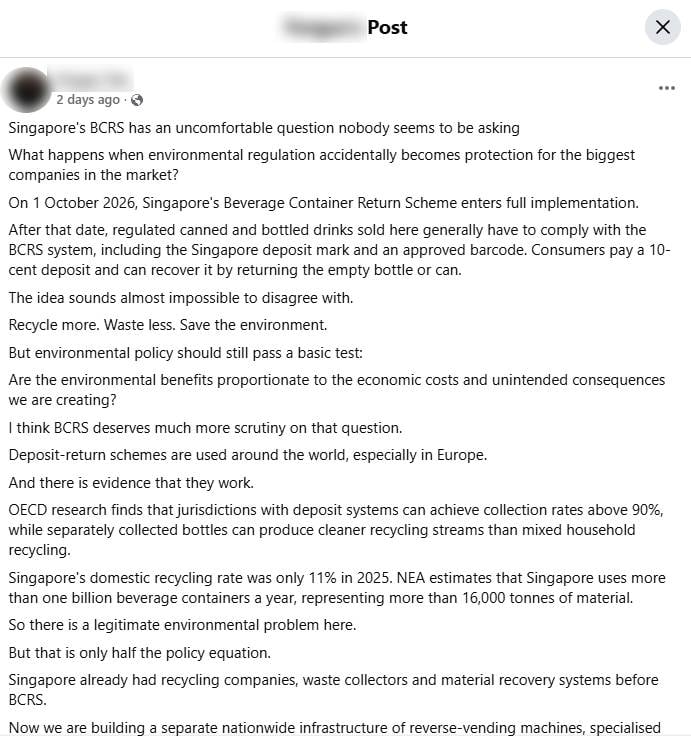
In a Facebook post last Sunday (20 Sept), a netizen argued that the environmental benefits of BCRS should be assessed alongside its economic costs and potential impact on product availability.
The Original Poster (OP) pointed in particular to the compliance costs faced by smaller importers bringing niche beverages into Singapore.
Source: Facebook
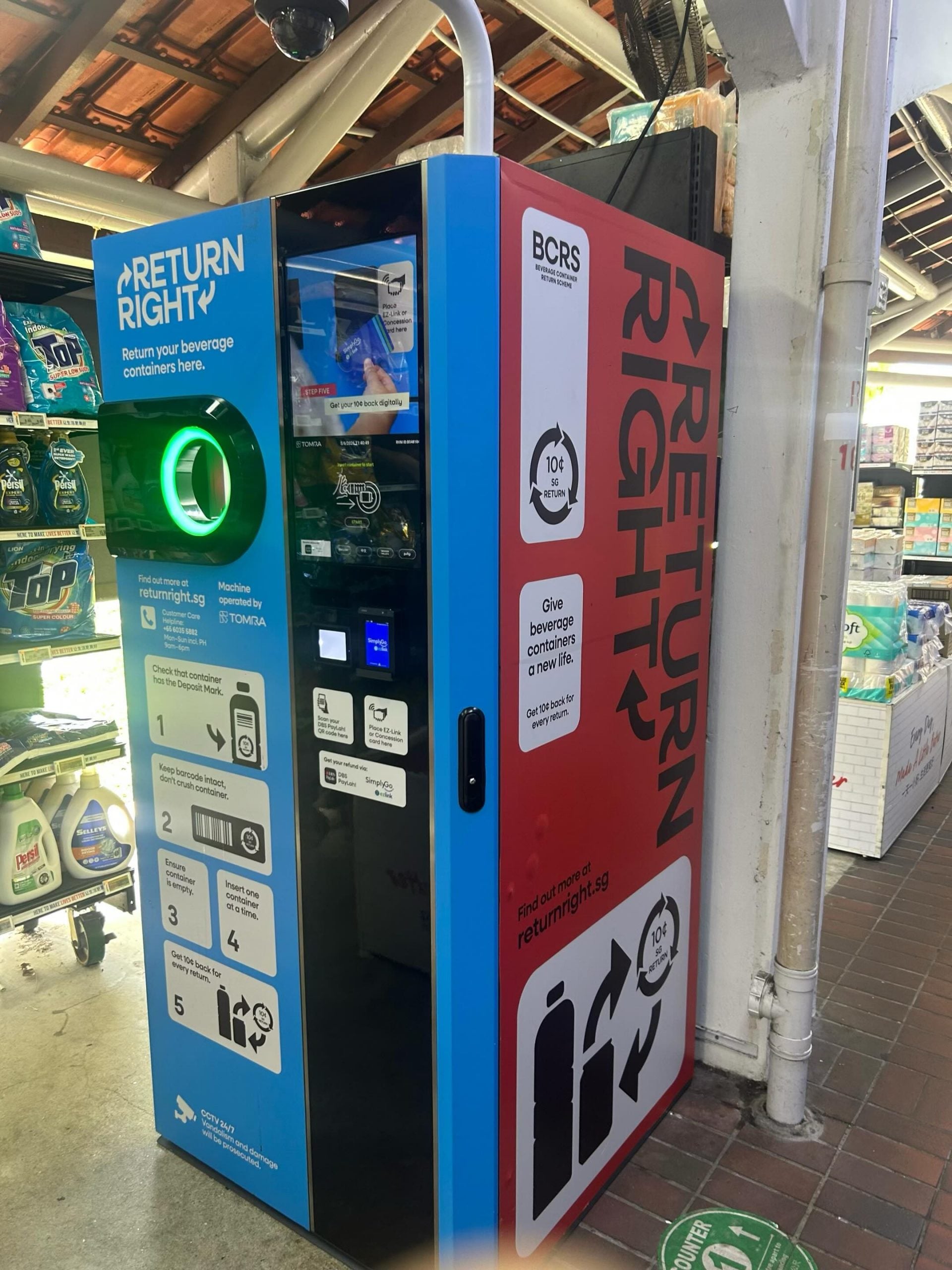
BCRS was launched on 1 April with a six-month transition period, during which drinks with and without the BCRS Deposit Mark could be sold.
From 1 Oct, regulated beverages supplied in Singapore must carry the Deposit Mark.
Netizen says BCRS could affect small importers differently
The OP acknowledged that increasing the recycling of beverage containers addresses a genuine environmental issue.
They cited Singapore’s relatively low domestic recycling rate and the large number of beverage containers used here, before questioning whether the costs of achieving higher recycling rates had been sufficiently considered.
They argued that compliance costs could affect large beverage producers and small importers differently because of economies of scale.
For larger producers, updating packaging artwork for Singapore may be spread across millions of units.
Smaller importers bringing in a few thousand cans of a niche drink, meanwhile, may have to use BCRS-approved stickers if overseas manufacturers do not produce Singapore-specific packaging.
Source: Instagram
BCRS documentation confirms that producers unable to incorporate the Deposit Mark and barcode into their packaging can order stickers through its portal from appointed printers.
CNA previously reported that these stickers cost between about four and 18 cents each, depending on volume. Producers also face a S$500 registration fee and S$5 for each registered product.
The OP argued that such costs could have a greater impact on smaller importers than companies selling millions of units.
“A regulation that costs five cents per unit may be trivial at ten million units and commercially significant at ten thousand units,” they wrote.
Raises concerns about parallel imports and product choices
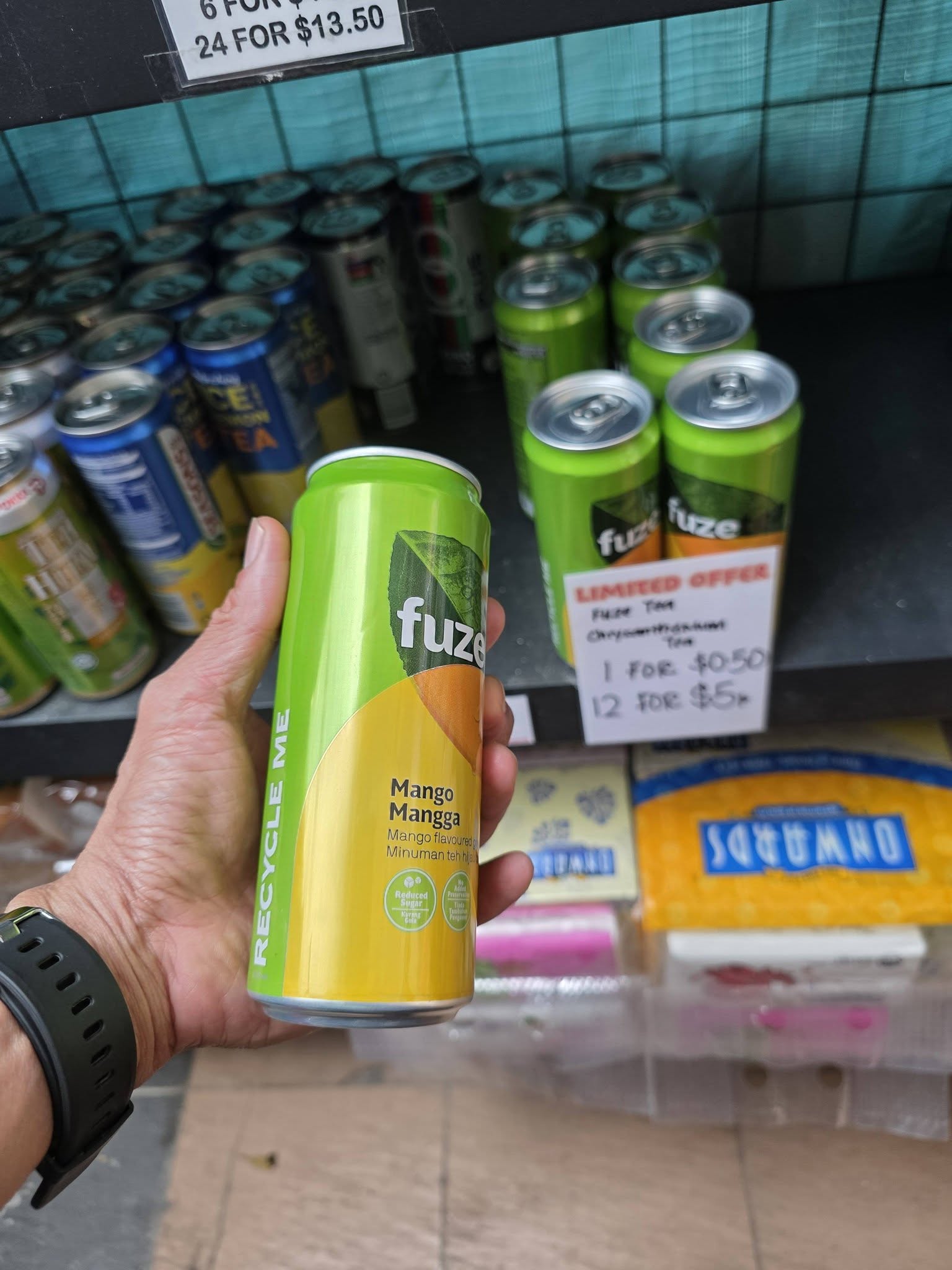
The OP also questioned whether BCRS could affect parallel importers, which may offer consumers beverages sourced from overseas markets.
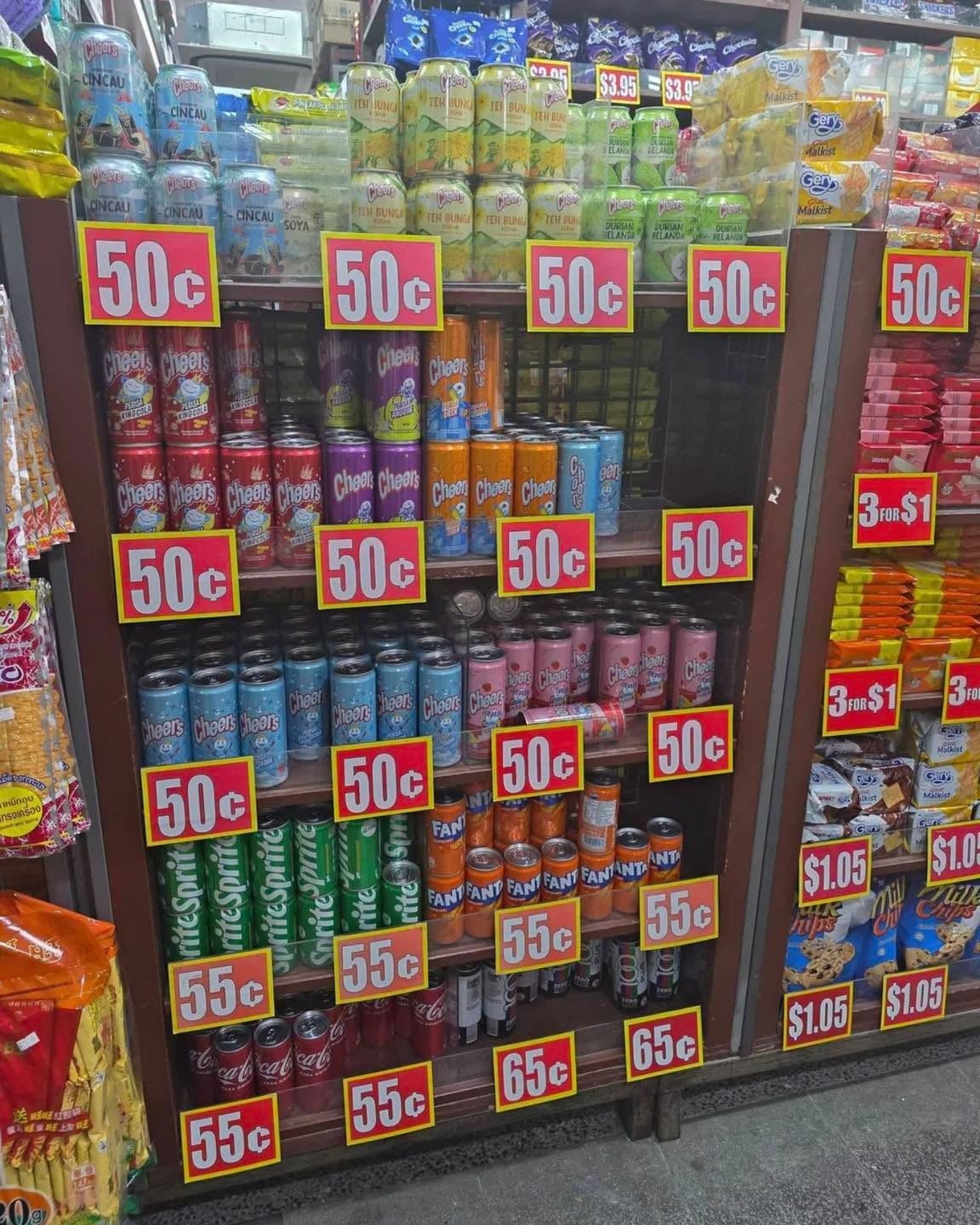
They cited CNA’s previous reporting that some imported canned drinks sold for around 70 cents, compared with locally supplied alternatives closer to S$1.
Source: SG News Warehouse Sale & Events on Facebook
They argued that additional compliance costs could narrow such price differences.
They also suggested that some niche products could become less commercially viable to import if registration, stickering and other requirements added significantly to their costs.
This could happen without any formal restriction on the products, making them feel that “products [would] simply stop appearing.”
BCRS Ltd is industry-led and licensed until 2033
The OP also highlighted that BCRS Ltd is a company established by Coca-Cola Singapore Beverages, F&N Foods and Pokka.
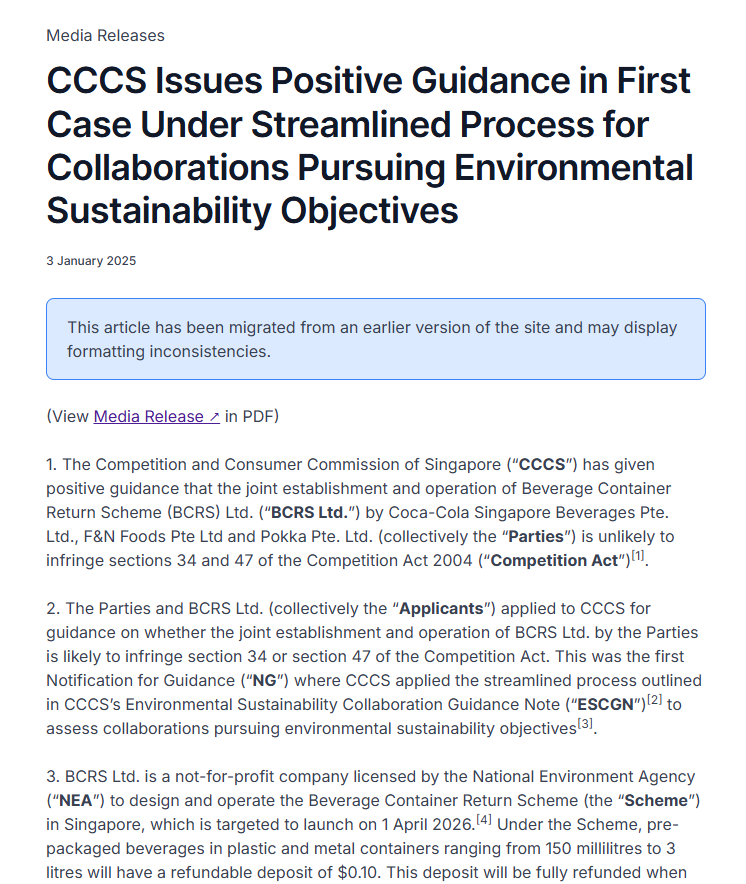
The Competition and Consumer Commission of Singapore (CCCS) confirmed that these three companies jointly established and operate BCRS Ltd, a not-for-profit company, which is licensed by the National Environment Agency (NEA) to operate the scheme.
Source: Competition and Consumer Commission of Singapore website
The licence is valid from 29 July 2024 to 31 March 2033, covering the preparatory period and seven years of scheme operations.
CCCS had previously advised NEA on potential competition concerns when the scheme was being developed in 2021.
Among its recommendations, the competition watchdog said NEA should regularly review the scheme’s parameters to ensure they do not unnecessarily restrict competition.
It also recommended reviewing recycling targets and compliance costs as market conditions change, as well as safeguards against the exchange of commercially sensitive information between industry players.
However, in January 2025, CCCS said the joint establishment and operation of BCRS Ltd by Coca-Cola Singapore Beverages, F&N Foods and Pokka was unlikely to infringe Sections 34 and 47 of the Competition Act.
Source: Singapore Incidents on Facebook
Government says scheme costs will be reviewed after first year
The Government has also acknowledged that the full cost-effectiveness of BCRS cannot yet be assessed.
In a written parliamentary reply on 8 Sept, Sustainability and the Environment Minister Grace Fu said NEA would “review the financials and effectiveness” of BCRS Ltd after the scheme’s first year of implementation.
More information would be provided when ready, she said.
More than 33 million containers collected so far
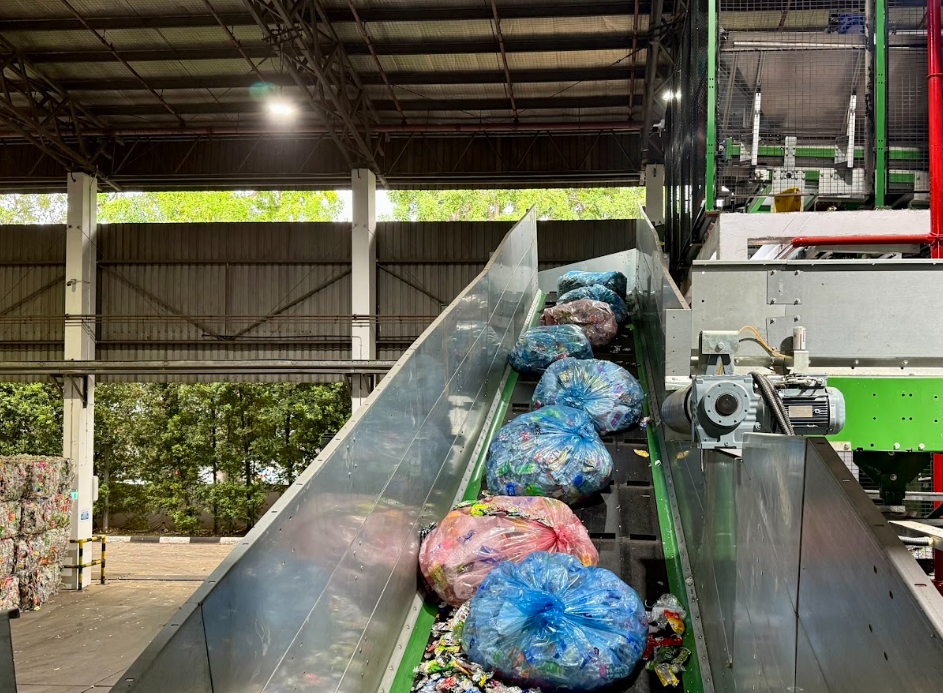
Meanwhile, the scheme has already collected more than 33 million beverage containers as of 13 Sept, according to BCRS Ltd.
A new 2,000-square-metre counting and sorting facility in Tuas can process the returned containers before sending the materials to recyclers.
Some 553 tonnes of material had been processed at the facility as of 13 Sept.
The scheme aims to achieve a return rate of at least 60% of containers in its first year and 80% from 2029.
Picture courtesy of BCRS Ltd
The Government had earlier said more than 20 million containers were collected during the first five months of the scheme.
Netizen says environmental benefits should be weighed against wider costs
The OP said the number of containers collected alone should not determine whether BCRS is successful.
They suggested that future assessments should consider how much additional recycling the scheme creates, its financial and carbon costs, consumer impact and effects on competition.
They also questioned how many beverage products and importers might leave the Singapore market because of compliance costs.
“Singapore has always depended on being an unusually easy place to trade,” The OP wrote.
“We are a small market. That makes regulatory fixed costs particularly dangerous because every additional licence, registration process, approved vendor, specialised label and compliance system has to be amortised over a relatively small customer base.”
They stressed that this did not necessarily mean BCRS should be abolished.
Instead, they suggested that regulators could consider simplified compliance mechanisms for very small-volume importers and monitor the number of beverage stock-keeping units (SKUs) and importers entering or leaving the market after full implementation.
They concluded that BCRS could ultimately prove environmentally worthwhile, but said its success should be assessed against its wider environmental, economic and social effects.
MS News has reached out to the OP for more information.
Have news you must share? Get in touch with us via email at news@mustsharenews.com.
Featured image courtesy of SG News Warehouse Sale & Events on Facebook, BCRS Facebook stories on Facebook and Singapore Incidents on Facebook.