
MS Explains: Why are there many spirit houses in Thailand?
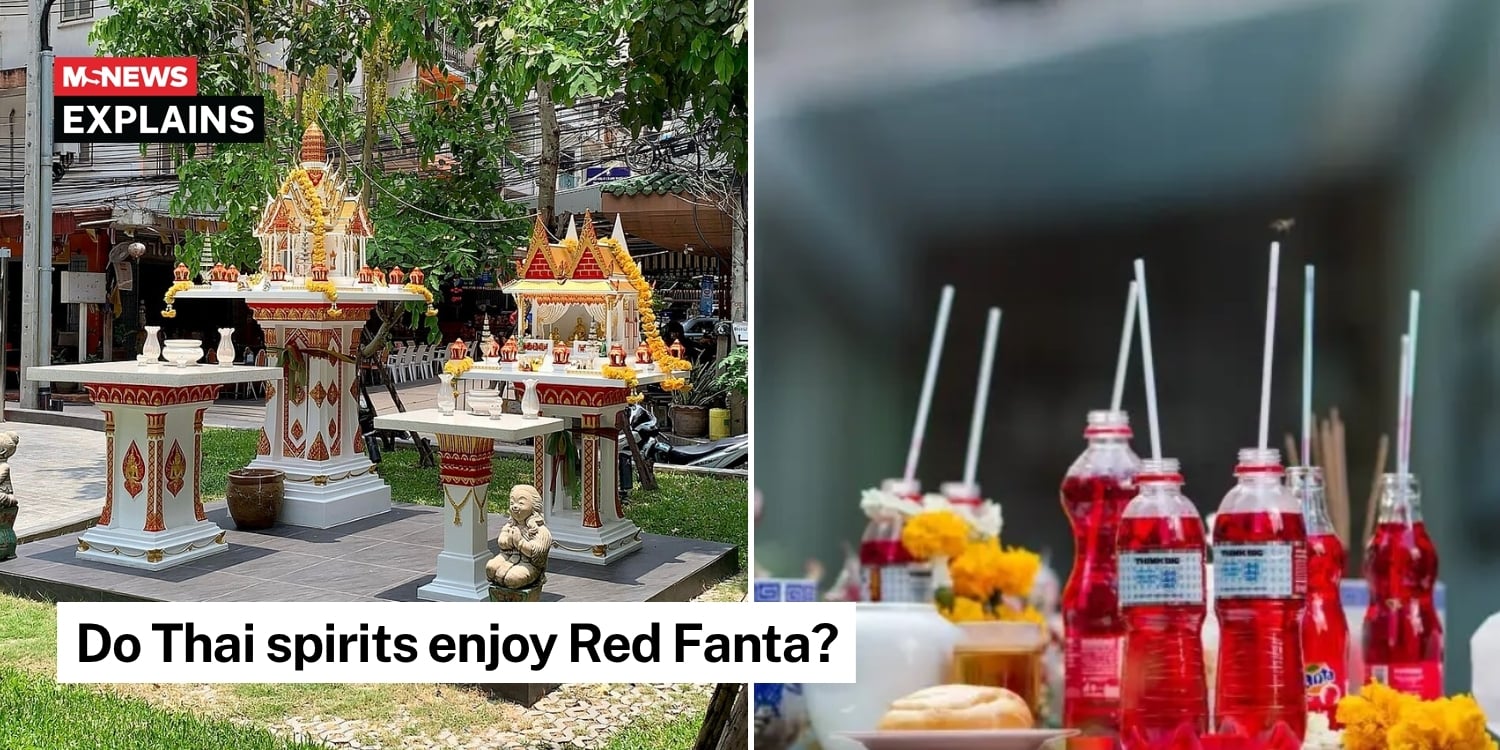
Those who spend time in Thailand will likely encounter structures that appear to be small, temple-like shrines on pedestals outside homes, businesses, and public spaces.
What makes them stand out are their traditional Thai design patterns and adornment with figurines, incense pots, garlands, and glasses of red Fanta.
Such frequent sightings may raise questions among visitors regarding the purpose of these shrines.
Here’s why spirit houses are important to Thai people.
Spirit houses offer protection and bring good luck
Belief in spirits and ghosts has been woven into Thai society for many centuries.
Alongside their faith in Buddhism, Thai people also embrace animism, the belief that places, trees, and buildings are inhabited by spirits.
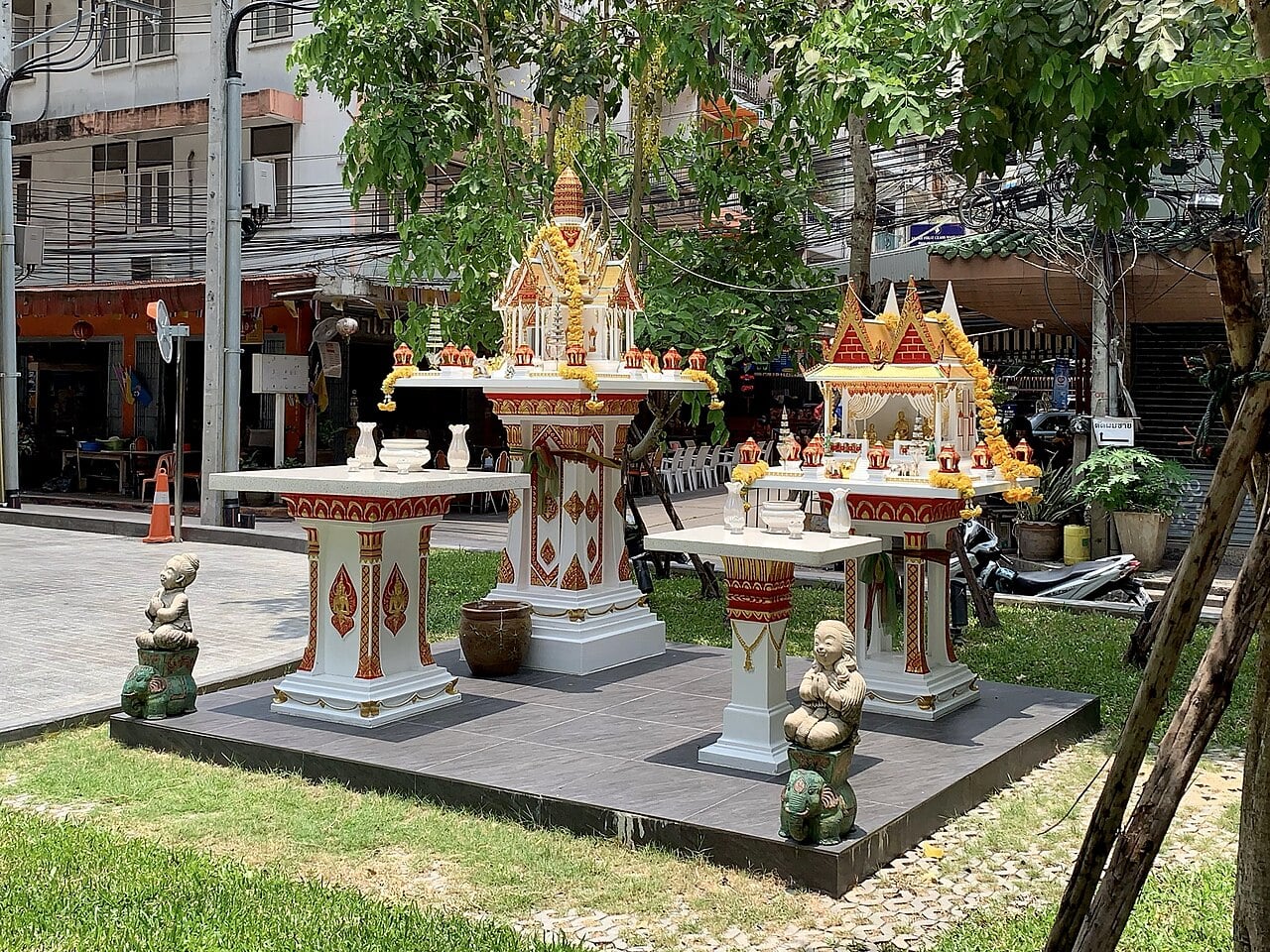
Source: Wikipedia
Construction on a certain piece of land is often seen as an act of encroachment that displaces the spirits who have long presided over the site.
Therefore, shrines and spirit houses are built to shelter and honour spirits.
When spirits are well worshipped, they are believed to protect the surrounding area and bring good fortune to the people.
Types of spirit houses in Thailand
Known locally as san, the two spirit house types most commonly seen around Thai homes and neighbourhoods are the San Phra Phum and San Chao Ti.
Raised on a single pillar or platform, the San Phra Phum is regarded as the dwelling place of Phra Phum, also known as Phra Chai Mongkol, the eldest son of the deity Thao Thotsarat Chai Mongkol.
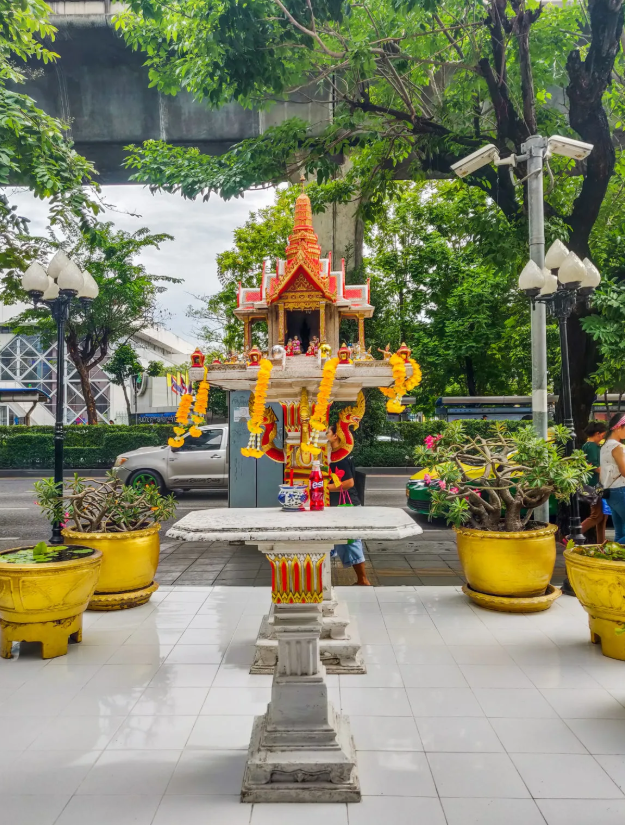
Source: Ruby Singh
Each of the deity’s nine sons watches over a particular domain, such as shops, homes, ponds, mountains, temples and cities.
San Phra Phum is usually the more formal and ornate shrine, set up to drive away bad luck and evil influences from the home.
It protects the head of the household, family members, and dependents, bringing everyone peace, happiness, and success in various areas of life, such as health, education, business, finances, and career.
On the other hand, the San Chao Ti, aka San Ta Yai, is an expression of gratitude toward ancestors who have passed away.
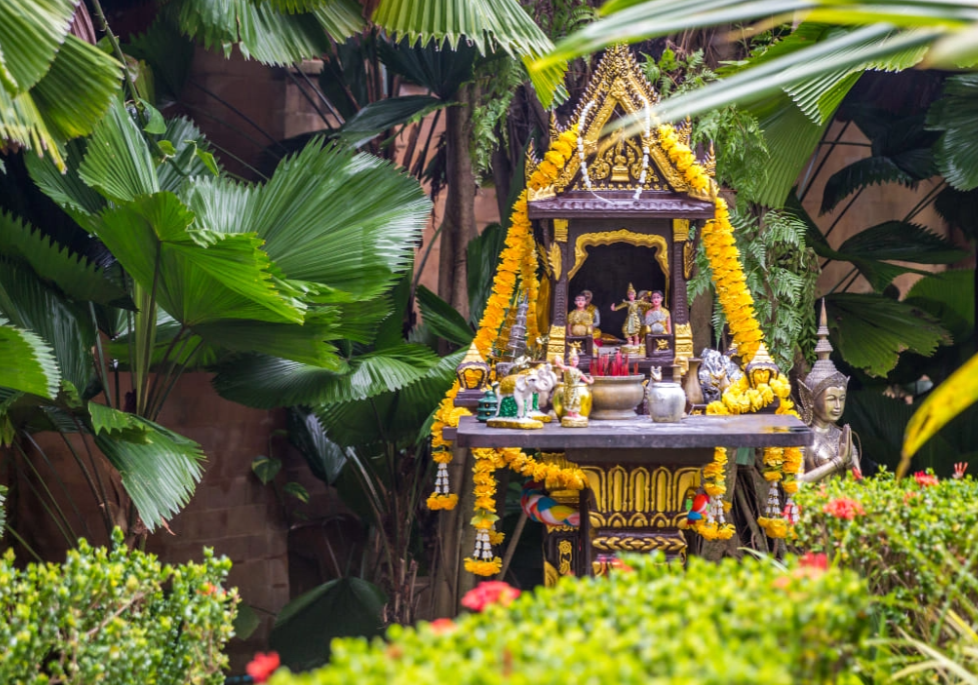
Source: Thairath
Built on four pillars, the shrine houses figurines of Da and Yai (“grandfather” and “grandmother”), symbolising the ancestral spirits who previously inhabited the area.
It is to respect the local spirits who were displaced by construction.
Appeasing them ensures that the ground remains peaceful, preventing workplace accidents, labour friction, or localised disruptions.
Both shrines are typically placed side by side outdoors near a home and decorated with figurines of servants, dancers, and animals such as elephants and tigers.
In addition, San Chao Ti is often found along roadsides and large trees, where roaming spirits are believed to gather.
The origins of Bangkok’s popular Erawan Shrine
Beyond typical spirit houses, the Erawan Shrine is another style frequently seen across Thailand, particularly around commercial complexes.
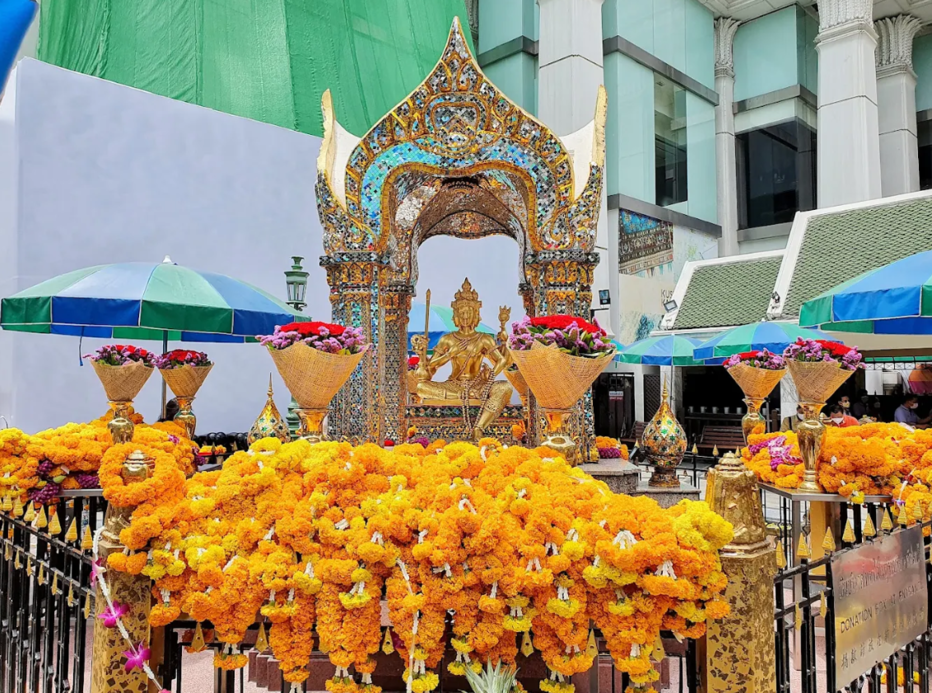
The original and most famous site is located at the Ratchaprasong intersection in Bangkok, Thailand, beside the Grand Hyatt Erawan hotel.
Built in 1956, it is a Hindu shrine to Phra Phrom, the Thai form of Brahma, viewed as the creator of the world.
Source: Google Maps
The statue has four faces, each looking in a different cardinal direction. The deity is depicted with six arms, holding various sacred objects that symbolise cosmic balance, wisdom, power, and grace.
Worshippers often pray at all four sides because each face represents a different aspect of life, such as career, relationships, wealth, or health.
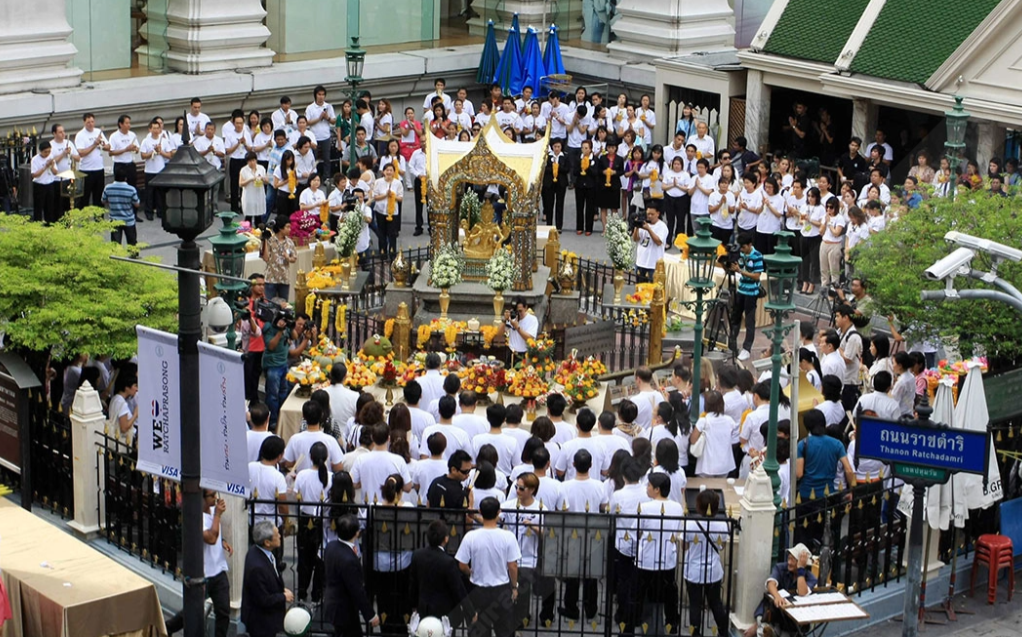
In the early 1950s, the hotel construction project was plagued by a relentless string of disasters: construction accidents injured workers, machinery broke down, and a ship carrying Italian marble sank on its way to Thailand.
Source: Thairath
Desperate and superstitious, project managers consulted astrologers and spiritual experts.
They learned two things: the hotel’s foundation stone had been laid on an intensely unlucky day, and the land itself needed proper spiritual appeasement.
To fix this, they commissioned the construction of the Erawan Shrine dedicated to Phra Phrom, which was completed in 1956.
Miraculously, the mishaps stopped, the hotel was successfully finished, and the shrine became a permanent fixture.
Nowadays, people from all walks of life, including local corporate workers, politicians, celebrities, and international tourists, visit the shrine.
What do people offer to their spirit houses?
Offerings are how Thais keep the resident spirit content. People will leave gifts at the shrine every day.
They can also be made on major Buddhist holidays, auspicious lunar dates, and personal milestones such as new jobs or lottery wins.
Offerings range from flower garlands, coconuts, bananas, rice, roast duck, palm-sugar cakes, and other desserts.
For beverages, people usually set out water, tea, or sweet drinks such as soda.
Theories behind red Fanta
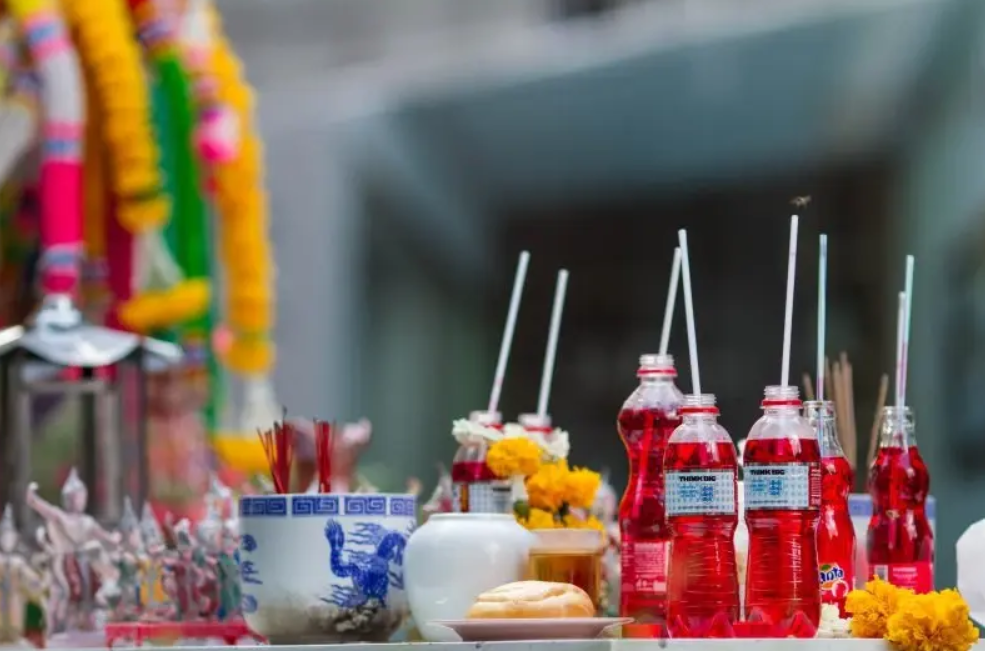
Red, strawberry-flavoured Fanta served in bottles with straws is a constant sight at these shrines, and many expats are intrigued to know why it has to be it.
Unfortunately, there’s no definite answer as to why Fanta became the standard choice, but several explanations circulate.
Source: Thai News Online
The most common theory is that the colour echoes the animal sacrifices once offered to spirits, with a red drink as a gentler substitute.
Many Thais associate red with blood, which signifies both fertility and sacrifice.
Another theory is that Bangkok families have Chinese roots, and red is an auspicious colour in Chinese tradition.
It’s also suggested that red incense sticks in a glass of water tint it red and lead to a link in people’s minds between red liquid and spirits.
One observer said sweetness, the colour red, and ease of purchase make red Fanta a seamless fit for Thai culture.
Before soft drinks became widespread, offerings of water were traditionally tinted with a pinkish herbal blend.
Spirit house etiquette: Do’s and don’ts
To show proper respect at these sacred sites, visitors must observe guidelines when approaching spirit houses.
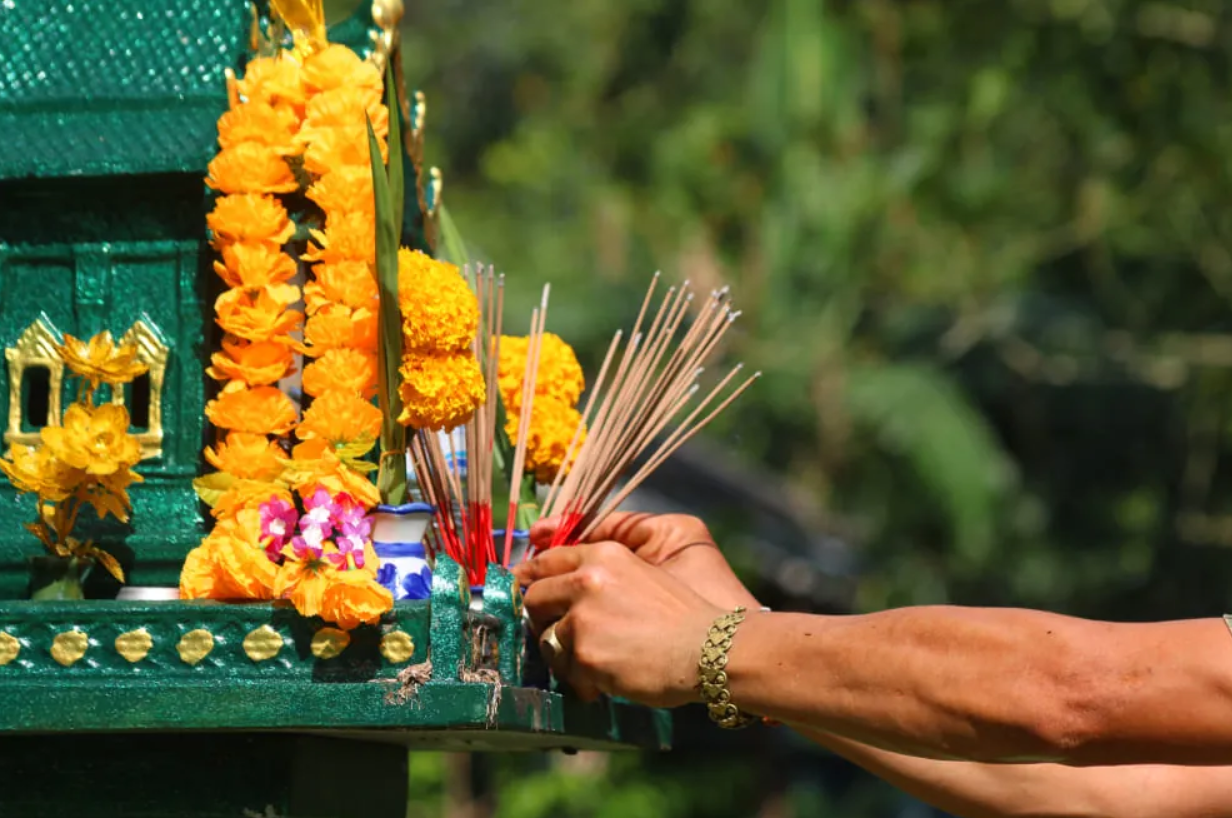
People should refrain from touching the houses, except when they want to clean them or make offerings. If possible, visitors should silently state their intention or ask for permission beforehand.
However, traditionally, touching, moving, playing with, or stepping on them without cause is seen as a sign of disrespect.
Source: AP Thai
Visitors should also dress respectfully when participating in rituals.
It’s also advised to keep feet and bags away from the base.
Photographing a shrine at a private home or business is fine, but avoid moving things.
In addition, it’s considered inappropriate to touch or take other people’s food on the shrine.
While some Thais love to perform Wai — a Thai gesture in which you put your hands together and slightly bow to show respect — when they walk past shrines, it’s not required to do so.
So, it’s safe to say that passers-by do not have to wai as long as they don’t do anything disrespectful.
Disposing of spirit houses
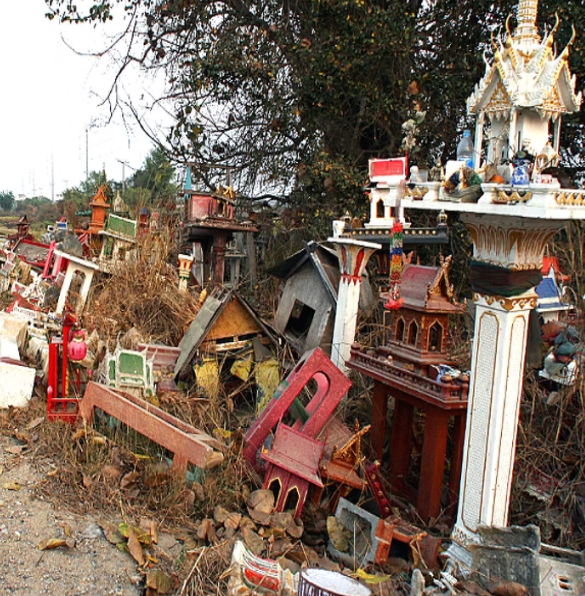
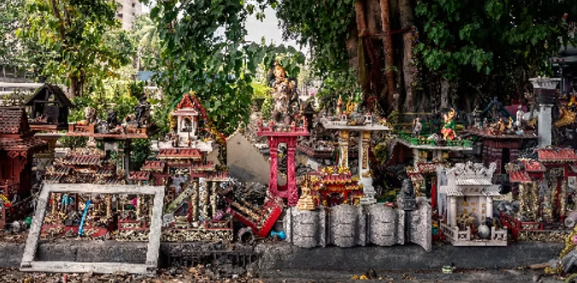
Apart from private homes and commercial properties, travellers often notice piles of old, broken spirit houses discarded under large trees, along roadsides, or on temple grounds.
Source: Amulet City
Because spirit houses are sacred, people do not treat them as ordinary trash. Throwing a damaged shrine in the bin is believed to bring bad luck.
When Thais need to get rid of an old house, they will hold a ceremony to invite the spirits to depart peacefully or move into a new one.
They then leave unwanted shrines at the mentioned places.
Source: Amulet City
According to some sources, leaving old shrines at temples is fine as long as the abbots or people in charge allow it.
Nonetheless, hiring a professional disposal service may be a better option.
Also read: Was Sang Nila Utama a real person, or a fictional character existing in social studies books?
Was Sang Nila Utama a real person, or a fictional character existing in social studies books?
Have news you must share? Get in touch with us via email at news@mustsharenews.com.
Featured image adapted from Wikipedia and Thai News Online.