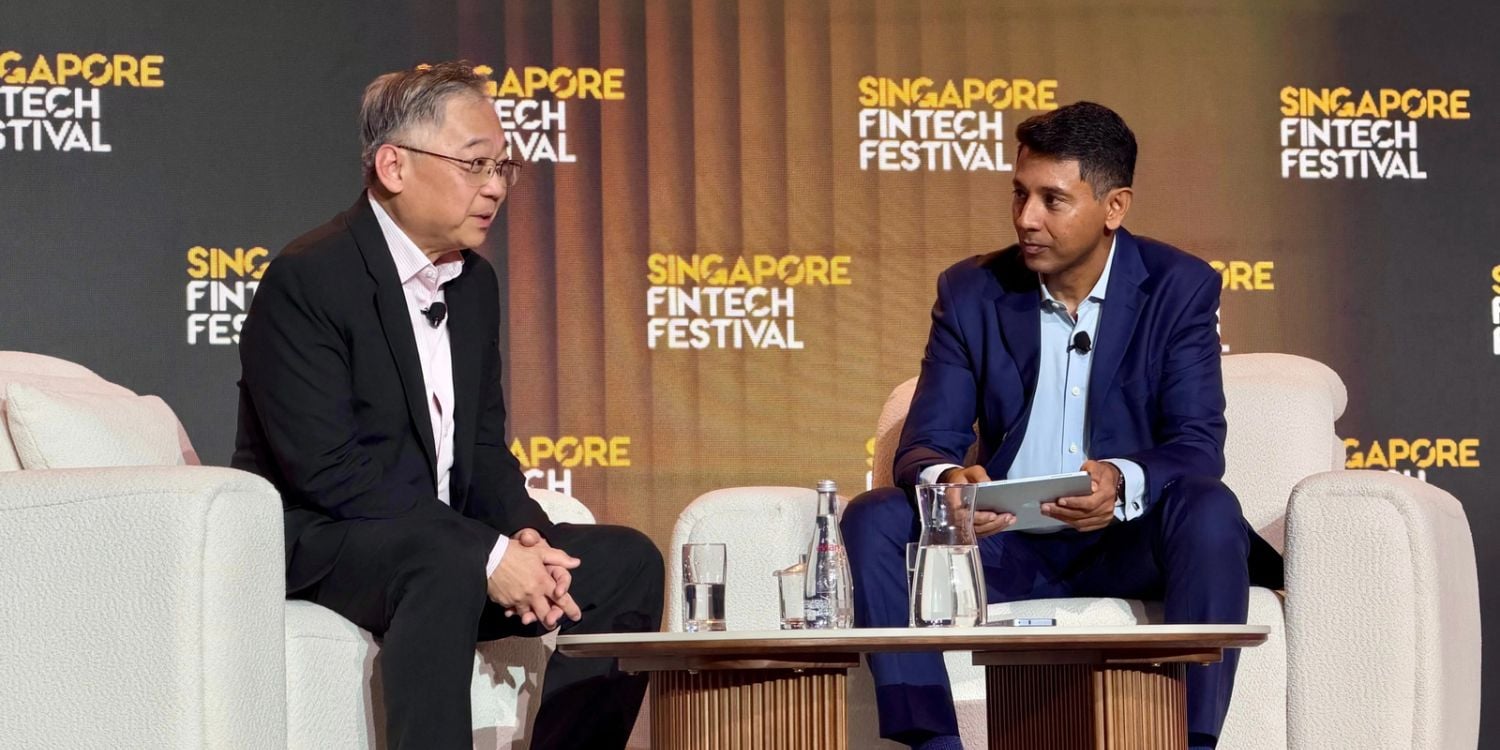

DPM Gan outlines AI missions for financial sector
Deputy Prime Minister and Monetary Authority of Singapore (MAS) Chairman Gan Kim Yong has announced three National AI Missions for the financial sector.
He unveiled the initiatives during his keynote address at the Singapore FinTech Festival on 18 Nov.
The missions focus on preventing financial crime, expanding access to financing for small businesses, and enabling safe agentic transactions.
At the same time, Mr Gan addressed new export licensing rules from the US Department of Commerce regarding advanced semiconductors, which have affected Singapore.
Engaging US authorities over new semiconductor licensing rules
Addressing the audience, Mr Gan acknowledged the US Department of Commerce’s recently announced new rules governing remote access to advanced semiconductors.
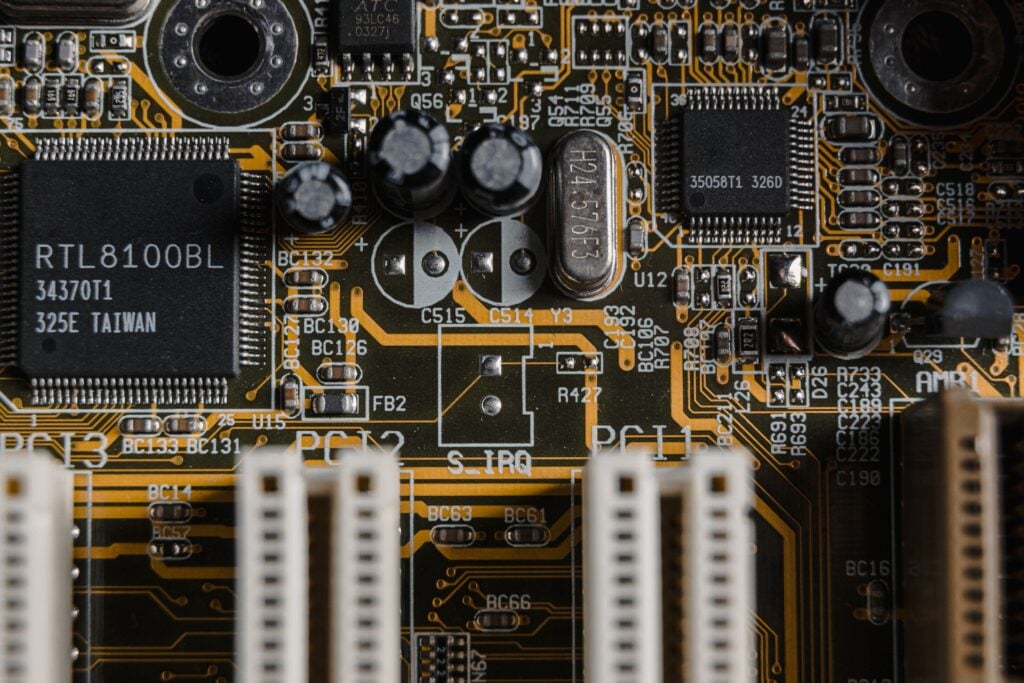
Source: Tima Miroshnichenko on Pexels for illustration purposes only
Under the new regulations, companies will require licenses to export or re-export advanced computing chips to five countries, including Singapore.
He said the Government is currently working with affected companies to assess business implications.
We are also engaging the US authorities on the new rules and how we can facilitate access for our companies.
He reaffirmed Singapore’s position as a trusted global business hub and partner to American enterprises.
However, he firmly stressed that Singapore does not condone companies exploiting their local presence to evade foreign laws.
“We will act against those who flout our laws,” he warned.
Tackling cross-bank scams through AI detection utility
Turning to the first mission, Mr Gan highlighted that scams can move victims’ money across multiple financial institutions within minutes.

Source: cottonbro studio on Pexels for illustration purposes only
Consequently, fraud cannot be stopped effectively if each institution only sees its own fragment of the transaction chain.
To address this, MAS is currently running a proof-of-value with five commercial banks.
The initiative pools transaction data securely, allowing AI models to detect illicit patterns across multiple banks that would otherwise be difficult for them to pick up individually.
Mr Gan announced that MAS will launch a Design Study early next year to blueprint an industry-wide Scam Detection Utility.
While initial efforts will focus on domestic bank accounts, Singapore aims to expand cross-border cooperation with foreign partners over time.
Expanding SME financing through richer data assessment
The second mission aims to improve loan access for small and medium-sized enterprises (SMEs).
Today, lenders assess businesses primarily on past performance and collateral, which disadvantages newer start-ups with limited track records.
To bridge fragmented financial records, the Government will also invite AI tech companies to test credit assessment tools using “realistic synthetic data”.
Financial institutions and public agencies will contribute data and domain expertise, while direct feedback will be gathered from SMEs.
Mr Gan explains that with richer data, AI can identify creditworthiness patterns that conventional reviews overlook, lowering borrowing costs for smaller enterprises.
Lenders could even use AI to proactively identify viable businesses and notify them of suitable financing options.
Enabling safe agentic AI transactions & PayNow enhancements
The third mission prepares the industry for autonomous AI agents capable of executing financial transactions on behalf of users.
Mr Gan cautioned that greater autonomy demands strict accountability and defined operational boundaries.
Authorities will work with the industry to test practical solutions in controlled environments.
Mr Gan listed examples such as linking AI agents with purpose-bound money to trigger automated contractual payments.
To drive these goals, the Future of Finance Institute (FFI) will unite industry players, researchers, and public agencies to craft guidelines and risk management standards.
Separately, Mr Gan announced the release of the Phase 2 report for PayNow Generation 2.
This rollout introduces a new SGQR+ switch, allowing residents and tourists to pay at any SGQR+ merchant using their preferred payment app.
Concluding his address, Mr Gan stressed that strong human oversight and trust remain fundamental to technological progress and innovation.
Also read: S’pore to focus on solar energy and biomethane to meet low-carbon energy needs: Grace Fu
S’pore to focus on solar energy and biomethane to meet low-carbon energy needs: Grace Fu
Have news you must share? Get in touch with us via email at news@mustsharenews.com.
Featured image adapted from Prime Minister’s Office.