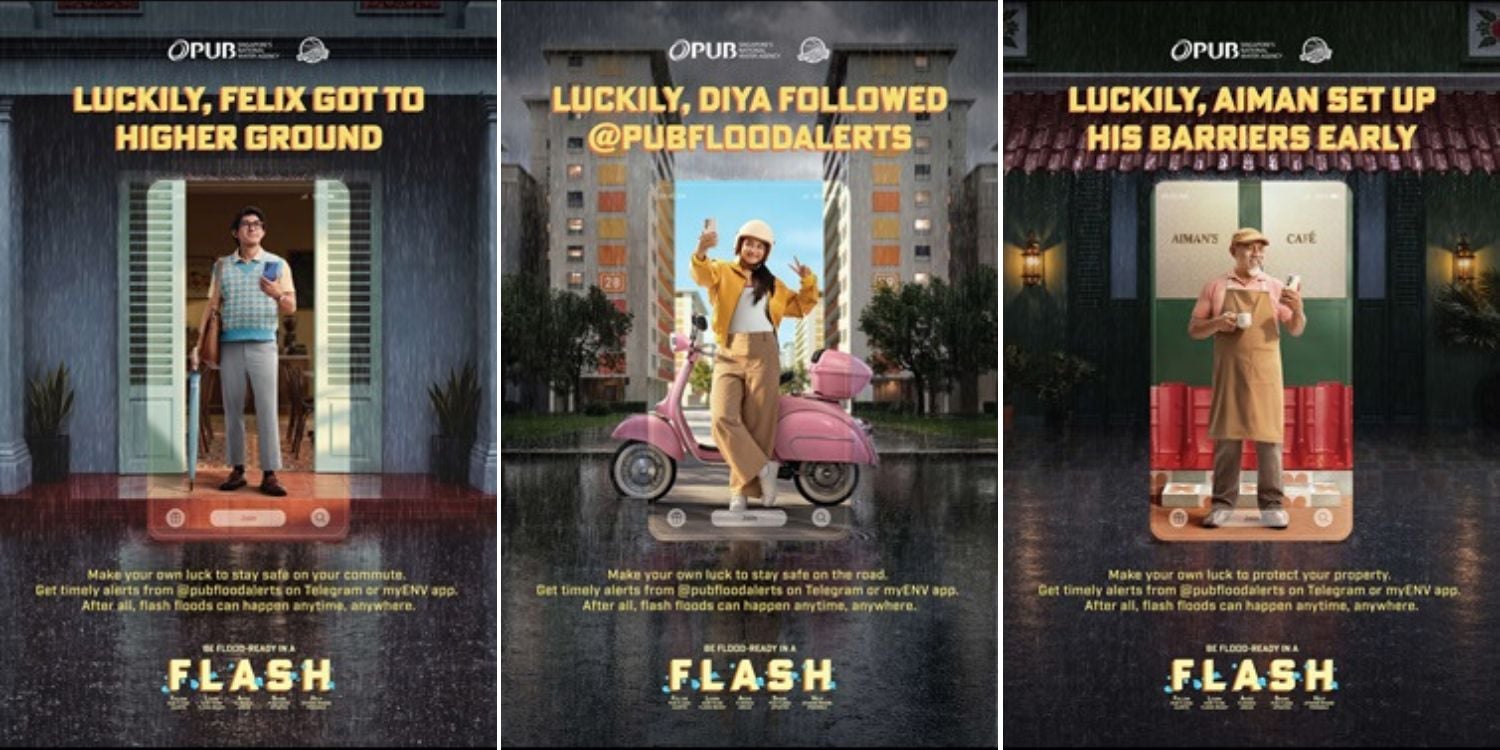

PUB launches flood resilience campaign
PUB, Singapore’s National Water Agency, launched its third flood resilience campaign on 12 Nov to bolster preparedness ahead of the northeast monsoon season.
The campaign challenges the idea that avoiding harm during a flood is simply a matter of luck.
Instead, PUB urges motorists, commuters, homeowners and businesses to take practical steps to stay flood-ready.
PUB uses relatable scenarios to help people understand how floods may affect them and what they can do to stay safe.
Motorists urged to check alerts
PUB encourages motorists to follow @pubfloodalerts on Telegram and check the myENV app before setting off.
Motorists can also check their vehicles’ on-board units (OBUs) for the latest updates.
If they encounter a flooded road, PUB advises them to take an alternative route instead of entering the water.
PUB trials road flood sensors
Alongside the campaign, PUB is trialling Road Flood Sensors (RFS) to improve flood monitoring.
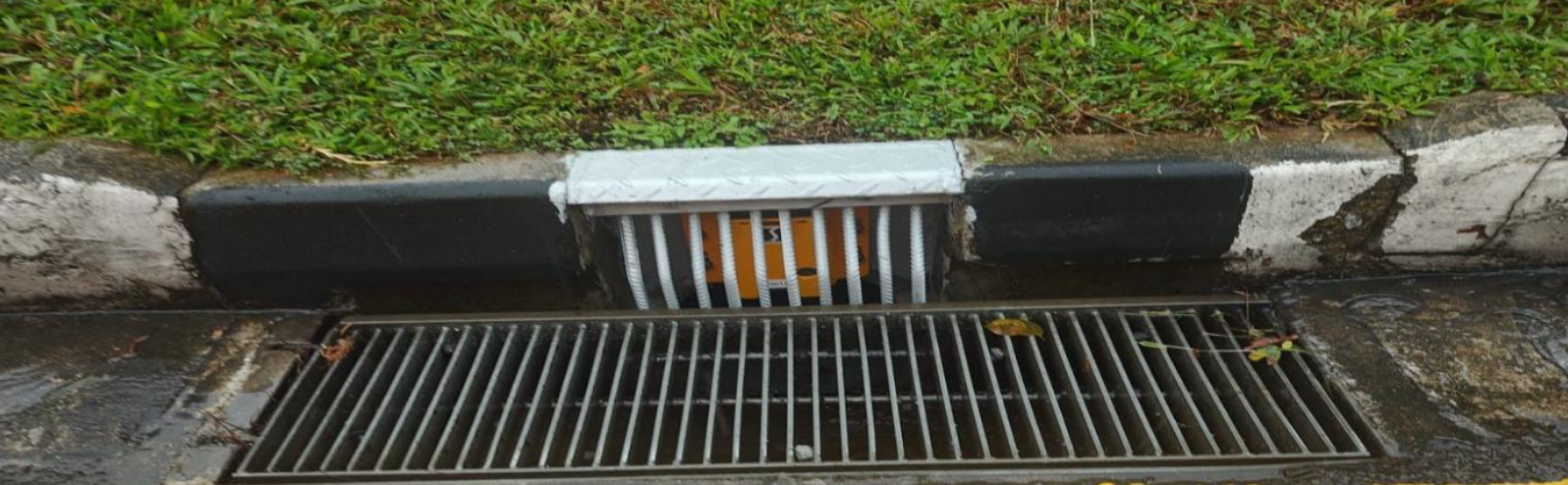
Source: PUB
The sensors provide automated, real-time monitoring of water levels on roads prone to flooding.
An initial six-month trial with 30 sensors showed encouraging results, with the sensors sending flood alerts within one minute.
PUB now plans to add 15 more sensors at flood-prone roadsides.
It is also exploring placements outside residential properties. This may give residents earlier alerts to protect their homes and vehicles.
New system to detect floods earlier
PUB is also testing an integrated flood monitoring and alerting system.
This system combines Road Flood Sensors, water level sensors in canals and drains, and CCTV video analytics.
This approach aims to detect floods more accurately and quickly, and also reduce the need for staff to monitor CCTV feeds manually.
As of now, PUB already uses more than 1,200 water level sensors and over 700 CCTVs across Singapore.
By 2028, it plans to install about 500 more water level sensors and 200 more CCTVs.
Remote-controlled pump vehicle piloted
PUB has also started a one-year pilot for a Remote-Controlled Pump Vehicle (RPV).
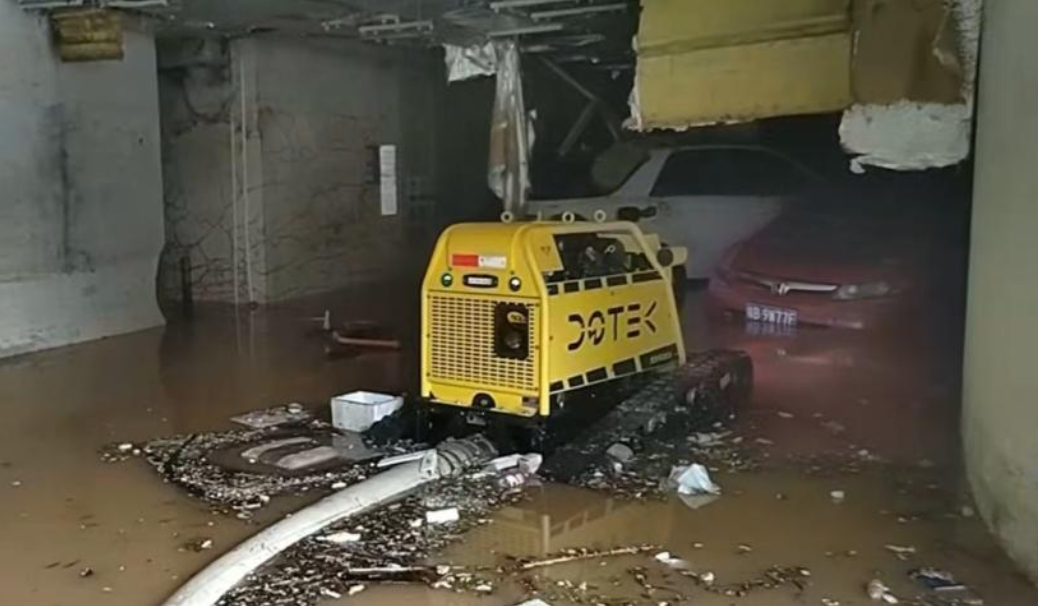
Source: PUB
The compact, tracked vehicle can enter flooded areas and move across uneven terrain and staircases.
Operators can control it from up to 100m away, reducing the need for personnel to enter floodwaters.
The RPV can pump at least 500 cubic metres of water per hour; enough to drain an Olympic-sized swimming pool in five hours.
It can also operate continuously for at least seven hours.
PUB may deploy it at roads, basements, carparks and tunnels during or after floods.
The vehicle can also help remove floodwater in coastal areas during high tide, when rainfall coincides with closed tide gates.
Businesses urged to be flood-ready
PUB also said businesses, developers and property owners play an important role in flood resilience.
In June, PUB launched the Flood-Resilient Developments Guidebook, offering practical guidance, examples and case studies for flood-resilient designs and operations.
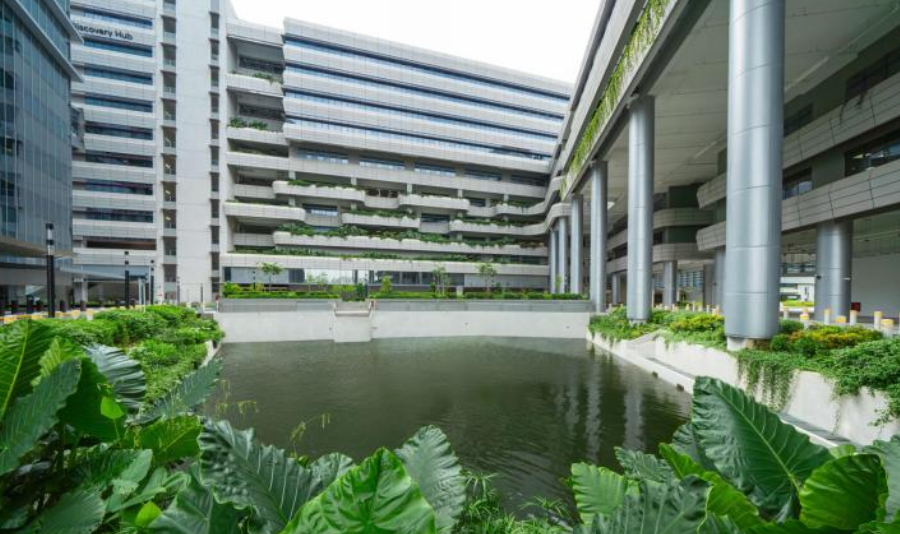
One example is the Singapore Institute of Technology (SIT) Punggol Campus.
Its lawns and detention ponds temporarily hold rainwater during storms.

Source: PUB
The campus also uses sunken plazas, gravel swales, rain gardens and cleansing biotopes to slow, capture and filter rainwater.
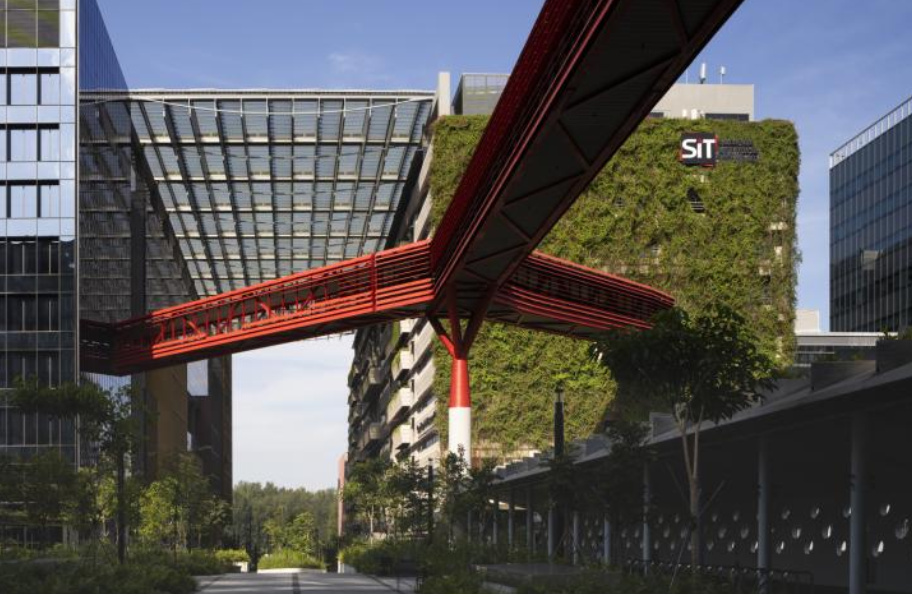
Source: PUB
Source: PUB
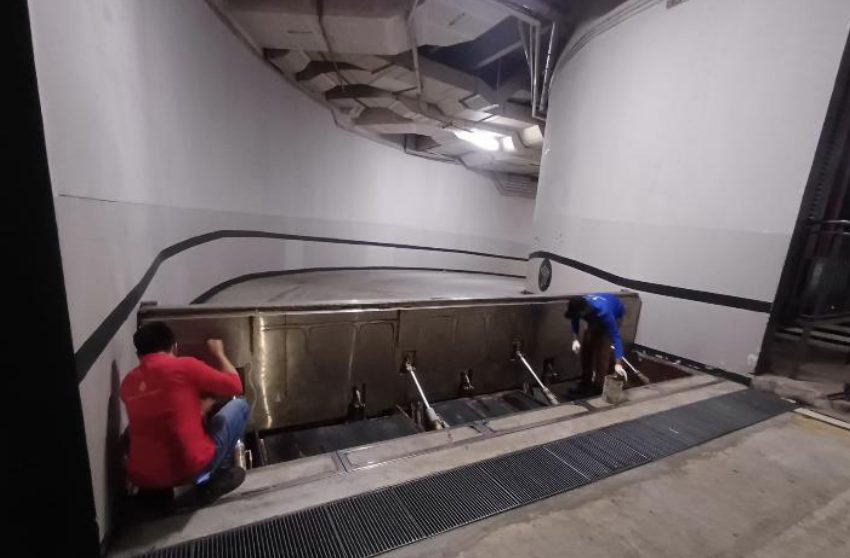
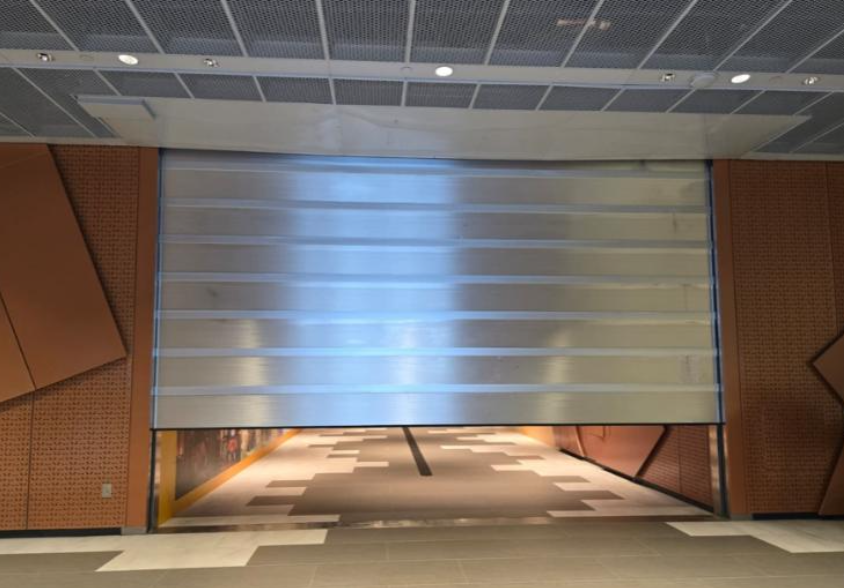
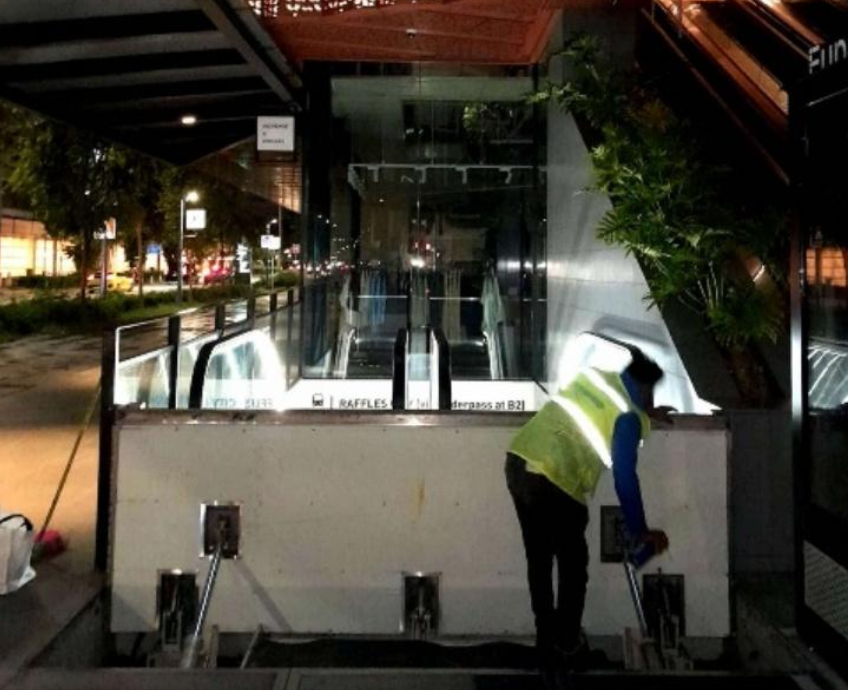
CapitaLand Investment’s Funan is another key example of a flood-resilient development listed by PUB.
During its redevelopment, Funan installed manual raise-up barriers at key access points, such as its basement passageways and carparks.
Source: PUB
Source: PUB
It also installed automatic flood barriers at its basement carpark entrances along North Bridge Road and Coleman Street.
Source: PUB
Funan’s operations team conducts regular checks and tests its procedures for floods, water backflow and sprinkler activation.
PUB urges public to act early
Ms Angela Koh, PUB’s Deputy Chief Executive (Flood Resilience), said flood resilience is about preparing for the unexpected, not hoping for the best.
PUB will continue to strengthen our flood monitoring, infrastructure and response capabilities, but building a flood resilient Singapore takes all of us.
Members of the public can reduce flood risks by staying informed, preparing early and avoiding flooded areas.
For more information on the campaign and F.L.A.S.H. safety tips, visit go.gov.sg/befloodready.
Have news you must share? Get in touch with us via email at news@mustsharenews.com.
Featured image adapted from PUB.