
MS Investigates: Was there ever an undersea tunnel connecting Labrador Park to Sentosa?
Labrador Park is known for its quiet seaside walks and scenic nature trails.
But did you know that the land there also once hosted a subterranean maze built for war?
Known historically as Fort Pasir Panjang, the elevated ridge once housed heavy coastal guns designed to defend Keppel Harbour.
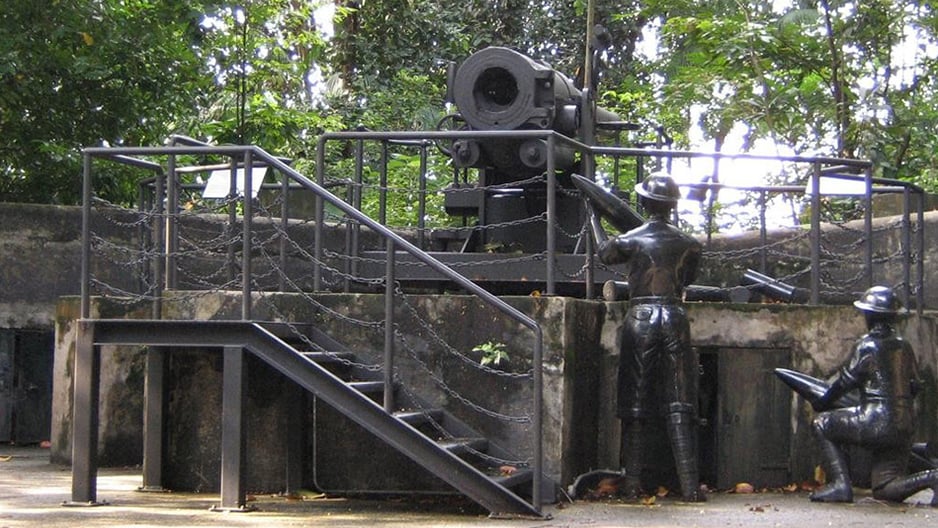
Source: NParks
Tunnels dating back to the 19th century do exist
The tunnels at Fort Pasir Panjang were believed to have been constructed in 1886, when Singapore was still a British colony.
Back then, the British military carved out the underground network as a shelter and also to store ammunition and supplies.
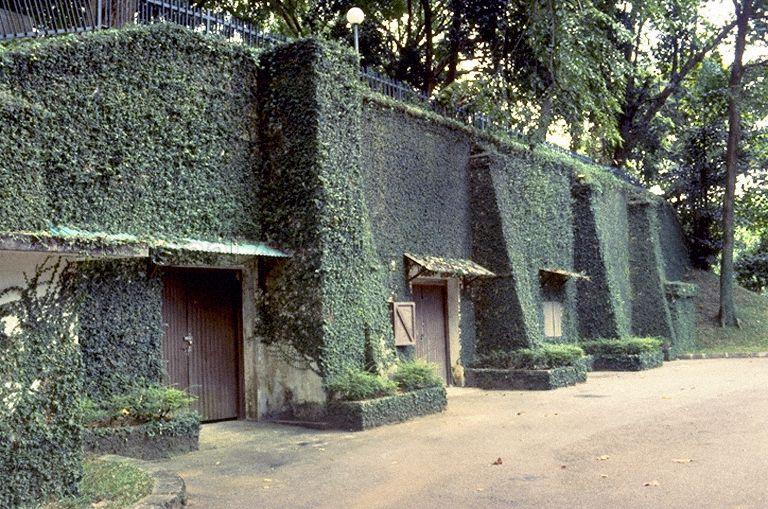
Source: National Archives of Singapore
A Singapore Free Press report from 1962 on the “Forgotten Fortress” claimed that the fort was ignored after the signing of the Anglo-Japanese Alliance Pact in 1902.
However, things would change when World War I erupted in Europe about a decade later.
To defend the coast of British-occupied Singapore, particularly the passageway leading to Keppel Harbour, the guns at Fort Pasir Panjang were manned in case of enemy fire.

Source: Newspaper.sg
The Fort would be used again during World War II in the late 1930s to 1940s, when war threatened the region.
In 1938, it received additional firepower in the form of two six-inch 37-ton guns to fight a coastal attack alongside Fort Siloso.
Fort Pasir Panjang was then closed off during the Japanese Occupation of Singapore, falling into disrepair ever since.
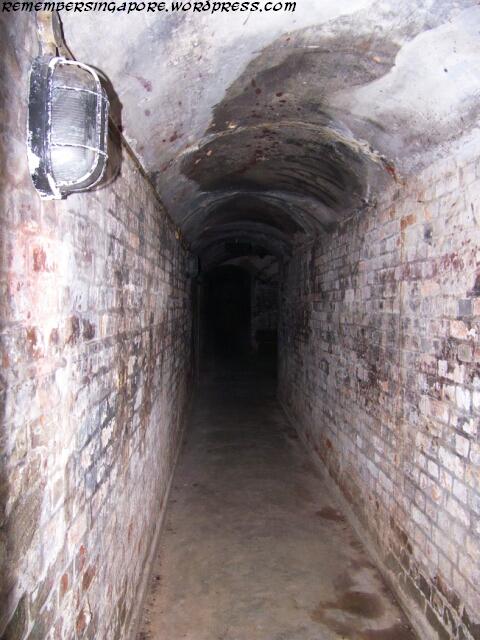
Source: Remember Singapore blog
While history buffs have long visited the park’s above-ground relics, the dark chambers underground remain firmly sealed off from public access.
For decades, urban legends have swirled around these forgotten pathways.
The most enduring tale claims that British engineers built a secret underwater passage directly connecting Labrador Park to Fort Siloso on Sentosa.
Rumour persists over 100 years
The answer to the question of whether there are secret underground tunnels from Labrador Park to Fort Siloso, in short, is no.
Due to the geography of the area, it is highly unlikely and unfeasible to construct an underground tunnel between the two forts.
Historian Jeyathurai Ayudurai, from Singapore History Consultants, explained this in a Mediacorp documentary on this same topic.
It would have been too difficult and expensive to have built a tunnel across the two forts.
This is especially true during the 19th century due to the era’s technological constraints.
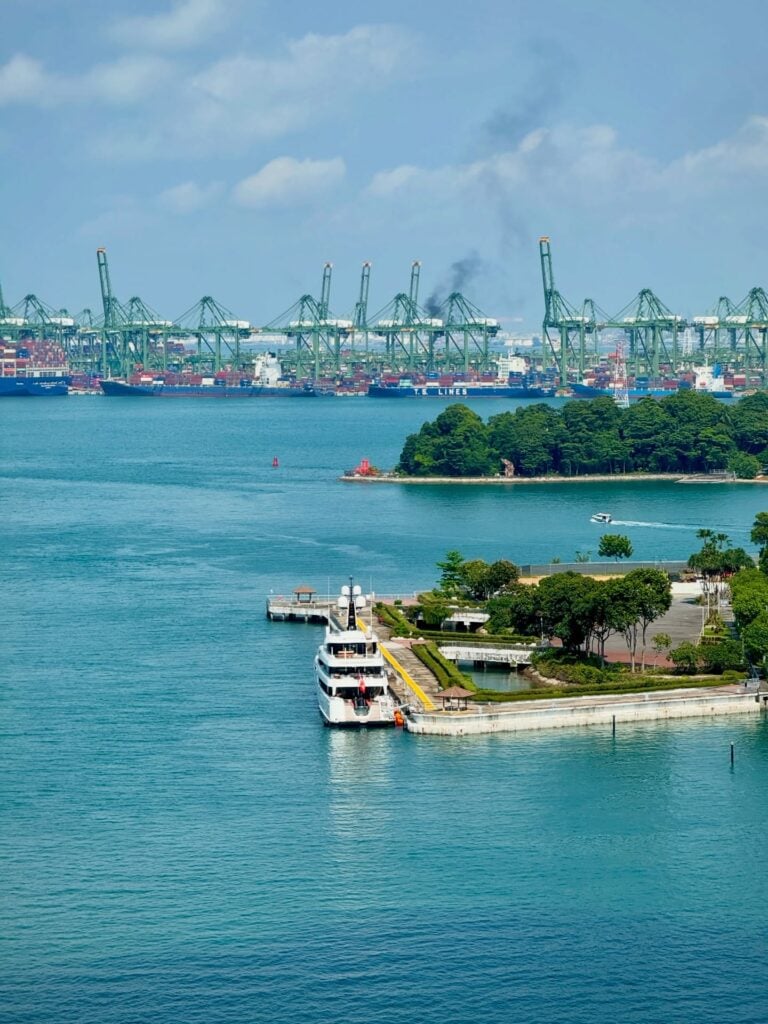
Source: @jay_jk on Instagram
Mr Ayudurai explains that Keppel was chosen as a harbour because of its deep waters.
As such, any underground construction would have needed to be exceptionally deep.
The British forces would have found it much cheaper and easier to simply traverse the 240 metres between the two forts by sea.
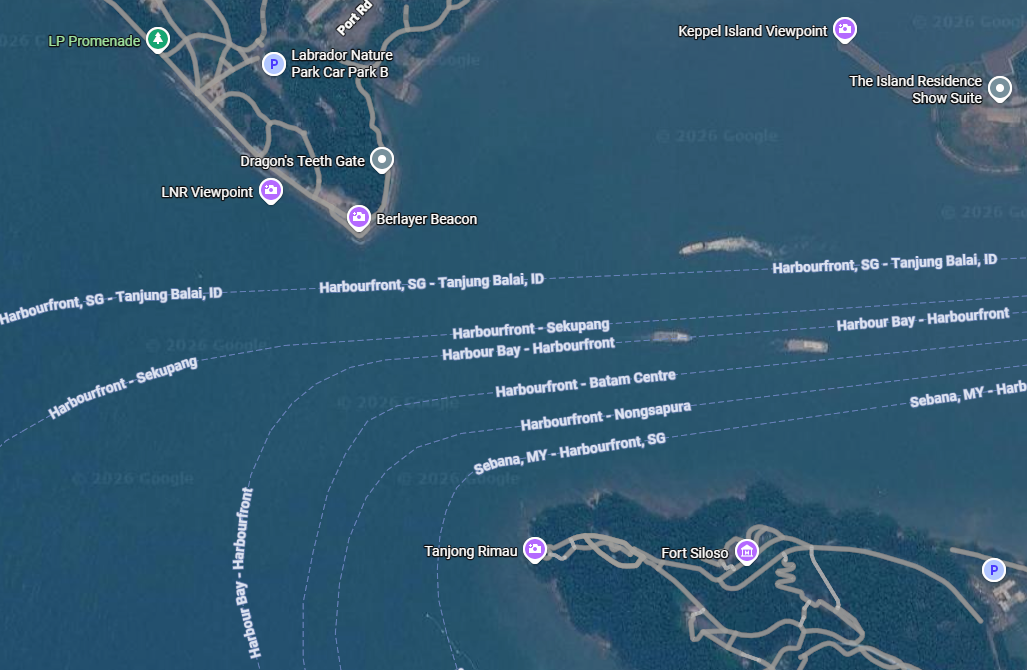
Source: Screenshot from Google Maps
The rumour likely started in 1881, as work was done to lay a minefield under the channel as added defence against enemy marine vessels.
To date, there have been no proven archival records detailing the construction of any such underground tunnels.
What are the tunnels really for?
So if the tunnels did not lead to Sentosa, what was their real purpose?
In reality, the underground network simply served as functional ammunition magazines and storage chambers.
The British army dug these subterranean rooms beneath the hill to support their heavy artillery guns above.
During wartime, soldiers needed quick access to heavy artillery shells without exposing themselves to enemy fire.
Deep underground, they stored thousands of explosive rounds inside reinforced concrete chambers.
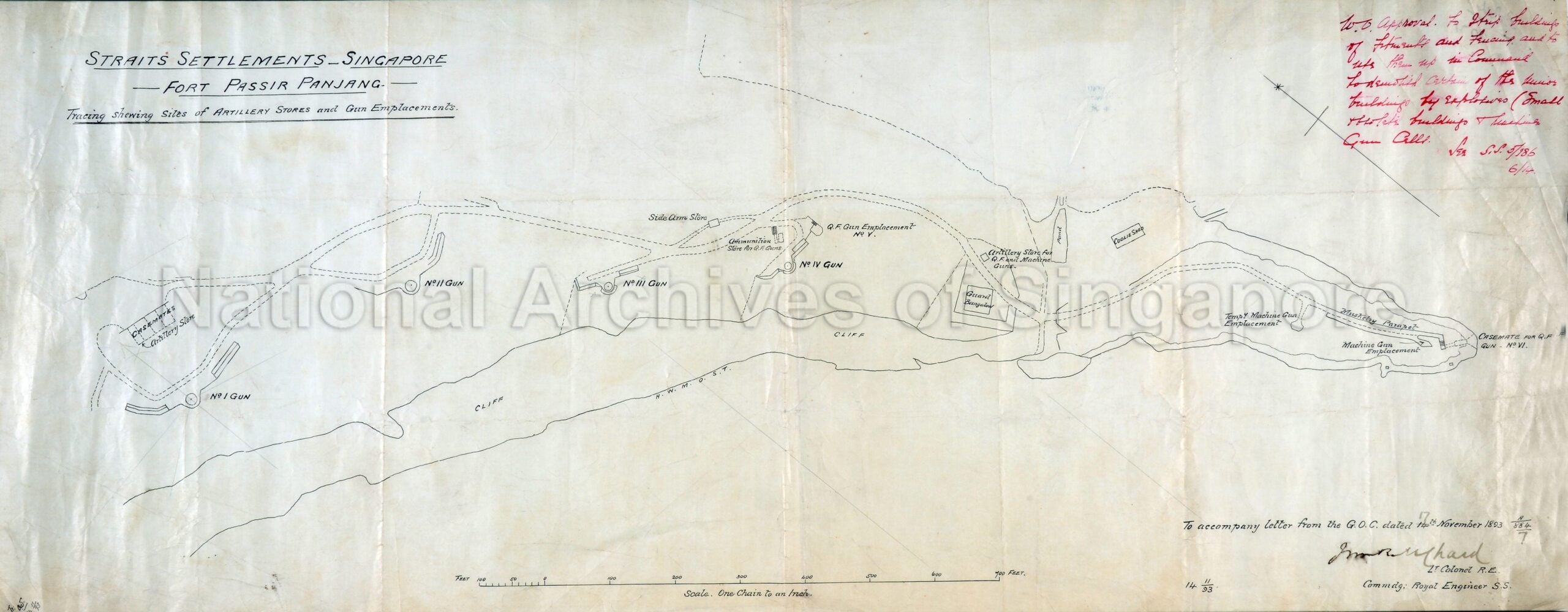
Source: National Archives of Singapore
The tunnels also featured long floor tracks designed to roll heavy ammunition crates along smoothly.
Engineers even built lay-bys inside the narrow tunnels to allow soldiers to pass each other safely.
Mechanical hoists then lifted the heavy shells directly up to the surface gun emplacements.
In addition, the complex housed sleeping quarters and command posts for the stationed artillery crew.
Authorities first unearthed the tunnels and opened them to the public in 2001. There are reportedly nine known tunnels in the network.
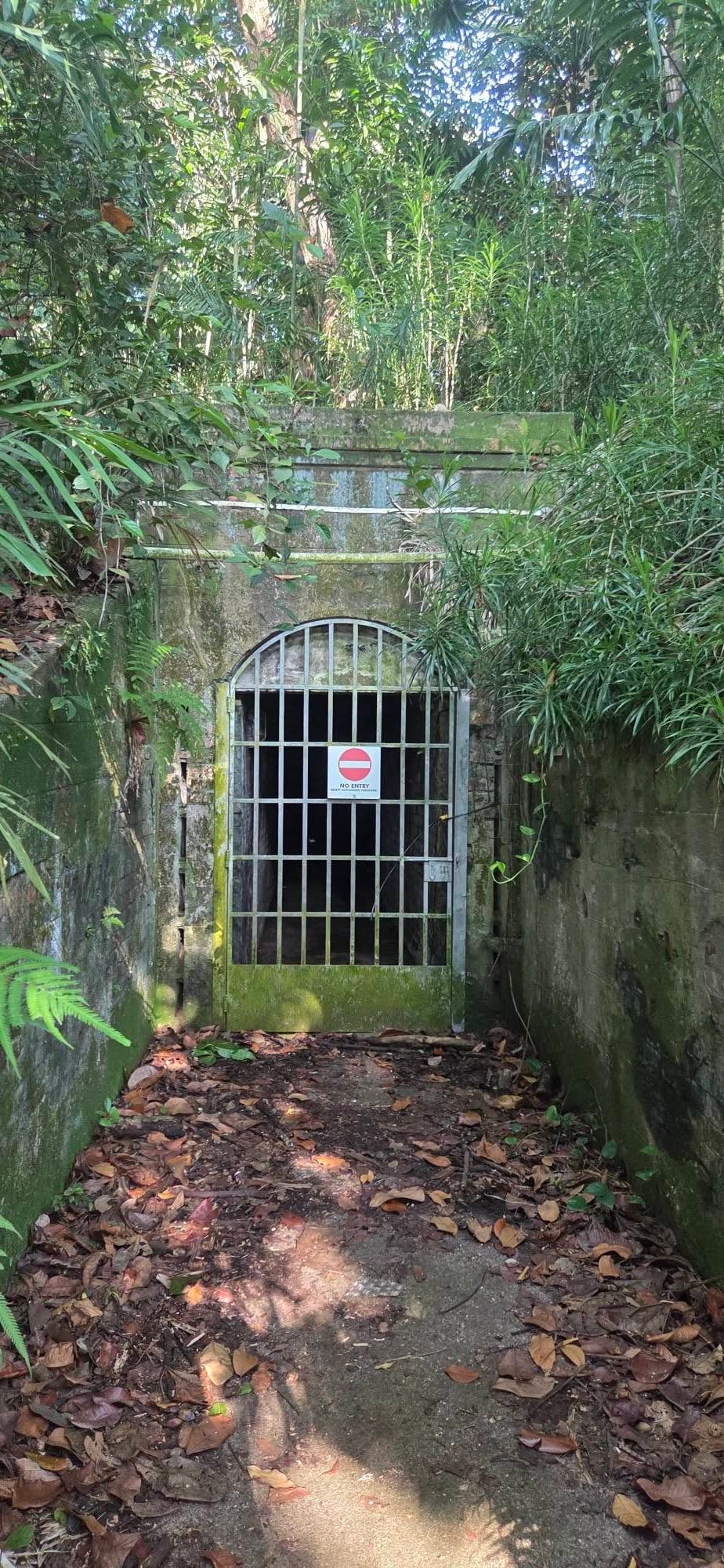
Source: Facebook
However, officials have permanently sealed the entrances from the public since 2016, due to structural stability and safety concerns.
Today, anyone who would like to visit the tunnels in person can still do so on NParks-authorised tours.
Also read: Uncovering the mystery of a lone Muslim tomb, hidden in a Kallang warehouse
Uncovering the mystery of a lone Muslim tomb, hidden in a Kallang warehouse
Have news you must share? Get in touch with us via email at news@mustsharenews.com.
Featured image adapted from NParks and Facebook.