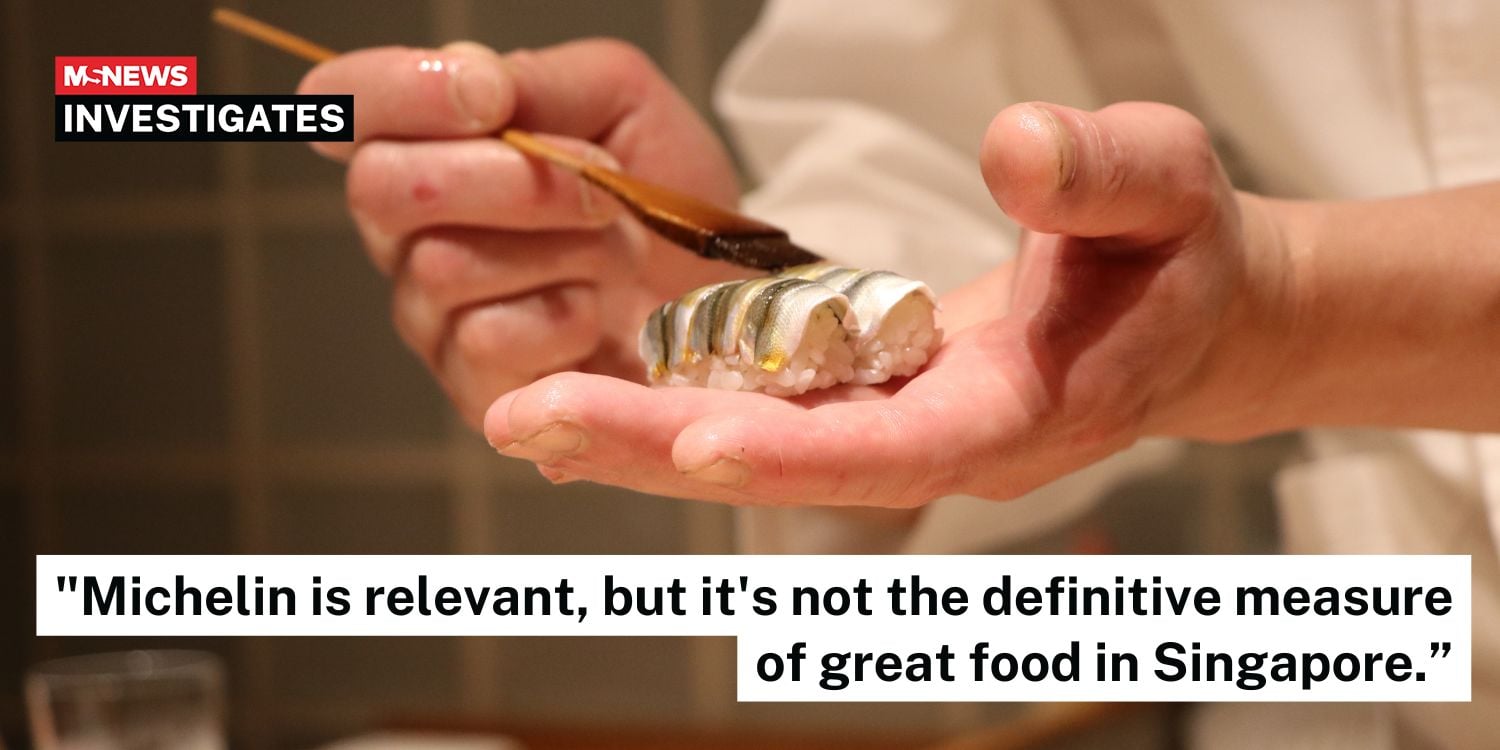

MS Investigates: Are Singaporeans really into local Michelin-rated food?
Walk through any food street in Singapore today, and chances are that you’ll spot the word “Michelin” plastered across signboards, menus and shop fronts.
A hawker proudly displays its Bib Gourmand certificate. A ramen shop advertises that it’s “Michelin-recommended. Another café mentions its chef had formerly worked at a Michelin-starred restaurant overseas.
But amidst all this marketing, it raises a simple question: what does “Michelin-rated” actually mean?
And perhaps more importantly, in a country where customers willingly queue 45 minutes for an unrated chicken rice, does the Michelin Guide really matter?
Michelin isn’t just about stars
Most people use the term “Michelin-rated” to describe any restaurant associated with the Michelin Guide, but it’s actually more nuanced than that.
The highest honour is, of course, the Michelin Star.
Restaurants can receive one, two, or three stars based on factors such as ingredient quality, mastery of cooking techniques, value for money, consistency, and the chef’s personality expressed through the cuisine.
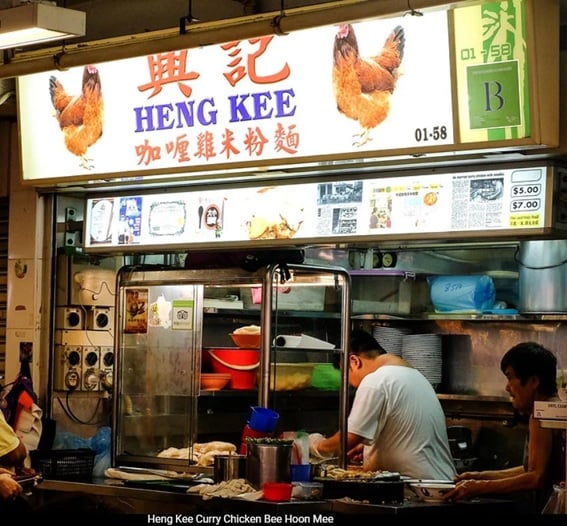
Then there’s the Michelin Bib Gourmand. Introduced in 1997, the award highlighted establishments serving exceptionally good food at moderate prices.
Source: Google Maps
In Singapore, this category has become especially significant because it includes numerous beloved hawker stalls.
Food establishments may also be listed under selected restaurants in the Michelin Guide without receiving a star or being placed in the Bib Gourmand list.
In other words, being “Michelin-rated” doesn’t mean a food establishment has earned a star.
Food influencer Rachel Tay (@goofytwocooks) said: “I have great respect for the dedication, consistency, and craftsmanship it takes to earn Michelin recognition. Every star, Bib Gourmand, or selection represents years of hard work and a commitment to excellence.”
Singapore’s relationship with Michelin is unique
When the Michelin Guide arrived in Singapore back in 2016, reactions were mixed.
Some celebrated the international recognition, while others questioned whether an overseas guide could accurately judge local food culture.
Singaporeans have long relied on recommendations from family, friends, online reviews, and, increasingly, TikTok creators.
Source: Michelin Guide
Hawker centres thrive because locals know where the good food is, often without needing any formal endorsement or recognition.
However, having The Michelin Guide on our shores has also placed Singapore on the global food scene.
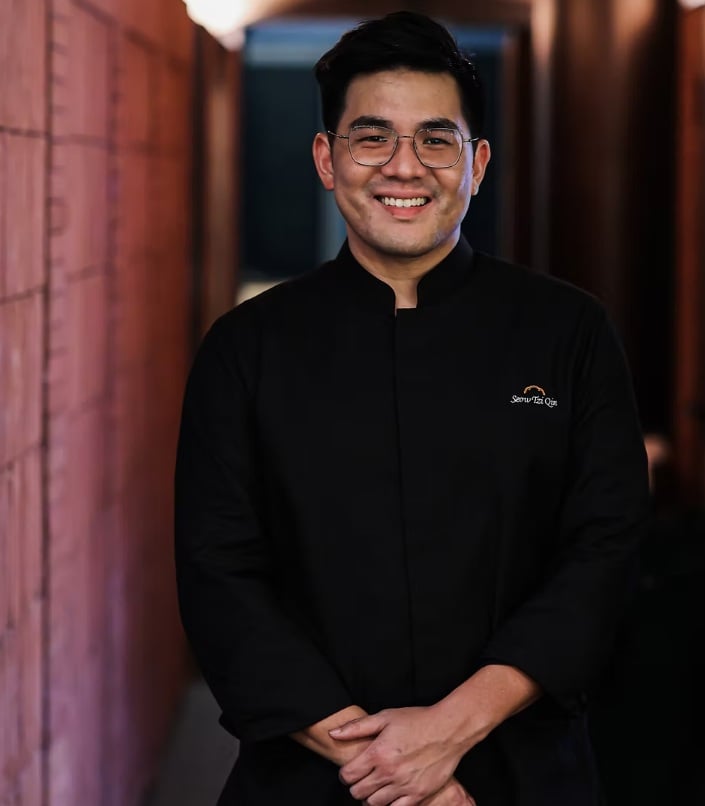
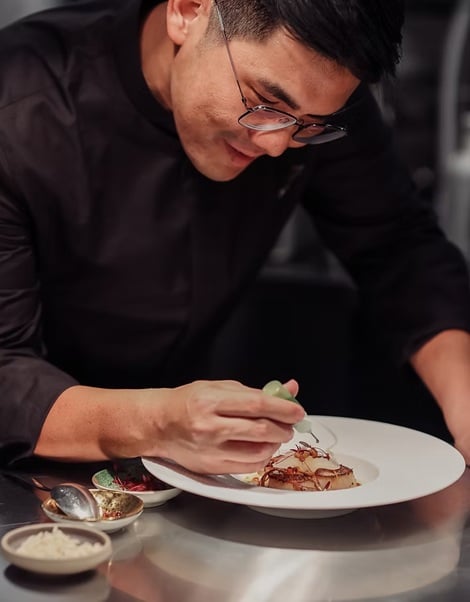
Chef Seow Tzi Qin (TQ), 37, Chef Partner at Jiak Kim House, believes Michelin’s role is significant, but should be kept in perspective.
Source: Chef Seow Tzi Qin
“Michelin is relevant, but it’s not the definitive measure of great food in Singapore. It gives restaurants international credibility, rewards consistency and craftsmanship, and helps position Singapore as a world-class dining destination,” he said.
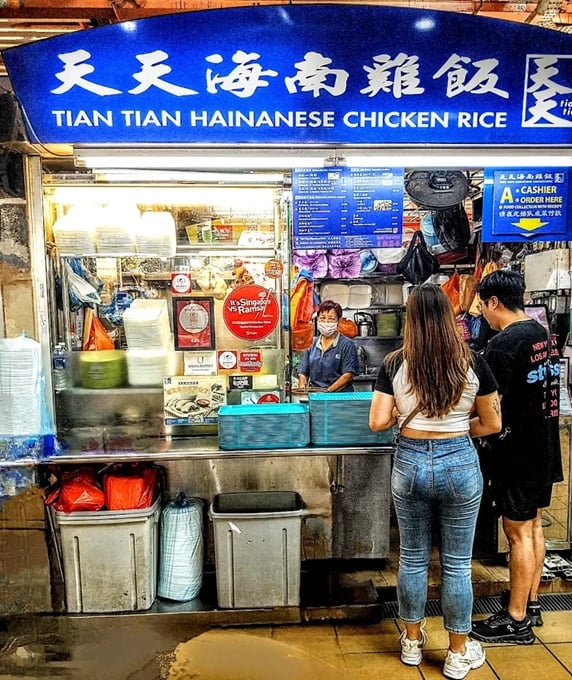
Tourists now specifically seek out Michelin-recognised hawker stalls, sometimes joining queues stretching over an hour to sample dishes that locals have enjoyed for decades.
Source: Google Maps
For businesses, this recognition can be transformative and life-changing.
Leong Shu Hua, a self-professed foodie, told MS News: “I do think the Michelin Guide will encourage people to explore and try more. It’s like the power of branding where some people are drawn to a particular brand.”
The 39-year-old senior tax manager added: “I tend to refer to the Michelin Guide more when I’m overseas, but not as much in Singapore.”
What do Singaporeans actually eat?
For everyday Singaporeans, convenience often outweighs prestige.
A neighbourhood zi char (cooked food), prata shop, or nasi lemak stall may not be in the Michelin Guide but can still attract loyal customers.
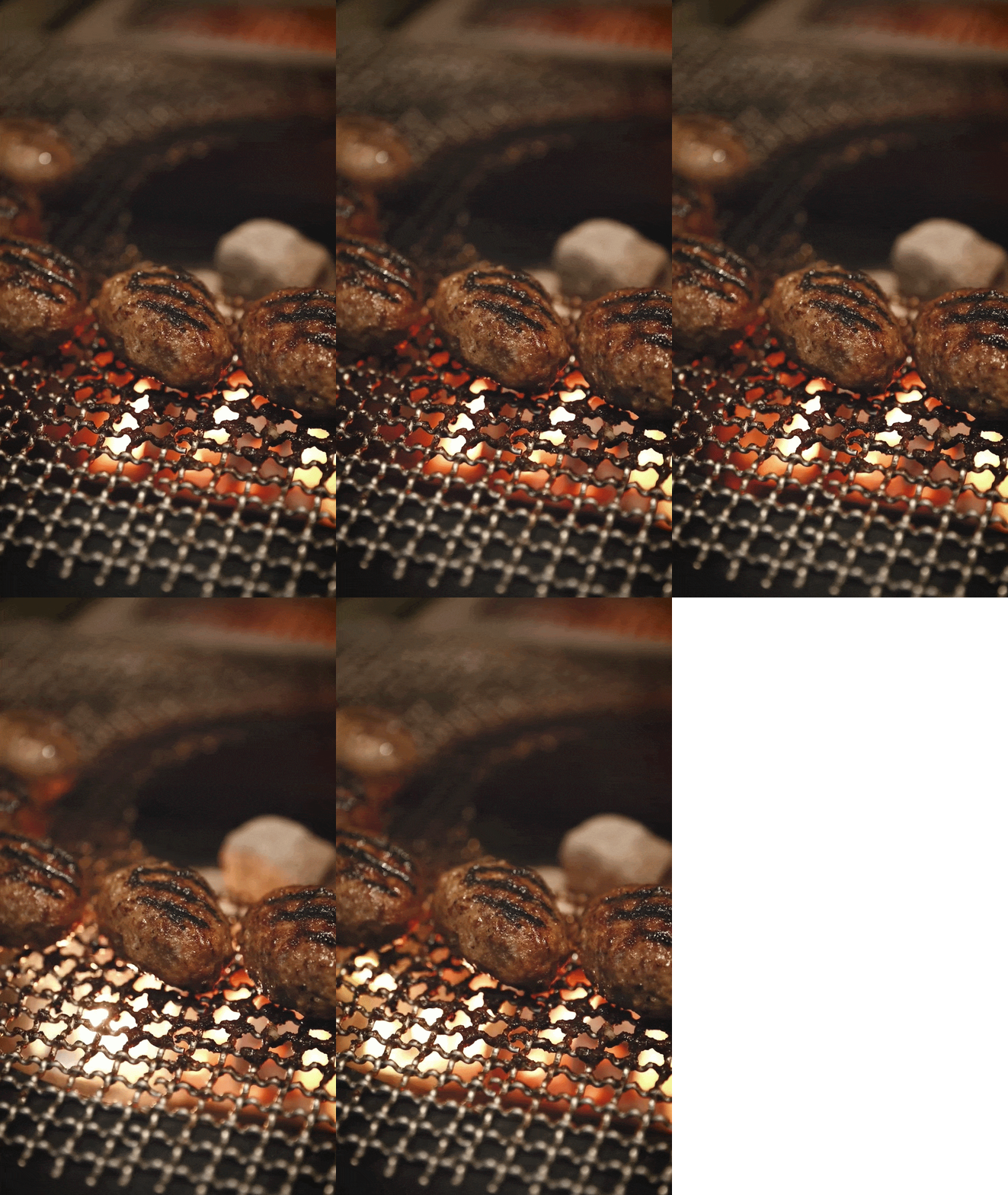
Food trends in Singapore also move remarkably quickly. One moment, everyone is queuing for a new matcha café. The next, it’s Hamburg steaks or viral cube croissants.
Source: @hikiniku.to.come on Instagram
Michelin, though, tends to reward consistency over trends. Inspectors revisit restaurants over time rather than chasing the latest social media sensation.
In other words, a Michelin recommendation and viral popularity don’t always overlap.
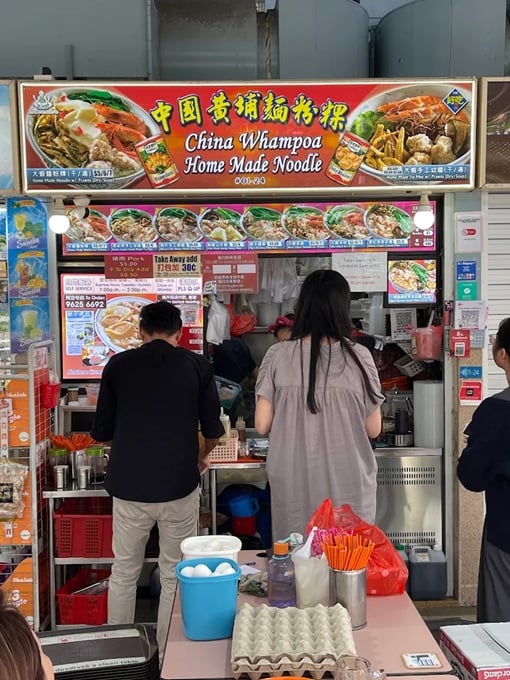
Chef TQ told MS News: “Singaporeans judge food differently too. We value ‘wok hei’, comfort, nostalgia, cultural authenticity and value for money, qualities that don’t always fit neatly into Michelin’s framework.”
“Sometimes a humble hawker meal can leave a stronger impression than a fine-dining experience,” he added.
Source: Google Maps
“More importantly, Michelin should never be the only measure of great food. Some of my most memorable meals have come from places with no Michelin recognition at all,” said Ms Tay.
“Great dining is about flavour, consistency, value, hospitality, and the experience it creates, not just an award,” she added.
Social media is the new food guide
Platforms like TikTok, Instagram and Xiaohongshu have arguably become more influential than traditional restaurant guides for young diners.
A single viral video can send thousands of customers to a new café, hawker stall or restaurant overnight. Conversely, a negative review can spread just as quickly.
@ice_dwhite [NEW‼️] Kyoto’s viral omurice is now in Singapore 📍All Ichiban Boshi Outlets 🗓️ Now till 31st October Check out our IG/ Tele/ TikTok -@ice_dwhite for more!! #kyotoomurice #sgfoodie #omurice #chefMotokichiYukimura #IBBxKichiShiokOmurice
Unlike Michelin’s anonymous inspection process, social media recommendations tend to be immediate, personal, and (more often than not) based on visual appeal as much as taste.
That doesn’t necessarily mean one is better than the other.
Source: Michelin Guide
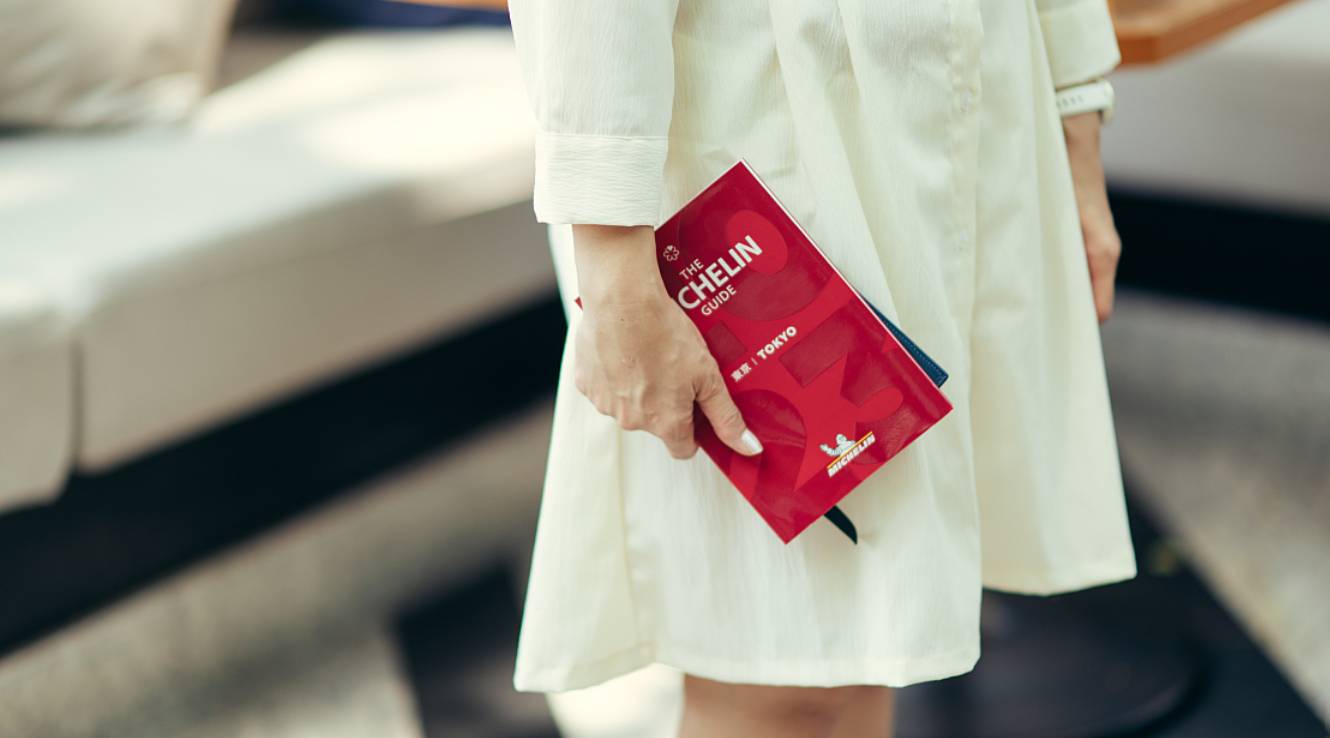
Michelin offers a curated assessment from professional inspectors, while social media reflects the opinions, and sometimes hype, of regular diners.
Both influence where people choose to eat, but in different ways.
Is Michelin worth paying attention to?
It depends. If you’re travelling, the Michelin Guide can be a useful reference for finding good food in an unfamiliar city.
Ms Tay told MS News: “For me, Michelin is a useful guide, not the deciding factor. The best food discoveries often come from passionate food lovers, local recommendations, and simply trusting your own taste buds.”
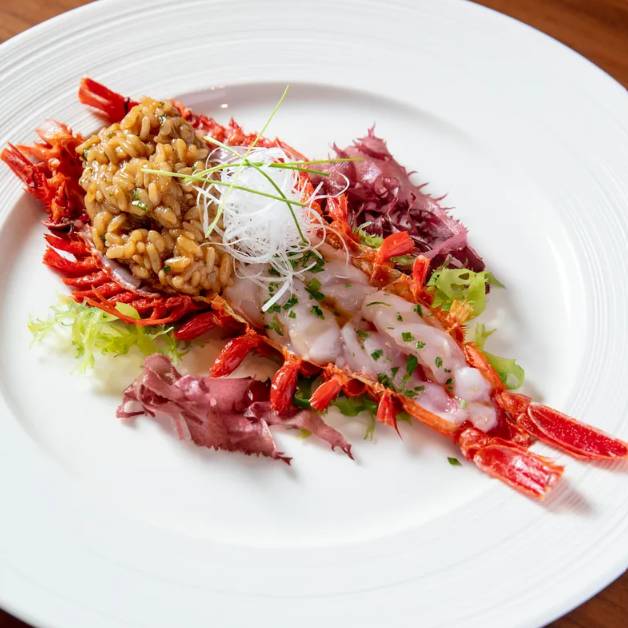
For special occasions, a Michelin-starred restaurant may offer a unique and memorable dining experience.
Source: Michelin Guide
However, if you’re simply looking to enjoy a good plate of char kway teow or a comforting bowl of fish soup after work, the Michelin Guide may not be your first consideration.
A taxi driver may also recommend a better supper spot than an internationally recognised guidebook.
Some office workers may swear by the cai fan stall downstairs simply because it’s fast, affordable and consistently delicious.
Taste, after all, is deeply personal and subjective.
The verdict
Michelin recognition undoubtedly carries prestige and can open doors for restaurants and hawkers alike.
It attracts tourists, boosts business, and highlights culinary excellence. However, it isn’t the only indicator of good food.
Ms Tay agreed: “At the end of the day, good food is meant to be enjoyed, with or without a Michelin label.”
“The risk is when chefs start cooking for Michelin instead of their guests. Food can become overly complicated or lose touch with its cultural roots,” Chef TQ explained.
Source: Chef Seow Tzi Qin
“Michelin should be seen as a benchmark and global marketing tool, not the only definition of success,” he added.
Chef TQ also felt that public loyalty, cultural relevance, commercial sustainability and, above all, genuinely delicious food matter just as much.
“For Jiak Kim House, Michelin recognition would be an honour, but building a distinctive Singaporean identity that keeps diners coming back is ultimately more important than chasing a star.”
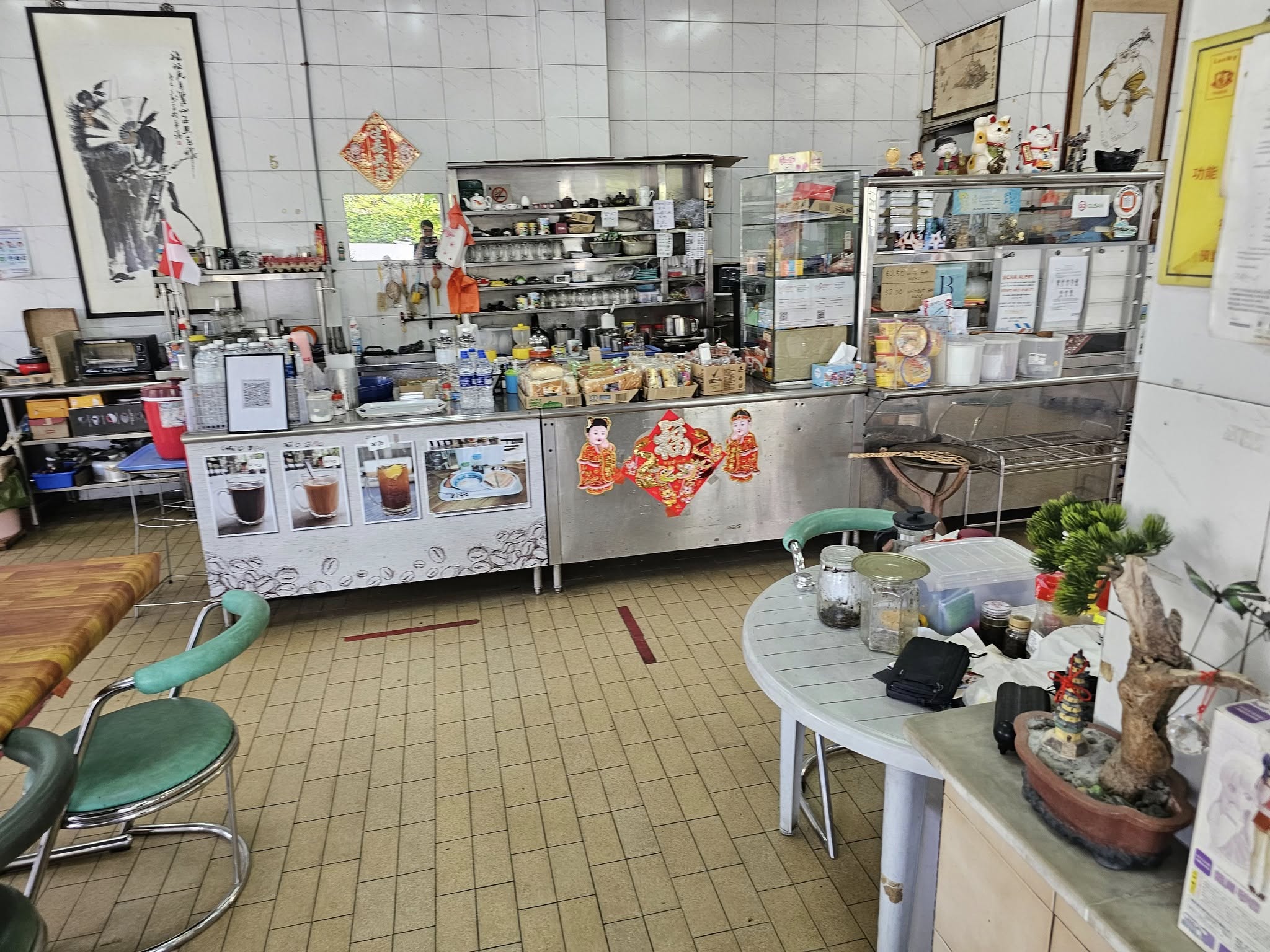
In Singapore, some of the most memorable meals can be found in places with peeling paint, plastic stools, and cash-only payment.
Source: Edmund Ng on Facebook
Locals don’t usually ask whether a stall is Michelin-rated before joining the queue. They ask a far simpler question: “Nice not?”
And perhaps that’s what makes Singapore’s food culture so distinctive.
Michelin may help visitors discover great meals, but it’s the everyday diners who ultimately decide which stalls can stand the test of time.
Also read: Michelin-starred restaurant Chef Kang’s to close in October 2024 as owner retires without successor
Michelin-starred restaurant Chef Kang’s to close in October 2024 as owner retires without successor
Have news you must share? Get in touch with us via email at news@mustsharenews.com.
Featured image adapted from Xiayujie326 on Canva for illustration purposes only.