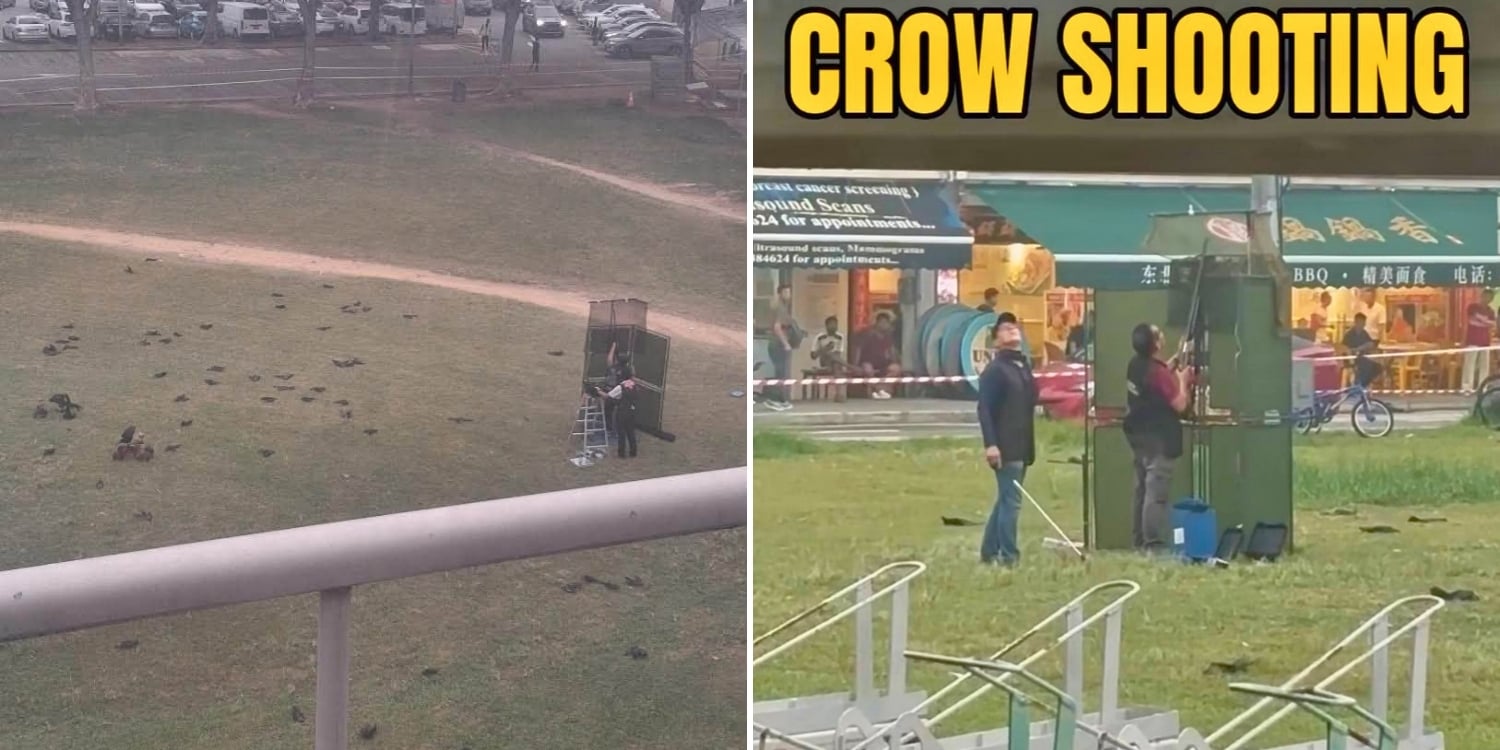

Crow culling near Aljunied MRT sparks online debate, as netizen encourages people to write in to MPs to stop shooting
A crow culling operation near Aljunied MRT has sparked online debate after videos and photos of the incident circulated on social media.
In response, an animal advocacy group is calling for more humane ways to manage urban bird populations.
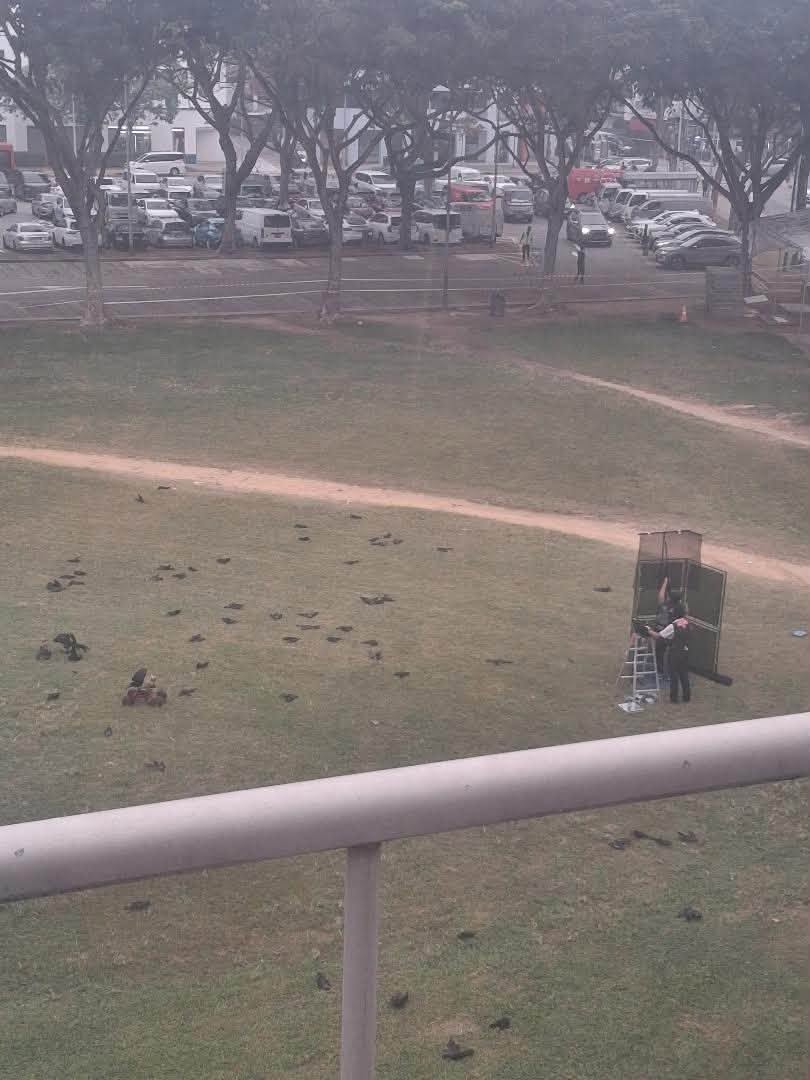
Source: Urban Birds Initiative Singapore on Facebook
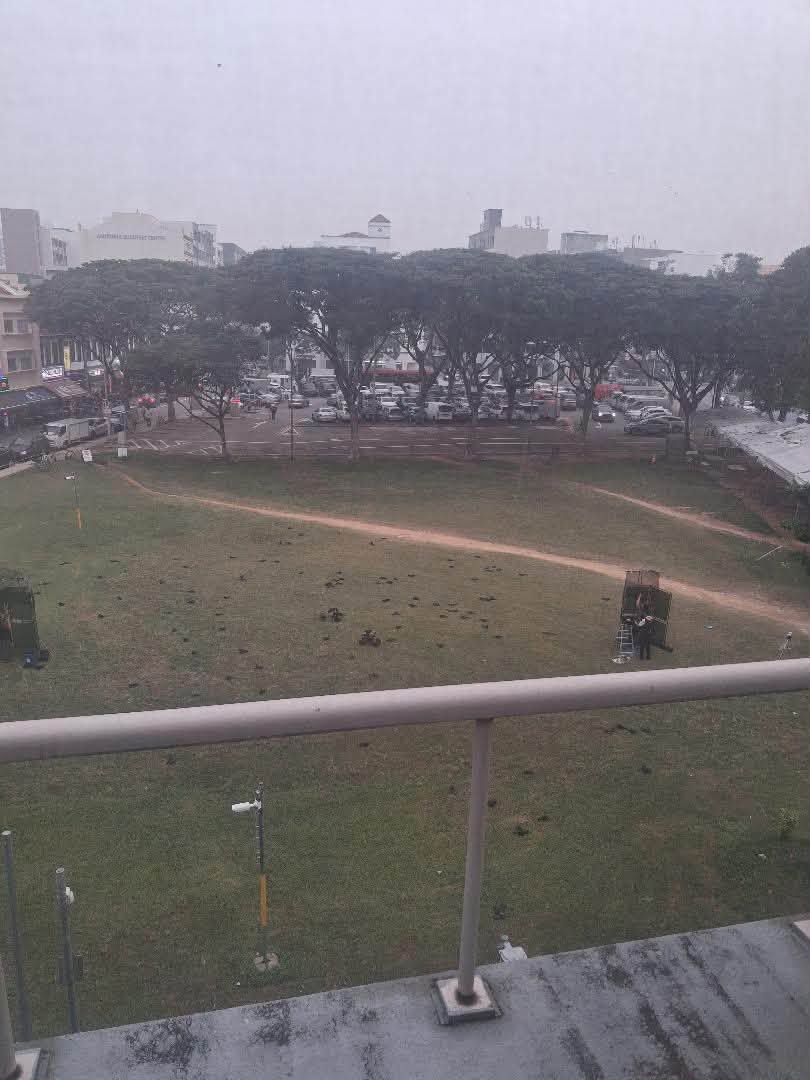
Urban Birds Initiative Singapore shared photos of dead crows on Facebook on Thursday (15 Oct), saying the incident had been shared by a concerned follower.
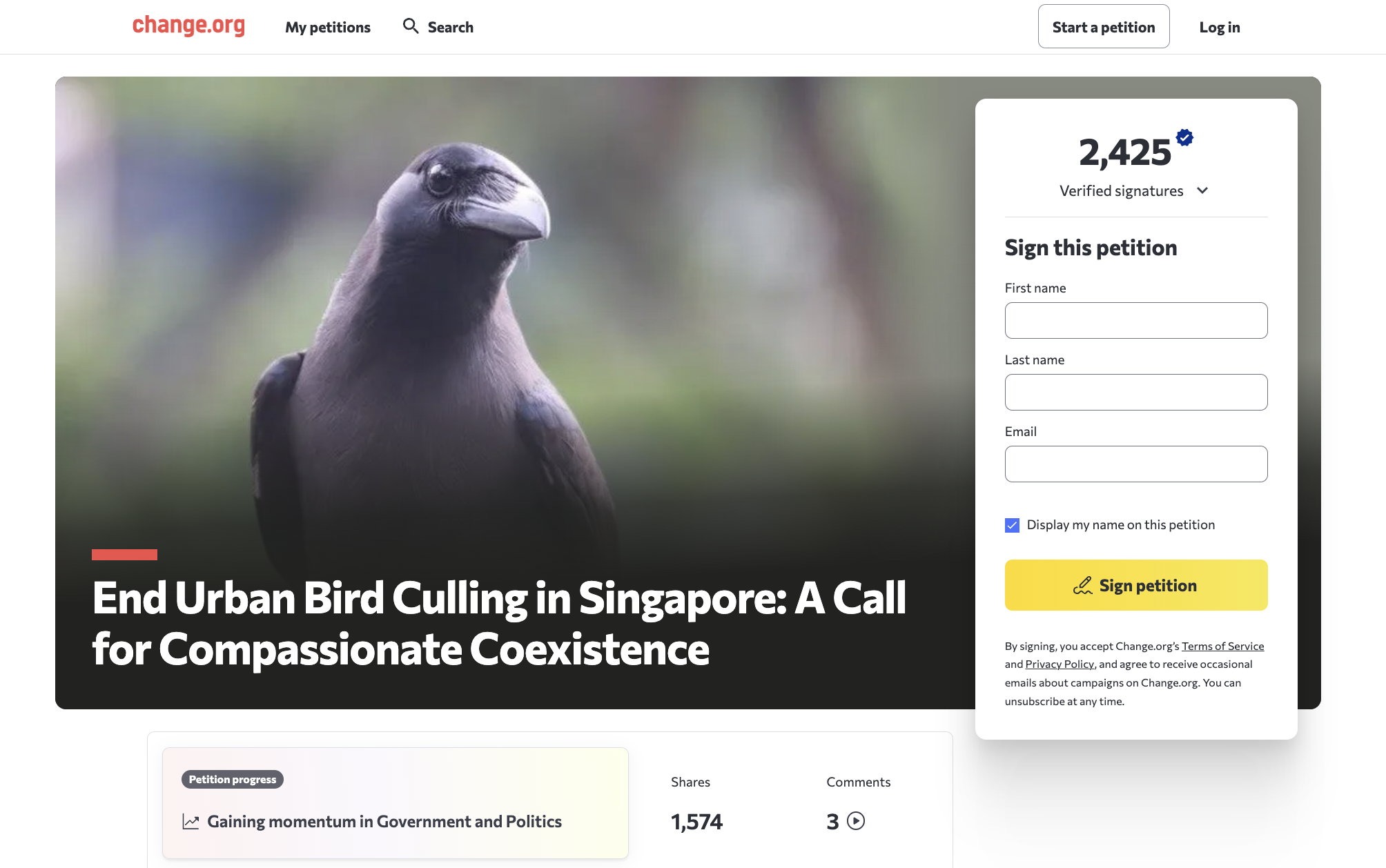
The group also urged the public to sign a petition titled “End Urban Bird Culling in Singapore: A Call for Compassionate Coexistence”.
As of 3pm on Friday (16 Oct), the petition had garnered more than 2,400 signatures.
Crow culling near Aljunied MRT draws crowds and online reactions
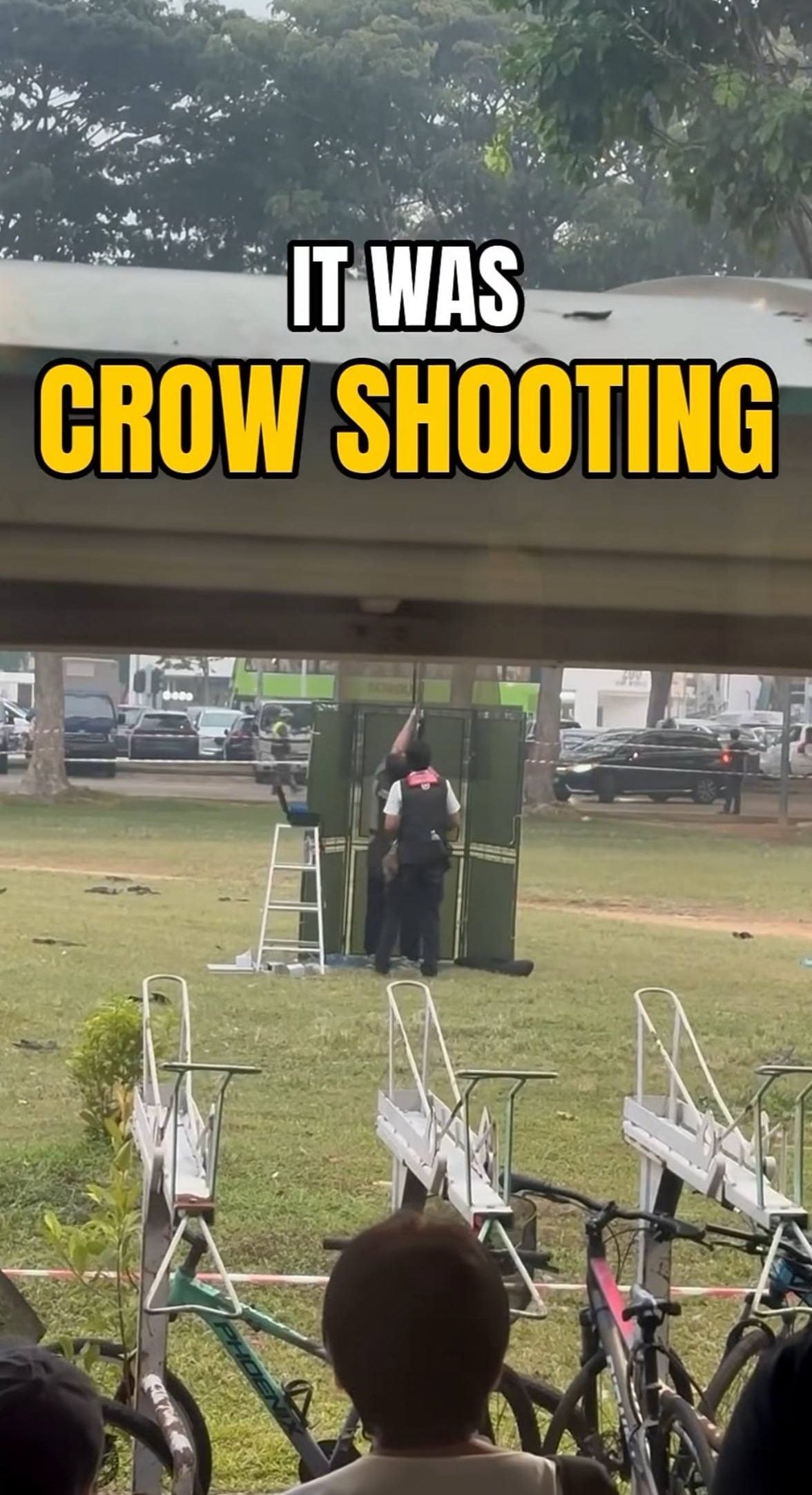
Separately, an Instagram video showed crowds gathering near Aljunied MRT after hearing what sounded like gunshots.
The area where the culling was taking place was cordoned off, while people gathered to watch the operation.
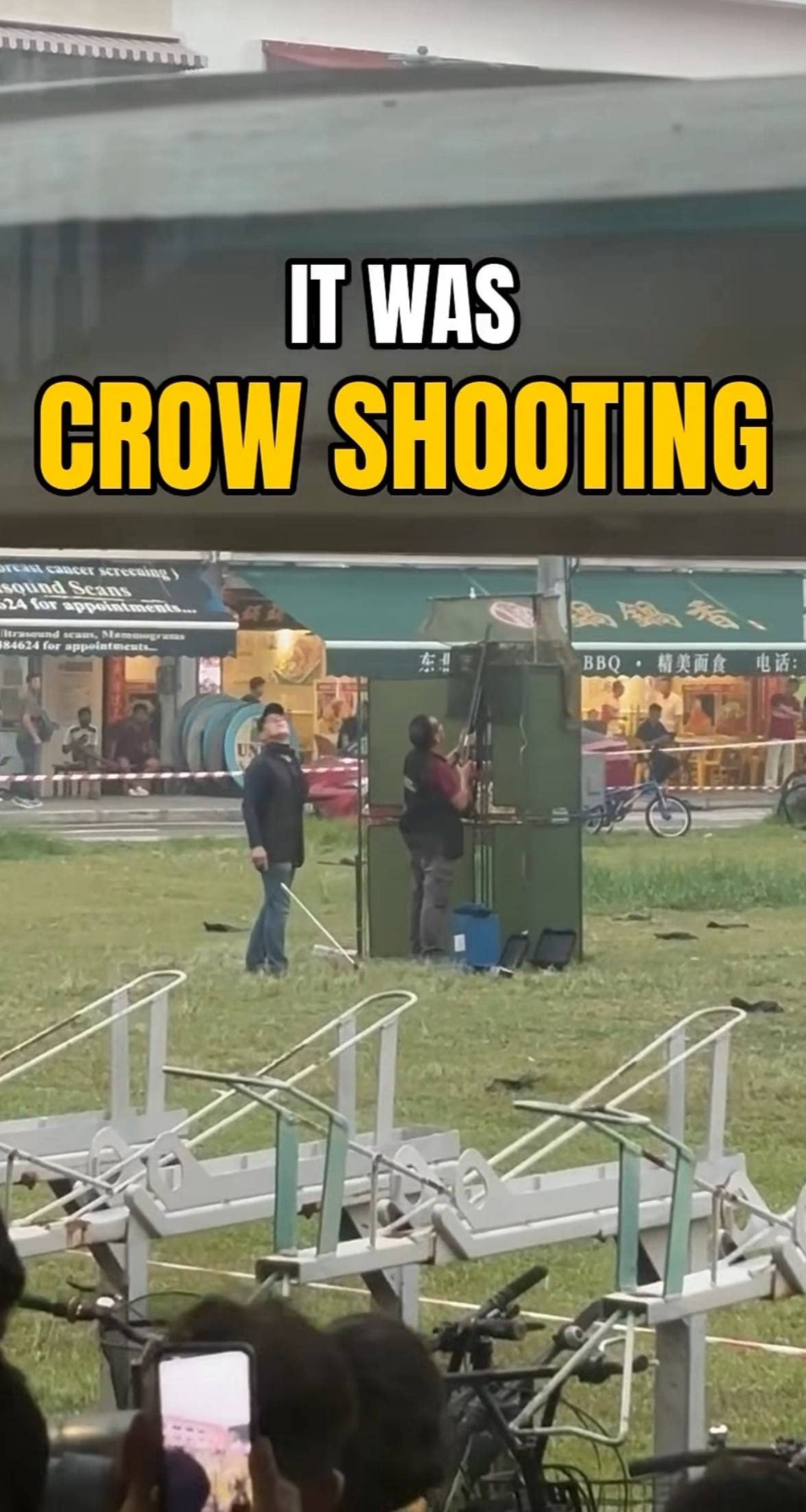
Source: @theglennnnn on Instagram
The footage was shared by content creator Glen Lim, who described the scene as unusual enough to draw the attention of passers-by.
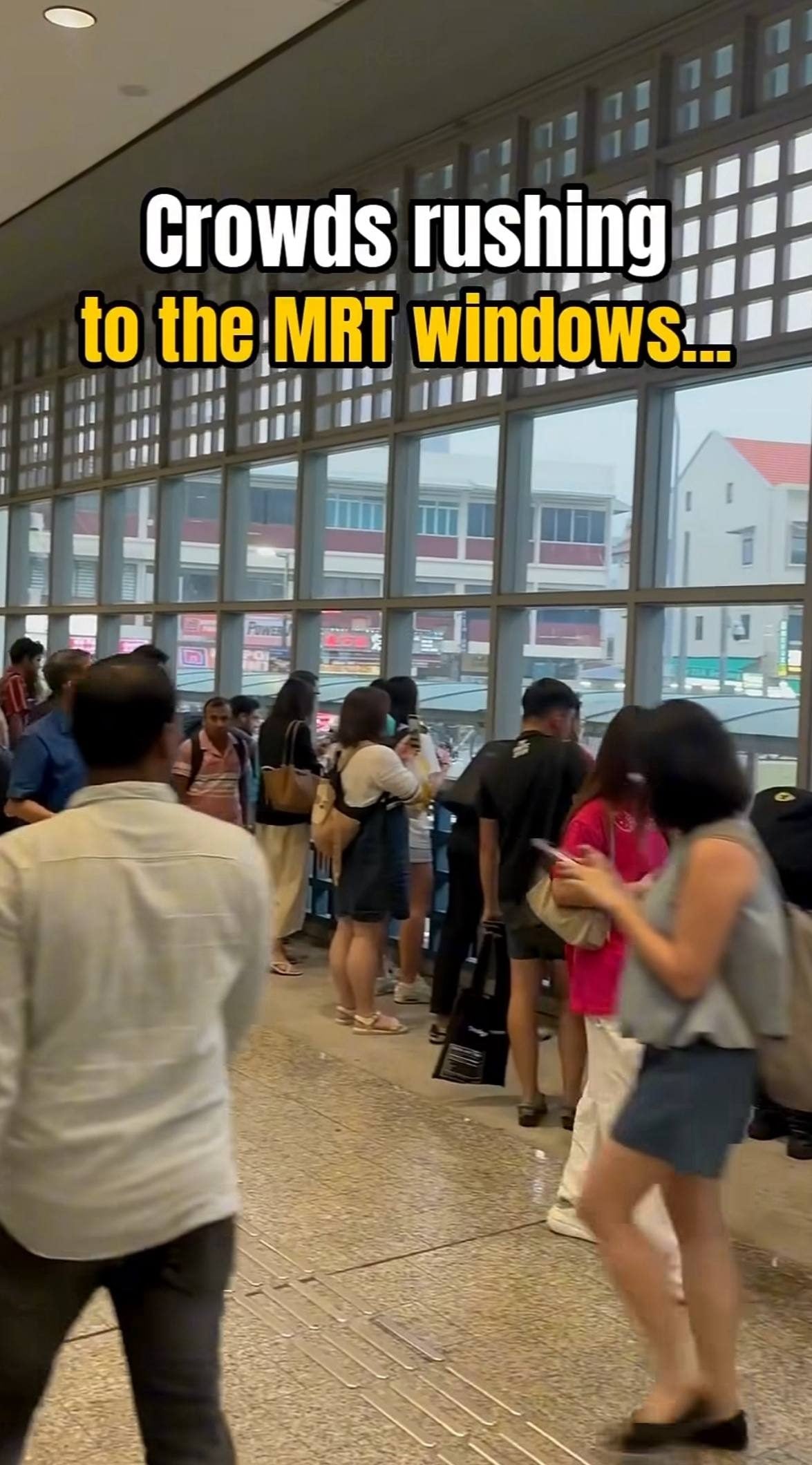
Source: @theglennnnn on Instagram
In its Facebook post, Urban Birds Initiative Singapore apologised to those who might find the images distressing.
They further thanked people who continued to speak up for the birds despite the difficult scenes.
The group also encouraged concerned residents to write to the National Parks Board (NParks) and their Members of Parliament (MPs) to share their views.
The incident prompted mixed reactions online, with many commenting on why culling was important.
Some commenters expressed concern about the impact of culling on other bird species. Meanwhile, others said the growing crow population had caused problems for residents.
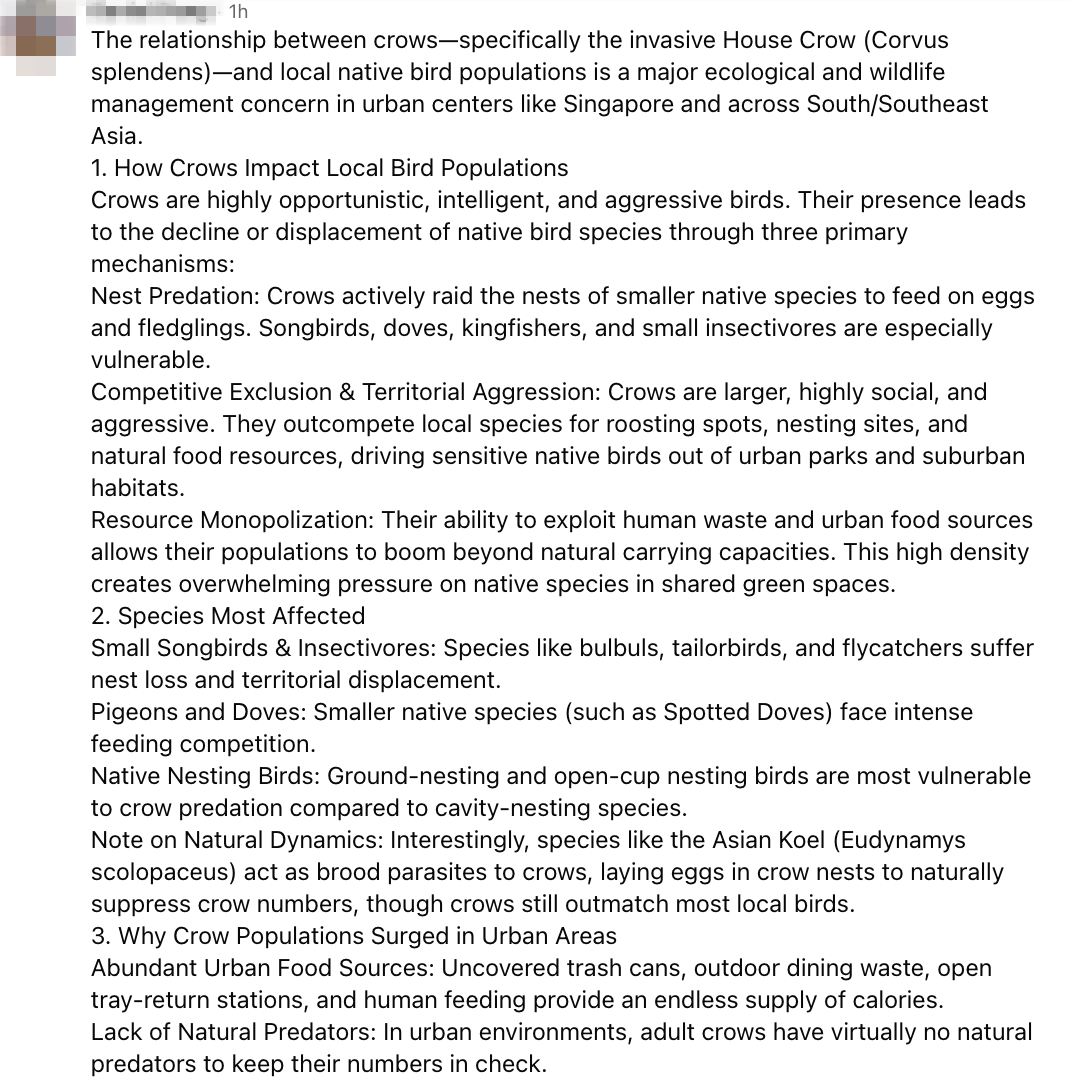
Source: Facebook
One commenter claimed that the birds’ loud calls disturbed their children and elderly parents in the mornings.
She then questioned whether those opposed to culling had considered the experiences of affected residents.

Source: Facebook
Another argued that those criticising the practice “probably have not been affected by the increased number of crows”.
The netizen added that abundant food sources and a lack of natural predators allow urban crow populations to grow. This causes the “ecosystem in the nature [to be imbalanced]”.
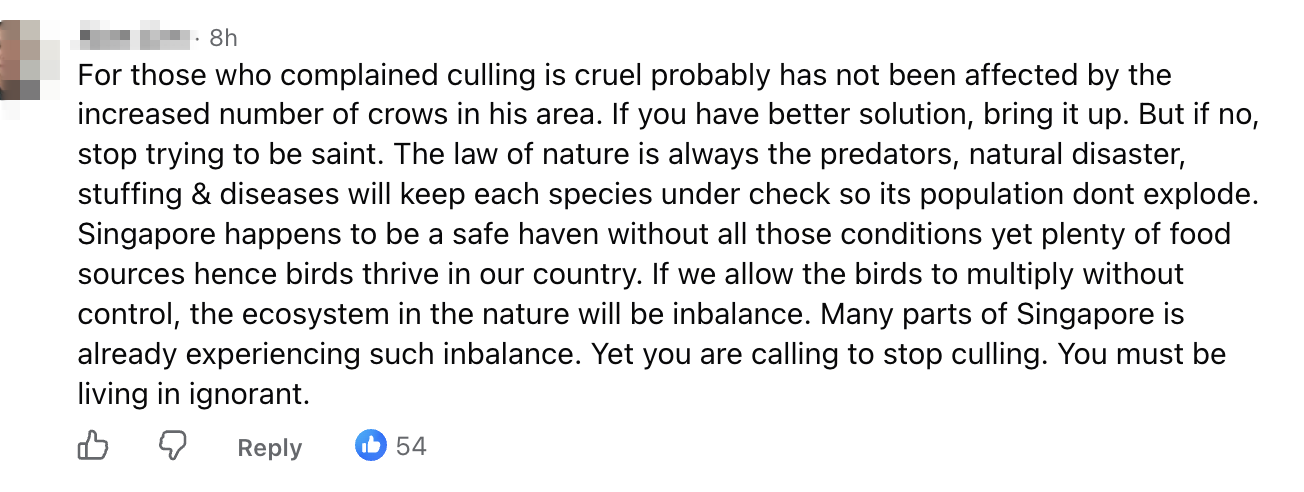
Source: Facebook
Petition calls for greater transparency and non-lethal alternatives
The petition, titled “End Urban Bird Culling in Singapore: A Call for Compassionate Coexistence”, calls on the authorities to reconsider the use of lethal methods and prioritise longer-term approaches to managing urban bird populations.
It argues that repeated culling over the years suggests existing methods may not adequately address the underlying causes of the problem, particularly the availability of human-generated food waste.
Source: Change.org website
The petition calls for NParks to publish more comprehensive data, including urban bird population counts, the effectiveness and costs of different management methods, public attitudes towards bird control, and the ecological and social impact of culling.
It also seeks stronger legal protection for house crows, rock pigeons, white-vented Javan mynas and common mynas, which are exempt from certain wildlife management approval requirements under the Wildlife Act.
The group further calls for community consultation before culling operations.
Independent observers from animal welfare organisations can monitor operations. Meanwhile, public reports detailing the number of birds culled, methods used and reasons for the decisions, can be released.
For house crows, the petition argues that reducing access to food waste and other human-generated food sources could be more effective in the long term than relying on culling alone.
Source: Urban Birds Initiative Singapore on Facebook
It also raises concerns about possible ecological consequences if crow populations are reduced without a fuller understanding of how other species might respond.
For pigeons, the petition points to alternatives used in other cities.
These include pigeon lofts where eggs can be removed or replaced. Such measures can prevent birds from nesting in unwanted areas.
NParks says crow shooting complements existing measures
NParks has said house crows are an invasive, non-native species that threatens Singapore’s native biodiversity.
The birds can also cause noise and hygiene issues, and may attack residents when they perceive their young to be threatened.
In July, NParks said it had culled more than 500 crows since shooting operations resumed in March 2026, CNA reported.
It also announced plans to progressively expand the operations to more districts, including Bukit Panjang, Marine Parade and Tanah Merah.
Source: @theglennnnn on Instagram
The board said it uses a multi-pronged approach to manage crow populations.
These include removing nests, studying crow ecology, reducing food sources, modifying habitats and taking enforcement action against illegal bird feeding.
It described shooting as a complementary measure alongside these existing efforts, which are intended to achieve a gradual and sustained reduction in crow numbers.
In a Facebook post on 22 July, Senior Minister and Minister for Home Affairs K Shanmugam also highlighted other measures used to manage crow populations, including trapping, nest removal, tree pruning and reducing food sources.
He urged residents not to feed birds and to dispose of food waste properly.
Also Read: Crow shooting operations ‘successfully commenced’ in Yishun, to resume in 9 districts: Chee Hong Tat
Have news you must share? Get in touch with us via email at news@mustsharenews.com.
Featured image adapted from Urban Birds Initiative Singapore on Facebook and @theglennnnn on Instagram.