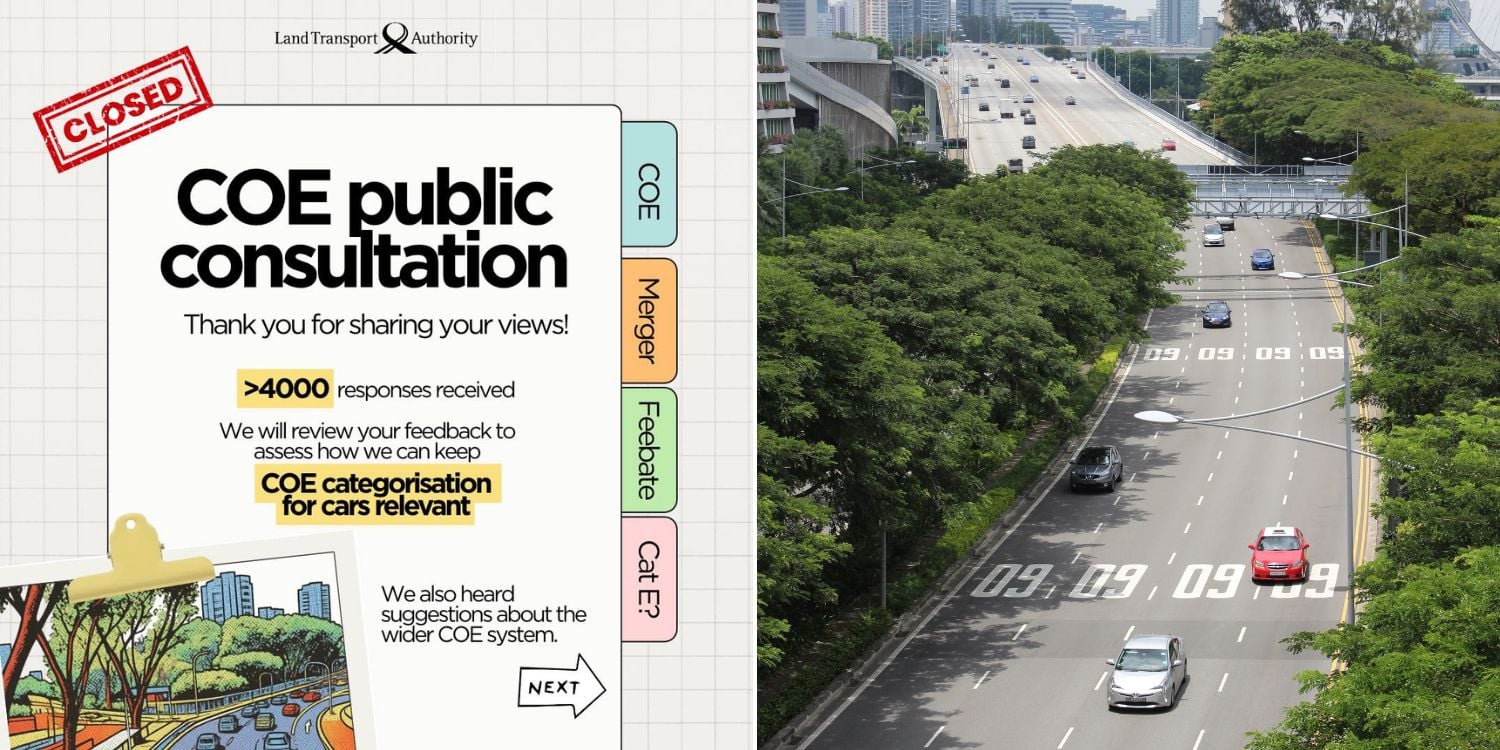

LTA receives over 4,000 responses in recent public consultation on COE categorisation
On Tuesday (3 Nov), the Land Transport Authority (LTA) shared on Facebook that it received over 4,000 responses to its public consultation on Certificate of Entitlement (COE) categorisation.
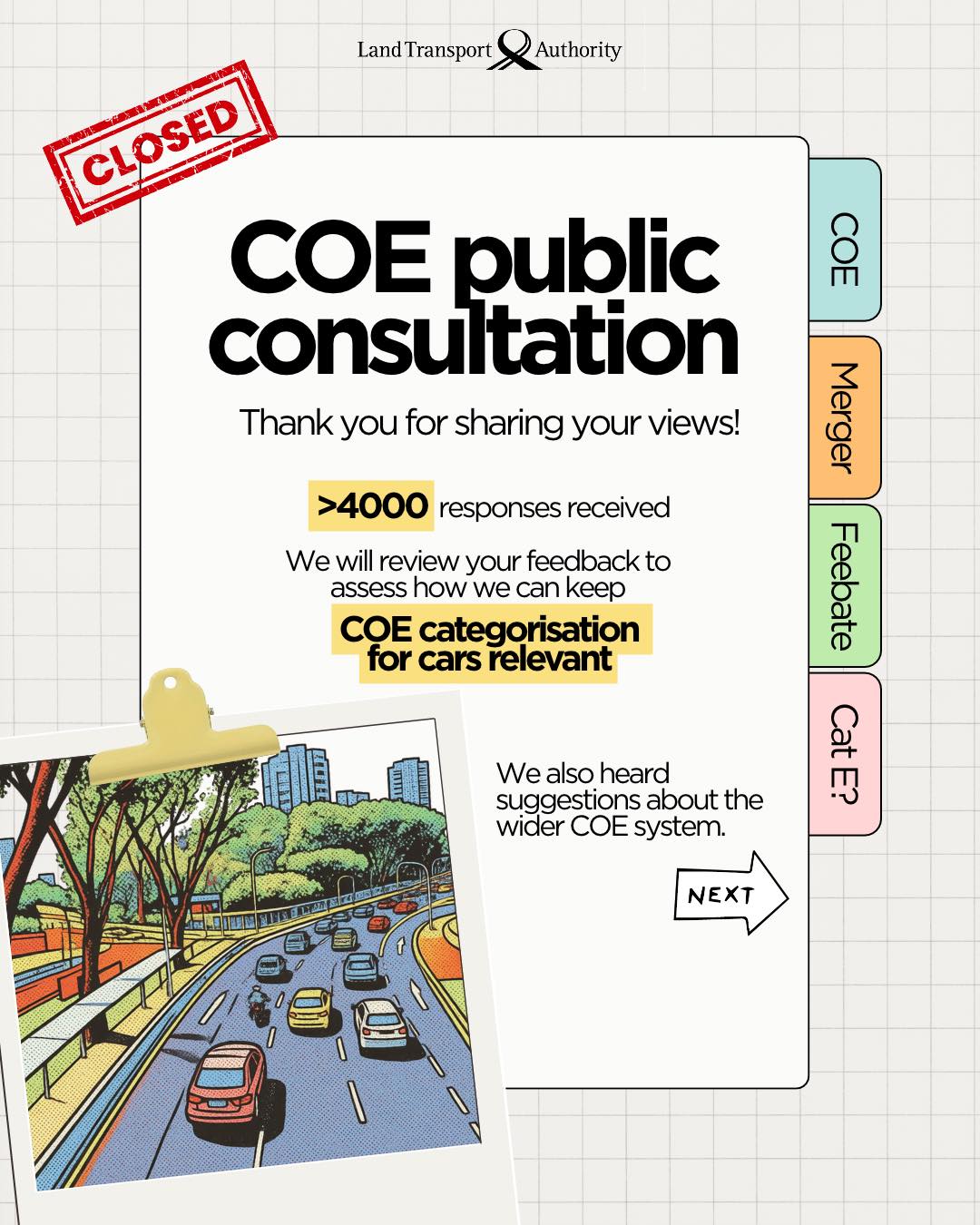
Source: @ltasg on Instagram
The consultation began on 8 Oct and ended on 2 Nov, allowing stakeholders, such as buyers and sellers of cars, to suggest ways to keep the categorisation relevant in the evolving vehicle market.
The review is expected to be completed by the end of 2026, and LTA will share the findings and recommendations by the first half of 2027.
Opened public consultation to keep COE relevant in today’s market
Since 2014, engine capacity and engine power have been used to distinguish between mass-market and higher-value cars.
However, advances in vehicle technology have made these criteria less effective.
Source: Varun Chandak on Pexels, for illustration purposes only
LTA noted that manufacturers are increasingly able to adjust vehicle specifications to fit within existing Category A thresholds.
As a result, more car buyers are competing for Category A COEs, narrowing the price gap between Categories A and B.
Between February and June, Category A COE prices have exceeded Category B prices on three occasions.
Thus far, LTA has engaged more than 200 members of the public, academics and representatives from the automotive industry, including through focus group discussions in April and May.
Based on the suggestions, LTA has developed a preliminary proposal and is seeking views from the wider public.
Over 4,000 responses, including a ‘Pay-as-you-bid’ system
LTA received over 4,000 responses during the period of consultation.
Public feedback received will be reviewed to ensure COE categorisation remains relevant in the current market.
Source: Lynde on Pexels, for illustration purposes only
Beyond the announcement, LTA also added that it “heard suggestions about the wider COE system”.
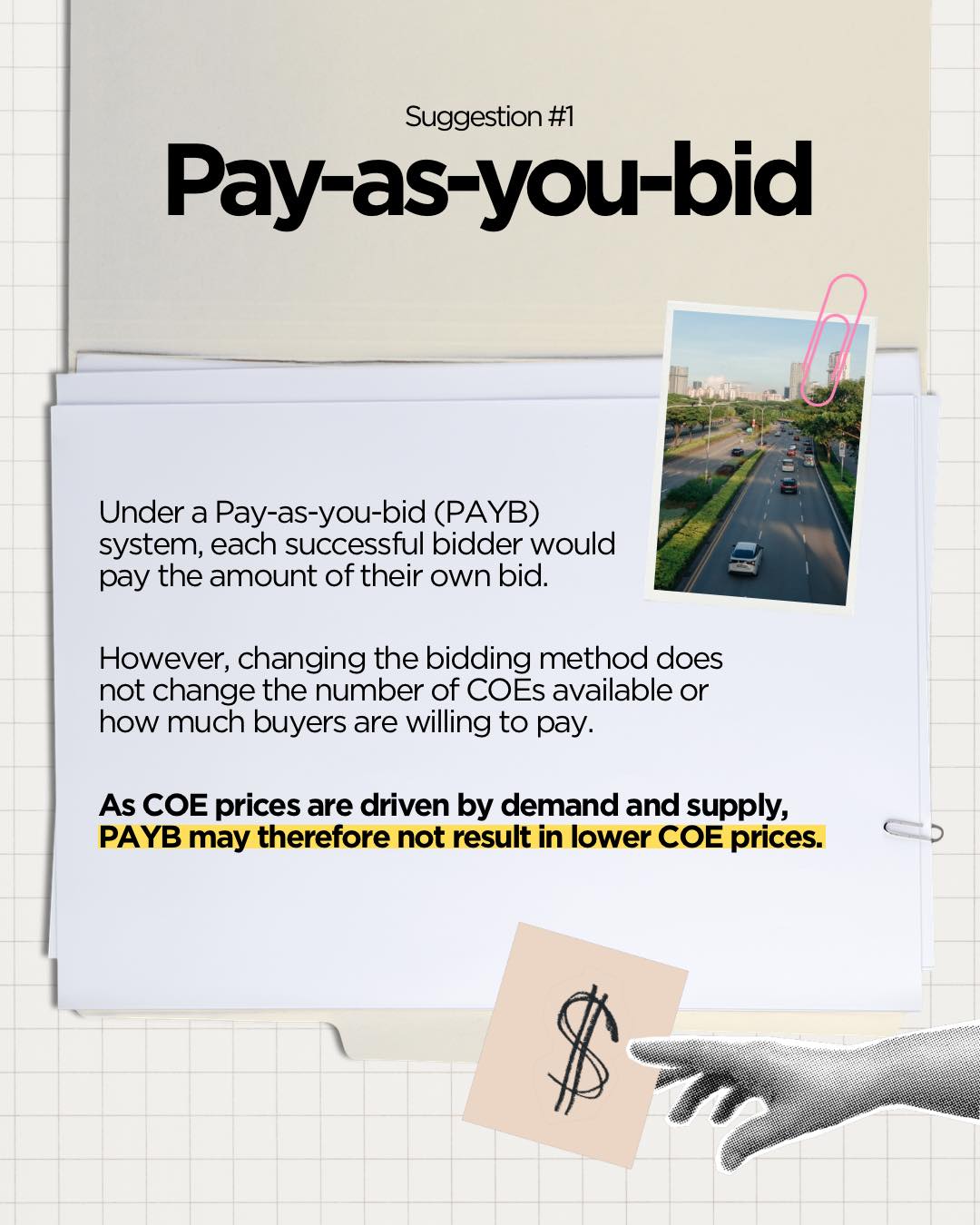
One of the suggestions included a ‘Pay-as-you-bid’ (PAYB) system.
Source: @ltasg on Instagram
Under PAYB, each successful bidder would pay the amount of their own bid.
However, LTA said that changing the bidding method “does not change the number of COEs available or how much buyers are willing to pay”.
This is because COE prices are driven by demand and supply. So according to LTA, a PAYB system may “not result in lower COE prices”.
Direct bidding and a surcharge on multiple-car ownership
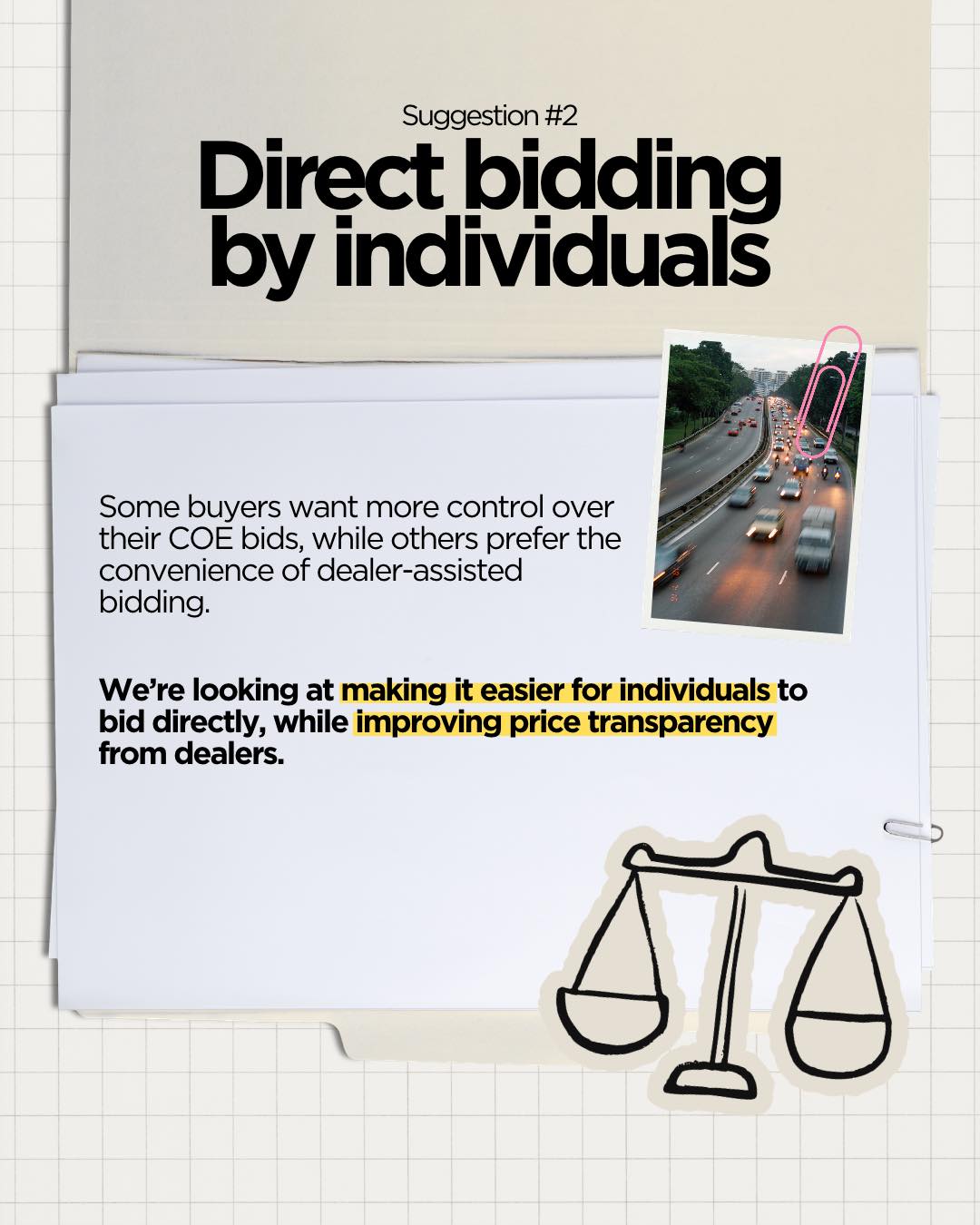
Another suggestion made was to implement direct bidding by individuals.
According to the responses, some buyers want more control over their COE bids, whereas others prefer the convenience of dealer-assisted bidding.
Source: @ltasg on Instagram
LTA said that they are looking at “making it easier for individuals” to bid directly, but will also work on “improving price transparency” from dealers.
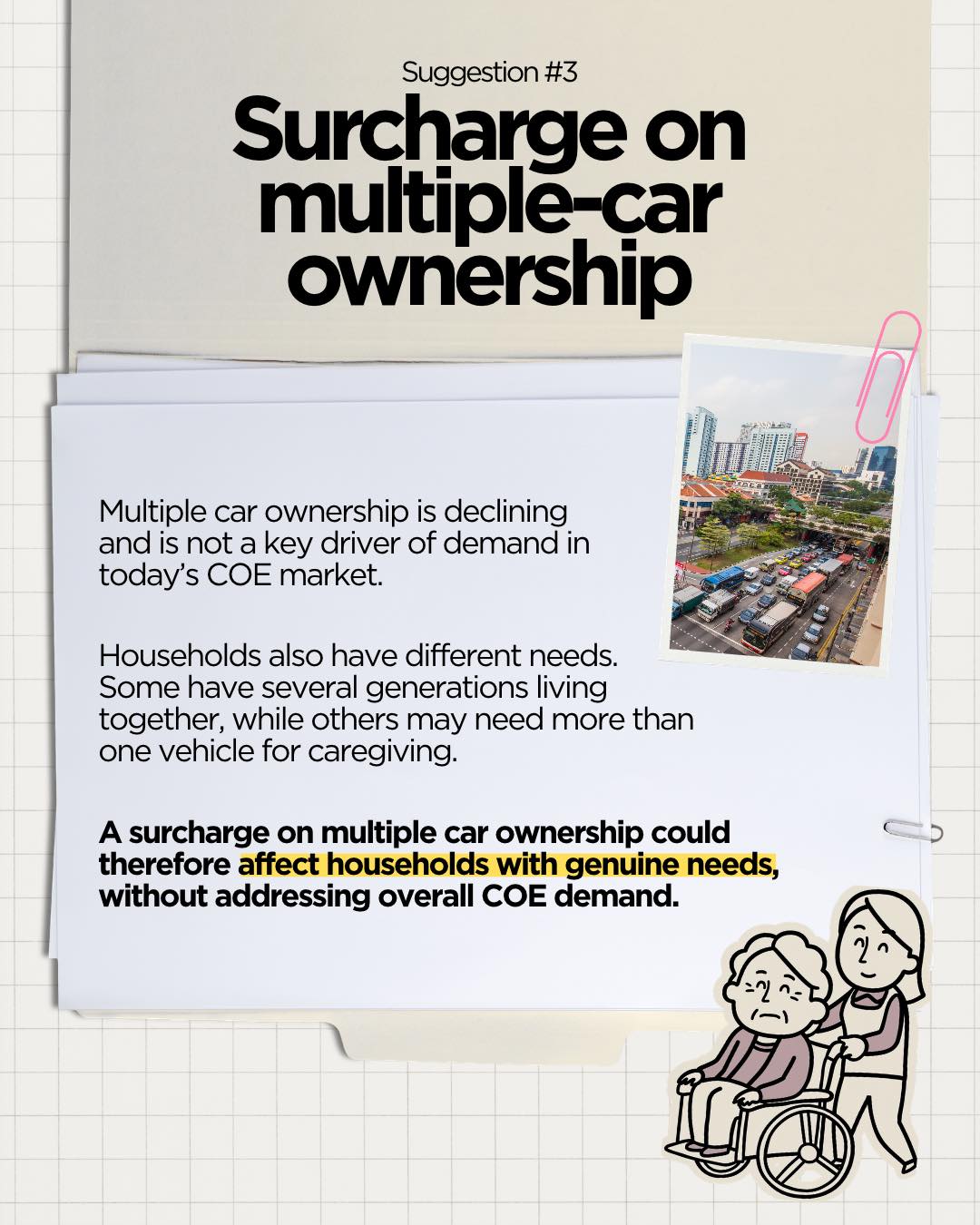
Lastly, there were suggestions to implement a surcharge on drivers owning multiple cars.
Multiple car ownership is declining and is not a key driver of demand in today’s COE market, LTA said.
Source: @ltasg on Instagram
In addition, LTA noted that households have different needs, as some have several generations living together, and others may need more than one vehicle for caregiving.
Thus, a surcharge on multiple car ownership could “affect households with genuine needs”, without addressing the overall COE demand.
Mr Lim Zhijian, LTA Chief Operating Officer, said: “Singapore’s COE system has served us well for more than three decades as a market-based, open and transparent framework for managing vehicle ownership.”
“As vehicle technology and the vehicle market continue to evolve, it is timely to review whether the current categorisation of cars remains fit-for-purpose.”
Have news you must share? Get in touch with us via email at news@mustsharenews.com.
Featured image adapted from Land Transport Authority – We Keep Your World Moving on Facebook and Varun Chandak on Pexels.