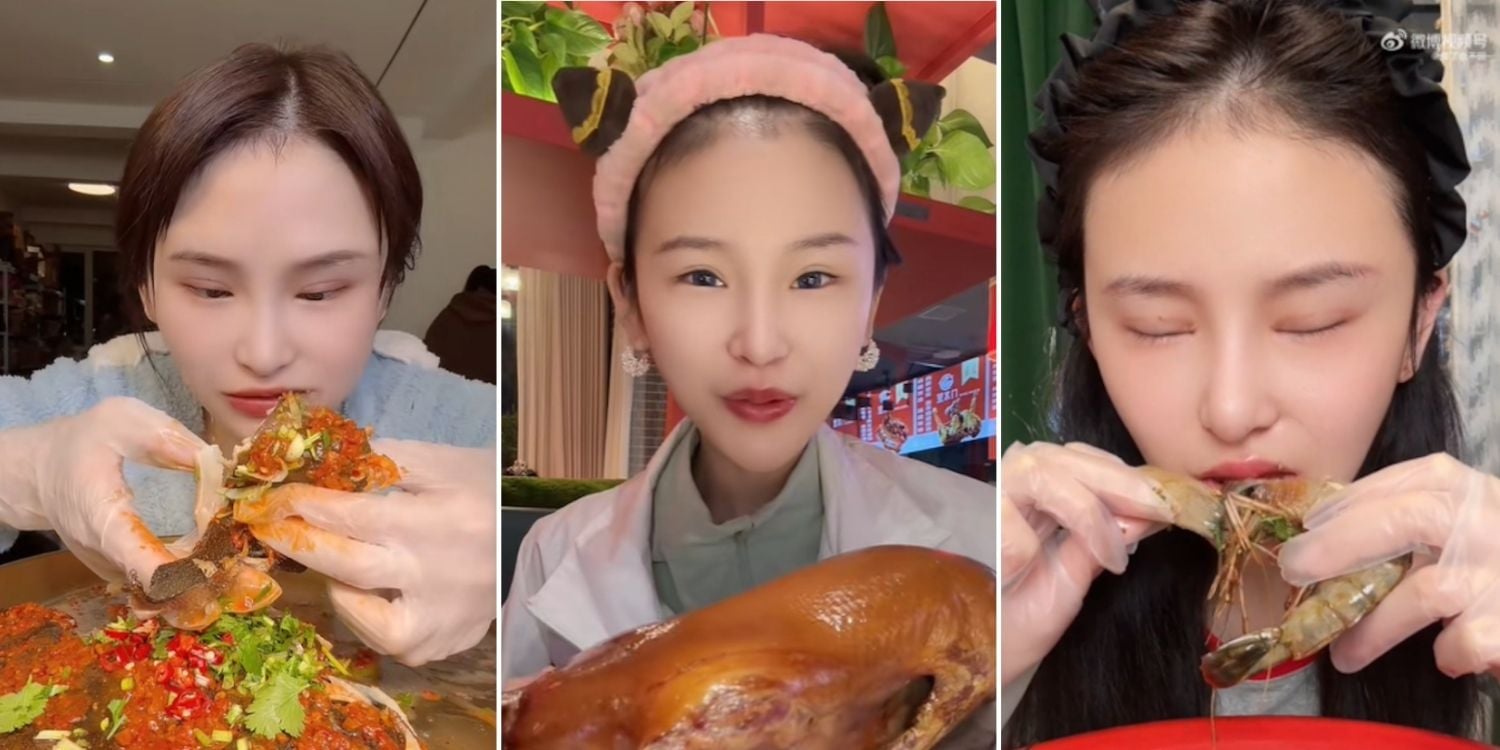

Mukbang creator dies after repeatedly suffering dangerously low potassium levels
24-year-old Chinese mukbang creator Chen Ziyi, known online as “Gan Fan Ying”, died from cardiac arrest induced by severe hypokalemia.
Ms Chen died on 17 Aug, with her parents announcing her death on social media on 4 Sept, sparking concerns over extreme eating content online.
Medical professionals and legal authorities in China have issued warnings regarding the biological dangers of extreme mukbang broadcasting.
Creator had been hospitalised repeatedly for low potassium
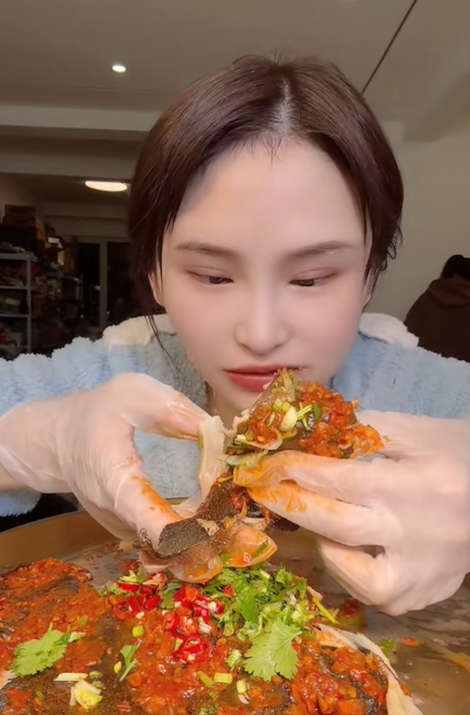
Ms Chen had spoken publicly about repeated hospital visits for hypokalaemia, or abnormally low blood potassium.
In previous videos and livestreams, she showed needle marks on the backs of her hands and discussed receiving potassium replacement treatment.
Source: HK01
In her final video on 14 Aug, Ms Chen said she had once again been admitted to hospital after her potassium levels dropped.
Three days before her death, her blood potassium level had reportedly fallen as low as 2.3 mmol/L.
A level below 2.5 mmol/L is considered severe hypokalaemia and can lead to serious complications, including abnormal heart rhythms and cardiac arrest.
She said mukbang work involved repeated eating and vomiting
At 1.62m tall, Ms Chen once weighed just 35 kilograms after severe weight anxiety during her college entrance exam preparations.
This led to extreme dieting and self-induced vomiting.
Ms Chen began producing mukbang content in 2021 and amassed more than 1.2 million followers on social media.
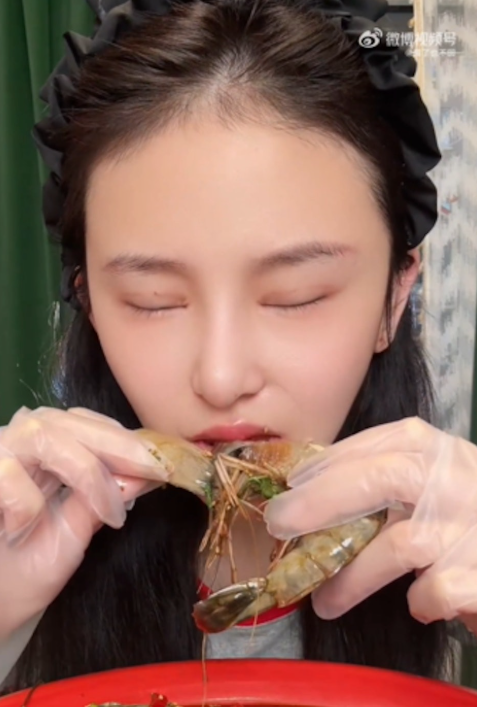
Her videos became known for featuring large quantities of food consumed at speed.
Source: HK01
She reportedly revealed that during one livestream selling preserved eggs, she had to eat around 60 to 70 eggs in a single session.
Ms Chen had also previously said that the pressure to keep eating for livestream sales took a toll on her health.
Chinese media reported that she associated her recurring low potassium levels with her work and a long-term habit of inducing vomiting after eating.
Repeated vomiting can cause dangerous electrolyte loss
Medical experts have stressed that binge eating itself does not necessarily cause potassium levels to plummet.
However, repeated vomiting or diarrhoea can cause significant losses of potassium and other electrolytes.
Potassium plays an important role in nerve signalling, muscle contraction, and the electrical activity of the heart.
Severe deficiency can therefore interfere with the heart’s normal rhythm and, in serious cases, lead to cardiac arrest.
Source: HK01
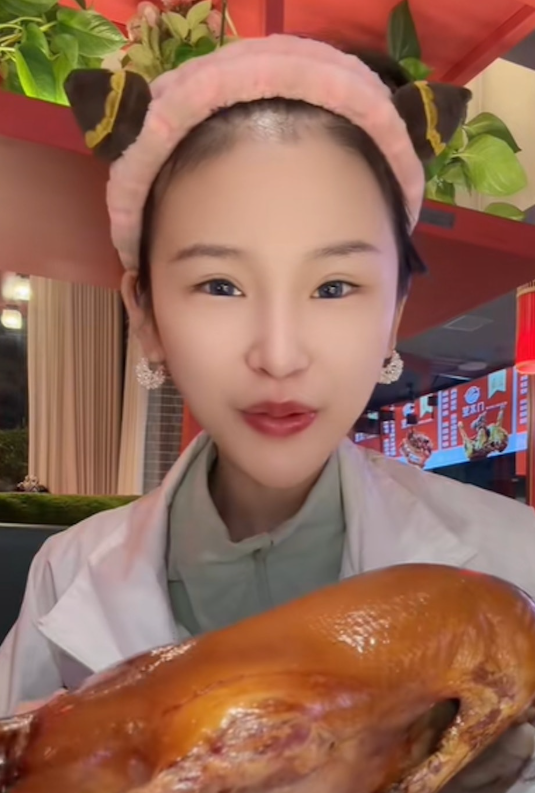
They also cautioned that simply taking potassium supplements is not a substitute for medical treatment, particularly if the underlying behaviour causing the electrolyte loss continues.
Luo Chaofan, a rehabilitation therapist affiliated with China’s National Health Commission, told the Global Times that people who repeatedly struggle to control their eating, induce vomiting, or follow extreme diets should seek medical assessment and treatment.
He added that such behaviours may point to an eating disorder or other underlying mental health issue.
Extreme mukbang content remains common online
Following Ms Chen’s death, Chinese journalists found that extreme eating and drinking content remained widespread on short-video platforms.
Some creators were reportedly ordering large quantities of takeaway food or consuming seven or eight types of alcohol in a single video.
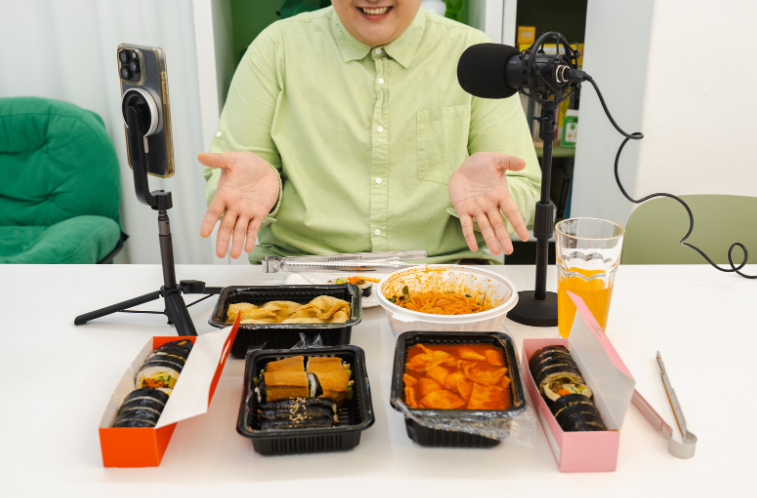
Source: Studio South Korea on Canva, for illustration purposes only.
Certain videos carried disclaimers such as “Virtual Performance, For Entertainment Purposes Only”, apparently indicating that the footage was staged.
However, legal experts said such labels do not automatically exempt creators or platforms from China’s rules on extreme eating content.
Li Weilong, a senior partner at Jiangsu Xingaodi Law Firm, said a disclaimer would not protect a video if it still visibly promoted excessive eating.
He said regulators could still order content to be removed and impose warnings or penalties.
Chinese law prohibits content promoting binge eating
China’s Anti-Food Waste Law explicitly prohibits producing, publishing, or distributing programmes and videos that promote excessive eating or binge eating.
Its Code of Conduct for Online Anchors also prohibits content showing fake eating, self-induced vomiting, binge eating, or other behaviour that encourages food waste or unhealthy consumption.
Medical and legal experts urge online creators to heed physical warning signs, emphasising that no amount of digital traffic or commercial gain justifies risking irreversible organ damage or sudden death.
Also read: Taiwanese influencer Guava Beauty dies at age 24, she was known for eating cosmetics
Taiwanese influencer Guava Beauty dies at age 24, she was known for eating cosmetics
Have news you must share? Get in touch with us via email at news@mustsharenews.com.
Featured image adapted from HK01.