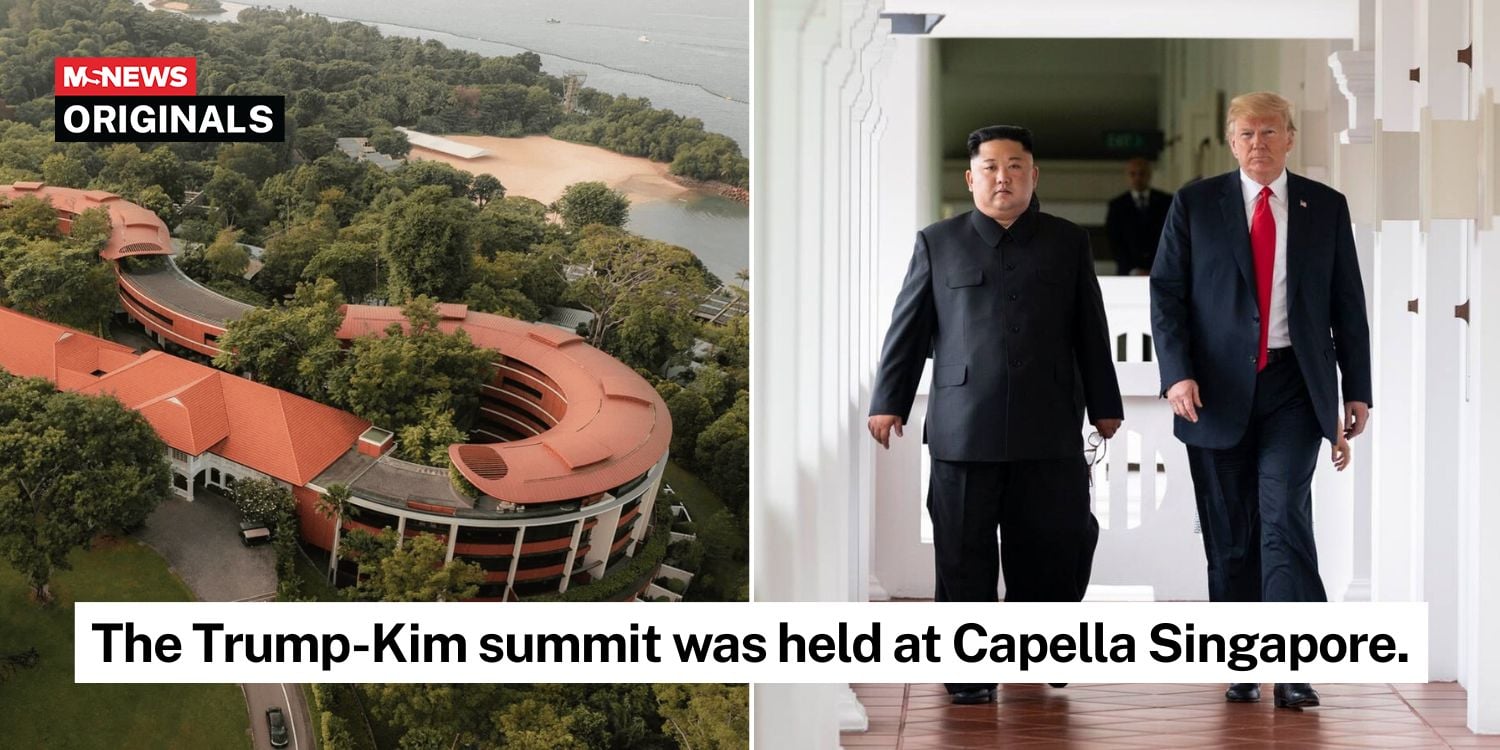

Singapore hosted a meeting between Donald Trump and Kim Jong Un in 2018
On 12 June 2018, Singapore found itself at the centre of global attention as United States (US) President Donald Trump and North Korean leader Kim Jong Un met for a historic summit at Sentosa.
The Lion City was picked for its neutrality and commitment to the safety of both leaders, said a White House spokesperson.
The highly anticipated meeting thus marked the first-ever summit between a sitting US president and a North Korean leader.
Eight years later, the summit remains one of the most significant diplomatic events ever hosted in Singapore.
US President and North Korean leader shake hands for the first time
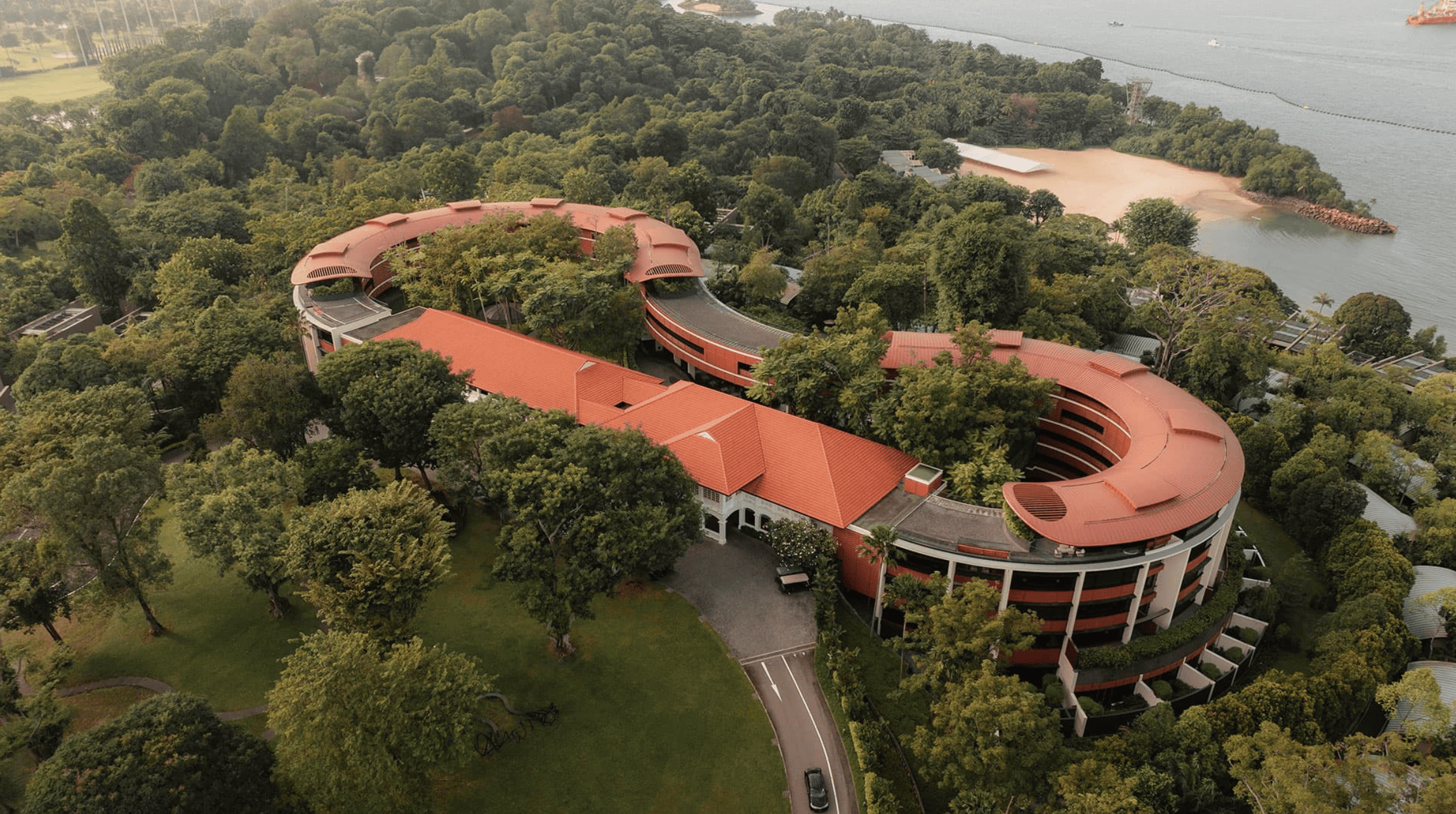
Held at the Capella Hotel on Sentosa, the summit began with a moment that would be broadcast around the world.
Source: Wikimedia Commons
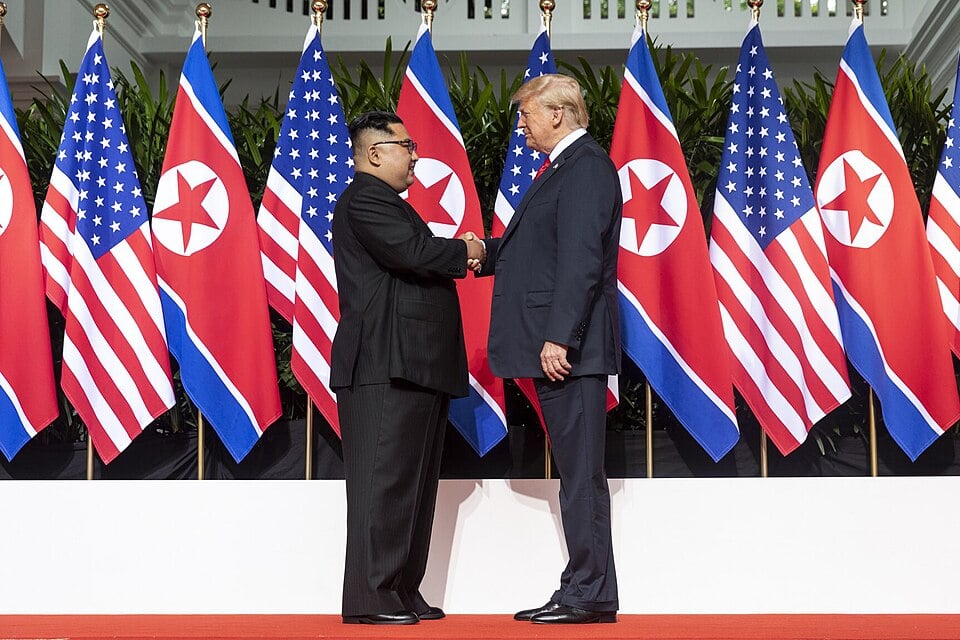
At around 9am, Trump and Kim emerged from opposite sides of the hotel before shaking hands in front of a row of American and North Korean flags.
The 12-second handshake marked the first face-to-face meeting between leaders of the two countries.
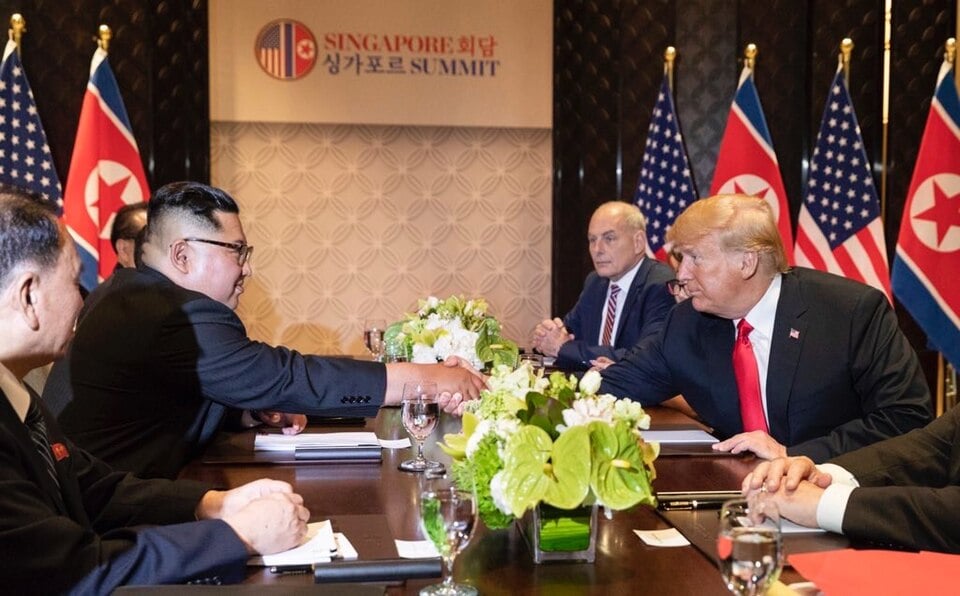
Speaking before their closed-door discussions, Trump described the meeting as a “tremendous success”.
Meanwhile, Kim said the two leaders had overcome obstacles and scepticism to reach the summit.
Source: Wikimedia Commons
How Singapore prepared for the historic summit
Singapore undertook extensive security and logistical preparations ahead of the summit, which was designated an ‘Enhanced Security Special Event’ under the Public Order Act.
Areas around the Capella Hotel on Sentosa, where the summit was held, and the Shangri-La Hotel, where Trump stayed, were gazetted as a “special event area” from 10 to 14 June 2018.
Source: Capella Hotel Group
Police conducted security screenings of people and vehicles entering these zones, while road closures and access restrictions were also implemented.
Thousands of local and international security personnel were involved to ensure that the event proceeded safely.
Additionally, air traffic operations were also affected during the summit period.
Portions of Singapore’s airspace were temporarily restricted from 11 to 12 June, requiring aircraft arriving at Changi Airport to reduce speed and comply with runway usage restrictions.
Cost of hosting the two leaders
The summit also required significant logistical planning.
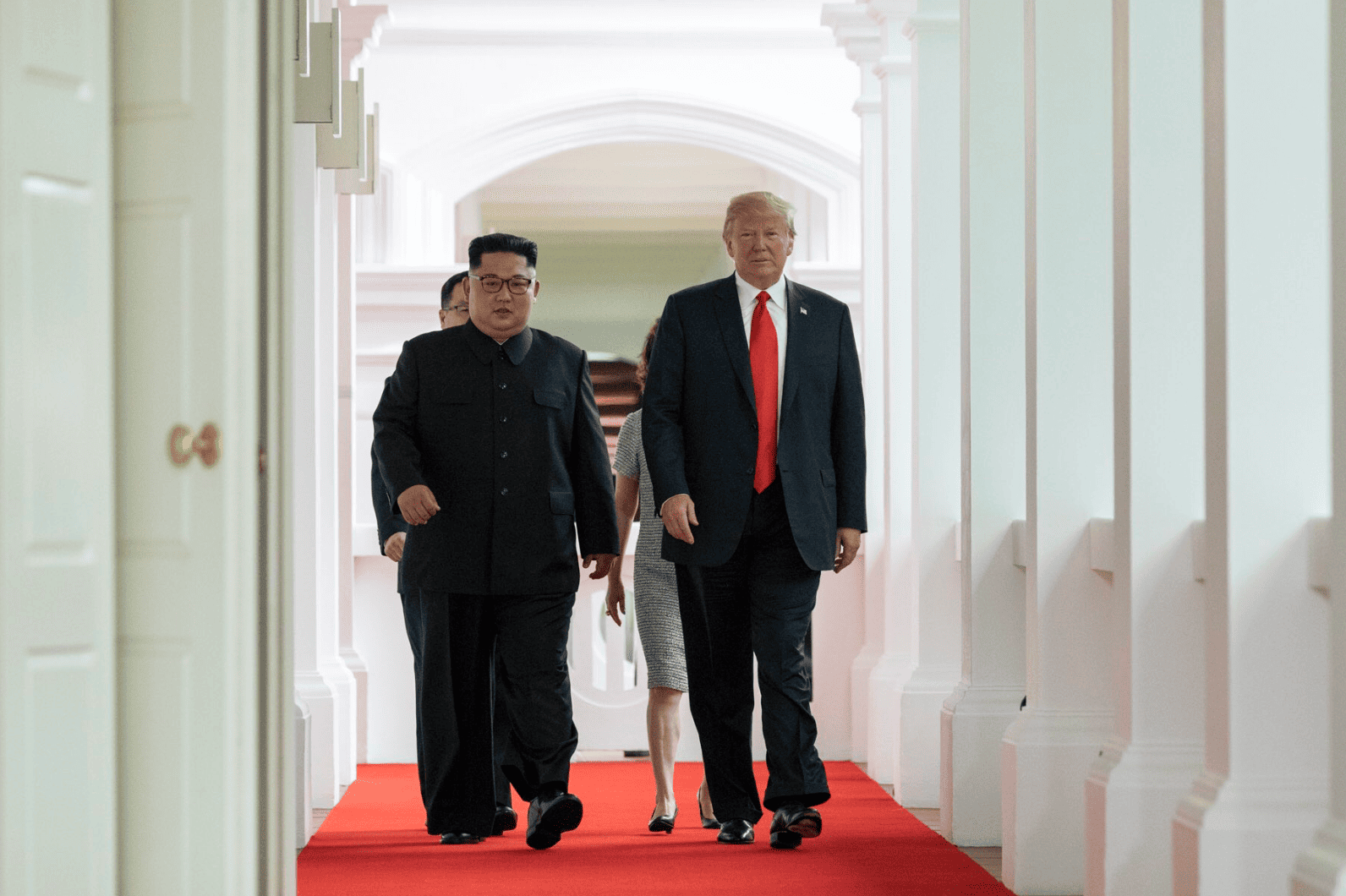
According to Singapore’s Government Technology Agency (GovTech), officials worked under tight timelines to prepare an International Media Centre capable of supporting more than 3,000 journalists from around the world.
This included setting up a dedicated accreditation system, strengthening cybersecurity measures, and putting contingency plans in place to ensure uninterrupted operations.
Source: Wikimedia Commons
Hosting the summit also came at a high financial cost.
While then Prime Minister (PM) Lee Hsien Loong initially estimated that Singapore would spend about S$20 million on the event, the Ministry of Foreign Affairs later revealed that the actual cost amounted to S$16.3 million.
Most of the expenditure went towards security arrangements, though a detailed breakdown was not provided.
According to a Ministry of Communications and Information spokesman, media spending amounted to S$4 million.
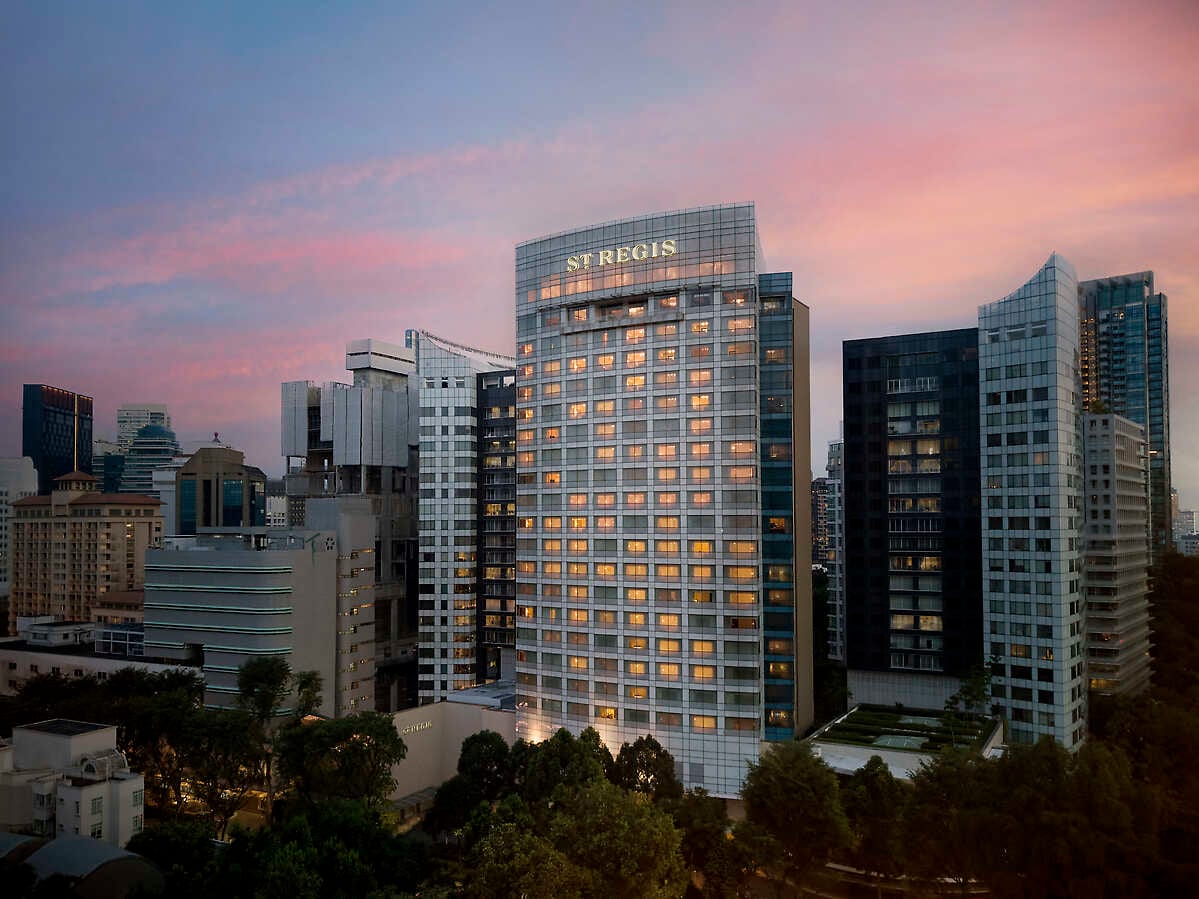
Foreign Affairs Minister Vivian Balakrishnan had previously said the estimated figure also included expenses such as Kim Jong Un’s hotel accommodation at St Regis Singapore.
Source: American Express. Image for illustration purposes only.
Then PM Lee said that hosting the summit was Singapore’s contribution to an important international endeavour.
Meeting came after tensions rose between the US and North Korea
The meeting came after a turbulent 2017, during which tensions between the US and Pyongyang escalated over North Korea’s nuclear weapons programme.
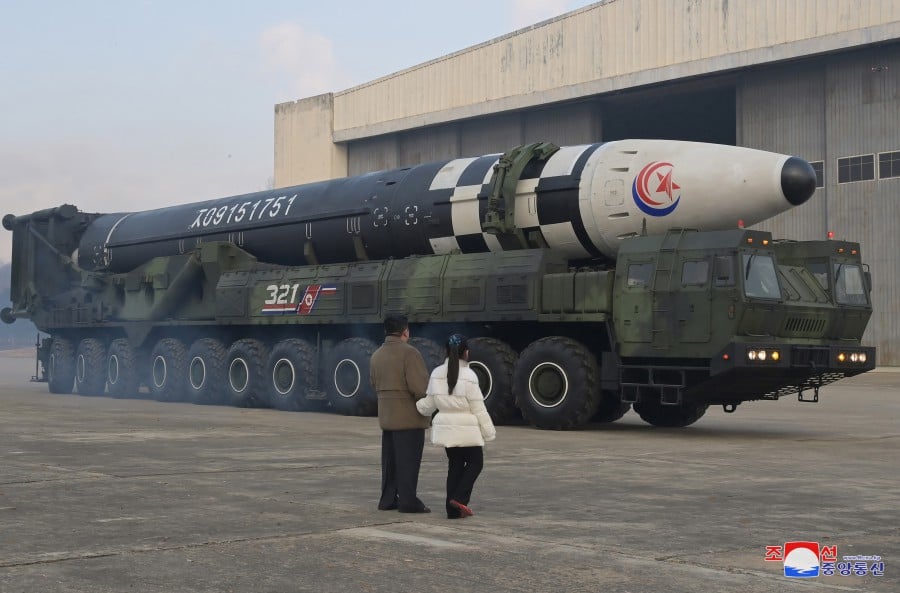
North Korea had successfully tested its first intercontinental ballistic missile (ICBM) in July 2017.
In response to the test, Trump had threatened North Korea with “fire and fury”.
Source: 38 North
Against that backdrop, many viewed the summit itself as a breakthrough.
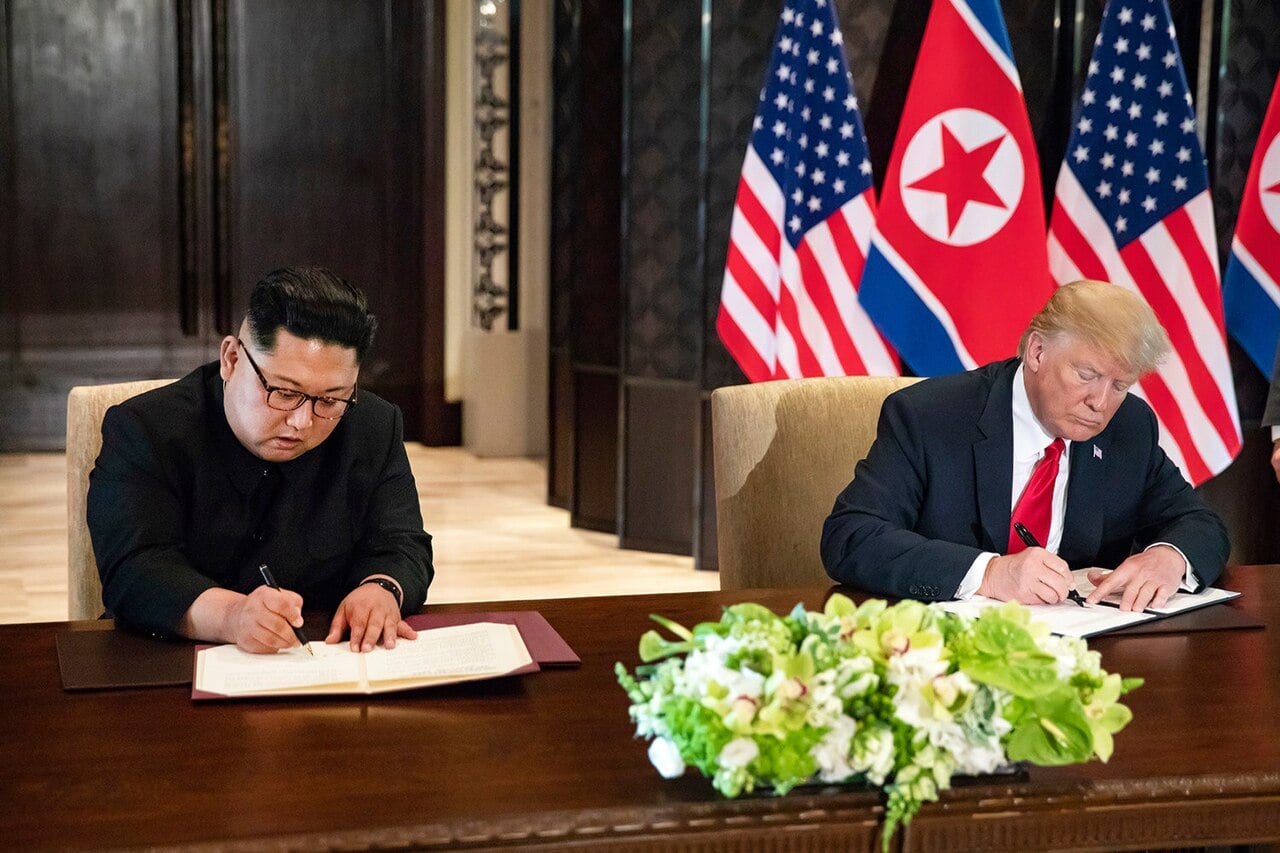
Following the summit, the two leaders signed a joint statement committing to improving relations between their countries.
Trump and Kim signed joint statement on denuclearisation and peace efforts
The two-page document outlined four key points. First, the United States and North Korea agreed to establish new bilateral relations.
Second, both countries pledged to work towards building a lasting and stable peace regime on the Korean Peninsula.
Source: Wikimedia Commons
Third, North Korea reaffirmed its commitment to work towards the complete denuclearisation of the Korean Peninsula.
Finally, both sides agreed to recover and repatriate the remains of the 6,000 American prisoners of war and soldiers missing in action from the Korean War.
Trump later described the agreement as the beginning of a new chapter between the two countries.
Kim, meanwhile, said the summit had left the past behind and signalled the start of major changes.
Despite initial optimism, progress on denuclearisation later stalled
While the summit generated optimism around the world, progress in the years that followed proved more challenging.
Trump and Kim met again in Hanoi, Vietnam, in Feb 2019.
However, talks ended without an agreement after both sides failed to bridge differences over sanctions relief and denuclearisation measures.
The two leaders would later meet briefly at the Korean Demilitarised Zone in June 2019, becoming the first sitting US president and North Korean leader to step together across the border.
However, negotiations eventually stalled, and North Korea has continued developing its missile and nuclear capabilities in the years since.
Despite the lack of lasting diplomatic breakthroughs, the Singapore summit remains a historic milestone.
Have news you must share? Get in touch with us via email at news@mustsharenews.com
Featured image adapted from Capella Hotel Group and Wikimedia Commons.