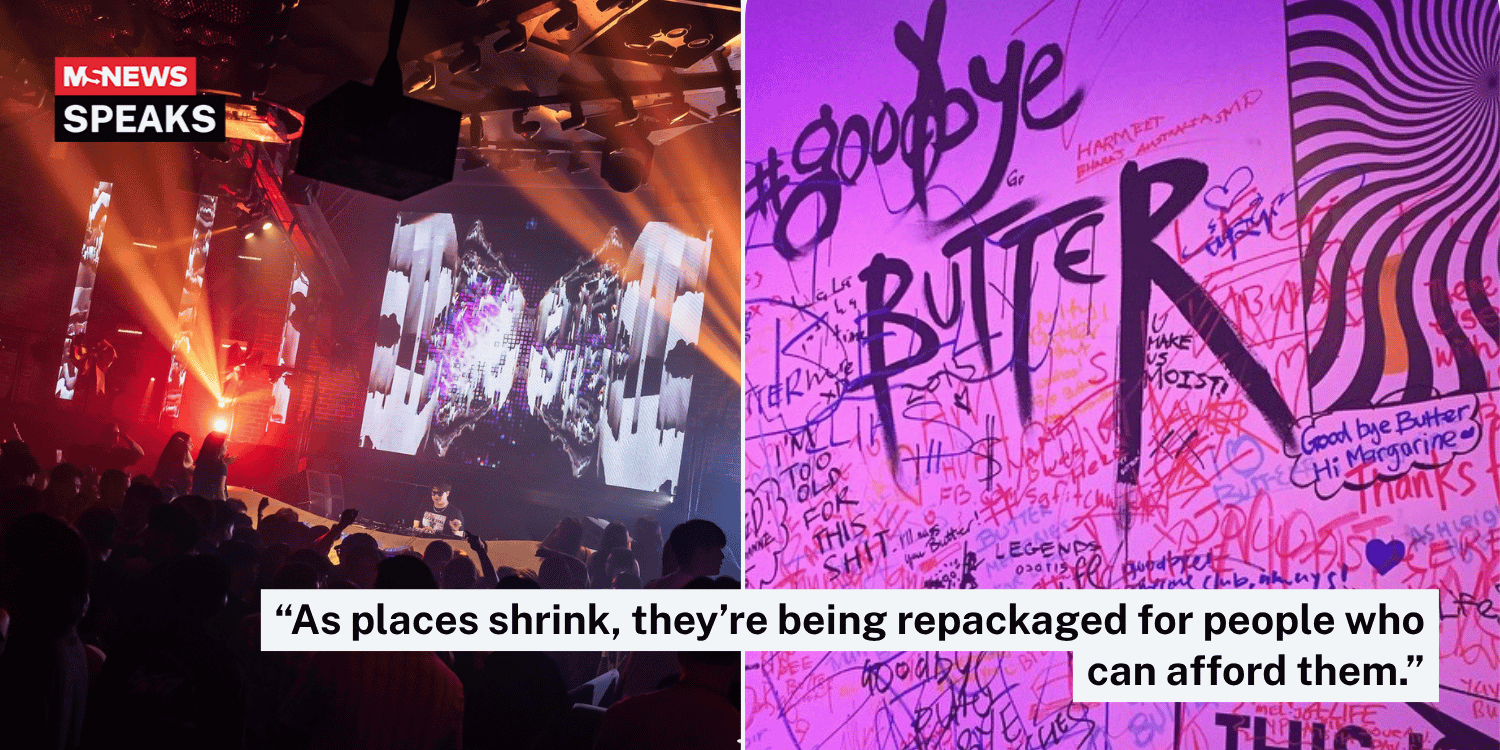

MS Speaks: What we’re really losing in the sanitation of Singapore’s clubbing culture and nightlife
This piece is part of MS Speaks, a segment in which MS News reporters share their honest views on current affairs and trending topics. Views expressed in this article are the writer’s own and do not reflect those of the publication.
–
I met some of my closest friends on dance floors.
Not through school, work, or over carefully scheduled dinners that start with Google Calendar invites.
I met them over drinks. The kind that starts casually — one round, maybe two — before the night gathers momentum and suddenly we’re spilling out of a club at 3am, hunting for prata.
Clubbing, for many millennials like myself, wasn’t just entertainment. It was infrastructure for friendship.
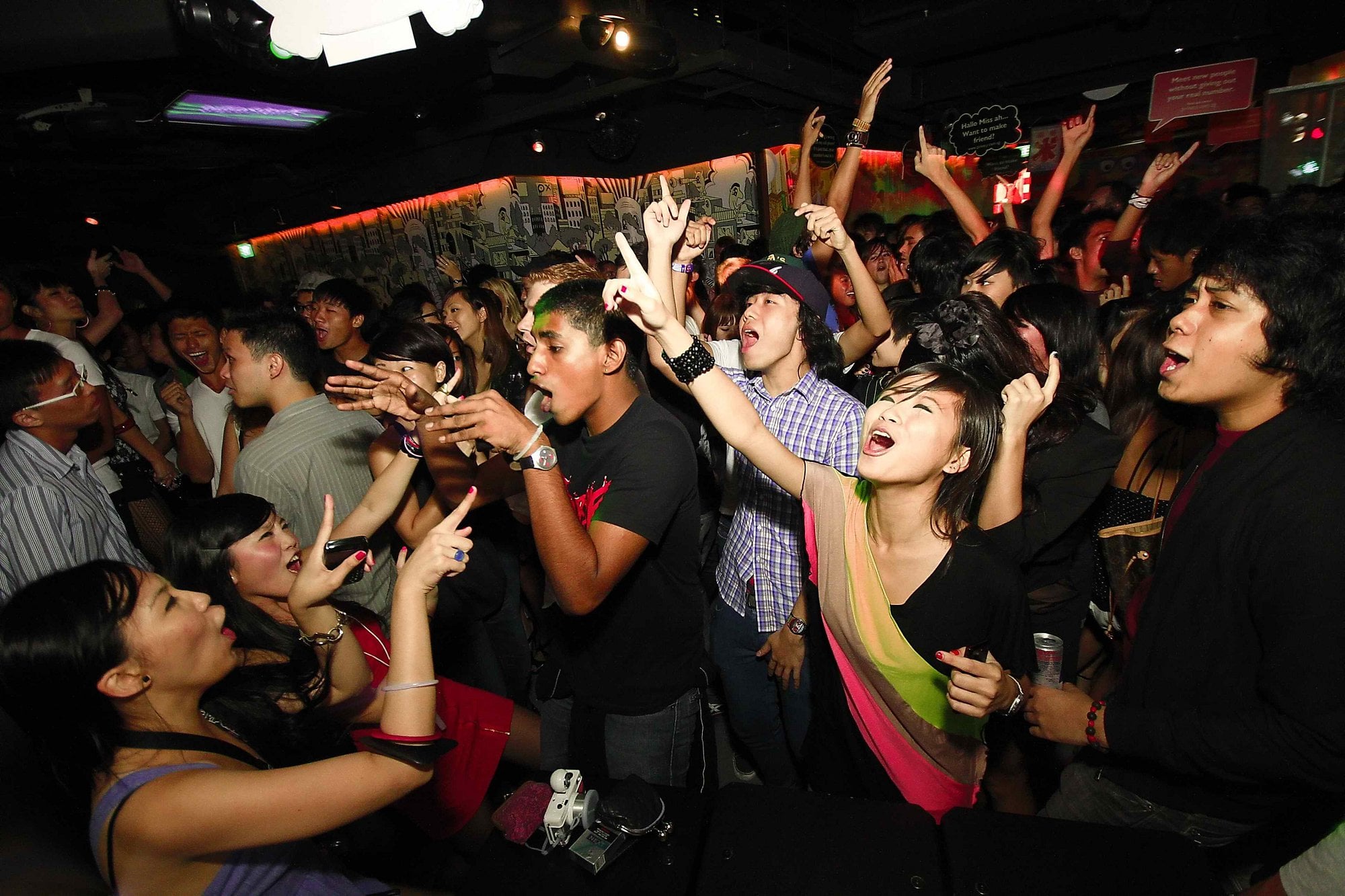
Source: The Butter Factory on TripAdvisor
It’s a strange way to build friendships, over loud music, cheap alcohol, questionable decisions. But there’s a kind of intimacy that only forms under those conditions.
Which is why watching the slow disappearance of nightlife spaces in Singapore feels personally unsettling. Because what we’re losing isn’t just another industry.
We’re losing the environments — loose, unstructured, and slightly chaotic as they are — where people could drop their guard and make those human connections.
The perpetual ‘death’ of clubbing
Look up “clubbing culture in Singapore”, and you’ll find the same tired refrain: nightlife is dying. Nothing new there, really — it’s been dying for years.
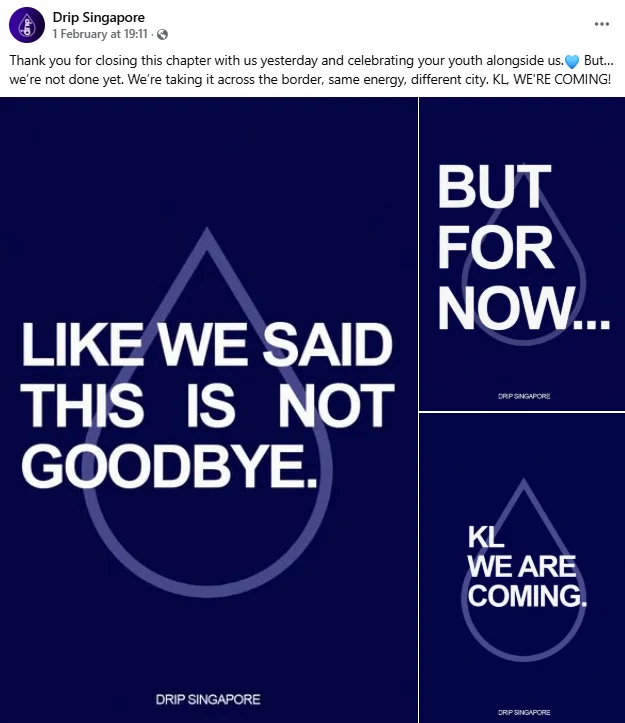
Source: Drip Singapore on Facebook
This time, however, the bell toll seems to sound something more permanent. The reasons, on paper, are predictable.
Rental prices are climbing. People are going out less, spending less, drinking less. In 2025, Singapore saw its highest number of closures in the food and beverage industry in a decade, according to the Accounting and Corporate Regulatory Authority (ACRA).
In the last couple of years, operating revenues from nightlife spaces have dropped dramatically from their S$674 million peak in 2015.
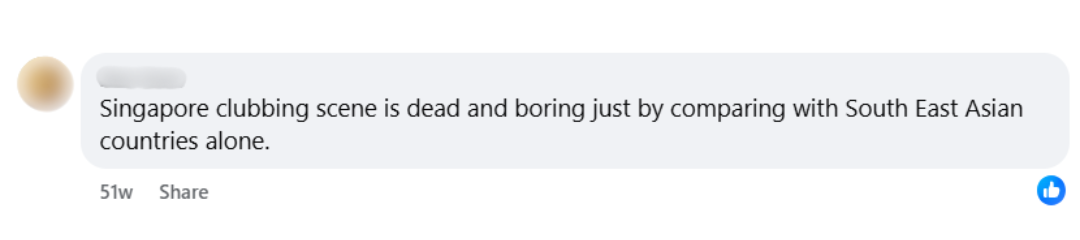
Source: Complaint Singapore on Facebook
And inevitably, the conversation turns towards economics and tourism. Experts caution that the decay of nightlife can impact whether Singapore can still market itself as a “world-class city” and global destination.
Because what disappears with nightlife isn’t just revenue.
It’s one of the last social spaces where you can briefly step outside the hamster wheel of productivity.
In defence of the mess
At its best, nightlife wasn’t clean. It wasn’t curated, neither was it good for you.
It was chaotic, communal, anonymous. You weren’t there to be seen correctly. You were just there.
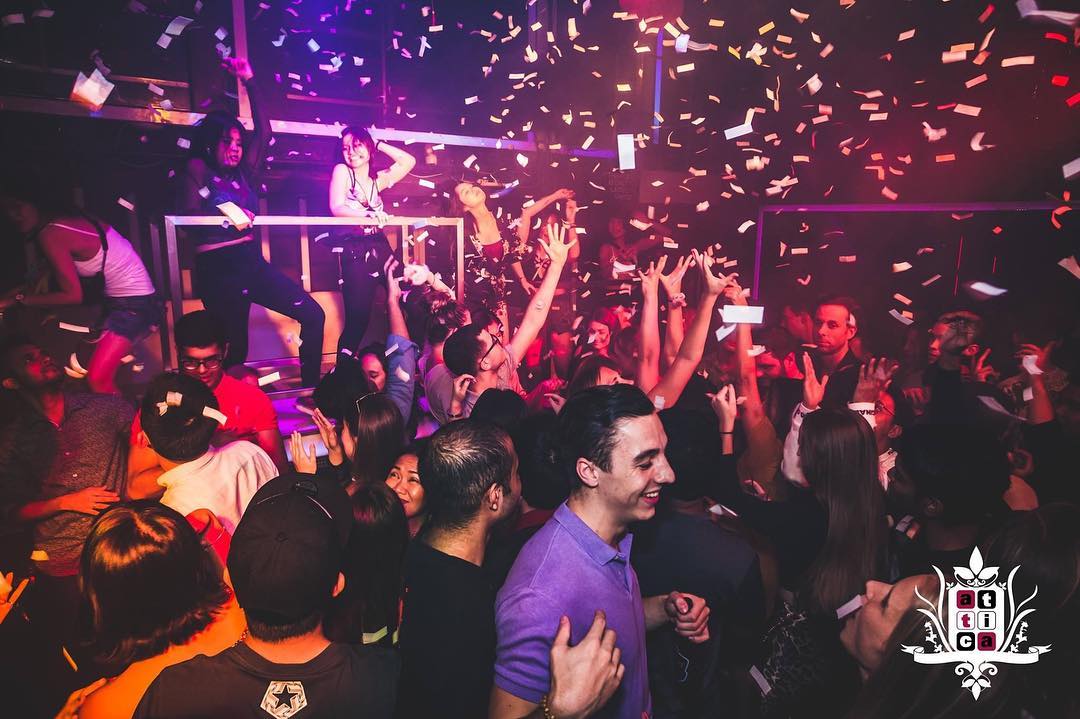
Source: aticasg on Instagram
Clubs were one of the few places where identity loosened its grip. You could try on a different self for the night — or drop it entirely. Hierarchies blurred. Strangers spoke without pretext.
In the dark, the rules softened.
You weren’t productive, you weren’t optimising, you weren’t performing for anything that lasted beyond the night. And even if you were, it didn’t matter.
That’s who these spaces drew in — the curious, the excessive, the ones willing to risk embarrassment for the chance of feeling something real. Even if it meant a bad decision by morning.
Because for all its flaws, nightlife allows for something increasingly rare: failure.
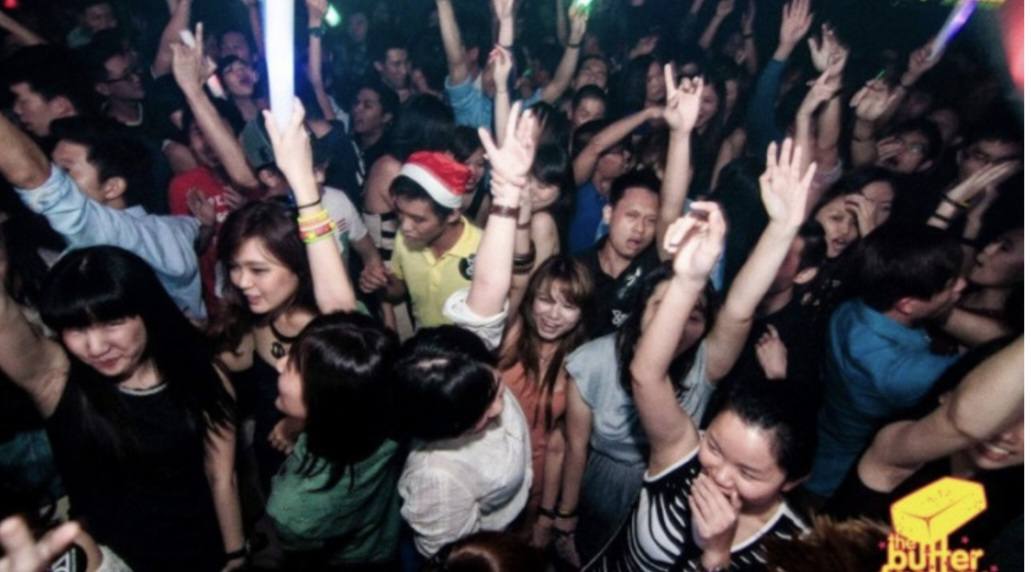
Source: travelsingapore.info vis Heritage SG Memories on Facebook
You can be too loud, too emotional, too much. You can misread a moment, say the wrong thing, dance badly, want the wrong person — and survive it. Laugh about it. Move on.
Nightlife also holds space for innovation — social, creative, even personal — because there is a risk that things can go wrong.
Innovation doesn’t come from controlled environments, after all.
As The Guardian put it in 2023, nightclubs are “cultural preserves, hotbeds of musical innovation, springboards for the advancement of fashion, dance and social change”.
It also does something else we’re slowly losing: it creates real, unstructured connection.
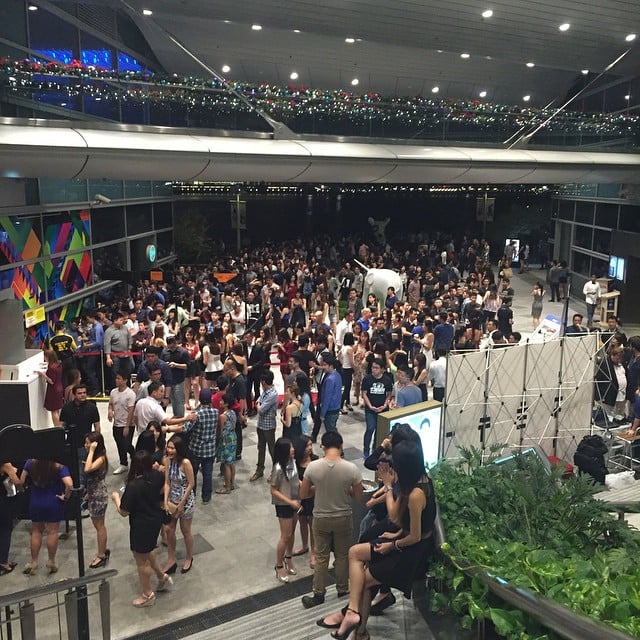
Source: butterfactory on Instagram
Yes, alcohol lowers inhibitions and facilitates organic social bonding. But more importantly, the context removes expectations.
You’re not networking, or exchanging LinkedIn profiles. You’re just being human with other humans.
And that cannot be engineered. At 2am on a dance floor, there is no agenda.
Rising against ‘clean’ nightlife
We keep being told nightlife isn’t dying — it’s evolving. But look closer, and it’s clear what that evolution really is: sanitisation.
Day raves. Sober parties. “Soft clubbing”.
I understand the appeal. Not everyone wants to wake up hungover (though there is something to be said about what you learn about yourself during a hangover), and there’s nothing inherently virtuous about drinking yourself into oblivion.
But something feels off about what nightlife is becoming: controlled, well-lit, and presentable.
These spaces don’t feel like nights out. They feel like content environments that are optimised for visibility, designed to be seen.
Writer Eugene Healy calls this shift “soft clubbing” — a move away from the anti-efficiency ethos that once defined nightlife. Traditional clubbing thrived in darkness, mess, and excess.
This new version feels closer to a “sunlit performance of self-optimisation“.
@eugbrandstrat Hot take – soft clubbing & coffee shop raves suck. Today: digging through a couple recent artefacts that demonstrate how frozen our culture feels right now, invoking some of Mark Fisher’s thinking, and why our culture needs more risks and edge rather than yet another ‘soft’ iteration. #brandstrategy #marketing #culture #capitalism
The loss of anonymity in ‘soft clubbing’
And yet, the desire for release hasn’t disappeared.
Vidya, a 27-year-old account manager who describes herself as a “party girl coordinator”, told MS News she goes out to “release stress”.
“I don’t need alcohol to club, I just need good music, and I love to dance,” she said. “It feels so freeing and liberating to be dancing to my favourite songs and just letting loose after a long week.”
That impulse — to let go, to dissolve for a few hours — is still there. But the environment around it has changed.
Because once a space becomes curated and visible, something else is lost: privacy.
The psychological freedom of anonymity disappears when everything is designed to be seen, documented, shared.
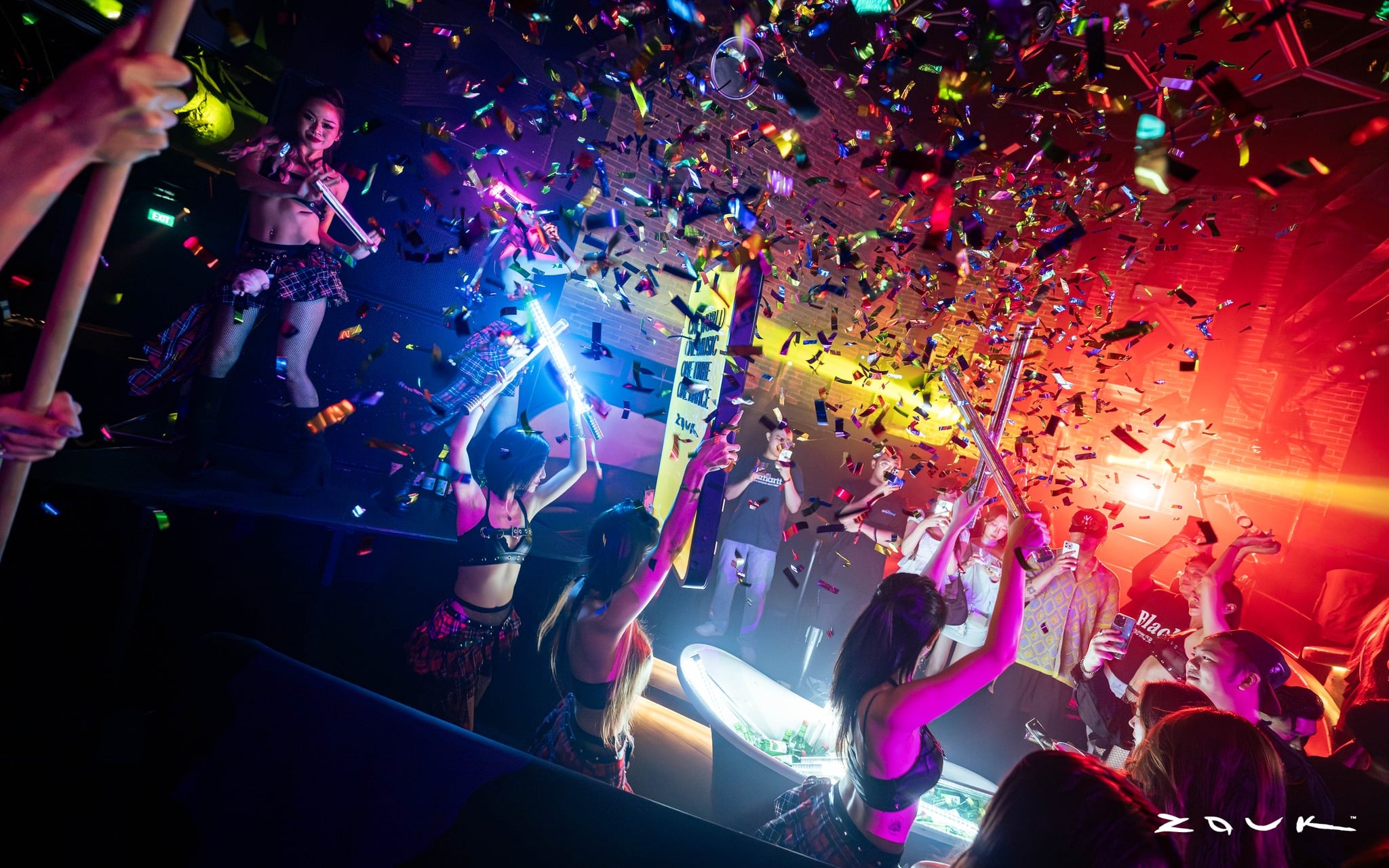
Source: Zouk Singapore on Facebook
What gets stripped away isn’t just alcohol. It’s unpredictability.
The risk. The excess. The chance that the night might take a turn you didn’t plan for.
We’re told this is progress, that it’s healthier.
And yet, younger people are lonelier than ever.
Because when the dance floor becomes another stage, the dynamic shifts. The room stops being a shared experience; it becomes a backdrop.
Clubbing on a ‘premium’
At the same time, the few spaces left are becoming more expensive, exclusive, and polished.
“Premium” nightlife experiences. Elevated clubbing. Curated vibes.
It’s hard not to see what’s happening: as spaces shrink, they’re being repackaged for people who can afford them.
I understand the business side. Rising costs, changing habits — nightlife operators are trying to survive.
Mustafa, a 27-year-old bartender who clubs “every now and then”, told MS News that clubbing was a “fun way to escape and forget most things for a night”.
However, like many patrons of the nightlife and clubbing scene, he feels concerned about prices “constantly going up”.
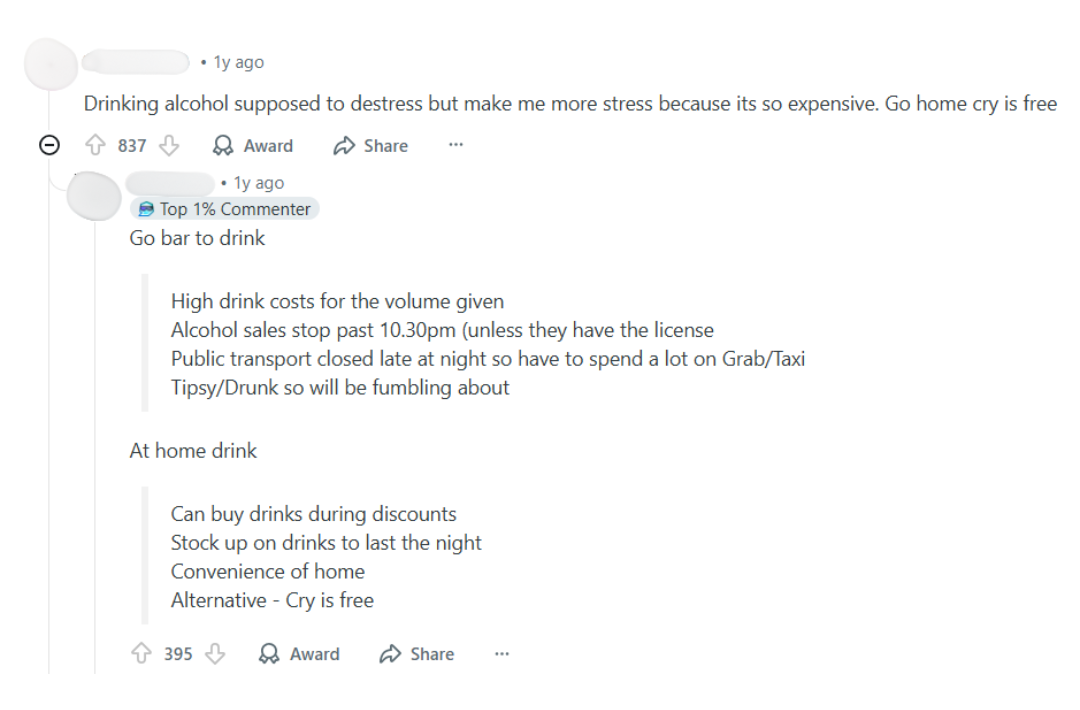
Source: r/singapore on Reddit
“Drinks can be expensive. Also expensive to take a cab home… so a night out is going to cost quite a bit,” he said. “It’s more appealing in other Southeast Asian countries where it’s far cheaper than here.”
Which is fair. There’s something bleak about the solution being: make it pricier, make it prettier, transform it into a product for consumption.
As if nightlife and the culture around it could so easily be converted into a product you can just get off the shelf.
This space was supposed to be messy and accessible and, at times, a bit grimy. That was part of its function.
When every night out starts to feel like something to budget for, dress up for, and perform in, it stops being a space for release.
It becomes another arena of pressure.
And the people who feel that most are the ones who already feel priced out of everything else.
Not just a cost-of-living issue
Modern life increasingly pushes us toward optimisation.
Work is optimised. Health is optimised. Productivity is optimised. Now it comes for our leisure.
Social spaces are becoming curated experiences. Gatherings become events. Everything is scheduled, documented, aestheticised.
How can real human connection thrive in that kind of structure?
We still need environments where people can wander, linger, stay out late and lose track of time.
Pop-up parties and themed nights are clever adaptations by nightlife businesses trying to survive. But they remain what they are: events.
Temporary and scheduled, often ending at 10pm.
They lack the open-ended chaos of real nightlife.
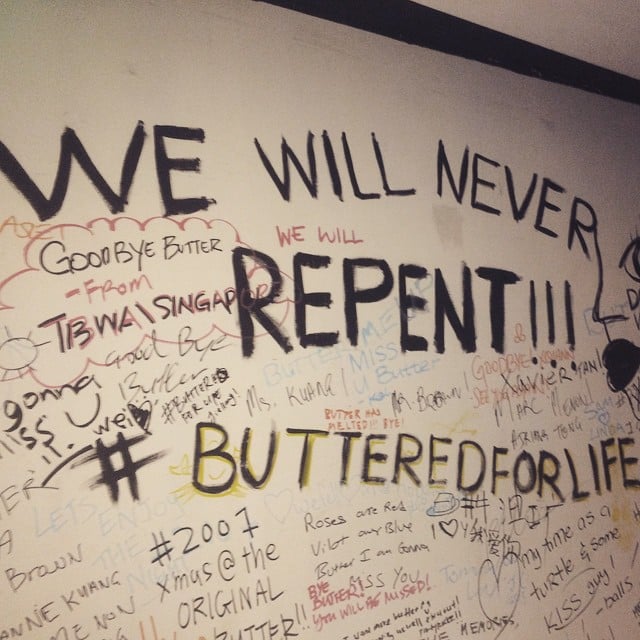
Source: butterfactory on Instagram
And chaos, on this side of human experience, matters.
Because staying out late once meant stepping outside society’s expectations. It meant risking boredom, discomfort, bad decisions — and sometimes, something unexpectedly good.
It meant allowing life to unfold in ways you couldn’t plan.
What happens if a generation grows up without those experiences?
Maybe the decline of nightlife isn’t just about alcohol consumption or changing habits.
Beyond a cost-of-living issue, maybe it’s about losing one of the last spaces where people can exist without permission.
And in a society already defined by efficiency and performance, that might be something worth protecting.
Also Read: Opinion: How the S’porean dream of self-sufficiency is making us lonely
Opinion: How the S’porean dream of self-sufficiency is making us lonely
Have news you must share? Get in touch with us via email at news@mustsharenews.com.
Featured image adapted from Zouk Singapore on Facebook and butterfactory on Instagram.