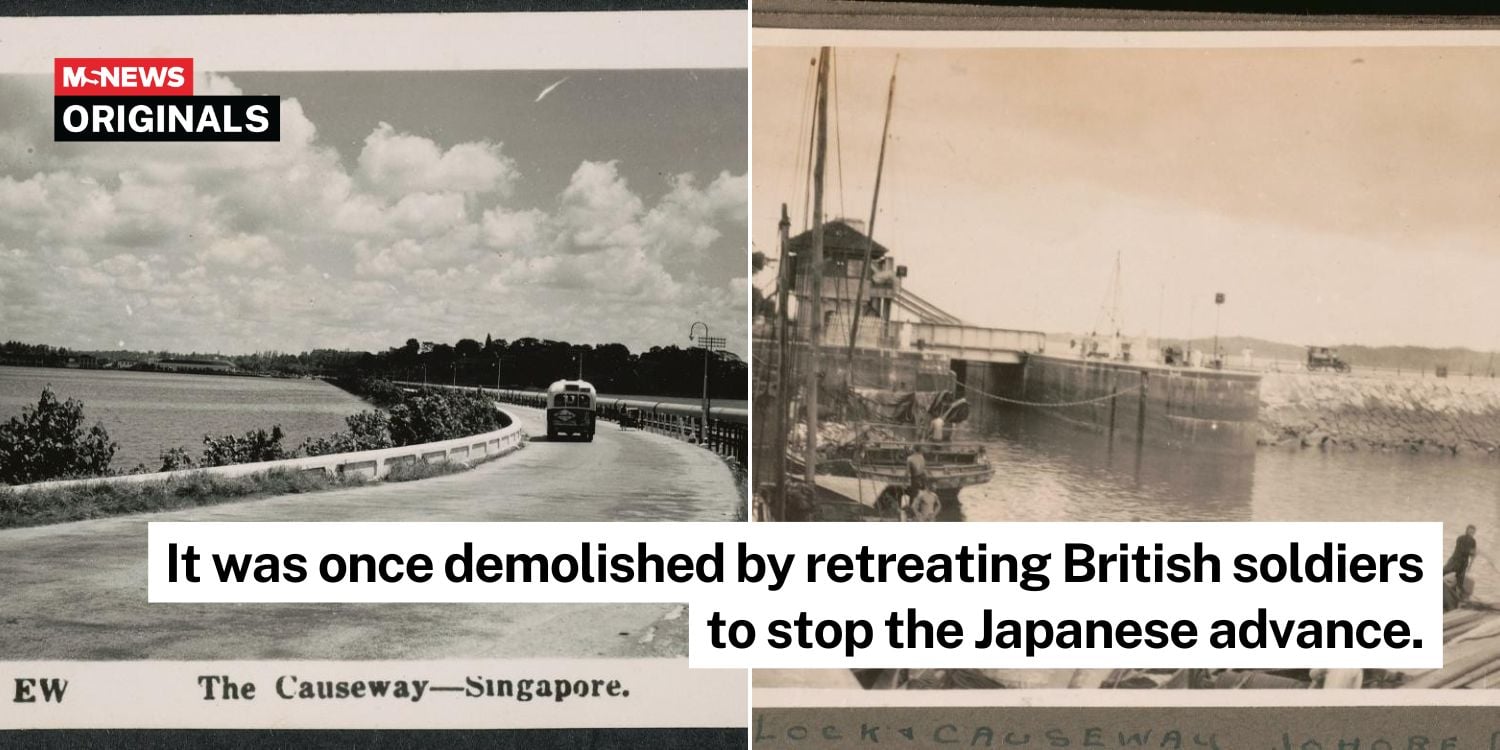

This day in history: Johor Causeway officially opens in 1924
For over a century, the Johor Causeway has connected Singapore to Johor Bahru (JB) and mainland Southeast Asia.
Throughout the years, this strip of asphalt has experienced much history, including being demolished to prevent the advance of the Japanese army during World War II.
While many things about it have changed, a few things remain the same — it still connects trade to Singapore and the traffic remains bad.
Causeway construction began as a result of increasing trade
Before the Causeway, ferries transported commodities from the Malayan peninsula to Singapore.
As trade boomed, the Johor Strait became more and more congested.
Wagon ferries were quickly built as demand for transport across the strait surged in the 1910s. Soon, even those were not enough.
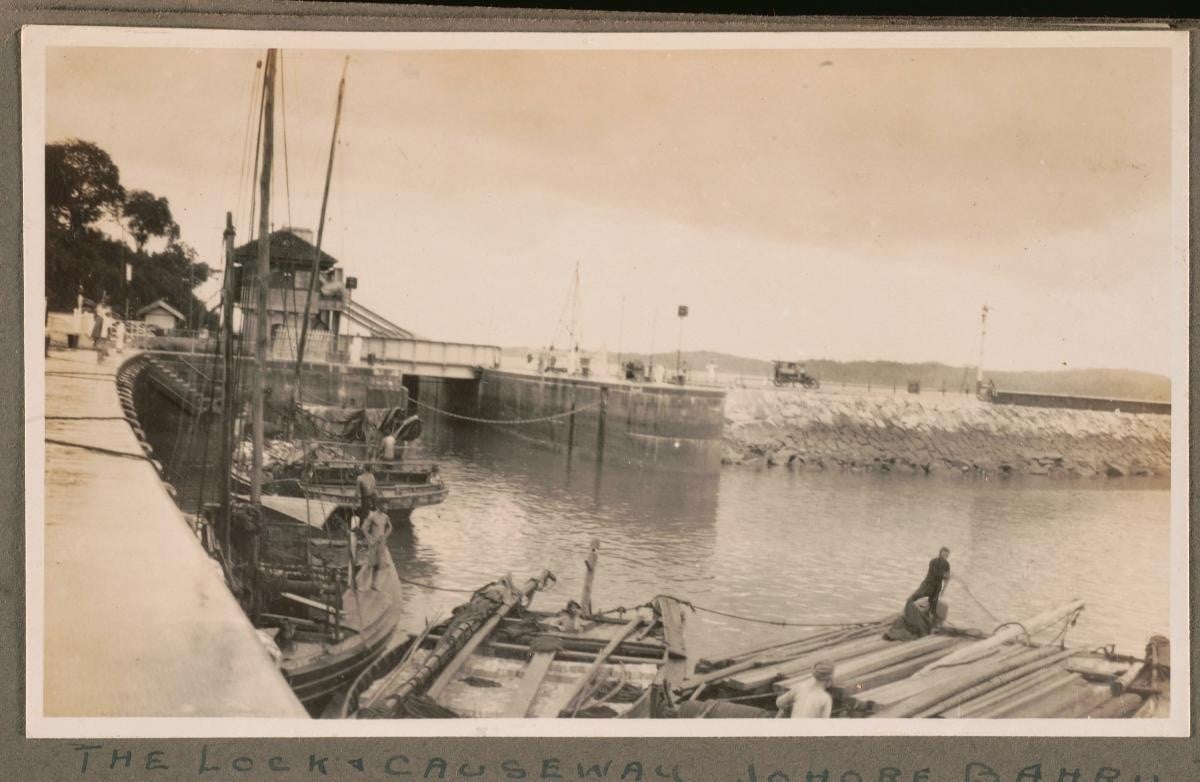
Source: Roots.sg
By 1917, the British government commissioned construction for a causeway.
While bridges were considered at one point, they ultimately decided on a causeway built with rubble and crushed stone from Pulau Ubin as it was cheaper than steel.
The original Causeway, designed by a London-based engineering firm, would total 1.06km from bank to bank.
It would be 18.2 metres wide to allow space for railway tracks, a roadway, as well as a water pipeline.
A great engineering feat for the time
Construction began in 1919, with 2,000 employed in the Causeway’s construction.
Half gathered rubble from Pulau Ubin while the other half built the causeway.
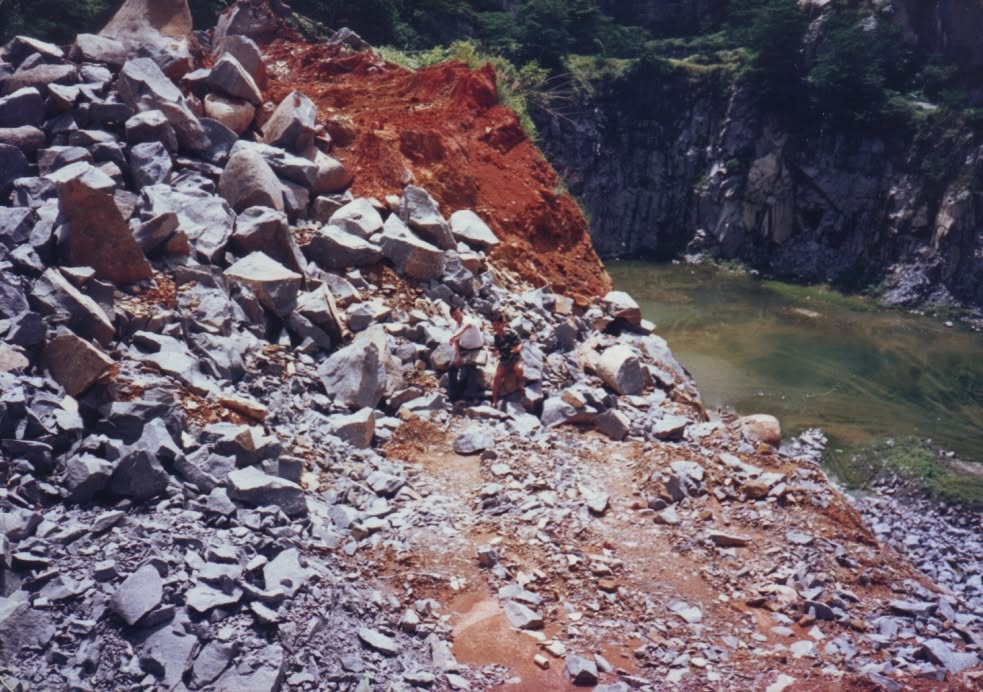
Source: Mike Ng on Facebook. Image for illustration purposes only.
The Causeway was the largest engineering project in the peninsula at the time, costing an estimated 17 million Straits dollars.
However, construction was not always smooth sailing.
The project was nearly abandoned due to an economic recession in the early 1920s and poor public sentiment.
A rumour even arose that human skulls had been put into the foundations to ward off evil spirits, but there was no factual basis for it.
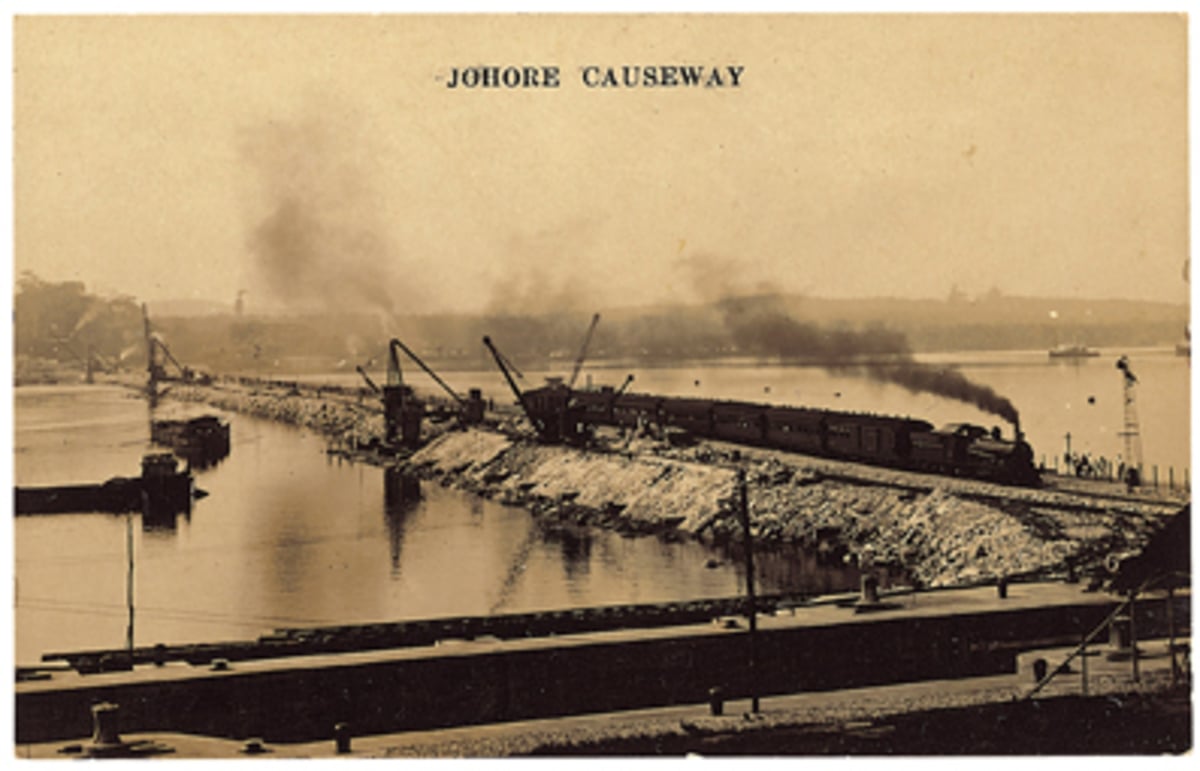
Source: Roots.sg
Yet five years on, the Causeway was completed three months ahead of schedule.
On 17 Sept 1923, trains began transporting goods across the strait.
The Causeway was officially opened on 28 June 1924.
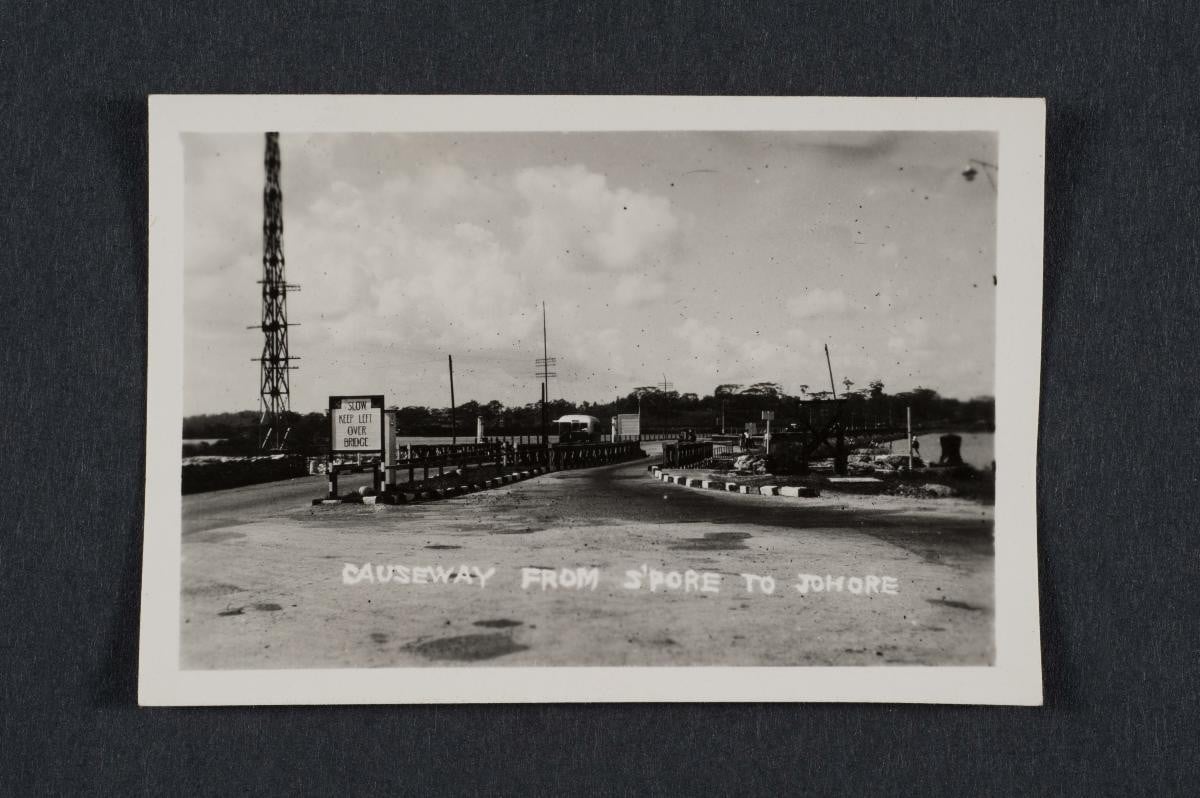
Source: Roots.sg
Demolished during the war, rebuilt and expanded after
In the following decades, the Causeway remained largely unchanged.
However, during World War II, the Allied forces set off two explosives to destroy the Causeway — in hopes that it would slow down the Japanese advance.
The explosives were set by British soldiers on 31 January 1942 who were on retreat from the Japanese.
Following the war, Singapore and Malaysia installed immigration checkpoints with passport control after the 1965 separation.
The Causeway was also rebuilt and expanded multiple times as traffic between Singapore and JB surged.
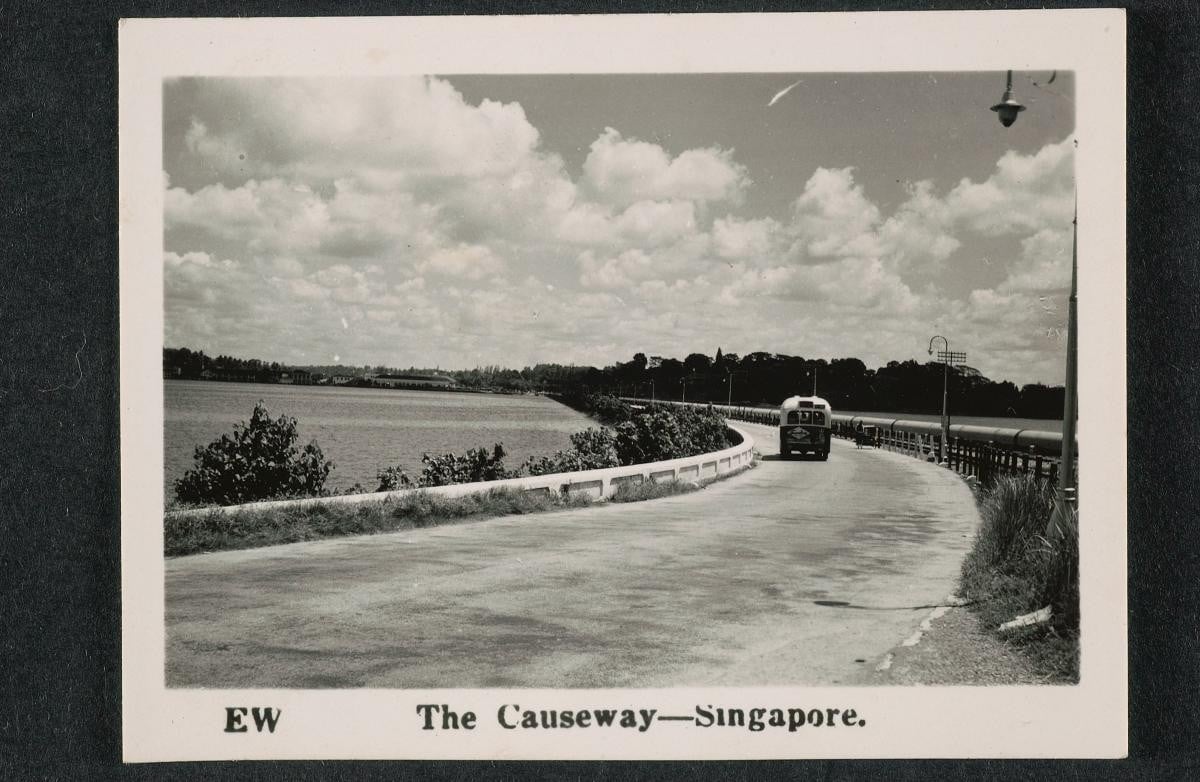
Source: Roots.sg
This occurred in 1976 and once more between 1989 to 1991.
The first expansion increased the road width to nine metres and removed a wall to create a footpath.
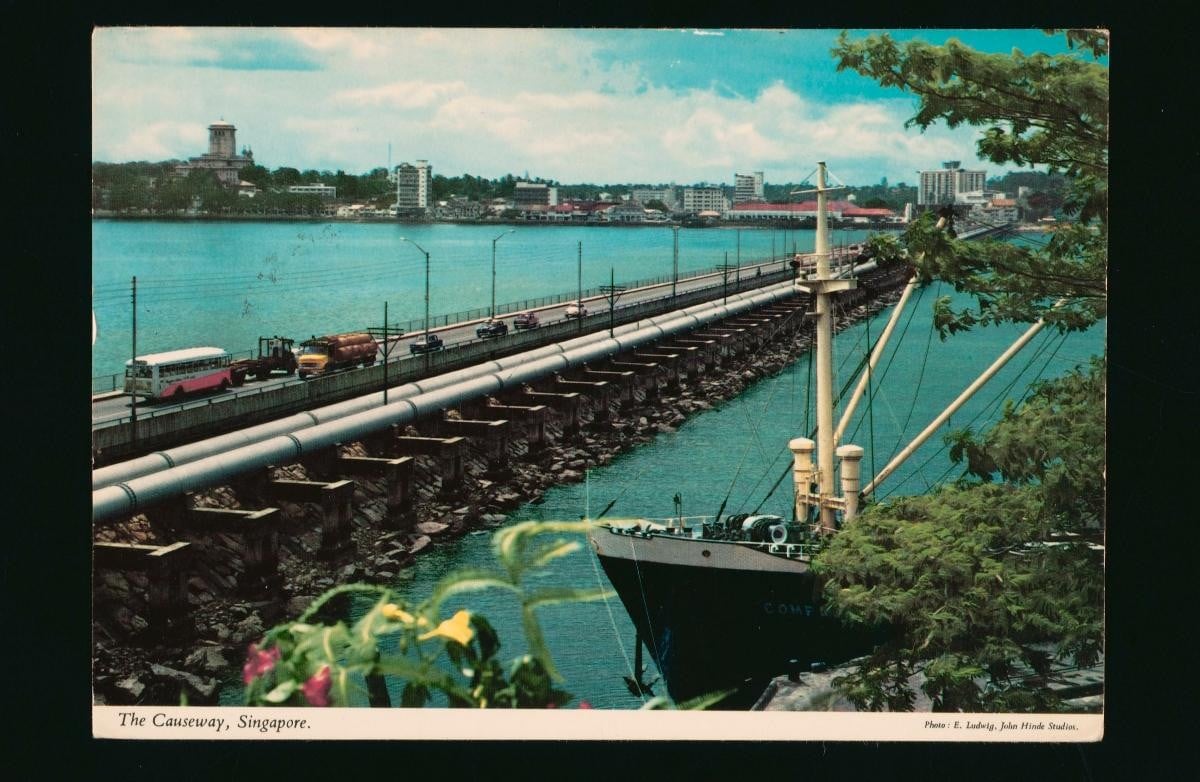
Source: Roots.sg
The second expanded the road to 23.5 metres, over twice the size, which included six lanes of traffic.
These expansions were done through land reclamation.
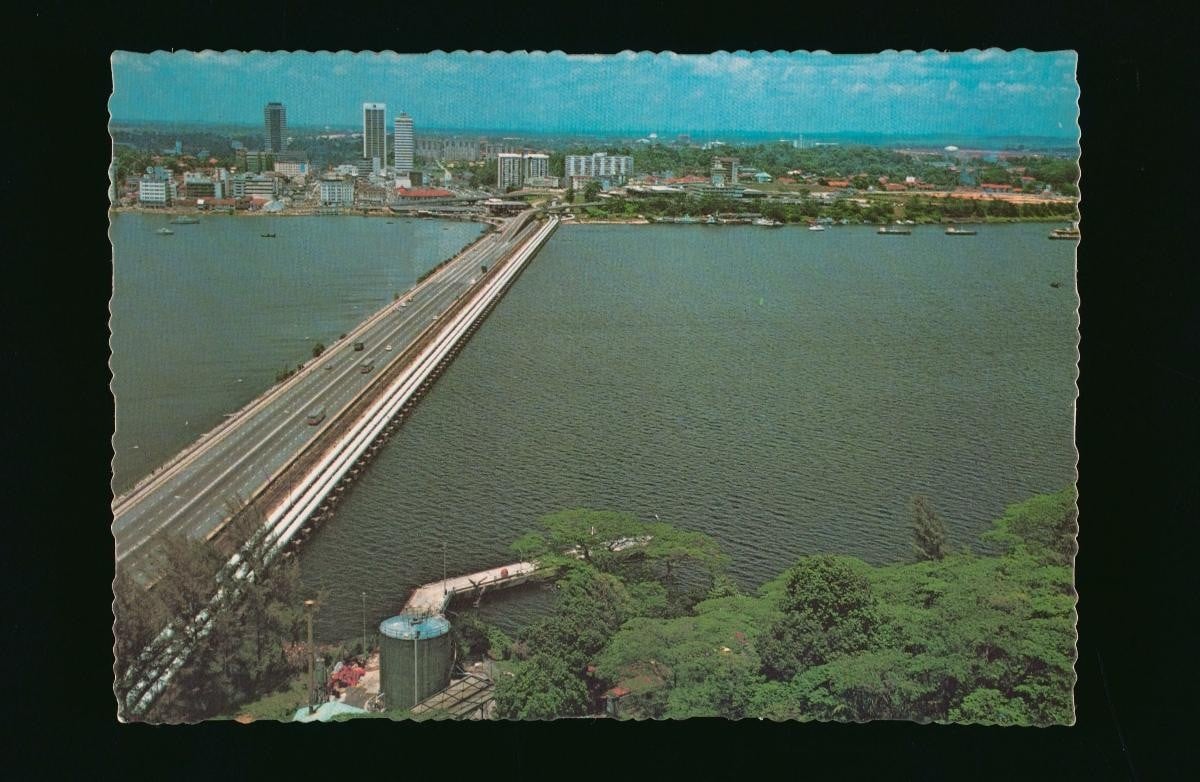
Source: Roots.sg
Since that second expansion, efforts to reduce congestion on the Causeway have largely been through the expansion of checkpoints on both sides of the crossing.
In 1998, the Tuas Second Link was built in order to divert some of the traffic from the Causeway.
An important connection required by both countries
Over the years, congestion on the Causeway has been a persistent issue. Jams during holidays have consistently made headlines.
One Malaysian actress even attempted to walk across the Causeway just to avoid the bus queue.
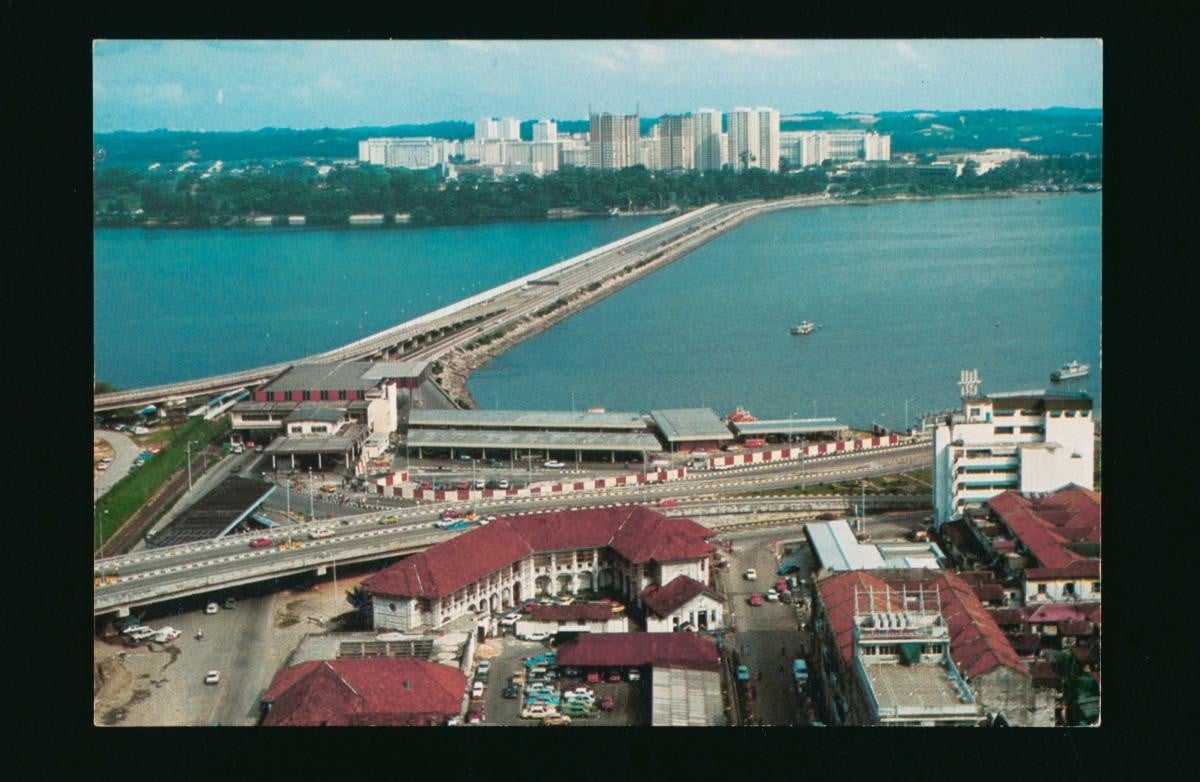
Source: Roots.sg
An average of around 145,000 vehicles, and around twice that amount of travelers, pass through JB’s Customs, Immigration and Quarantine (CIQ) complex daily.
The crossing takes up to two hours on weekdays, and that number balloons on weekends and holidays.
Despite many wanting a better experience using the Causeway, any changes to the structure itself will be difficult as it will require approval from both Singapore and Malaysia.
Yet, the Causeway remains an important structure for both Singapore and Malaysia today.
For Singaporeans, it provides valuable access to an affordable vacation spot. Meanwhile, for Malaysians, it is a road to better job opportunities.
Also read: S’pore-Johor Causeway celebrating 100-year anniversary on 28 June, morning congestion expected
S’pore-Johor Causeway celebrating 100-year anniversary on 28 June, morning congestion expected
Have news you must share? Get in touch with us via email at news@mustsharenews.com.
Featured image adapted from Roots.sg.