
Thai child ‘cannibal’ Si Ouey & how the media turned him into an urban legend
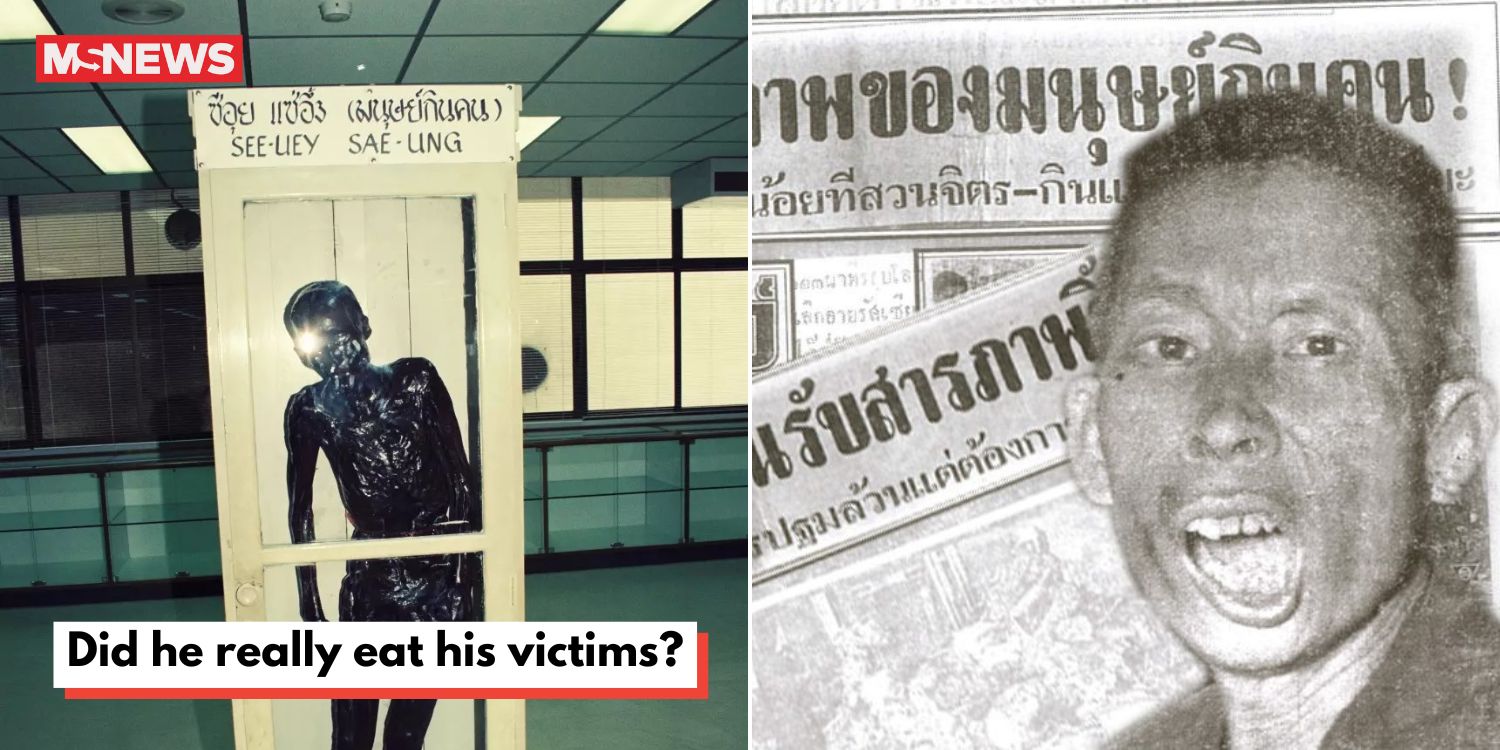
For a generation of Thai children, Si Ouey — a convicted serial killer found guilty of murdering and cannibalizing a total of seven children — was the boogeyman.
He was the monster that parents would use to scare their children into coming home before it was dark.
Although Si Ouey was executed by firing squad in 1959 at the age of 31, parents and children alike continued to fear him.
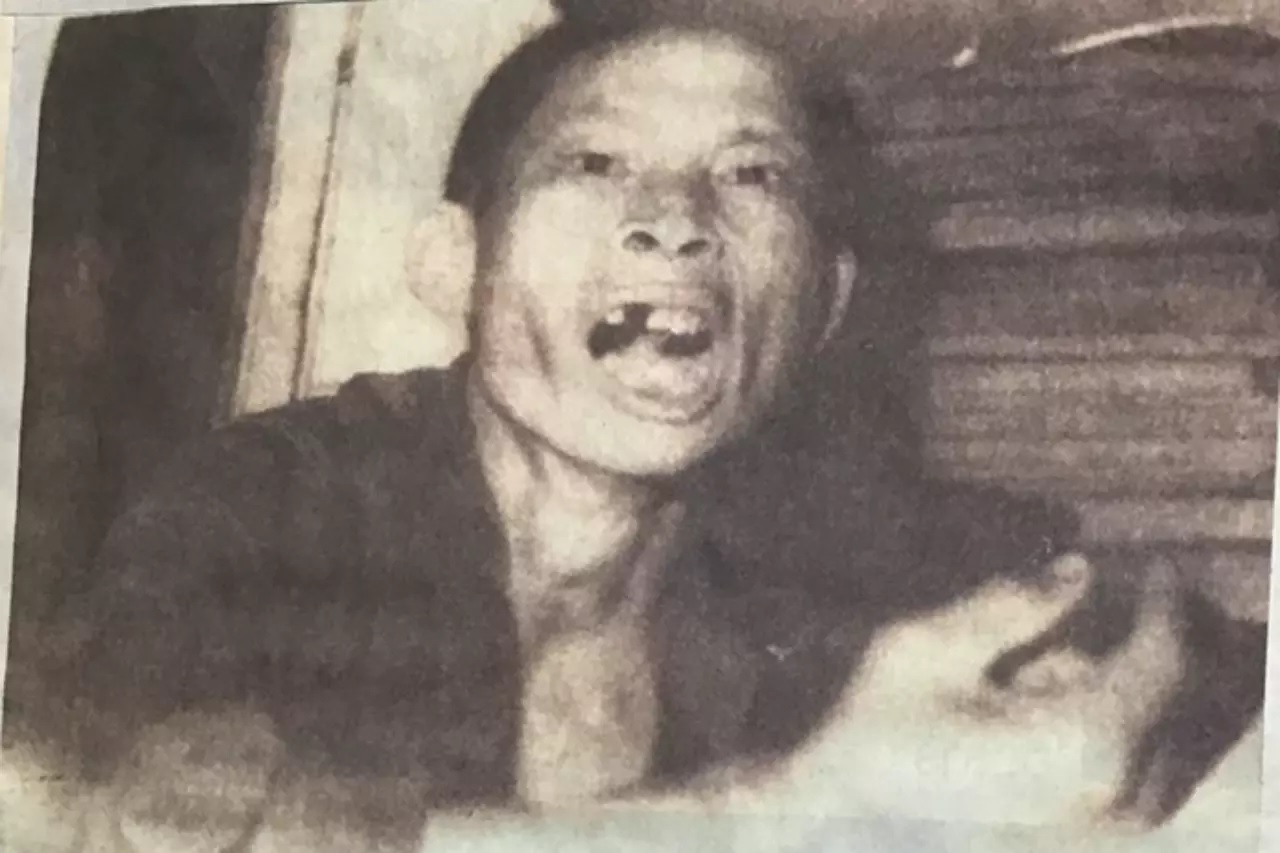
Source: Thairath
Multiple shows and movies were made about his story, further entrenching the man into public imagination and horror.
To soothe their fears and to show that the man truly was dead, authorities even mummified Si Ouey’s remains and displayed them in the Siriraj Medical Museum.
His corpse remained there for decades before it was cremated more than 60 years after he became an urban legend.
This is the turbulent story of Si Ouey, one of the most feared criminals in Thailand’s history.
A Chinese refugee who sought a fresh start in Thailand
Si Ouey was born in Shantou, China in 1927.
He left China to start a new life in Thailand after fighting in the Second Sino-Japanese War — arriving by ship on 28 December 1946 at the age of 19.
According to a ThaiPBS documentary, the man came alone and did not speak a lick of Thai.
From there, Si Ouey wandered around Thailand, bunking with fellow immigrants and working various labour jobs to pay the bills.
Often, he would only spend a few months in one place and leave once there were no more jobs available.
For a time, he settled down in Thap Sakae district, Prachuap Khiri Khan in central Thailand where he became closely acquainted with the people in the area.
Surviving locals who knew the man personally described him as well-mannered and very hardworking.
However, that all changed one fateful day in 1958.
Arrested for murdering a boy in 1958
On 27 January 1958, 11-year-old Somboon was running errands for his family in Rayong.
The boy was going to celebrate his coming-of-age ceremony, called “Kon Chuk” (โกนจุก) or Topknot-Cutting Ceremony.
To help prepare food for the celebration, the boy had gone out to buy some vegetables. He went to a nearby garden and asked the local vendor to sell him some produce.
That vendor was Si Ouey, who had made his way north after his time in Thap Sakae.
In a statement to the police, Si Ouey said that he had lured the boy away by inviting him to see a bird’s nest.
He then knocked Somboon unconscious with his bare hands.
Si Ouey also revealed the gruesome details of how he extracted the boy’s innards, throwing away the intestines in a nearby pond while keeping the boy’s heart and liver.
According to ThaiPBS, he was caught by locals as he was about to burn the boy’s body.
A search party looking for the missing boy found Si Ouey brandishing a cleaver while Somboon’s lifeless corpse lay atop two logs.
During his arrest, Rayong police also seized his blood-covered knife, several pieces of fabric stained with the boy’s blood, as well as a heart and liver “that resembled a human’s” found in the man’s pantry.
Interrogation and linking Si Ouey to other mysterious murders
After his arrest, police began their interrogation — during which other unsolved cases involving children were brought up.
Si Ouey, who was not represented by a lawyer, was questioned via a translator the whole time as he still barely spoke Thai.
After nine days of interrogation, Si Ouey signed a confession admitting not only to the murder of Somboon, but also six other cases all involving children.
He confessed to attacking the following four victims at Prachuap Kiri Khan in 1954:
- An 8-year-old girl who had her neck sliced but survived,
- a 10-year-old girl who was found in a temple with her heart and liver missing,
- a 9-year-old girl who was similarly found with her heart and liver missing,
- a 10-year-old girl who only had her neck sliced.
The two other cases were from the Nakhon Pathom and eastern Bangkok area.
In late 1954, a 5-year-old girl was found at a train station with her belly sliced open. Around three years later, a 7-year-old girl was killed in Nakhon Pathom with several internal organs missing.
In the statement, Si Ouey said consuming human hearts and livers gave him boundless energy, allowing him to work tirelessly.
He also said he had consumed human flesh in Thailand two times prior: once in Bangkok and once in Nakhon Pathom.
The Thai Supreme Court sentenced Si Ouey to be executed, and on 16 September 1959, the 31-year-old immigrant was killed by a firing squad.
Media storm turned him into a boogeyman
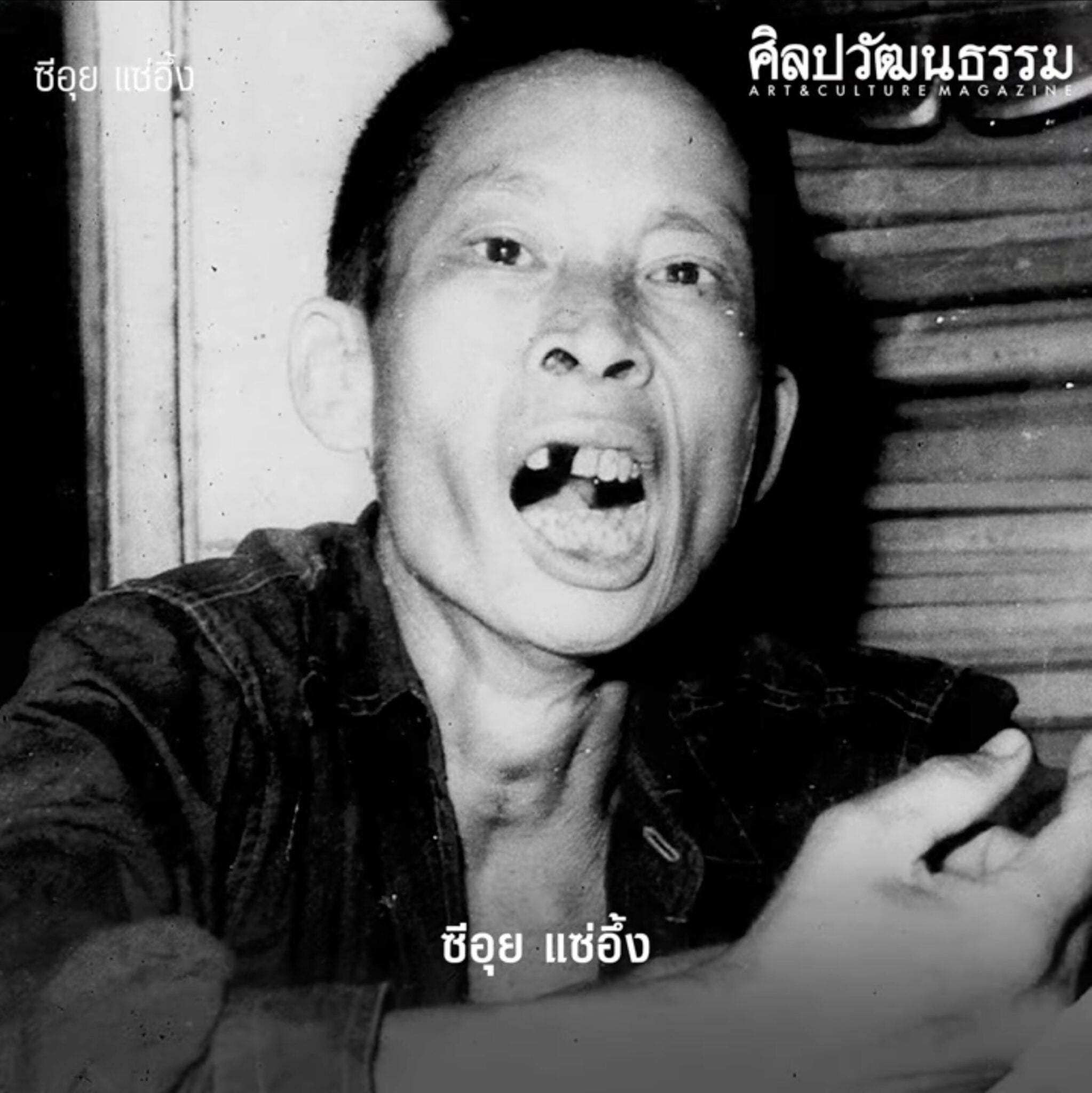
When his confession made headlines, Si Ouey was quickly dubbed “The Cannibal” by Thais.
A picture of the man seemingly roaring in defiance was plastered on the front page of newspapers around the country. People needed to know why a man would not only kill children, but also eat their organs.
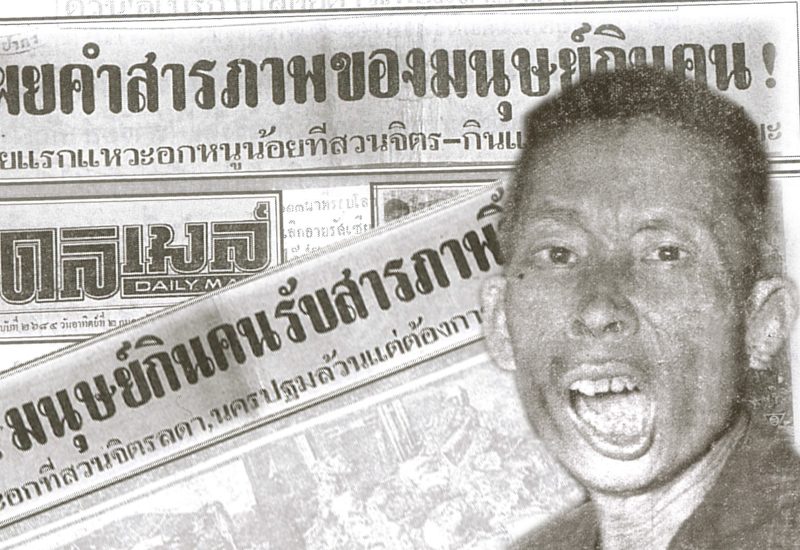
Source: Silpa-Mag
Soon they were given a story.
According to urban legends, Si Ouey grew up in poverty and without proper care from his parents.
He was also often bullied by other kids his age, instilling a strong hatred within him.
One day, the boy met an ascetic who gave him advice on how to fight back.
In order to get stronger, the ascetic told Si Ouey that eating human hearts and livers would give him strength. Hearing that, the young boy began hunting animals and eating their raw innards.
Reports wrote that he got his first taste of human flesh after joining the army at 18 years old.
When food ran low during an intense siege, Si Ouey began eating his dead comrades to stave off hunger.
In Thailand, the man — who felt his body weakening after years of hard labour — would be reminded of the ascetic’s advice.
His confession, combined with the legend, intrigued doctors and scientists in Thailand. After his execution, they began to study the convicted serial killer’s body in hopes of discovering what caused him to kill.
These stories, although unverified, were published in major newspapers.
Si Ouey’s corpse also became a source of spectacle. Authorities had mummified him and put the body on display at the Siraraj Medical Museum.
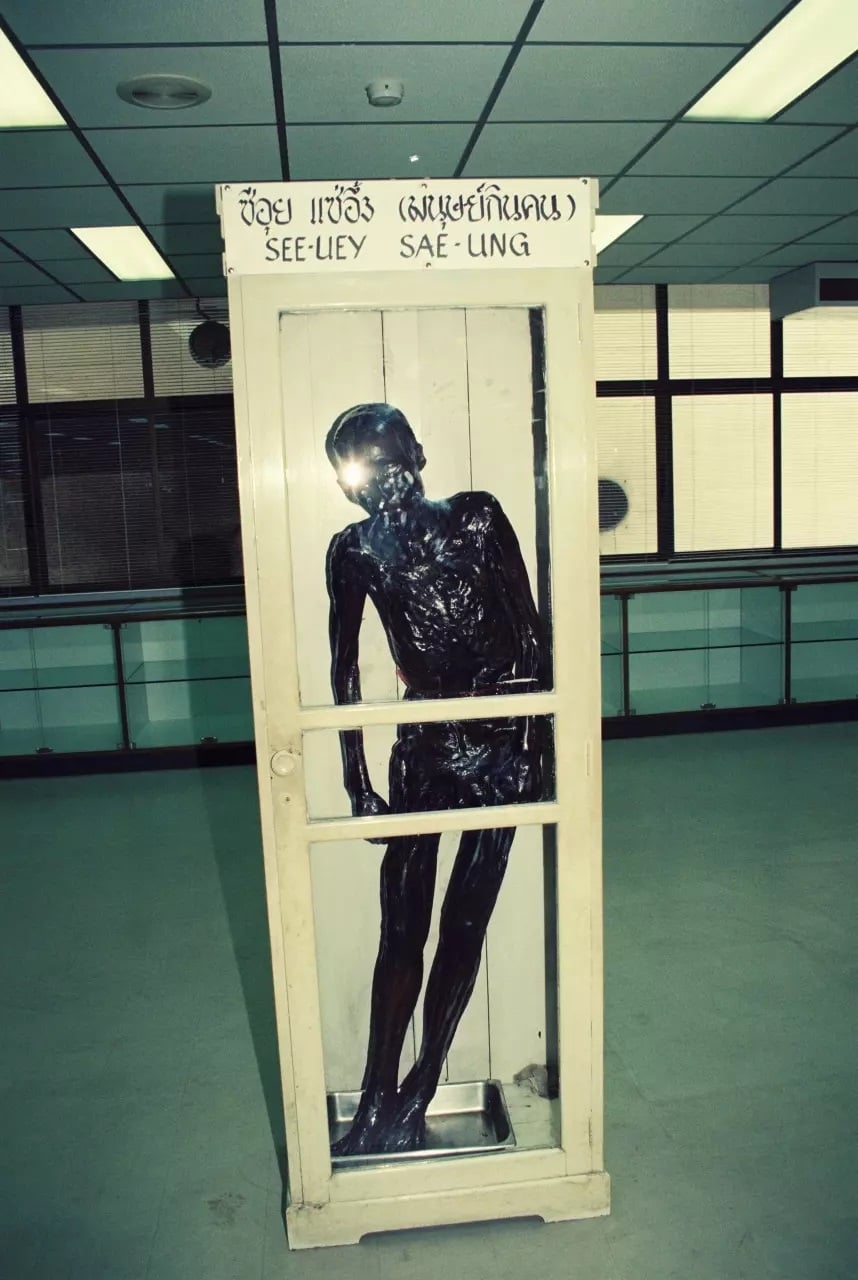
Source: Thairath
Although his plaque only had his name in English, in Thai, they also added his nickname “The Cannibal”.
Was Si Ouey really a serial killer?
Years on, while “The Cannibal” remained Thailand’s most infamous serial killer, his notoriety and stranglehold on the Thai imagination has died down.
As this occurred, some locals raised doubts about whether Si Ouey was responsible for all those gruesome killings.
While he was linked to the murders of seven children, the man was only convicted for one — the last boy in 1958.
Additionally, his confession has also been disputed.
Source: Silpa-Mag
Critics have pointed out that not only was the confession obtained under duress, but many of the details in his confession did not match the facts in those cases.
In fact, one of the girls he confessed to murdering was alive.
These doubts culminated in a movement seeking to return human dignity back to Si Ouey. A petition on Change.org in 2019 drew more than 11,000 signatures.
“Even if he truly is guilty of the crime, his punishment was death. Not being reviled for decades,” the petition read.
The movement saw Si Ouey as a victim of the media publishing unsubstantiated rumours.
A prominent human rights activist in Thailand added that Si Ouey’s story should be a case studied in future civic rights classes.
She elaborated that it was dehumanising to put the man’s body on display at a museum and label it “The Cannibal”, especially after he had already received capital punishment.
After decades of fearing him as the boogeyman, those in Thailand began to question if the story they were told was real or simply a product of questionable policework.
Finally laid to rest
Si Ouey’s body was eventually removed from the display case it sat in for decades.
On 23 July 2020, he was given a proper funeral before being cremated.
As he had no relatives in Thailand, his funeral was attended by the few people in Thap Sakae who personally knew the man.
They were also the ones who had always fought for justice for Si Ouey, with many protesting his innocence.
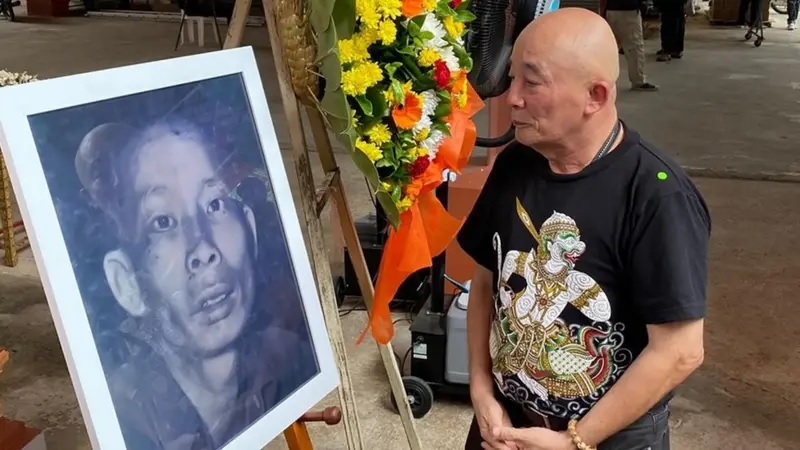
Source: BBC Thailand
The small community still shares good memories they have of Si Ouey.
They spoke of a man who worked hard in the fields and even helped raise some of the children who are now pushing their 60s today.
One woman, who was just a young girl when Si Ouey was around, said she believes the man was afraid to speak up for his own innocence out of fear that he would be deported back to China.
Due to government policy, Si Ouey’s ashes are presently stored at Wat Bang Phraek Tai in Nonthaburi province.
Also read: MS Unsolved: The curious case of Khor Kok Soon & the Shenton Way shootout that left 1 dead
MS Unsolved: The curious case of Khor Kok Soon & the Shenton Way shootout that left 1 dead
Have news you must share? Get in touch with us via email at news@mustsharenews.com.
Featured image adapted from Silpa-Mag and Thairath.