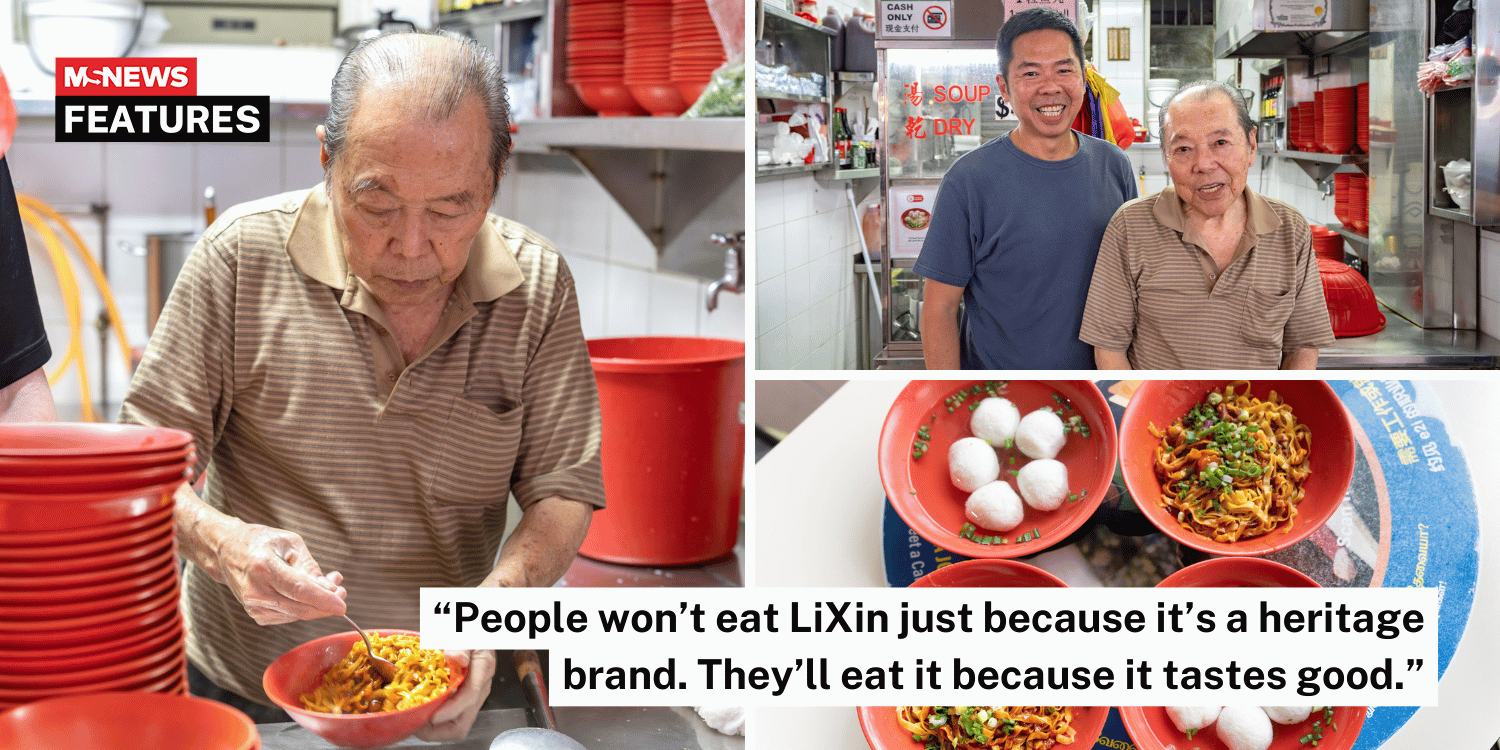

80-year-old LiXin Fishball Noodles founder still starts work at 3am, now runs business with his son
For most people, starting work at 3am would be unthinkable.
But for 80-year-old Lim Lee Seng, it is simply another day at the office.
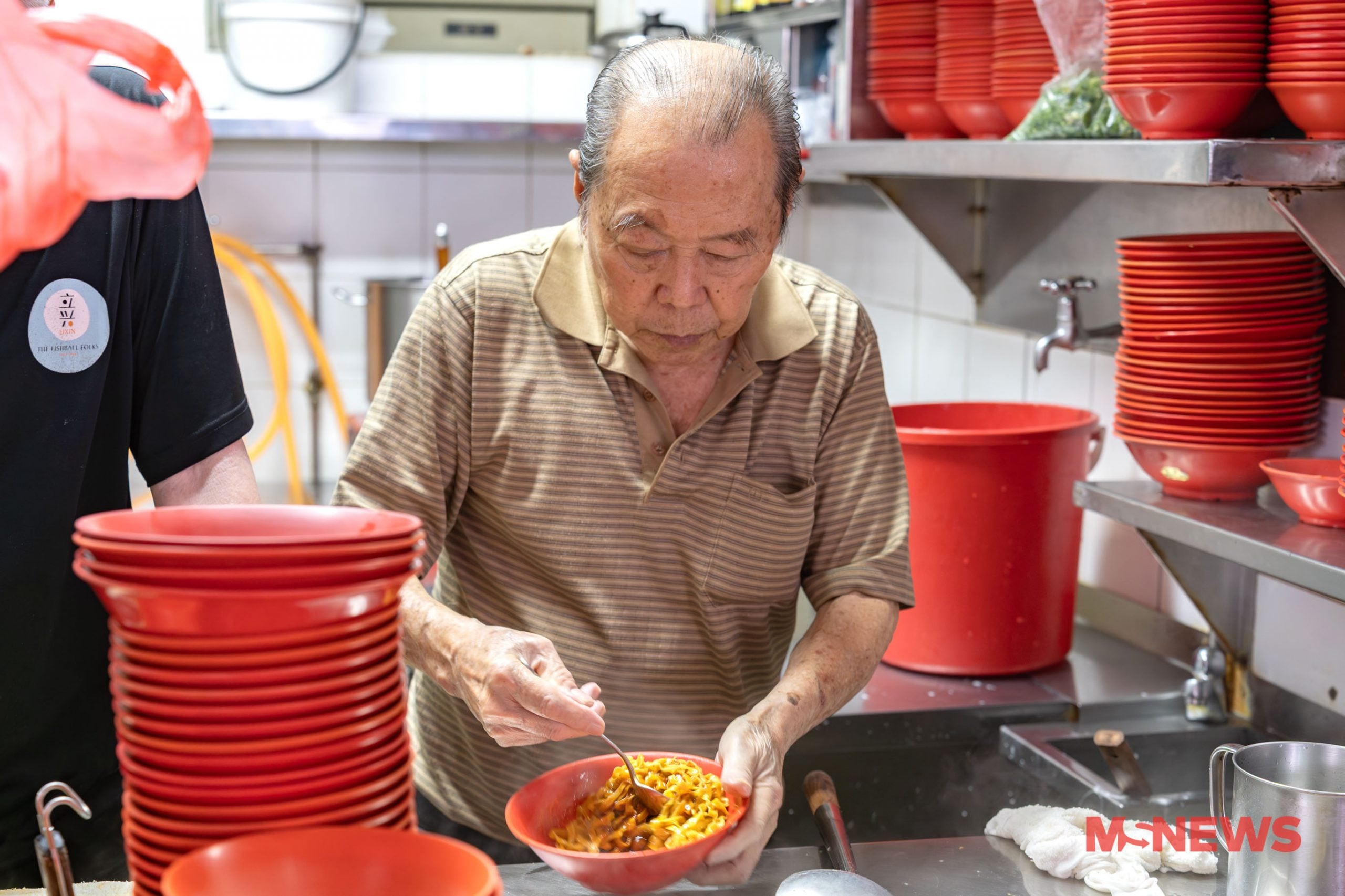
Nearly six decades after founding LiXin Teochew Fishball Noodles from a humble pushcart in 1968, Mr Lim still arrives before dawn at the brand’s original stall in Toa Payoh.
There, he personally prepares the fishballs and keeps a close eye on every bowl that leaves the kitchen, ensuring each one meets the standards he has upheld for almost 60 years.
His philosophy has remained just as straightforward throughout the decades:
Cook the best for my customers.
From sawmill worker to Michelin-recognised hawker
Long before LiXin became one of Singapore’s best-known fishball noodle brands, Mr Lim worked at a sawmill and was searching for a better way to make a living.
He initially tried selling a cuttlefish dish but soon noticed that fishball noodles drew more customers.
Determined to learn the trade properly, he spent six months apprenticing at a fishball noodle stall in Telok Ayer before striking out on his own.
The early days were anything but glamorous. A bowl of fishball noodles cost just S$0.20 or S$0.30 then, depending on how many fishballs came with it.
Preparing those fishballs was no small feat either. Mr Lim would travel to Jurong Fishery Port to buy yellowtail fish, then spend hours scraping the flesh from the bones, filleting, mincing, kneading, moulding, and shaping everything by hand.
Despite the long hours and modest earnings, quitting never crossed his mind.
“I just persisted and worked hard,” he told MS News.
Today, LiXin has grown from a pushcart into a homegrown chain with 18 outlets across Singapore.
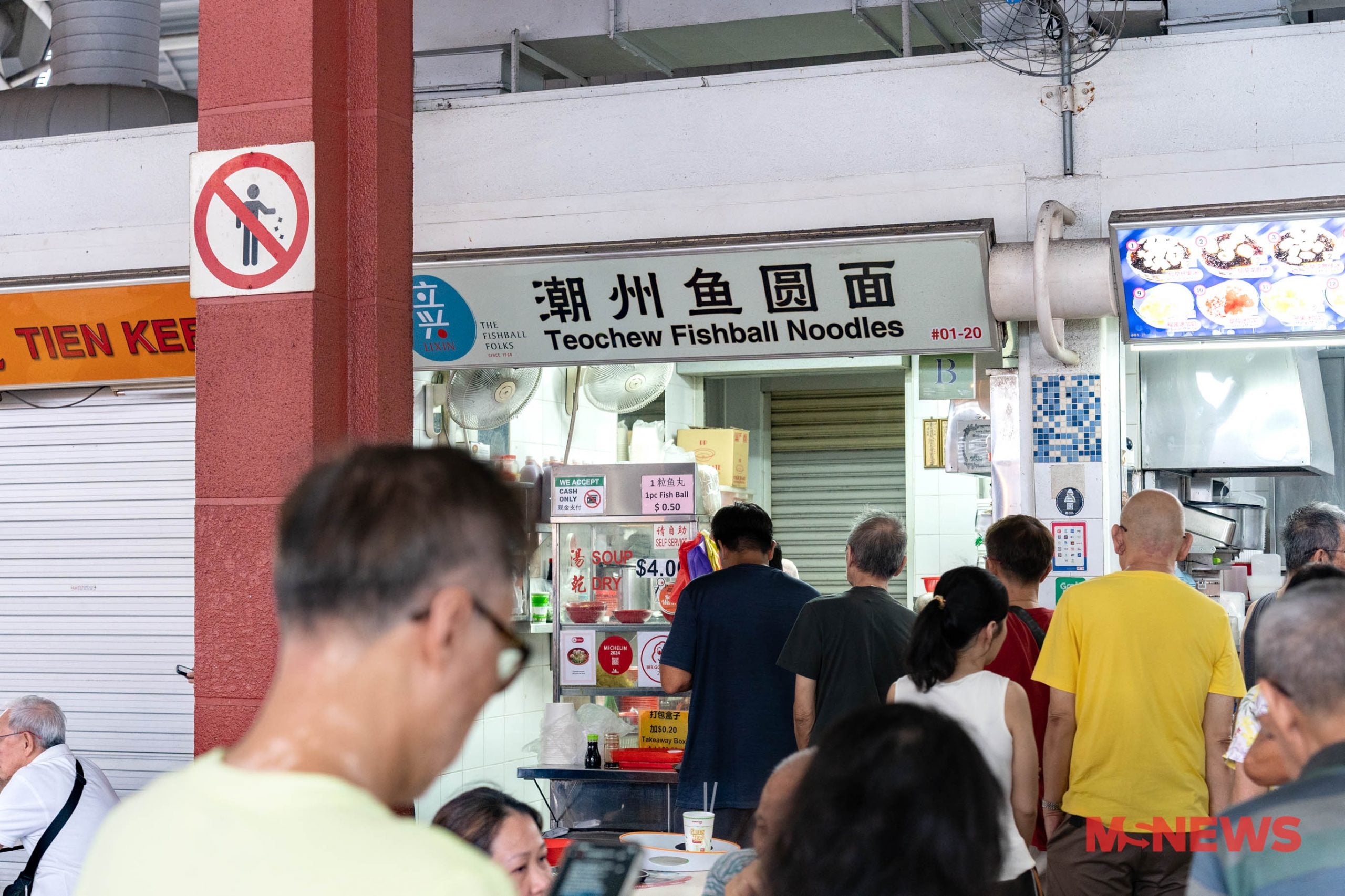
It is also Singapore’s only fishball noodle brand to be awarded the prestigious Michelin Bib Gourmand for five consecutive years since 2022.
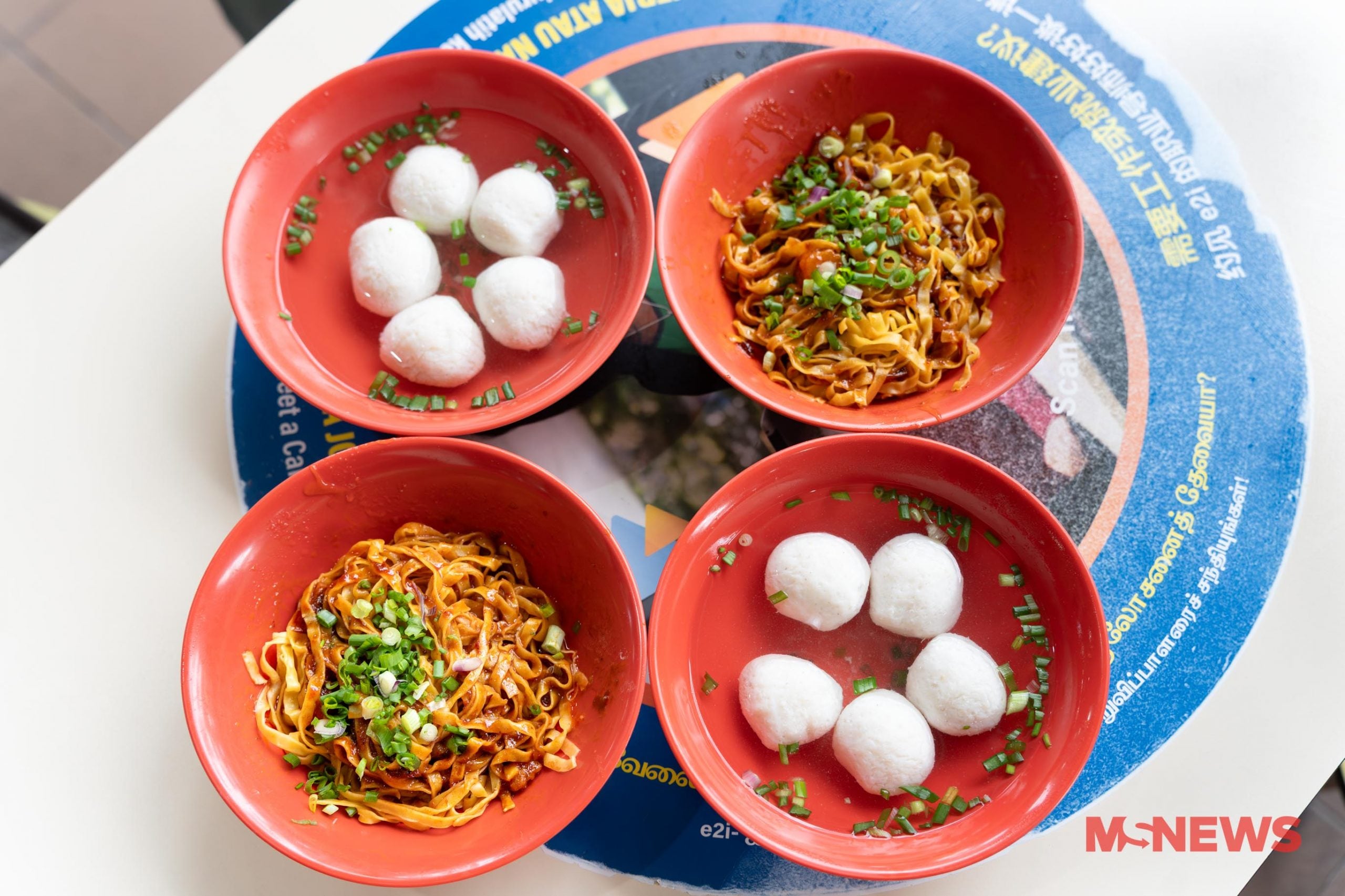
Its fishballs, fish cakes, and fish dumplings are still prepared fresh daily using 100% yellowtail fish, without surimi, stabilisers, or preservatives.
His son wanted nothing to do with hawker life
Ironically, Mr Lim’s son, Eddie, spent much of his childhood determined not to follow in his father’s footsteps.
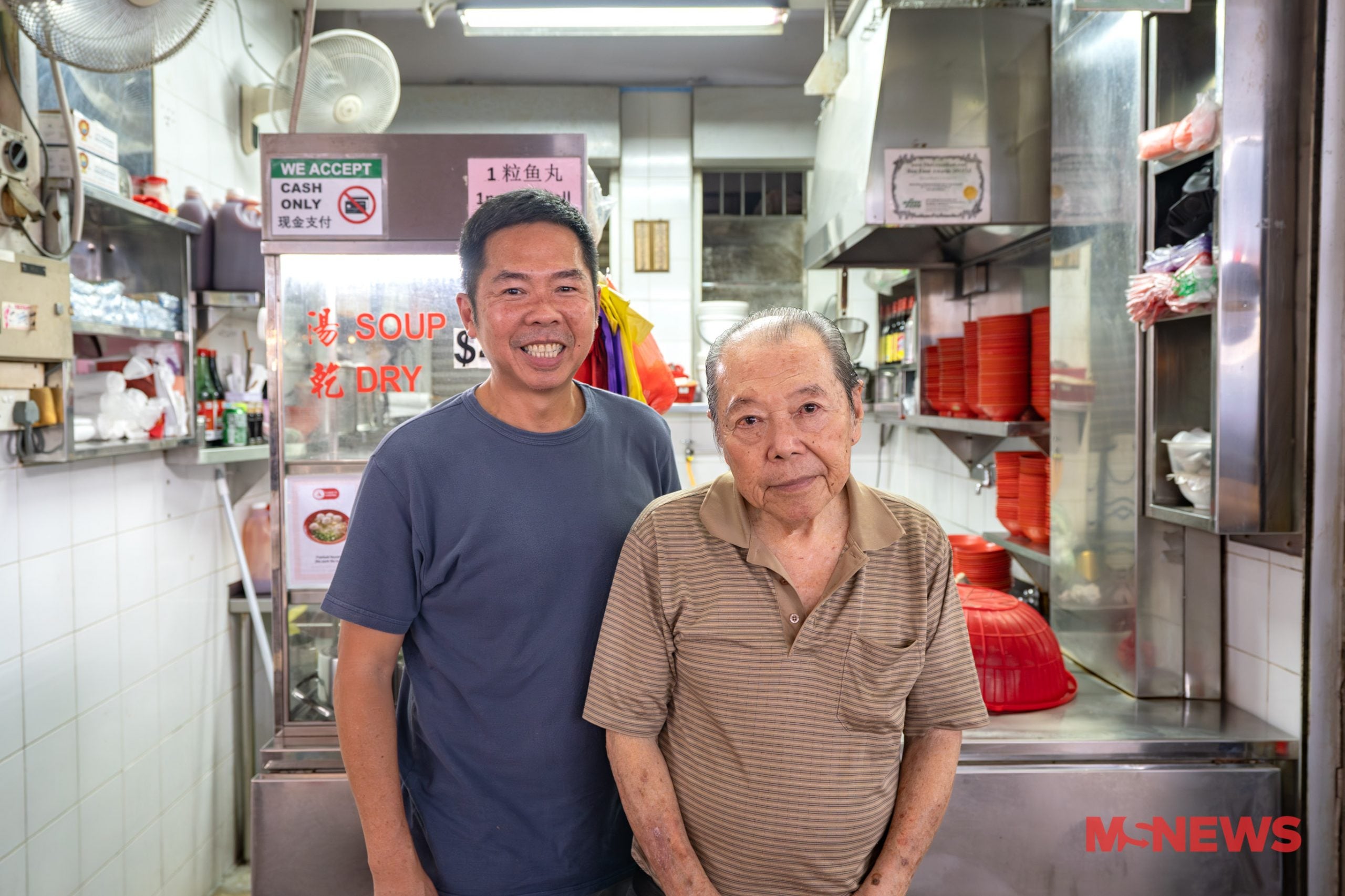
One of his earliest memories is of his mother shouting up from the ground floor of their four-storey flat, waking him and asking him to come down to help at the stall.
Weekend mornings were spent washing dishes, serving customers, and darting around the bustling hawker centre.
After watching his parents endure such long and gruelling hours, Eddie decided the hawker life was not for him.
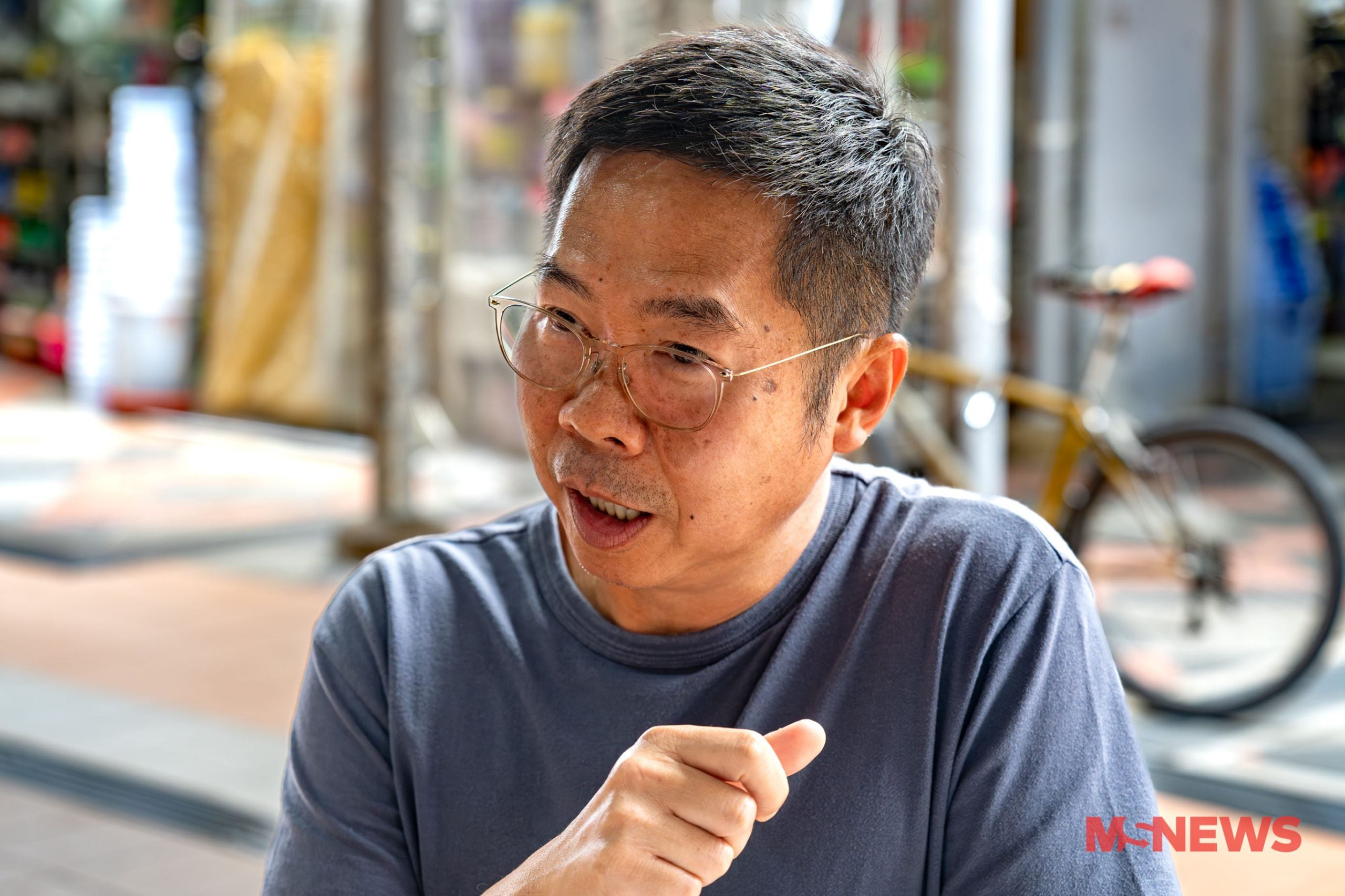
“I swore I would never want to be a hawker,” he admitted.
Instead, he entered the car trade, where he worked for around 13 years.
His unexpected journey back to fishball noodles began when he bought his father a fishball-making machine, hoping it would ease the strain of decades of manual labour.
That eventually led Eddie to open his own fishball noodle stall at Old Airport Road Food Centre in 2007.
It lasted only six months.
“There was no brand. It was just known as Teochew Fishball Noodles,” Eddie recalled.
One day, his father visited and delivered a characteristically blunt assessment: business was poor, and Eddie should consider closing the stall.
So he did.
A second chance that changed everything
Eddie returned to selling cars, but the noodle business was not quite done with him yet.
Another opportunity arrived in 2009, when Food Republic invited the family to open an outlet at ION Orchard.
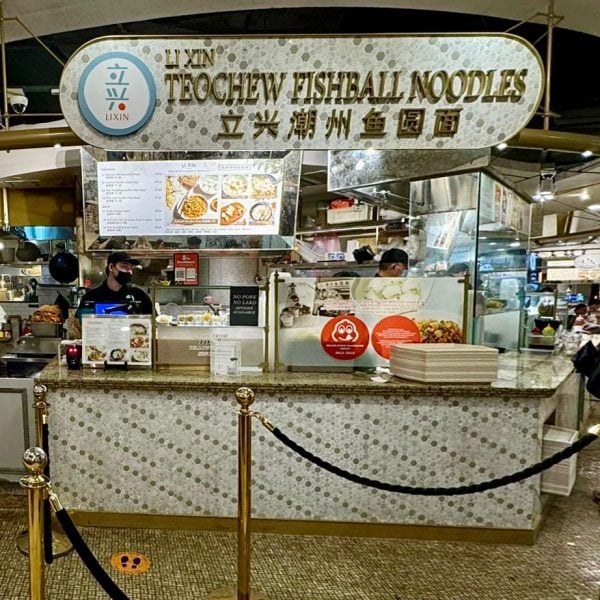
Source: LiXin Teochew Fishball Noodles
The new outlet struggled for much of its first year. Mr Lim and his wife spent almost every day there, helping to stabilise operations and keep the business afloat.
For Eddie, the experience became a turning point.
After his failed first attempt, he could not understand why something that “looked so simple” was, in reality, so difficult to get right.
At the same time, he had seen his father build a loyal following over decades, with customers returning time and again for the same familiar bowl.
Eventually, that made Eddie determined to prove that he could do it, too.
Father and son clashed over expansion
Today, he oversees the wider business, though working with his father has not always been smooth sailing.
As LiXin expanded beyond its original Toa Payoh stall, disagreements between father and son became increasingly common.
While Mr Lim preferred to rely on the instincts and techniques he had honed over decades, Eddie wanted to introduce machinery, standard operating procedures, and more modern production methods.
Their debates sometimes became so heated that the pair would stop speaking to each other for days.
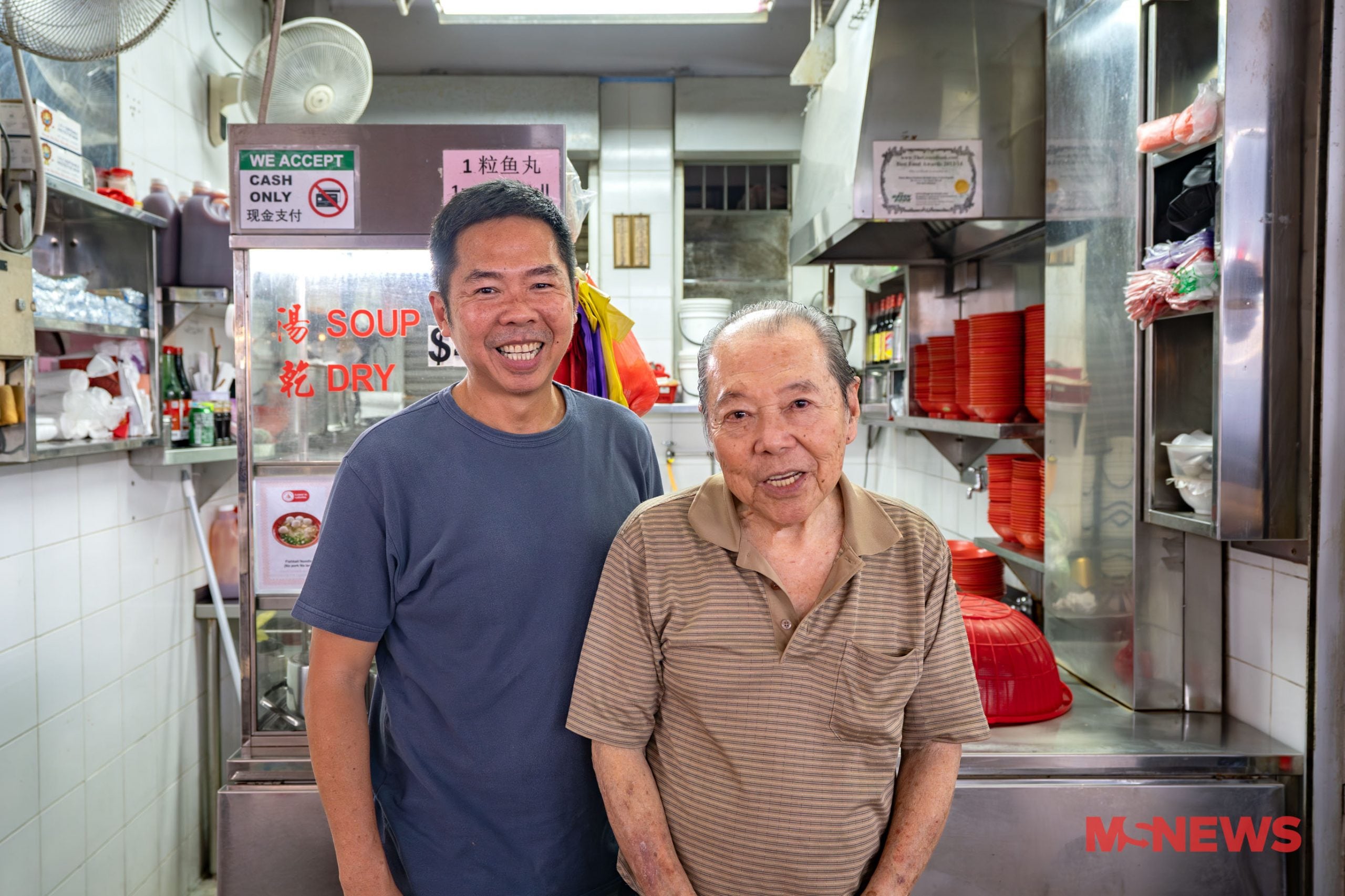
Over time, however, Eddie realised that forcing his father to change was not going to work.
Instead, he let the results do the talking.
Mr Lim gradually warmed to the new equipment after seeing that it could produce quality fishballs more efficiently without compromising the taste and texture he cared about.
“A traditional parent won’t tell you, ‘Good job’,” Eddie laughed. “He’ll just say, ‘This machine is not bad.'”
Heritage alone won’t keep customers coming back
LiXin may have almost six decades of history behind it, but Eddie does not believe heritage alone is enough to sustain the business.
“People won’t eat LiXin just because it’s a heritage brand,” he explained. “They’ll eat it because it tastes good.”
Maintaining that taste consistently across the brand’s outlets has become one of its biggest challenges, especially when customers compare every bowl with the ones they remember from childhood.
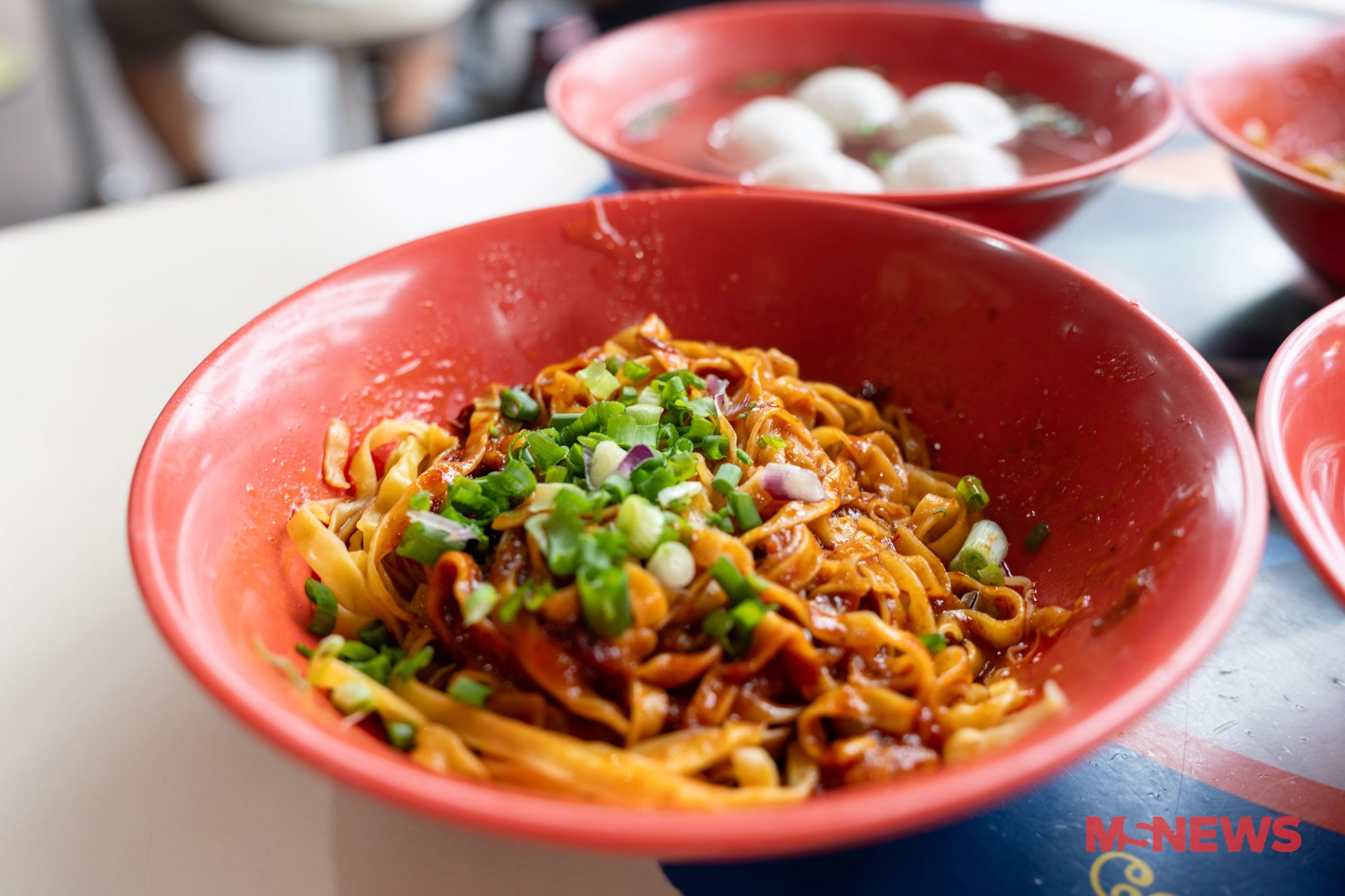
At the same time, Eddie is thinking about how to introduce a new generation of Singaporeans to traditional hawker food, particularly when fishball noodles now have to compete with ramen, pasta, and an ever-growing rotation of trendier cuisines.
To him, keeping the brand alive also does not necessarily mean passing it down to another family member.
As such, Eddie is currently grooming 30-year-old head of product and business development Jordon Lim, who shares the company’s vision, to eventually take the reins.
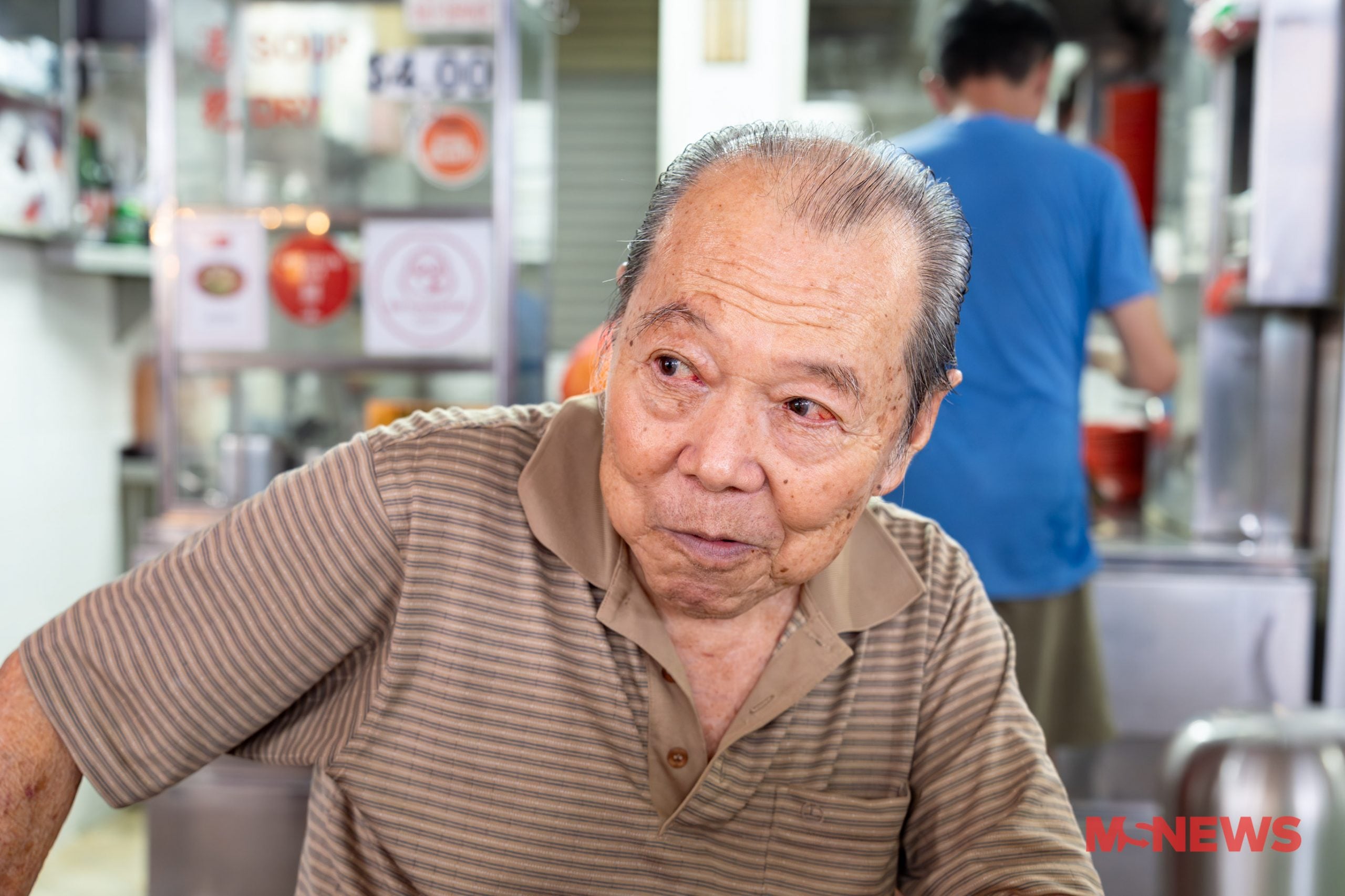
For Mr Lim, what matters most is that the business continues for years to come, regardless of who leads it.
LiXin opens its newest stall at Jewel Changi Airport
LiXin’s story is still growing, with its newest stall now open at the revamped Food Republic at Jewel Changi Airport.
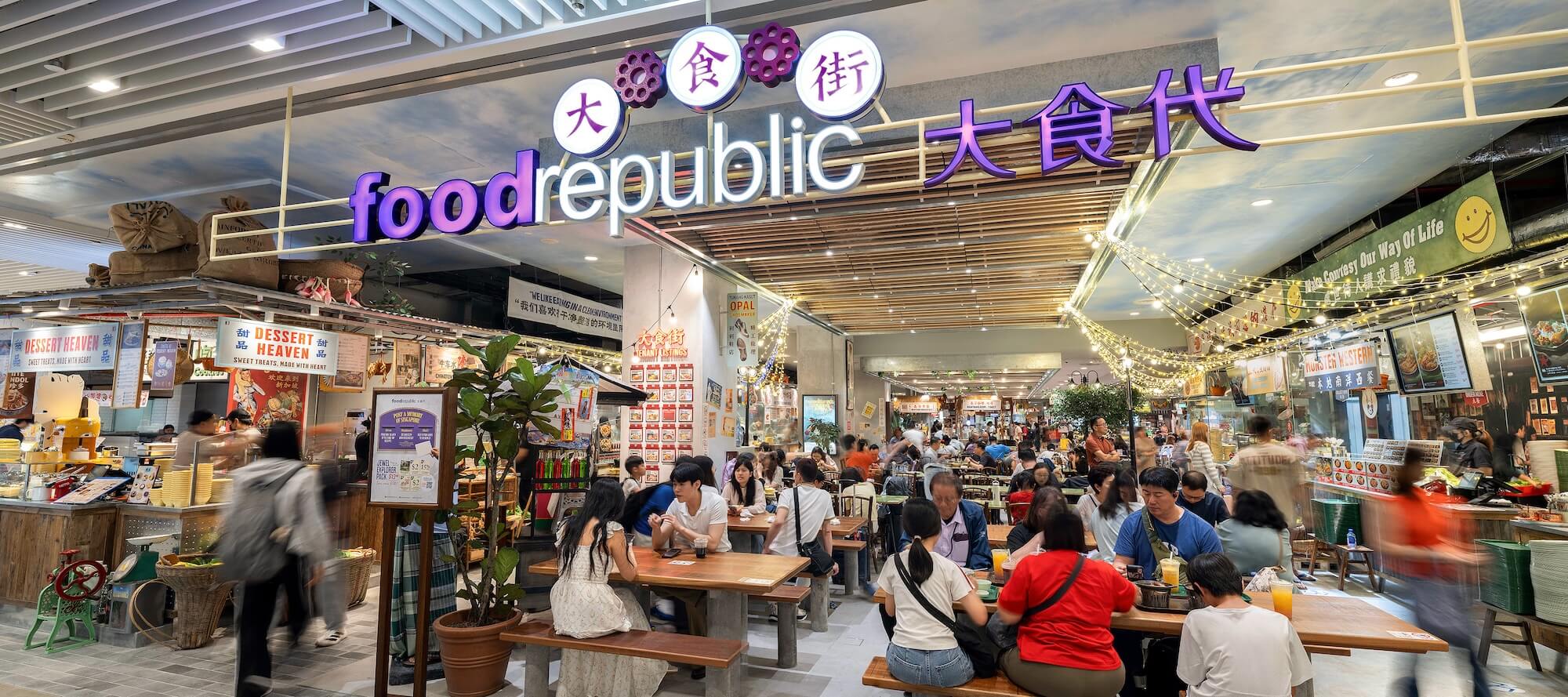
Image courtesy of FoodRepublic
Reopened on 3 July 2026, the 13,300 sq ft, 500-seat food atrium is designed to resemble a bustling Singapore hawker street from the 1960s and 1970s, complete with five-foot ways, old-school signboards, vintage props, and nostalgic photo spots.
LiXin is one of four Michelin Bib Gourmand brands gathered under one roof at the food atrium, which also houses 10 heritage food stalls, making it a fitting new home for a brand that began with a pushcart almost six decades ago.
At the Jewel stall, diners can tuck into LiXin’s signature noodles with mee pok or mee kia, served dry or in soup, and with or without chilli.
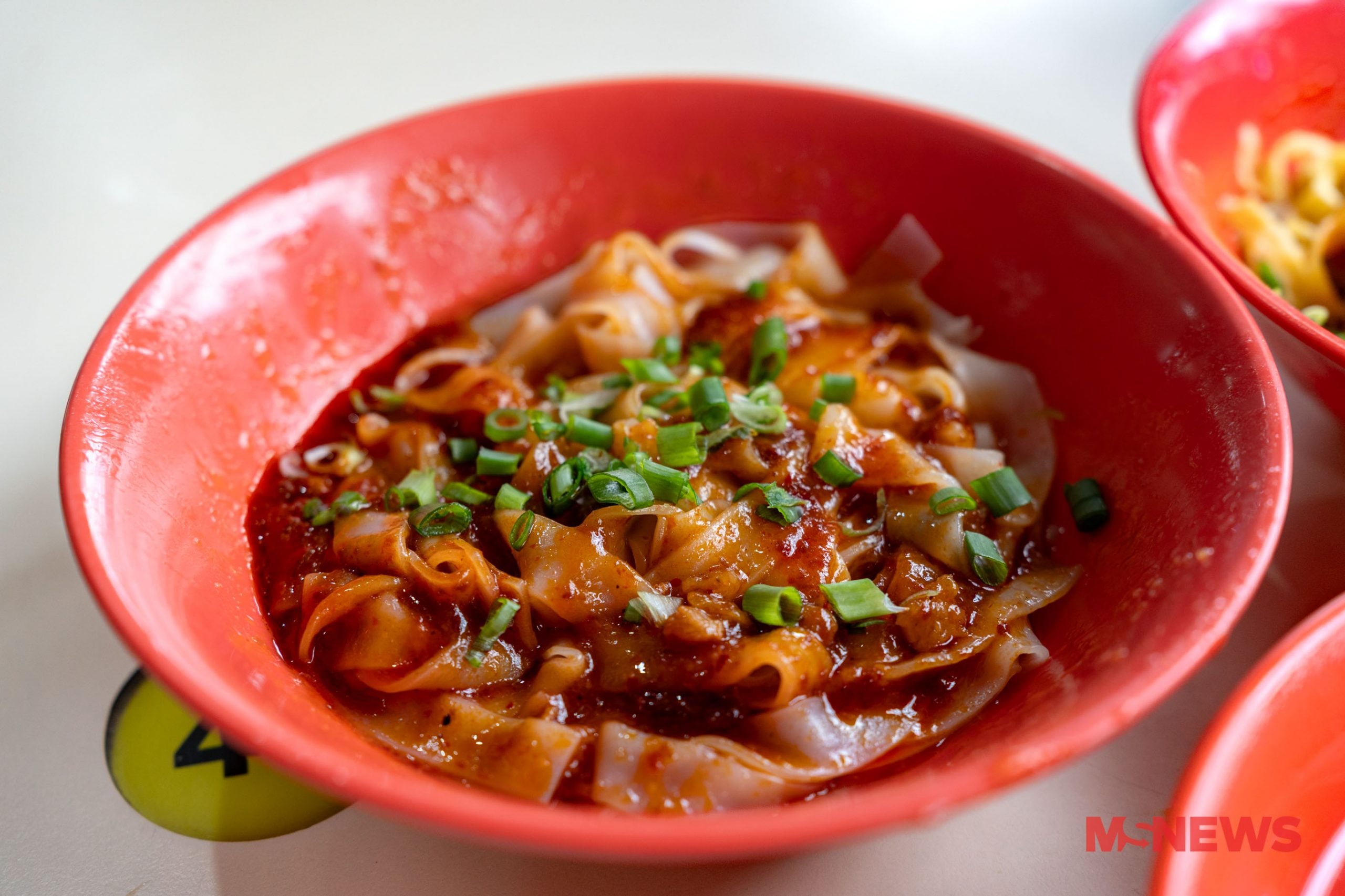
Despite the brand’s growth, Eddie hopes every bowl will continue delivering the same familiar feeling customers have associated with LiXin for generations.
“It’s a bowl of comfort food,” he said. “We may not be fine dining, but comfort food can also be consistent.”
For more information, visit LiXin’s website and follow them on Instagram and Facebook.
Have news you must share? Get in touch with us via email at news@mustsharenews.com.
Featured image by MS News. Photography by Felicia Fun.