
Hawkers in Singapore must run stalls themselves to prevent subletting
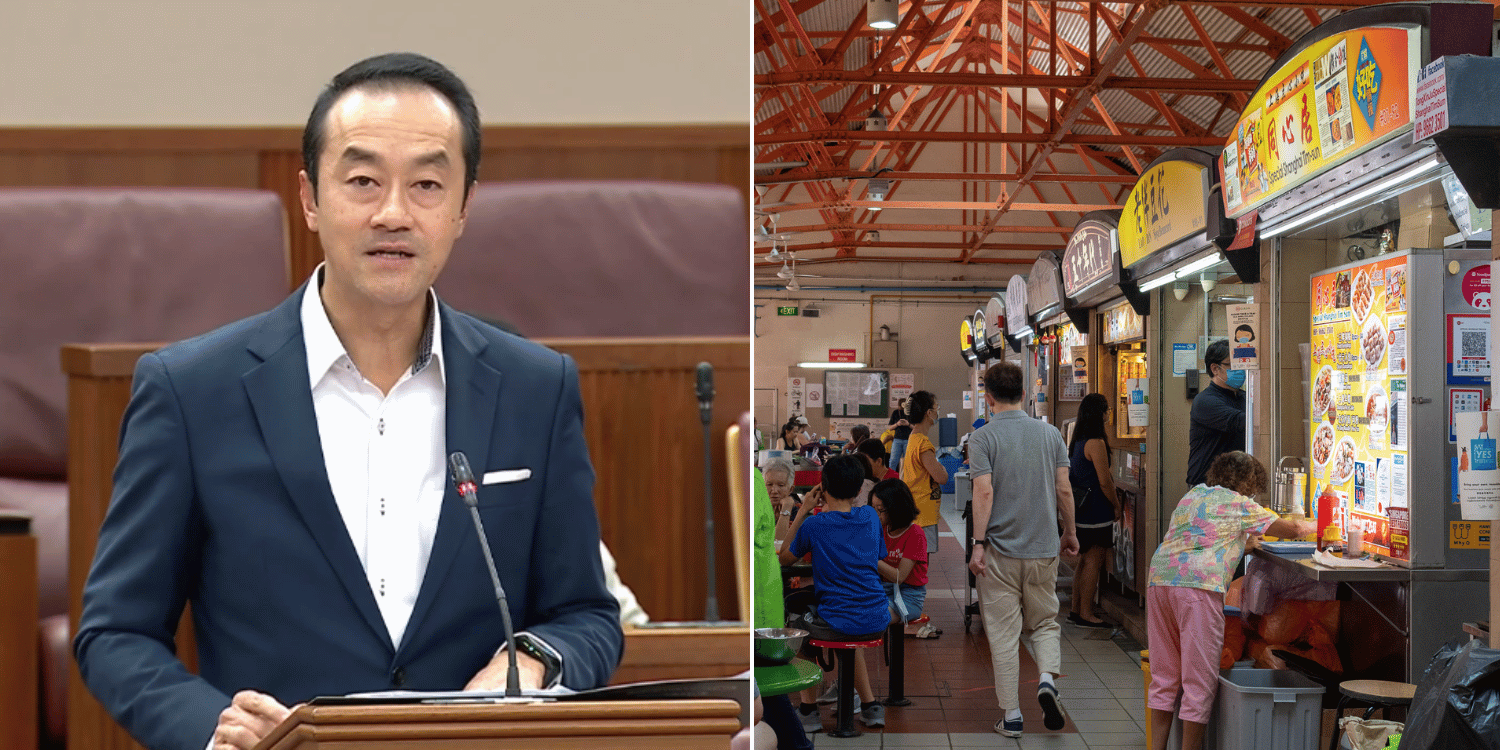
Senior Minister of State for Sustainability and the Environment, Dr Koh Poh Koon, stated in Parliament on 10 March that hawker centre stallholders must personally operate their stalls to prevent subletting.
He explained that this requirement helps maintain low barriers for small businesses while preserving the authenticity of hawker culture.
Requirement for hawkers to run stalls themselves
Dr Koh’s remarks came in response to questions from Edward Chia of Holland-Bukit Timah GRC and Workers’ Party MP Jamus Lim of Sengkang GRC regarding the National Environment Agency’s (NEA) rule requiring stallholders to personally run their stalls, as well as whether flexibility exists when stallholders are temporarily unable to operate.
The discussion followed a viral Facebook post by hawker Noorman Mubarak, who expressed frustration over having to “force” his heavily pregnant wife to be physically present at their nasi lemak stall in Yishun Park Hawker Centre.
In his post, Mr Noorman claimed that NEA had issued his wife, who was 40 weeks pregnant, a “warning” for allegedly violating the tenancy agreement by not being physically present at the stall.
Providing opportunities for Singaporeans
Dr Koh explained that the requirement is essential to prevent stallholders from subletting their stalls and profiting from rent.
Without it, tenants who successfully bid for a stall could sublet it and pocket the rent difference without running the business themselves.
He emphasised that hawker centres play a crucial role in nation-building and that hawker culture is a key part of Singapore’s identity.
“We want our hawker centres to continue providing opportunities for Singaporeans to directly operate their own small food businesses,” he said.
Flexibility to pass stall to family member
Since NEA can directly verify stallholders’ presence through inspections, Dr Koh stated that requiring hawkers to be physically present is the most practical and fair way to prevent subletting.
If a hawker is temporarily unable to run the stall due to reasons such as medical conditions, they can appoint a joint operator or nominee to manage the stall during that period.
However, if tenants are unable to operate their stalls, they are expected to return them to NEA, providing other hawkers with a fair chance to bid.
“For those who are unable to personally operate their hawker stalls, they may relinquish their stalls or hand them over to a family member,” Dr Koh added.

NEA also supports hawkers looking to expand by allowing individuals to operate up to two cooked food stalls in hawker centres, as long as they can effectively manage their time and operate both stalls themselves.
Regarding the nasi lemak stall at Yishun Park Hawker Centre, Dr Koh noted that NEA had permitted Mr Noorman’s wife to appoint someone else to manage the stall during her pregnancy.
“He has two or three stalls in NEA hawker centres, but up to, I think, 21 registered stalls in other food and beverage establishments,” Dr Koh added.
“It is understandable that, as a business owner, he wants to focus on his other businesses . . . but that’s not something we want because we cannot allow our NEA hawker system to be catering to the interests of such private chain owners. We need to make sure there are opportunities for others to enter the trade as well.”
Keeping food affordable & ensuring fair opportunities
Dr Koh stated that while NEA supports hawkers in growing their businesses, it must also prevent individuals from exploiting the system.
He warned that allowing stalls to be entirely operated by hired workers as businesses grow would make hawker centres indistinguishable from coffee shops and food courts, ultimately diminishing their authenticity.
He added that over time, hawker culture would weaken as it shifts from dedicated hawkers personally preparing their dishes to businesses focused on efficiency and expansion, rather than heritage and quality.
“While we support technology to improve store-level efficiency, we should not do so at the expense of our hawkers stepping away from running the store themselves and letting their workers just take over the day-to-day running and cooking of the food itself,” said Dr Koh.
“The reality, therefore, is that we need to balance between protecting our heritage, keeping the food affordable, and ensuring fair opportunities for new hawkers.”
Have news you must share? Get in touch with us via email at news@mustsharenews.com.
Featured image adapted from CNA and by MS News.