

S’pore’s fertility rate was 0.87 in 2025, population will start to shrink in early 2040s
Singapore’s total fertility rate (TFR) plunged to a record low of 0.87 in 2025, a significant drop from 0.97 the year before.
Thus, the Republic would require a “carefully managed immigration flow to augment our low birth rate”, said Deputy Prime Minister Gan Kim Yong in Parliament on Thursday (26 Feb).

Source: Khoa Pham on Unsplash. Photo for illustration purposes only.
0.87 fertility rate means 44 children per 100 residents
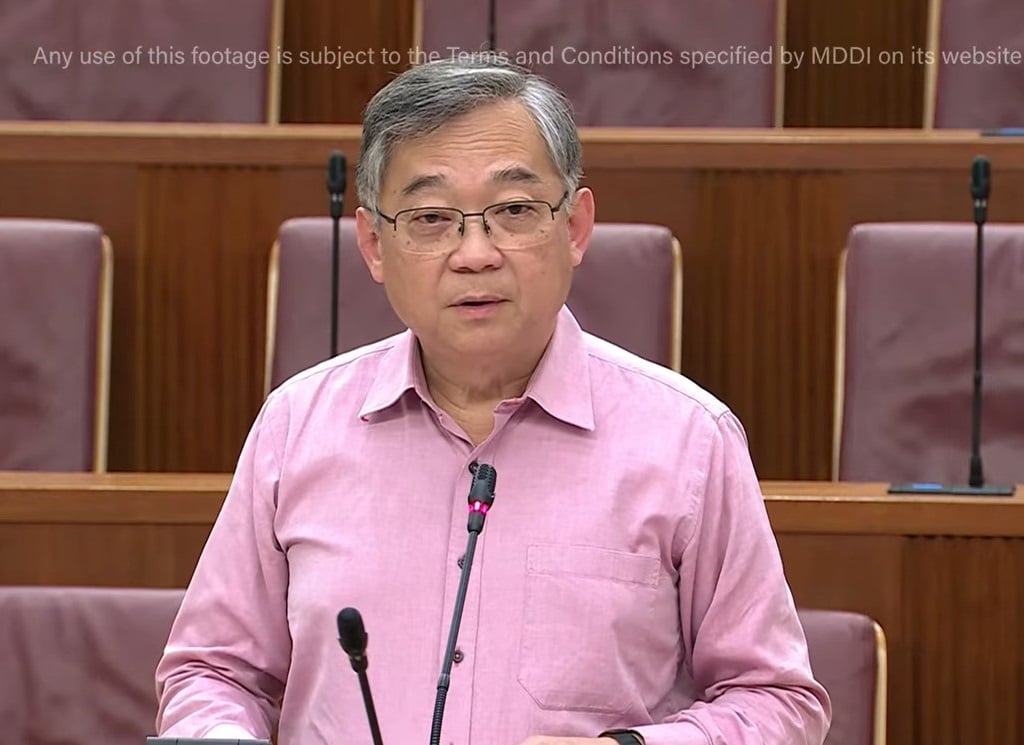
Mr Gan, who was speaking for the Prime Minister’s Office at the Budget debate, said if the TFR remained at 0.87, every 100 residents would produce just 44 children and 19 grandchildren.
This trend would be “practically impossible” to reverse as Singapore would have “fewer and fewer” women who can bear children, he noted, adding:
If no new measures are taken, our citizen population will start to shrink by the early part of the 2040s.
He also noted that Singapore’s TFR was 1.24 about a decade ago.
It fell below 1.0 for the first time in 2023, reaching a then-nadir of 0.97. This figure was maintained in 2024.
‘Existential crisis’ facing S’pore
Low birth rates, together with an ageing population, will “profoundly reshape” Singapore, society and the economy in the coming years, said Mr Gan, who is also Minister for Trade and Industry.
Source: MDDI Singapore on YouTube
The implications range from weakening family support networks to slowing economic growth.
Slowing economic growth will mean correspondingly slow income growth.
On the other hand, spending on healthcare and social issues must increase to support the growing population of seniors.
This will lead to “tremendous strain” that will be felt not just at the national level, but also by individual households, he pointed out, adding:
And with fewer citizens, it will become increasingly difficult to meet our national security and defence needs. This raises the deeper question of what Singapore will be 50 or 100 years from now – will we remain vibrant, liveable and relevant? Will we exist?
Thus, he pointed to an “existential challenge” facing Singapore.
25K-30K new citizens expected per year for the next 5 years
However, we “cannot give up”, Mr Gan said.
So even as the Government steps up efforts to support Singaporeans in having children, “carefully managed immigration flow” is necessary.
In 2025, about 25,000 new citizens were taken in, and over the next five years, about 25,000 to 30,000 new citizens per year are expected.
Singapore must also adjust the intake of permanent residents (PRs) as this is “the pathway to work towards citizenship”, he noted.
Thus, about 40,000 PRs are expected to be taken in every year for the next five years. This is more than the 35,000 PRs newly minted in 2025.

Concerns over immigration to be addressed
Mr Gan acknowledged Singaporeans’ concerns and anxieties regarding immigration, including questions over fewer job opportunities and the changing social fabric of the country.
The Government takes these concerns “seriously”, and will continue taking steps to address them, he said.
He assured Singaporeans that a stable citizen core will be maintained, with the Government continuing to be selective about new immigrants.
The pace of immigration will also be managed to ensure that the development of public infrastructure, such as housing and transport, keeps pace with population growth.
The Government will also “keep a close watch” on the growth of the non-resident population, including foreign workers, to ensure that Singaporeans remain in the majority.
S’pore needs ‘marriage and parenthood reset’ to solve fertility rate issue
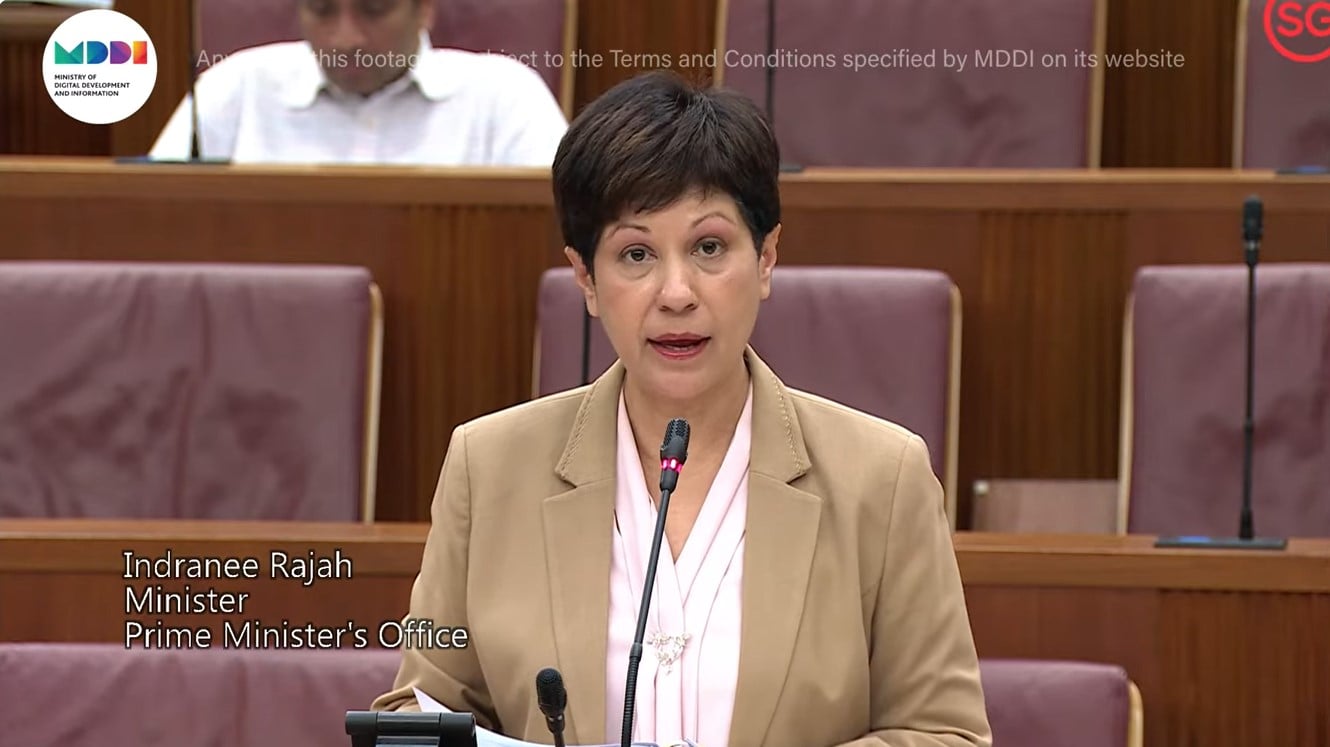
Speaking after Mr Gan, Minister in the Prime Minister’s Office Indranee Rajah said the TFR issue cannot be addressed by policy measures alone.
In fact, what Singapore needs is “a marriage and parenthood reset”, she added.
Source: MDDI Singapore on YouTube
This involves three areas:
- How marriage and parenthood are viewed and supported
- How workplaces can evolve to better align work and family
- How everyone can play their part
To that end, the Government will form a new workgroup to look into these areas “holistically” and engage members of the public, businesses and the people sector, she revealed.
Suggestions from Members of Parliament (MPs) in the Budget debate will also be considered, including more childcare leave and more support for parents with costs.
Also read: Elon Musk claims S’pore is ‘going extinct’ due to low birth rate, sparks debate about population
Elon Musk claims S’pore is ‘going extinct’ due to low birth rate, sparks debate about population
Have news you must share? Get in touch with us via email at news@mustsharenews.com.
Featured image adapted from Khoa Pham on Unsplash. Photo for illustration purposes only.