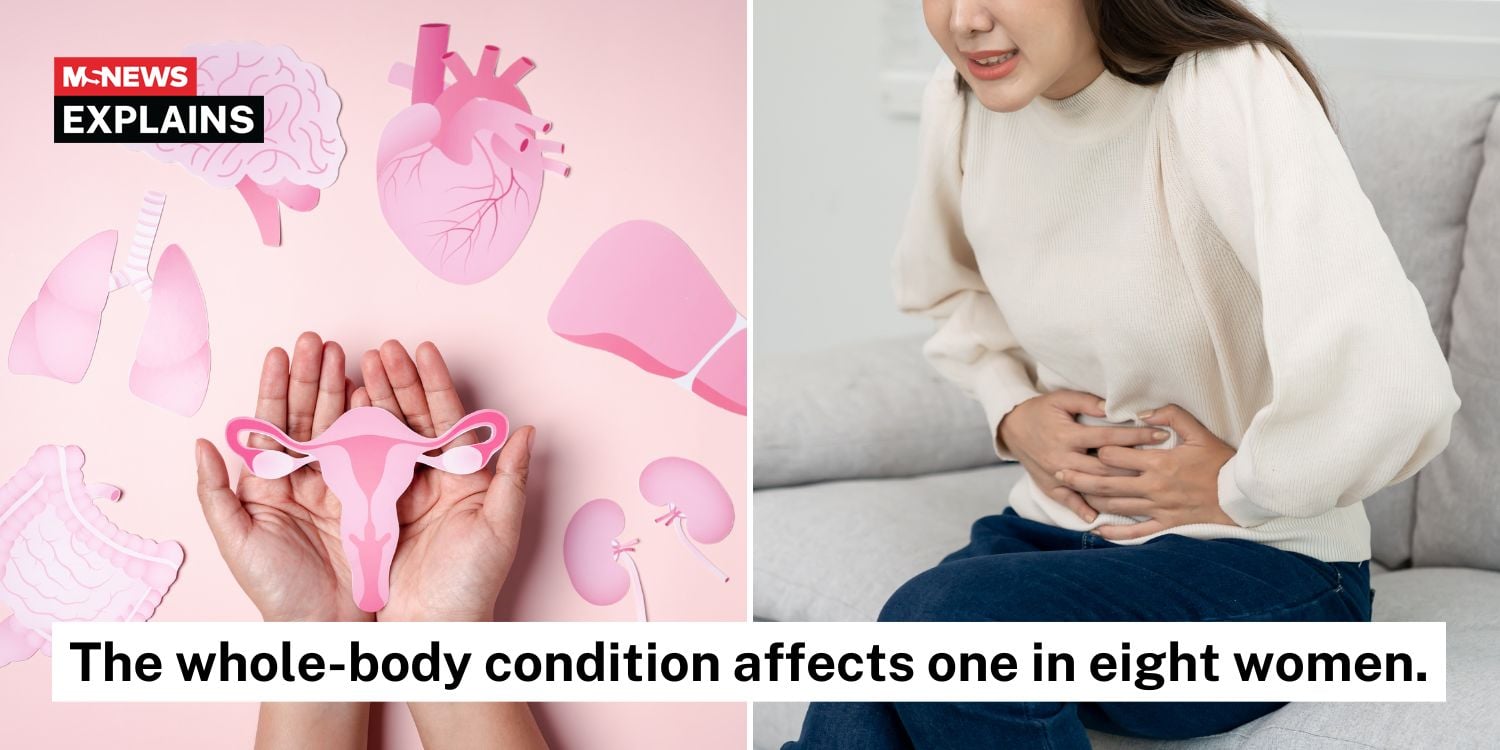

MS Explains: The medical condition that affects one in eight women
In early May, a health policy published in the medical journal The Lancet announced that polycystic ovary syndrome (PCOS) has been renamed to polyendocrine metabolic ovarian syndrome (PMOS).
For centuries, the condition — which affects one out of eight women — has been treated as an ovarian disorder.
This has caused delayed diagnoses, knowledge gaps, and patient dissatisfaction.
After years of experts advocating for a name change, a global consensus has finally been reached.
Read more to find out why the change was needed, and what this means for patients.
Why was the name change necessary?
PMOS has been observed as early as 460 BC to 377 BC by the ancient Greek philosopher Hippocrates.
In his work ‘Diseases of Women’, he wrote about women who have little to no menstruation, exhibit masculine appearance, and did not become pregnant.
In 1935, the term ‘polycystic ovary syndrome’ was coined.
However, the term PCOS is inaccurate as it implies the existence of ovarian cysts, a symptom not all patients have.
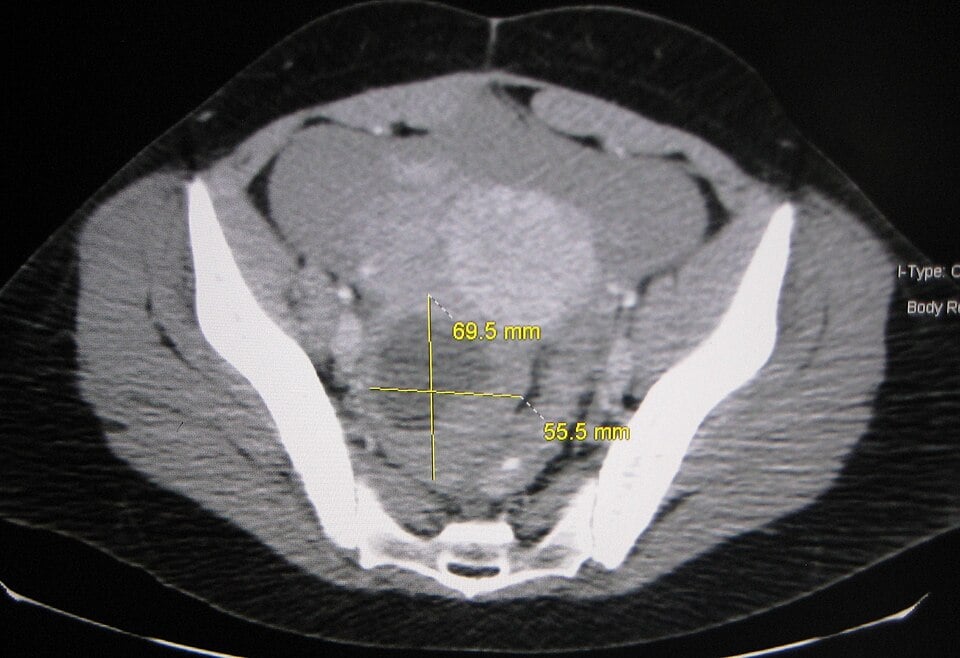
Image courtesy of Wikimedia Commons. For illustration purposes only.
According to the World Health Organisation, up to 70% of women with the condition do not know they have it.
Some of these women may also have been misdiagnosed even if they exhibit other symptoms such as:
- Irregular and abnormal periods
- Abnormal hair growth
- Acne
- Infertility
Experts began to advocate for a name change that would better reflect the condition in 2012.
In Sept 2024, a multistep global consensus process began its key stages.
How did the name come to be?
To come up with a more accurate name for the condition, 9,358 patients and 3,656 health professionals worldwide were surveyed.
During the process, alternative names were assessed for duplication, pronunciation, stigma, and cultural implications.
Fun fact: Endocrine metabolic ovulatory syndrome (EMOS) was a frontrunner. However, it was found to overlap with the emo subculture and was ultimately dropped.
The name PMOS came about after determining that the name should facilitate diagnosis and optimise care.
Respondents also hoped that it would enhance research and understanding of the condition.
Why was it renamed to PMOS?
PMOS describes the condition for what it truly is — a complex, multisystem condition.
Studies confirmed that the condition affects the neuroendocrine, metabolic, and reproductive pathways.
Particularly, it disrupts multiple hormones and causes the following:
- Insulin resistance
- Obesity
- Risk of type 2 diabetes
- Cardiovascular issues
- Ovarian dysfunction

Image courtesy of charliepix on Canva. For illustration purposes only.
“By putting ‘endocrine’ and ‘metabolic’ in the name, PMOS tells clinicians this is a whole-body condition, not just a gynecologic diagnosis,” said Dr Steven Vasilev, founder of Lotus Endometriosis Institute in California.
What happens now?
Announcing the new term for the condition is just the first step of an ongoing multistage global implementation strategy.
For this to happen, there must be a coordination with governments, research funders, journal editors, regulators, and the general healthcare industry.
The name change is expected to lead to the advancement of understanding and treatment of the condition.
For three years, the investigators will monitor and evaluate the result of the name change.
They will also consider emerging evidence on subtypes and refinement of the terminology as understanding of it evolves.
Singaporean women with PMOS have longer reproductive lifespans: Study
In Singapore, most women with PMOS have been found to belong to a subtype of the condition “associated with the most favourable outcomes”.
A study published in Oct 2025 found four different subtypes of the condition among women from China, Singapore, the United States, Europe and Brazil.
Of the Singaporean women, 52% were observed to have the “high level of sex hormone-binding globulin” (SHBG-PCOS) subtype.
While it has its own adverse symptoms, it is said to be the mildest form of PCOS.
These patients have the lowest risk of diabetes and hypertension, and mild androgenic features.
“The study debunks the long-held belief that PCOS is inherently a worrying diagnosis,” said Prof Yong Eu Leong from the Department of Obstetrics and Gynaecology at NUS Medicine, one of its authors.

Image courtesy of nevodka on Canva. For illustration purposes only.
Another study published in Oct 2025 of Asian women who underwent in-vitro fertilisation (IVF) at the National University Hospital (NUH) also found that women with PCOS have better reproductive outcomes than their peers without the condition.
Even women with PCOS aged 36 years and above have higher pregnancy rates (70%) through fertility assistance versus those without PCOS.
“These findings should offer real reassurance,” said Professor Mahesh Choolani, Head of the Department of Obstetrics and Gynaecology at NUS Medicine, who co-authored the study.
“Our focus is to translate these insights into clear guidance and tailored care, so women can plan their families with confidence while safeguarding their long-term health.”
Also read: Ebola epidemic has been declared a global health emergency, should S’pore be concerned?
Ebola epidemic has been declared a global health emergency, should S’pore be concerned?
Have news you must share? Get in touch with us via email at news@mustsharenews.com.
Featured image adapted from kiattisaklamchan on Canva, shisuka on Canva, both for illustration purposes only.