MS Explains: Why PMDs catch fire and how to prevent them
Personal Mobility Devices (PMDs) have gained a notorious reputation in recent years, ranging from being the cause of accidents to household fires.
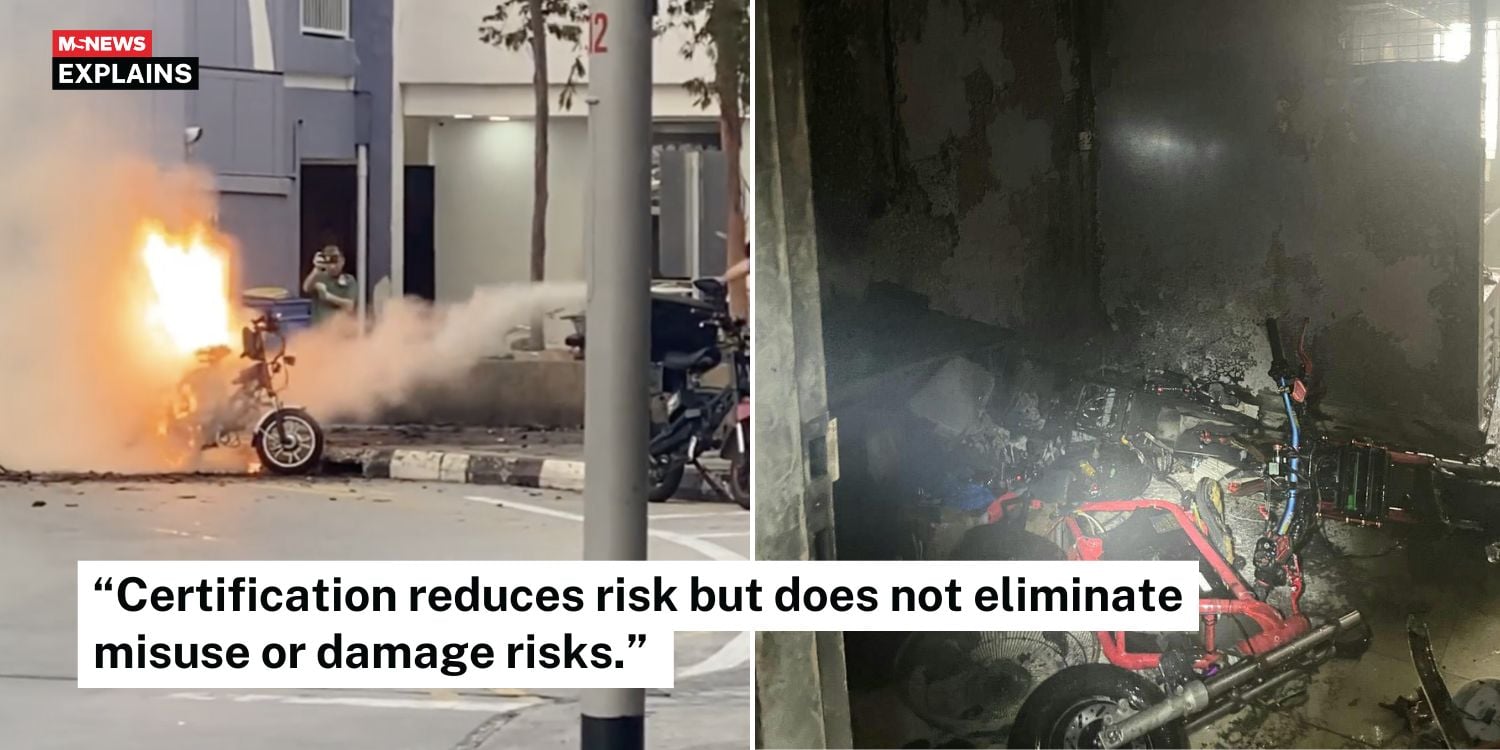
On 13 Aug, two people in Bukit Merah died when a blaze, believed to have originated from a PMD battery pack, engulfed their home.
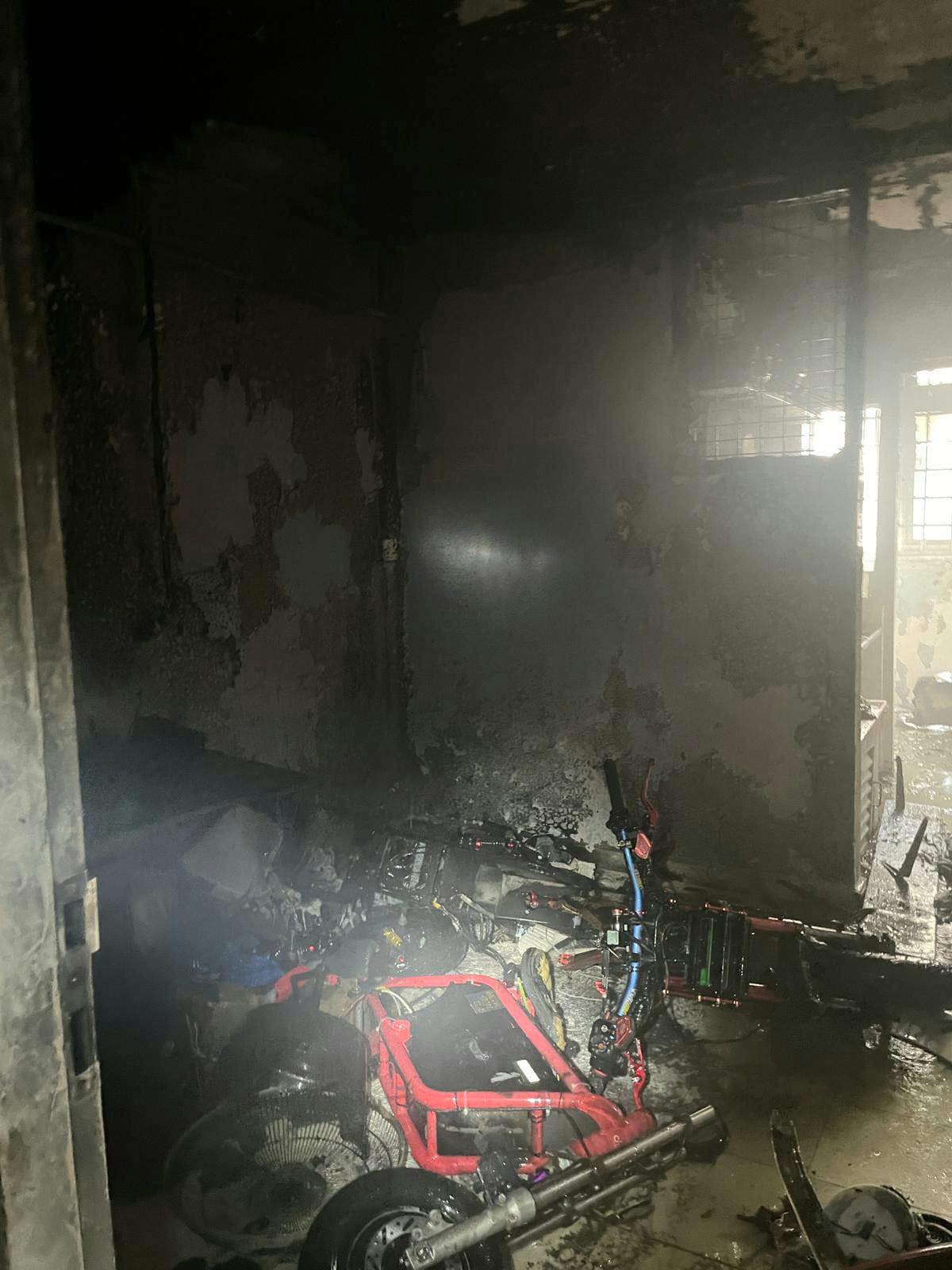
Source: Singapore Civil Defence Force
The blaze follows a troubling statistic that PMD-related fires are increasing in Singapore.
The first half of 2025 saw 20 such cases, double the number from the same period in 2024.
Although this is a far cry from the peak of such fires in 2019, when more than 100 reported cases were recorded, the recent spike sparks renewed concern for public safety.
MS News speaks with a fire safety expert about what causes PMDs to catch fire and whether there are ways to prevent them.
The dangers of non-original parts
PMDs utilise lithium-ion batteries, which are generally safe and commonly found in consumer electronics, such as smartphones and power banks.
However, they can still malfunction in cases of misuse and neglect, which may lead to property damage or, in extreme cases, loss of life.
According to Mr Kelvyn Ong, Managing Director of fire protection company King Fire Pte Ltd, there are several reasons behind PMD fires.
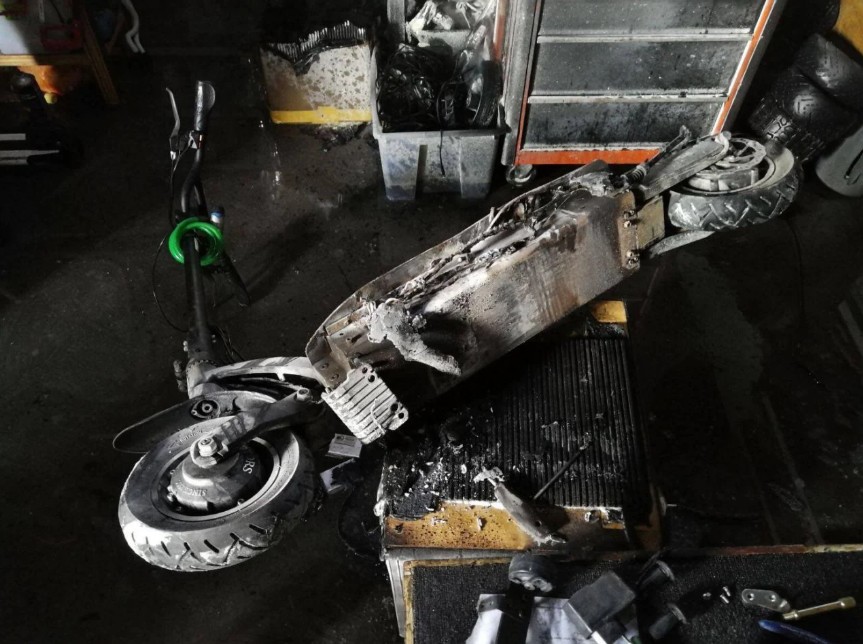
These include physical damage to the battery pack due to drops and crashes, as well as water corrosion after rain or washing.
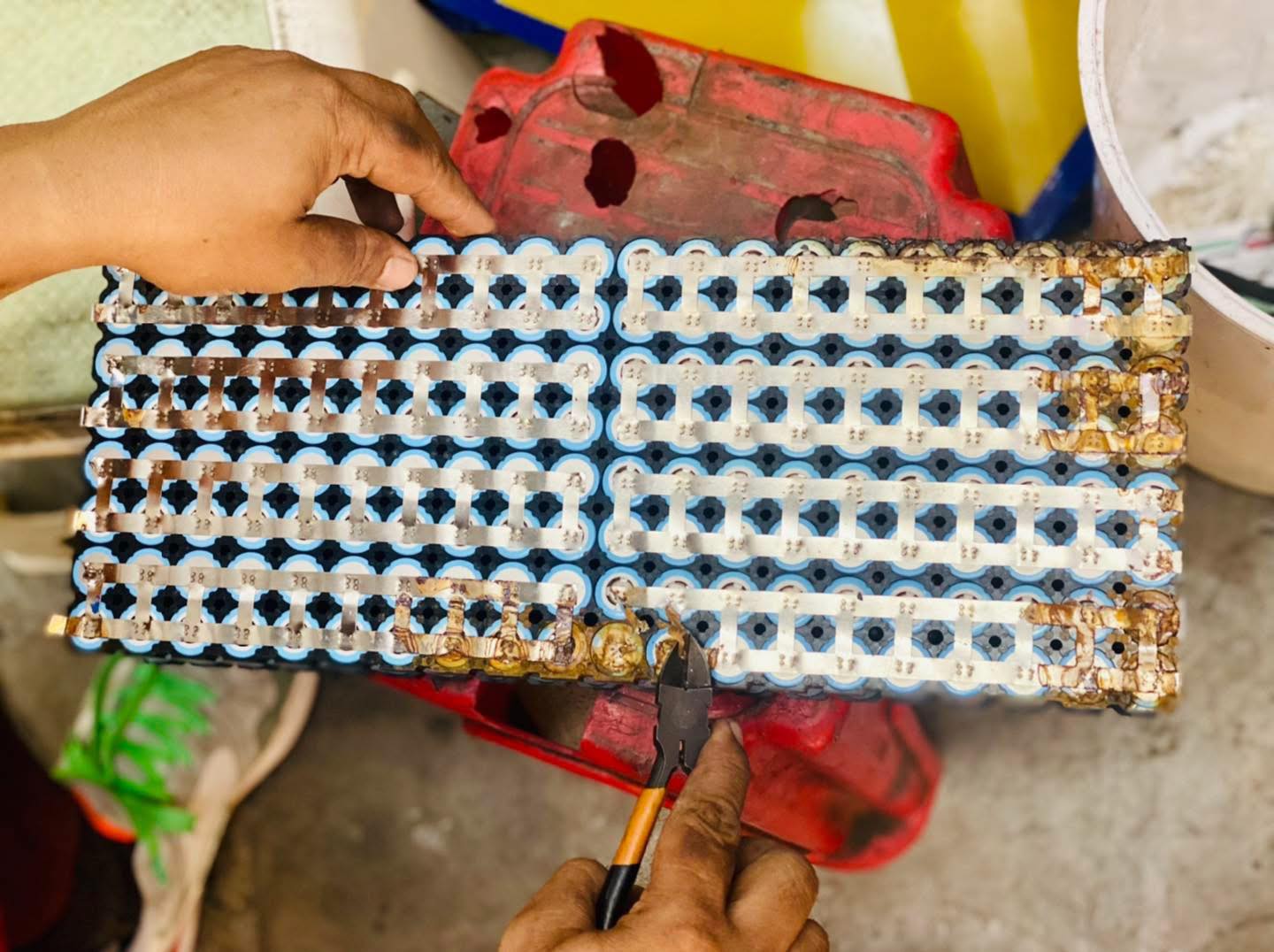
Source: Ekstreme Scooters. Image for illustration purposes only.
Non-original batteries, chargers, and wiring that do not match the PMD’s original specifications also compromise the device’s safety.
Home-based repair shops, e-commerce platforms, and overseas/web stores usually sell these non-original parts.
Such parts “tend to fail more easily” due to unknown quality control.
“Mismatches can overcharge cells, bypass protective circuits, cause overheating, and accelerate cell ageing,” says Mr Ong.
Source: Falcon PEV. Image for illustration purposes only.
Alternatively, PMDs with UL2272 certification are safer, as they have passed a series of stress tests that evaluate the device’s ability to withstand shock, water exposure, and other factors.
PMDs with this certification have mechanisms that shut the devices down when they sense overheated batteries.
Some experts say that this is why cases of fires in certified PMDs are rare; however, the chances are never zero.
Licensed PMDs can catch fire if overcharged
Mr Ong tells MS News that it is still possible for certified PMDs to catch fire.
“Certification reduces risk but does not eliminate misuse or damage risks,” he said.
In worst-case scenarios, battery fires, which “burn extremely hot and emit toxic/irritant gases”, can re-ignite and spread quickly to nearby combustibles.
Escaping such fires becomes difficult, especially in corridors, stairwells, or cluttered rooms.
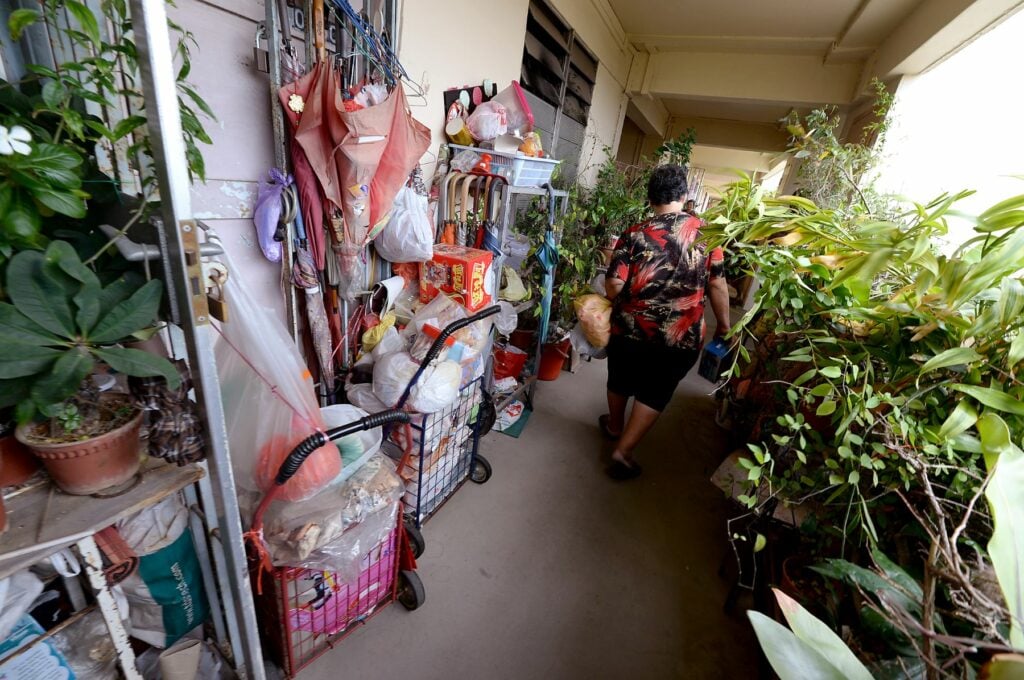
Source: Jurong-Clementi Town Council. Image for illustration purposes only.
As such, PMD users should not take certified devices for granted; instead, they should adopt proper charging habits and avoid using “fast or unknown chargers”.
Good charging habits include:
- Unplugging the device when fully charged
- Always being present when charging PMDs (don’t charge the PMDs while sleeping)
- Letting the device cool before charging
- Charging the device on a hard and flat surface so that heat can properly escape
They should also avoid frequent full discharges to 0% and leaving the device at 100% for days.
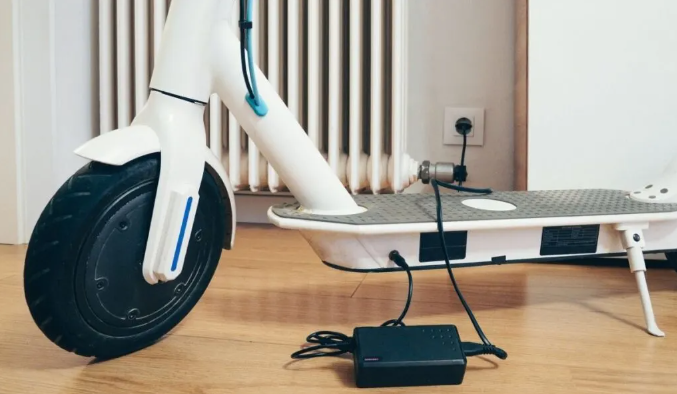
Source: DECE Scooter. Image for illustration purposes only.
“Partial charging is fine, and gentler on cells,” added Mr Ong.
He further advised users to follow the seller’s or manufacturer’s guidance on how long to charge their device.
Mr Ong estimates that most PMDs only require between three and eight hours of charging.
In the event of an emergency, PMD users may also consider stocking their home with fire protection products, such as a home fire blanket or fire extinguisher.
How to check if you need to dispose of or repair your PMD
Another good habit would be to regularly check batteries for damage, including bloating, corrosion, dents, powdery residue, or rust.
Mr Ong recommends checking the physical conditions of the battery before each charge.
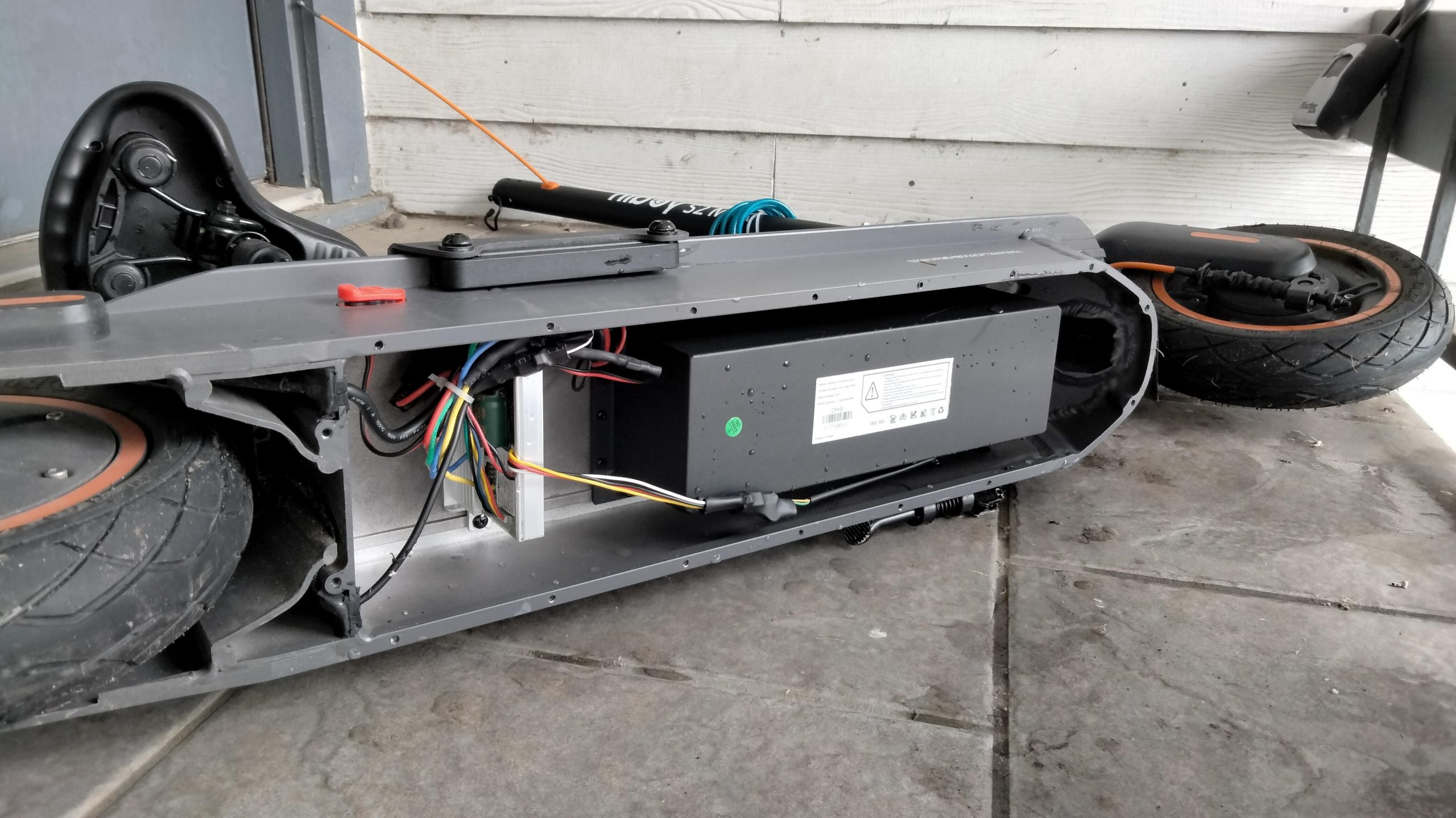
Source: Reddit. Image for illustration purposes only.
Other red flags of a damaged or deformed battery are:
- Chemical or “sweet/solvent” smell, hissing or crackling sounds
- Unusual heat while idle or charging
- Discoloured shrink wrap (turned yellowish, with burn marks)
If PMD users spot any red flags, they should not attempt to repair the device themselves.
A hot, hissing, or smoking battery pack should be an obvious signal to call 995.
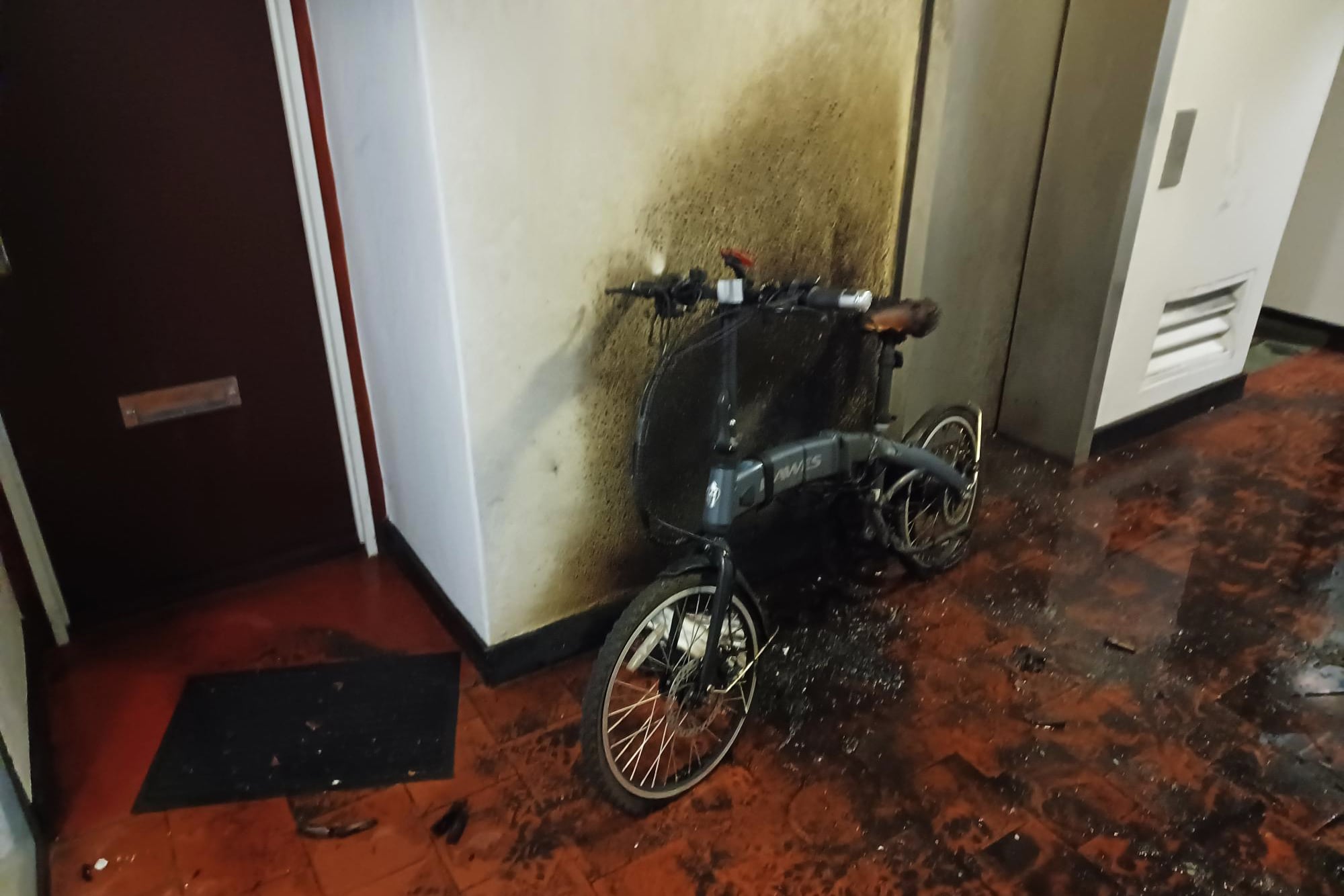
Source: BikeRadar. Image for illustration purposes only.
In cases where users need to replace the battery, they should return the device only to the original retailer or distributor.
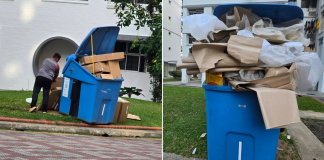
Meanwhile, those in Singapore who want to dispose of their PMDs must not throw them in general waste, chutes, or blue recycling bins.
Instead, one should bring the PMDs to a nearby e-waste collection point (found here).
Non-compliant and illegally modified PMDs, which are illegal to ride in Singapore, should be disposed of immediately.
“The LTA takes a serious view of devices with non-original parts,” said LTA.
Offenders may face maximum penalties of fines up to S$20,000, a jail term of up to 12 months, or both, if caught.
Also read: Bukit Merah fire likely started from PMD, couple who died reportedly planning to wed
Bukit Merah fire likely started from PMD, couple who died reportedly planning to wed
Have news you must share? Get in touch with us via email at news@mustsharenews.com.
Featured image adapted from Facebook and Singapore Civil Defence Force (SCDF) on Facebook.