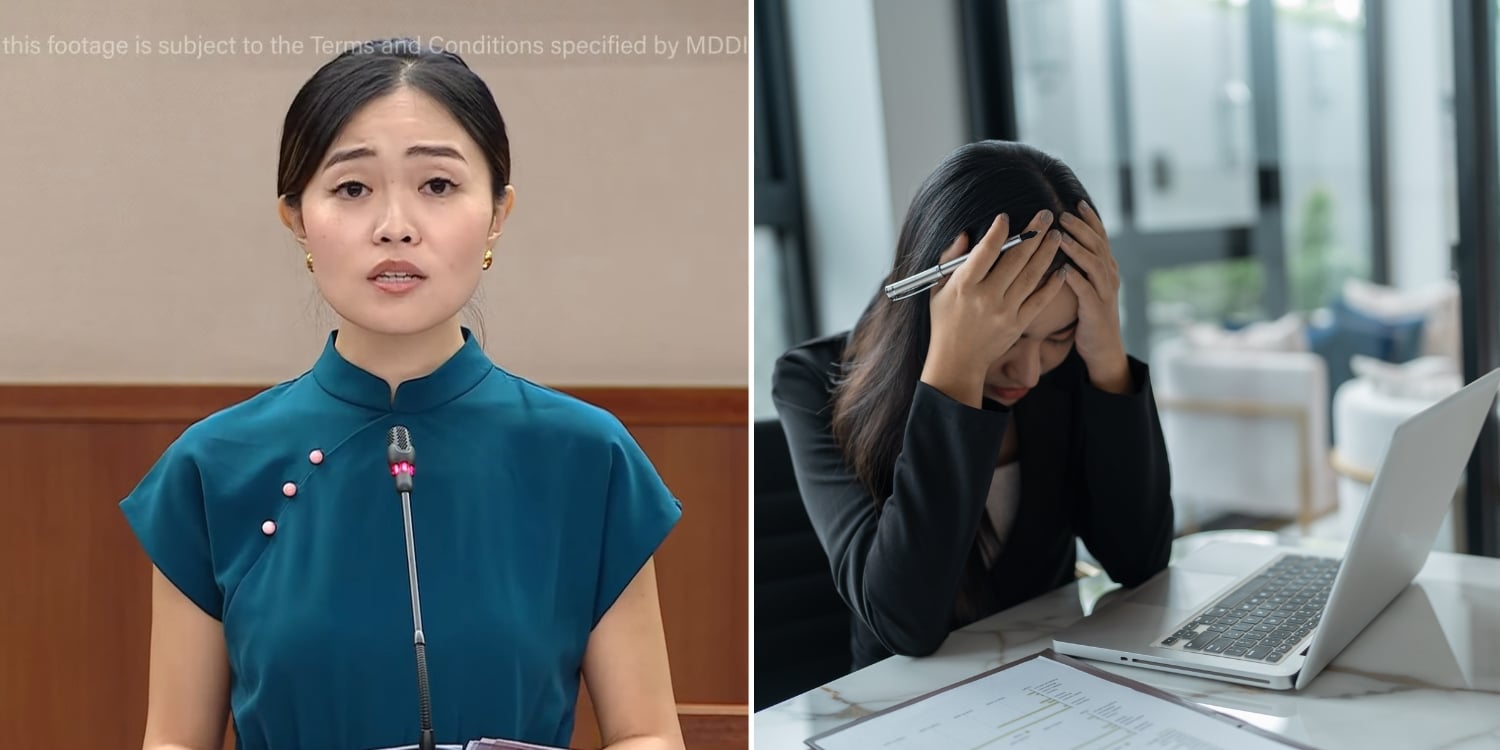

Eileen Chong says improper AI adoption could increase workload for employees, cause more burnout
Workers’ Party (WP) member Eileen Chong has raised a warning about the potential negative effects of artificial intelligence (AI) adoption in the workplace, suggesting it could increase workloads and lead to greater burnout for employees.
In her speech during the Budget 2026 debate on 24 Feb, Ms Chong urged the government to prioritise improving the livelihoods of Singaporean workers through AI, rather than focusing solely on productivity gains.
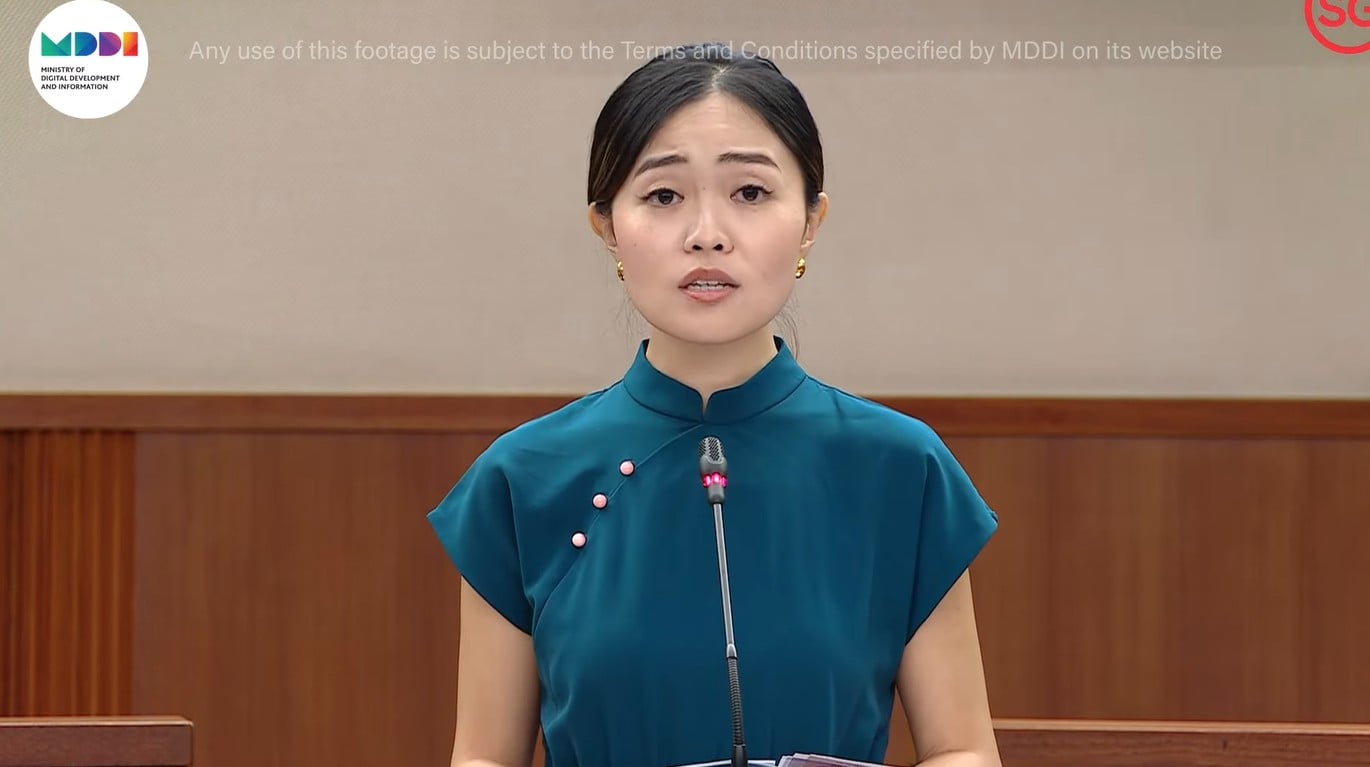
Source: MDDI Singapore on YouTube
Eileen Chong warns of AI fatigue in Budget 2026 debate
The non-constituency Member of Parliament (NCMP) made her remarks after Prime Minister (PM) Lawrence Wong’s 12 Feb announcement that Singapore would form a National AI Council to coordinate the country’s AI strategy.
“A significant portion of the Prime Minister’s Budget speech was devoted to AI,” Ms Chong said.
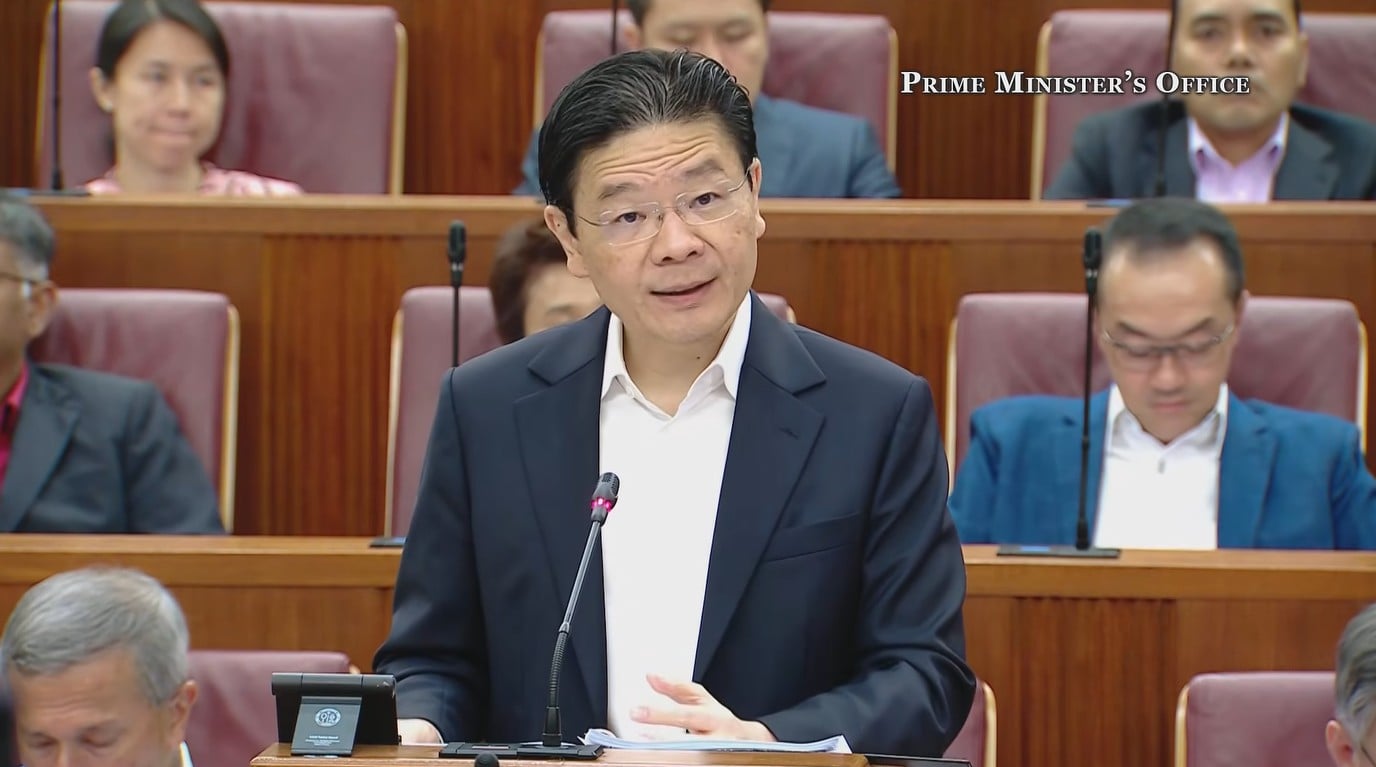
Source: Lawrence Wong on YouTube
Ms Chong said she supported harnessing AI as a strategic advantage, but warned of “AI fatigue” in Singapore’s workforce.
She cited a study recently reported by the Harvard Business Review, which analysed how generative AI changed work habits at a United States (US)-based tech company with around 200 employees.
Rather than reduce workload, the adoption of AI tools instead consistently intensified it over eight months.
For example, AI accelerated certain tasks, which then raised expectations for speed, which in turn deepened reliance on AI.
Source: Matheus Bertelli on Pexels, for illustration purposes only
Many workers found themselves doing more at once and feeling more pressure than before they used AI.
What initially seemed to be higher productivity turned into silent workload creep and growing pressure, resulting in burnout.
Eileen Chong says AI should give time back to Singapore’s workers
With growing adoption of AI at work, Ms Chong warned that it would not only displace some jobs, but make Singaporeans “run faster on the same treadmill“.
I urge the Government and all Singaporeans to think not just about how AI can make us more productive, but about how it can give us our time back.
She pointed out that Singapore’s average full-time working week already stands at nearly 44 hours, among the highest in the developed world.
61% of Singaporean employees reported fatigue, and burnout costs Singapore’s economy an estimated S$15.7 billion in lost productivity each year.

Source: charliepix on Canva, for illustration purposes only
Ms Chong warned that productivity gains do not automatically become “human gains”.
She argued that AI automation of tasks should not mean employees get more tasks, but rather that they can leave the office on time to have dinner with their families.
Ms Chong hoped that giving Singaporeans more time and energy for families and community would be one of the design goals of the country’s national AI strategy.
Netizens say AI causes increased expectations at work
On Reddit, Singapore’s netizens praised Ms Chong’s speech, with one mentioning the negative feeling of needing to chase growth in the era of AI.

Source: Reddit
Others highlighted how the introduction of AI often led to higher expectations from bosses, with one user noting that simply introducing AI into the workplace raised the bar for entire teams.
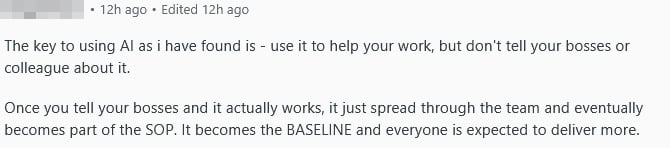
Source: Reddit
A third commenter echoed Ms Chong’s points, citing how AI has resulted in an increased workload and mental strain.

Source: Reddit
However, there was also a dissenting view, with one netizen sharing that their boss refused to use AI due to distrust in the technology.

Source: Reddit
Also read: ‘Fear cannot be S’pore’s response’: PM Wong to chair new National AI Council
‘Fear cannot be S’pore’s response’: PM Wong to chair new National AI Council
Have news you must share? Get in touch with us via email at news@mustsharenews.com.