
Non-resident population drives S’pore’s total population growth
Singapore’s total population has grown to 6.11 million, with its increase primarily driven by non-residents.
The latest statistics come from the National Population and Talent Division’s Population in Brief 2025 publication, which highlights key trends in Singapore’s demographic.
Population hits 6.11 million, non-residents see biggest jump
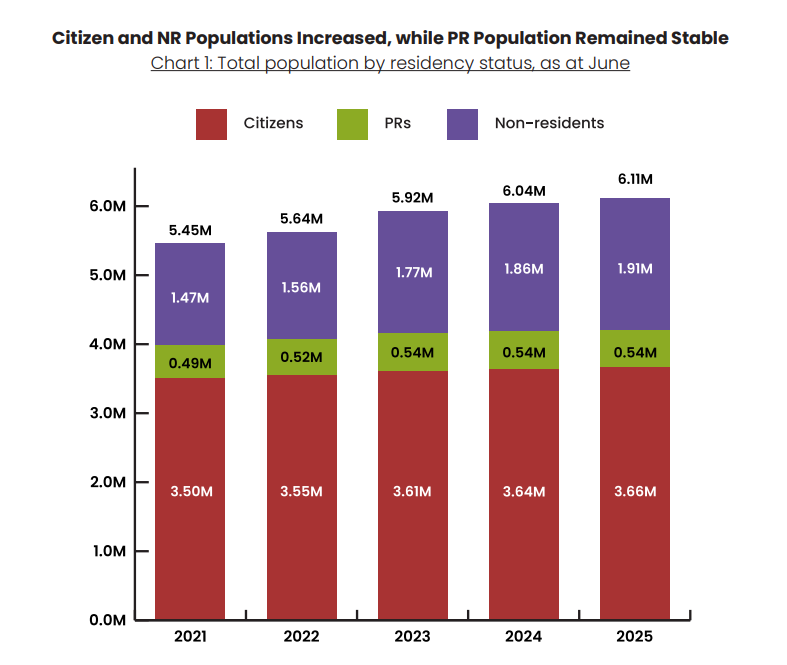
As of June 2025, Singapore’s population of 6.11 million people rose by 1.2% compared to the previous year.
This pace of growth outstrips the 2015–2020 period, when population numbers rose more slowly.
Source: National Population and Talent Division
Between June 2024 and June 2025, the citizen population inched up by just 0.7%, while the Permanent Resident (PR) population held steady.
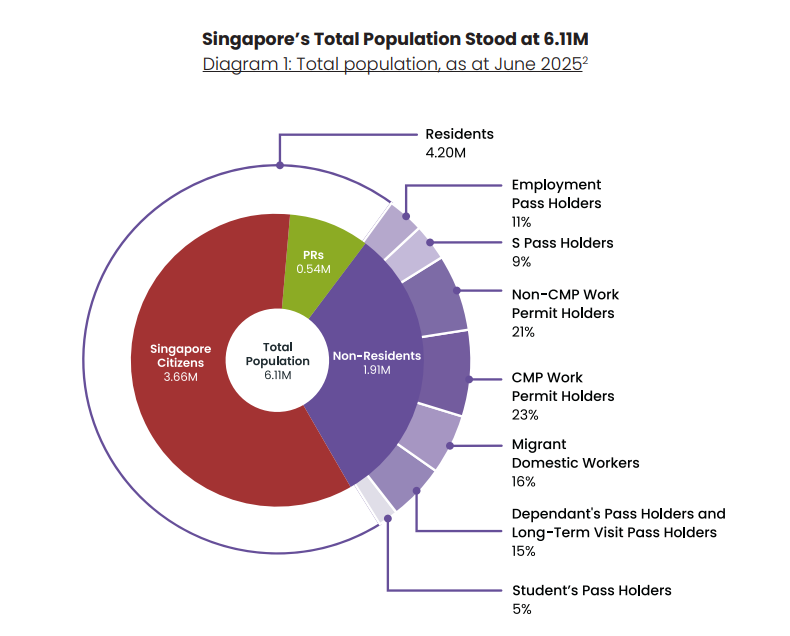
In contrast, the non-resident (NR) population surged by 2.7% — driven mainly by work permit holders and migrant domestic workers (MDWs).
Source: National Population and Talent Division
The report highlighted the diverse nature of Singapore’s NR population, whose size and composition fluctuate to meet the nation’s economic and social needs.
Singapore has been bringing in more foreign workers to power massive projects like Changi Airport Terminal 5 and the ramp-up of new housing estates.
Currently, foreign workers make up about two-thirds of the NR population. The rest consists largely of MDWs, dependants, and international students.
Source: MS News, for illustration purposes only
Slight rise in citizen births
The report also revealed that Singapore recorded 29,237 citizen births in 2024, up 1.2% from the year before.
However, the average number of births over the past five years (30,400 annually) is still lower than the 32,900 seen in the preceding five-year stretch.
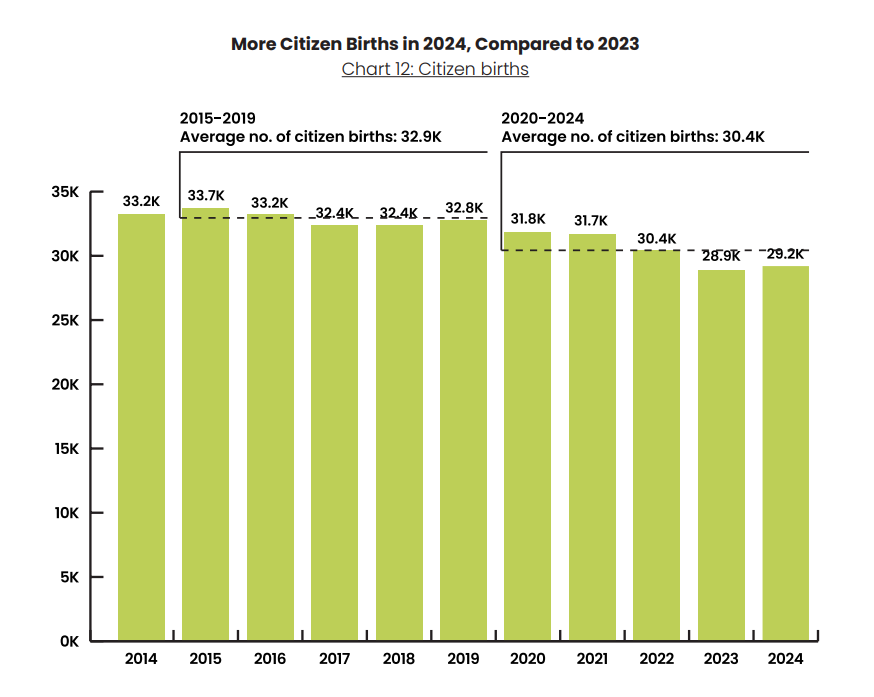
Source: National Population and Talent Division
At the same time, more women are having children later — with the median age of first-time mothers rising from 30.3 years in 2014 to 31.6 years in 2024.
Also read: Fluff Bakery to close in Sept after 12 sweet years, urges customers to place last orders
Fluff Bakery to close in Sept after 12 sweet years, urges customers to place last orders
Have news you must share? Get in touch with us via email at news@mustsharenews.com.
Featured image adapted from MS News. For illustration purposes only.