
‘Abuse of process’: Appeal court rejects man’s new defence in capital drug case that he received more drugs by mistake
Singapore’s Court of Appeal has dismissed an appeal by Mustaqim bin Abdul Kadir, who was convicted of trafficking a capital quantity of drugs to justify a death penalty.
The court ruled that his attempt to introduce fresh psychiatric evidence amounted to an “abuse of process”.
In its judgement text released on Tuesday (24 March), the Court of Appeal upheld both his conviction and sentence.
They found no merit in his arguments, calling his account “self-interested” and inconsistent.

Tried to introduce new psychiatric evidence on appeal
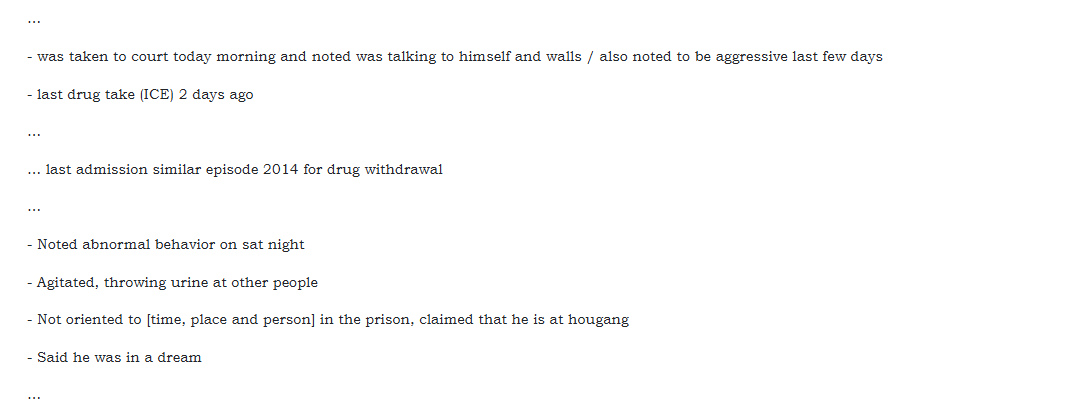
Mustaqim had sought to adduce additional evidence to argue that he was in a confused or disoriented state when giving statements to the Central Narcotics Bureau (CNB).
This included prison clinical notes and a psychiatric report.
His legal team claimed this could cast doubt on the reliability of those statements, which were key to his conviction.
Source: eLitigation website
However, the court found that this evidence was not new.
Instead, it ruled that the defence had already been aware of the issue during the trial.
However, he chose not to pursue it.
“This was therefore a case where the Defence not only had access to the relevant psychiatric evidence… yet… elected not to run the State of Mind Defence,” the judges said.
Court says move was a tactical attempt to retry case
The court was particularly critical of the timing of the application, describing it as a strategic attempt to introduce a new defence after losing at trial.
“A disappointed party will not be allowed to retrieve lost ground by relying on evidence he should have put before the court below.”
Judges added that the move appeared to be an effort to secure a retrial “under the guise of an application to adduce further evidence”.
As such, they concluded that the application constituted an abuse of process.
Defence contradicted earlier position
At trial, Mustaqim’s main argument was that some of the drugs in his possession were “unwanted”.
He claimed he had mistakenly received them from a supplier named “Zack” and intended to return them to him.

Source: CNB website
He also claimed that certain CNB statements were obtained through inducement.
On appeal, however, he attempted to argue that his mental state, possibly affected by drug withdrawal, explained inconsistencies in those same statements.
The court found these positions difficult to reconcile.
It noted that it would have been “challenging, if not impossible”, for him to claim both that he was misled into giving statements and that he was too disoriented to understand them.
Evidence showed active involvement in drug trafficking
Even if the new evidence were admitted, the court found it would not have changed the outcome.
Judges pointed to multiple pieces of evidence showing Mustaqim’s active role in drug trafficking. This includes phone records and messages arranging drug deals.
In one voice note cited by the court, he confirmed a transaction involving “panas”, a street name for diamorphine.

Source: eLitigation website
The court also found his claim that he intended to return part of the drugs unconvincing, noting there was no supporting evidence beyond his own assertions.
Appeal dismissed, conviction upheld
Ultimately, the Court of Appeal dismissed both his application to introduce new evidence and his appeal against conviction and sentence.
It reaffirmed that the original findings, including that he knowingly possessed and intended to traffic a significant quantity of diamorphine, were sound.
His death sentence was upheld.
Also read: Court dismisses death row inmates’ challenge against Misuse of Drugs Act, MHA explains why
Court dismisses death row inmates’ challenge against Misuse of Drugs Act, MHA explains why
Have news you must share? Get in touch with us via email at news@mustsharenews.com.
Featured image adapted from SG Courts and MS News. Picture on the left for illustrative purposes only.