
Singapore’s core inflation rises to 1.4% in February, was 1.0% in January
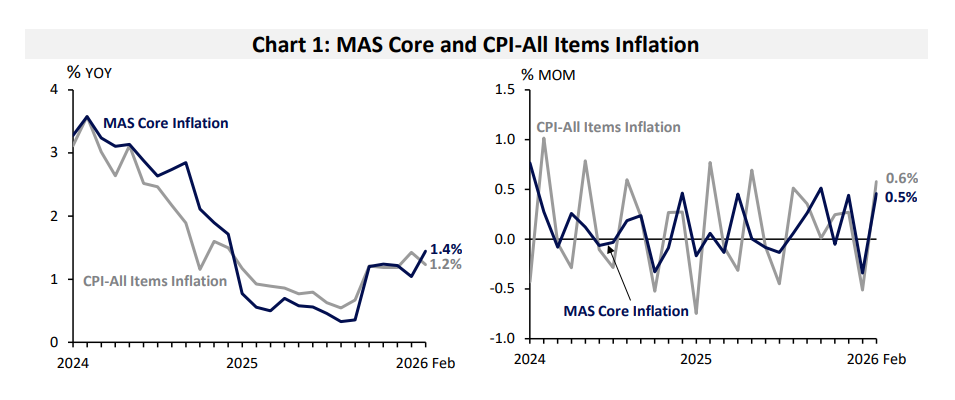
Singapore’s core inflation rose to 1.4% year-on-year in February, up from 1.0% in January, according to a joint statement by the Monetary Authority of Singapore (MAS) and Ministry of Trade and Industry (MTI) on 23 March.
Authorities said the increase was largely due to “seasonal effects” linked to Chinese New Year, making it the highest level since Dec 2024.
On a month-on-month basis, core inflation rose by 0.5%.
Higher food, services and retail prices drive increase
The rise was mainly driven by higher inflation for food, services, and retail goods.
Source: MTI
Food inflation increased to 1.6%, while services inflation rose to 2%, largely due to higher airfares and holiday-related spending.
Retail and other goods inflation also edged up from 0.5% to 0.6%, with higher prices for medicines, health products, furniture, and furnishings.
Overall inflation dips despite core increase
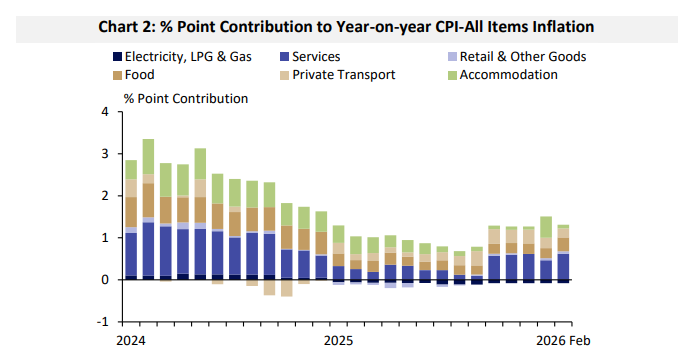
Overall inflation, measured by the Consumer Price Index (CPI)-All Items, fell to 1.2% in February, down from 1.4% in January.
Source: MTI
This was due to lower accommodation and private transport costs, which offset the rise in core inflation.
On a monthly basis, CPI-All Items increased by 0.6%.
Accommodation and transport costs ease
Accommodation inflation fell sharply to 0.3%, from 1.9% in January, due to slower increases in housing maintenance and repair costs.
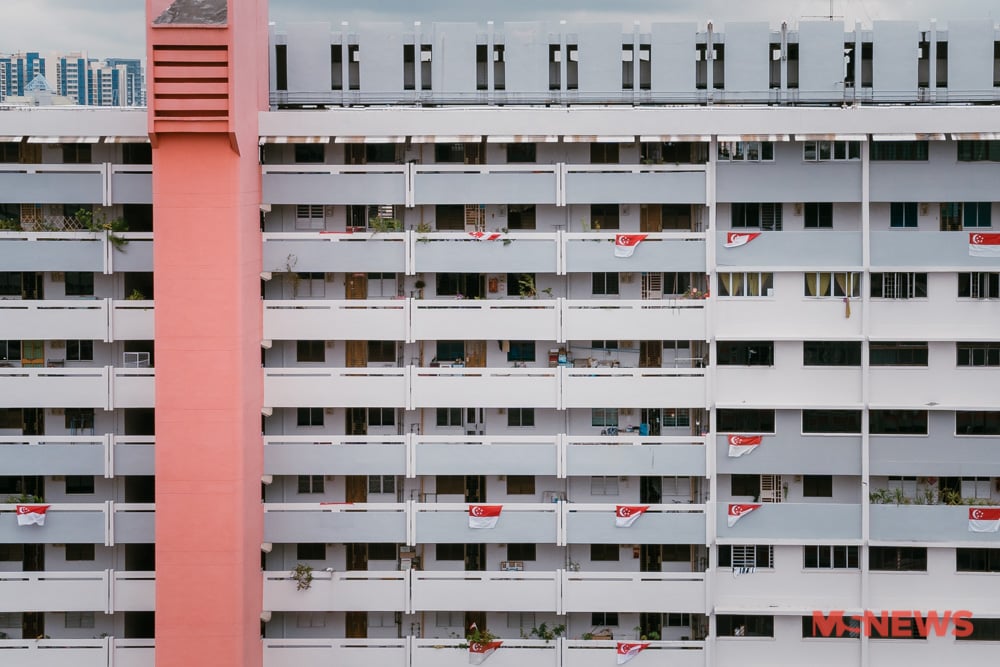
Image by MS News
Private transport inflation also eased from 2.7% to 2.4%, as petrol prices declined more steeply during the month.
Meanwhile, electricity and gas prices fell further to -4.3% from -4.2%
Global energy prices may push costs higher
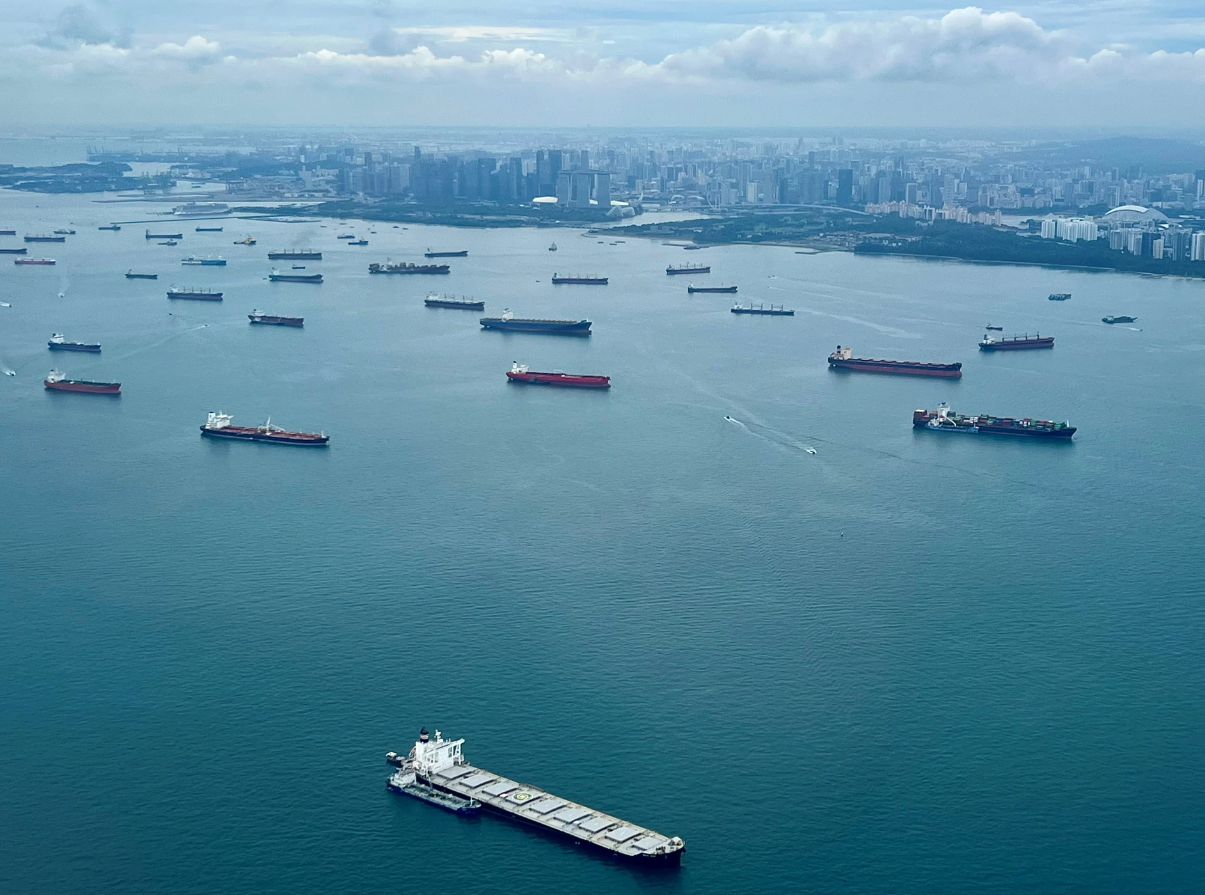
According to MAS and MTI, global energy prices have “risen significantly” recently, following the current ongoing Middle East conflict.
Source: Offshore Energy
Thus, an increase in Singapore’s import costs is to be expected in the near future.
“On the domestic front, unit labour cost growth is likely to edge higher this year, although the extent of the pick-up will be dampened by sustained productivity growth,” said the authorities.
“Meanwhile, private consumption demand should remain steady, amid continued real wage increases.”
The authorities expect both core inflation and overall inflation to average between 1.0% and 2.0% this year.
“MAS is assessing recent developments and will provide an update to the inflation outlook in the April Monetary Policy Statement.”
Also Read: ‘These are bracing times’: President Tharman approves Budget 2026, acknowledges ‘economic problems’
‘These are bracing times’: President Tharman approves Budget 2026, acknowledges ‘economic problems’
Have news you must share? Get in touch with us via email at news@mustsharenews.com.
Featured image adapted from MS News.