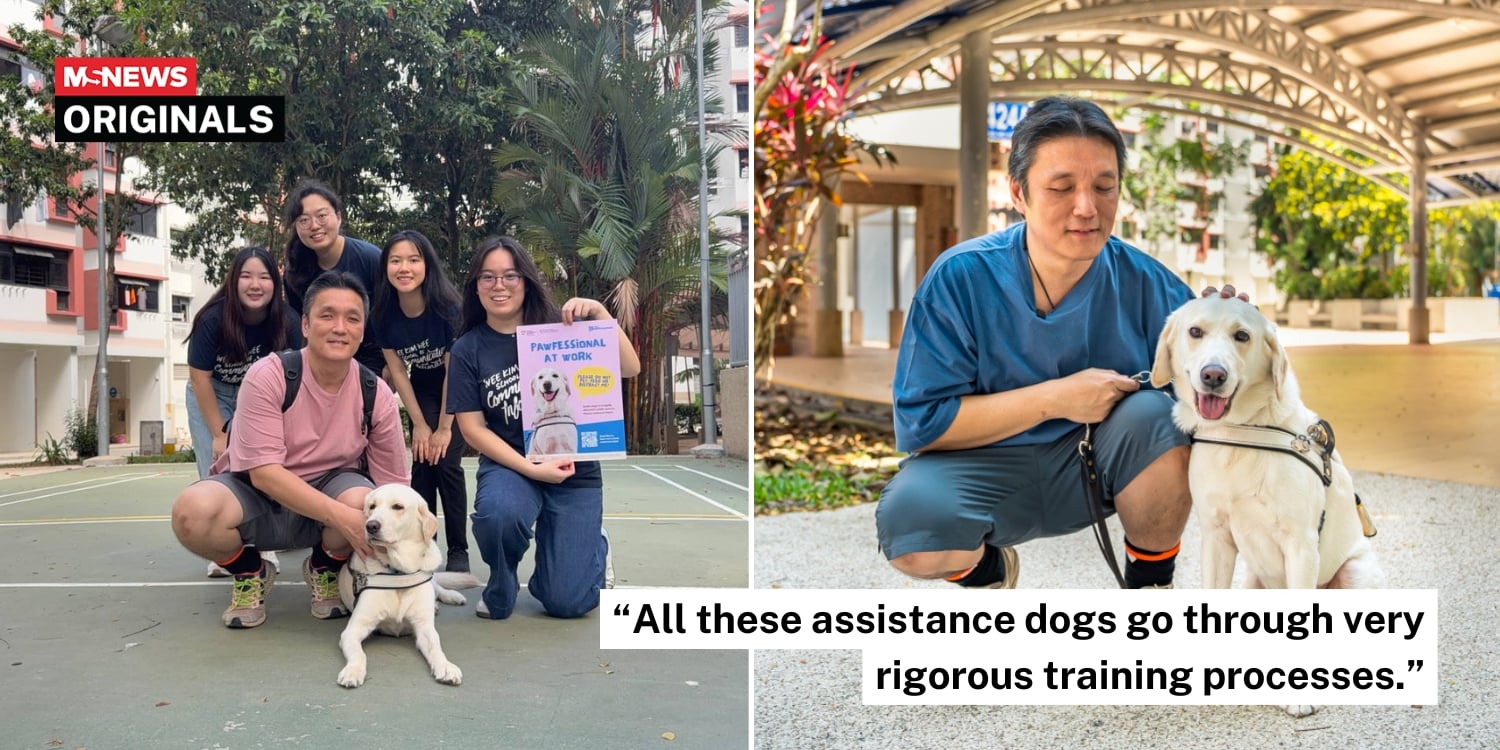

NTU students create campaign to raise awareness about guide dogs
Just outside of Ang Mo Kio Hub, a passer-by stood a short distance away from a blind man and his guide dog.
Clearly taken in by the cute dog, the man spent an entire minute looking at it, occasionally waving and beckoning at it.
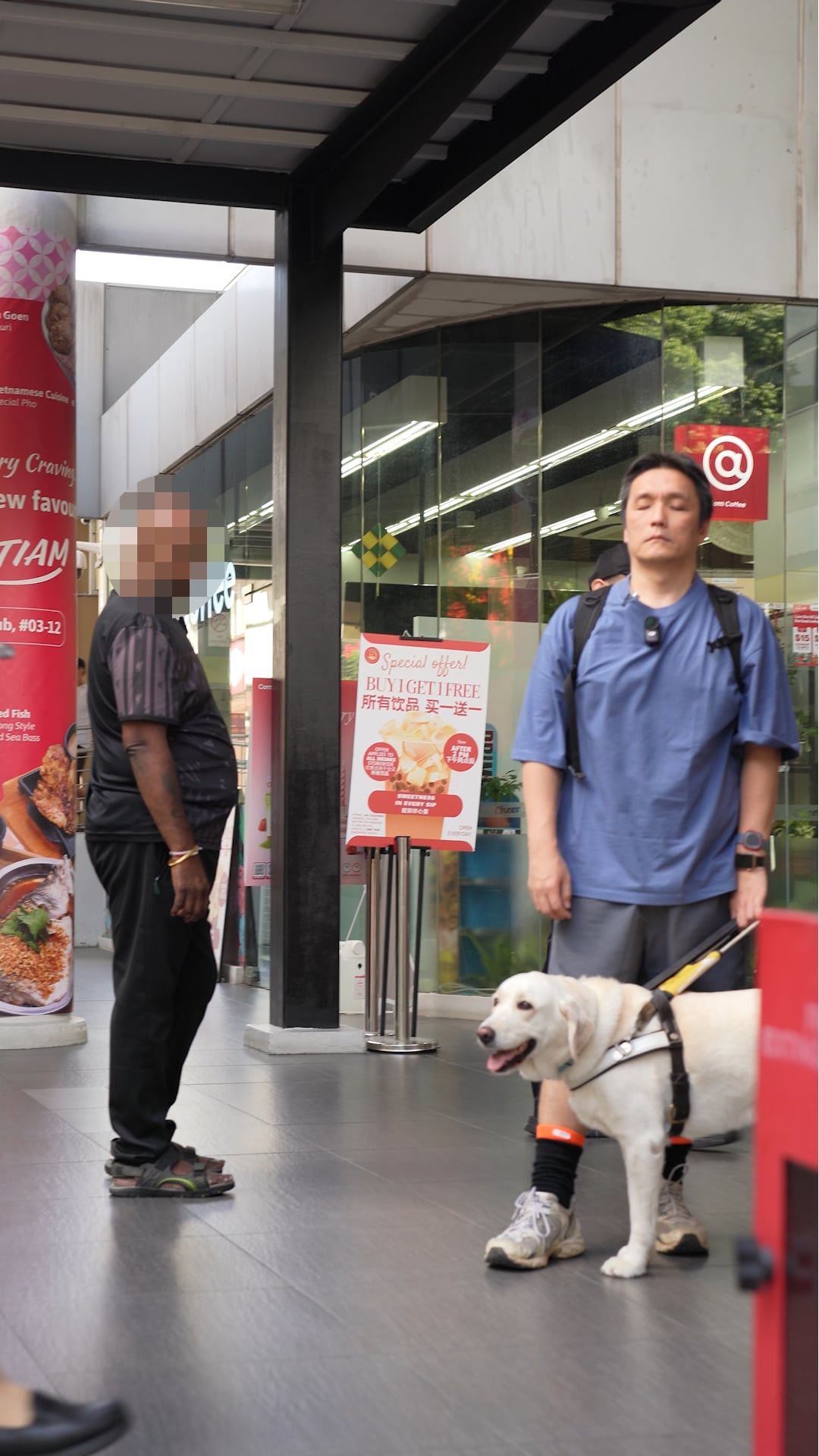
Image by MS News
He had no ill-will or malice, but he had unintentionally done something that no one should around a working guide dog.
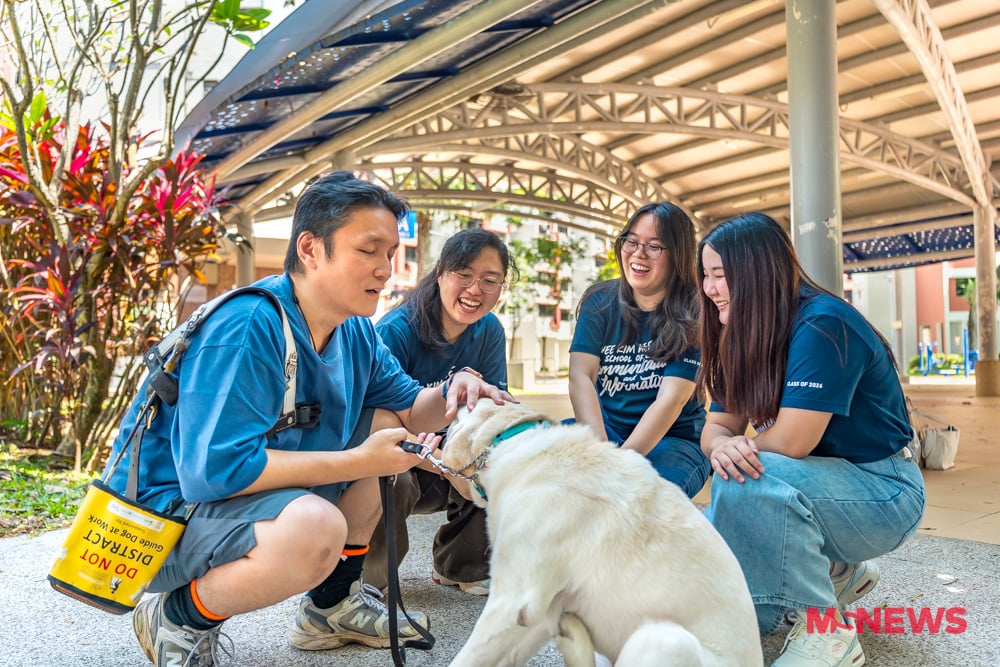
To educate those in Singapore on how to behave around assistance dogs and bust some common misconceptions, four communications students from Nanyang Technological University (NTU) — Jin Qiuhui, Jaymee Tan, Tan Tze Wei, and Ruth Loo — took action through their public awareness campaign, The Pawfessionals.
Campaign tackles guide dogs and handlers being denied access in public
“We came across a few news articles online about guide dogs being denied access into public areas,” said Qiuhui.
“Guide dogs are supposed to give the handlers freedom and access to more places, but because of their presence, they’re being denied access.”
The four had then come up with the project to build a foundation for societal acceptance of assistance dogs in Singapore, starting with guide dogs.
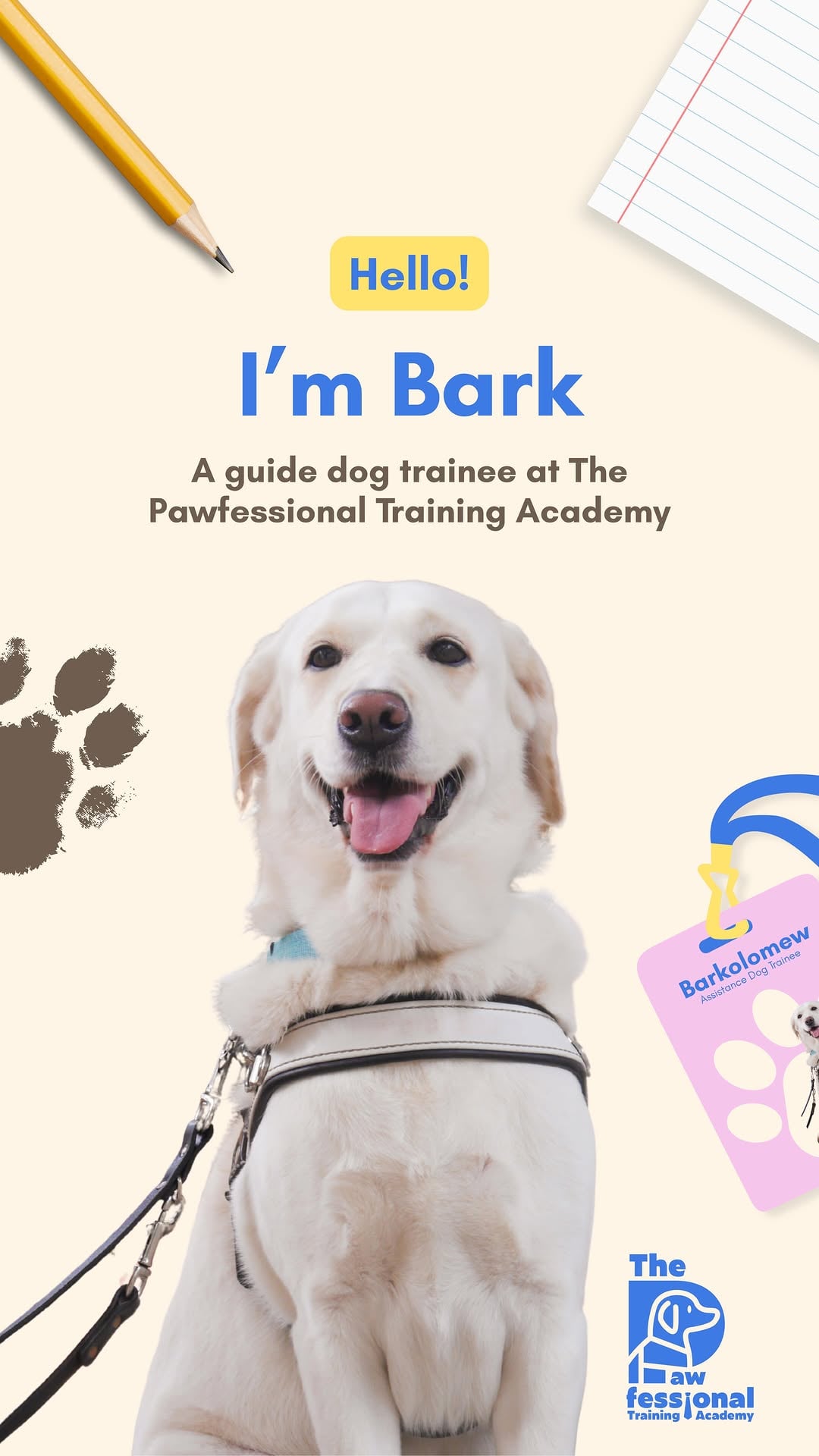
Source: @hey.its.bark on Instagram
Thus far, the four-month-long social media campaign has produced reels and carousels teaching the public about the rigorous training assistance dogs go through and how to interact with them.
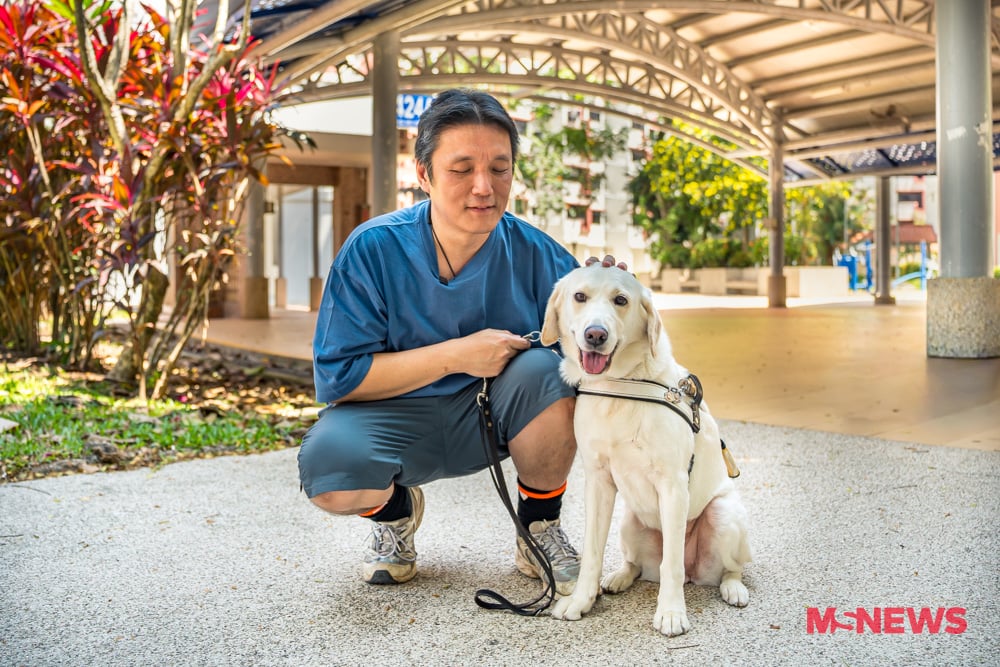
And the poster child of their campaign is none other than six-year-old Eve, a Golden retriever and Labrador mix from Japan.
Eve starred as ‘Bark’ in the campaign, a fictional dog going on a journey from trainee to professional working dog.
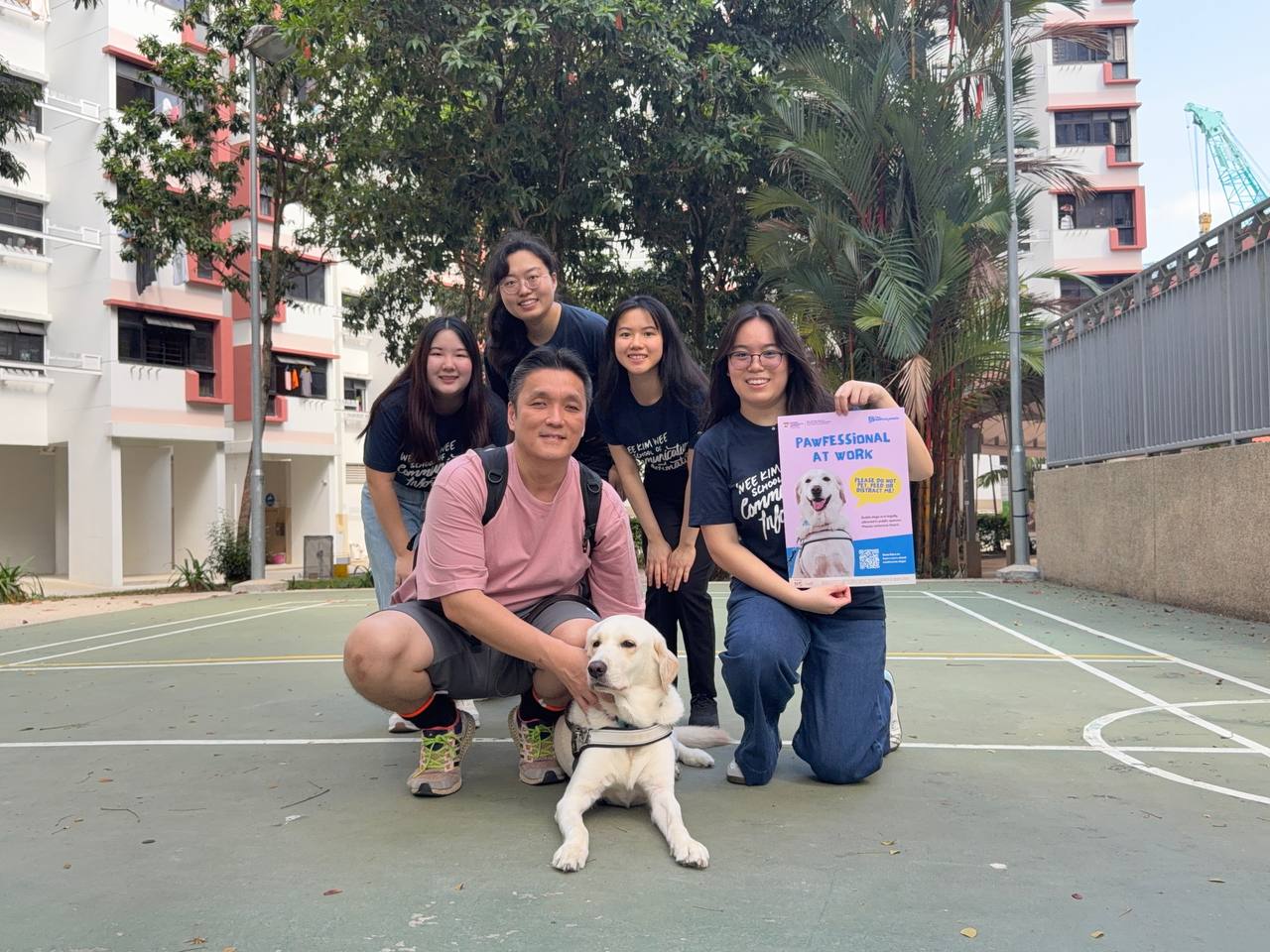
Image courtesy of The Pawfessionals.
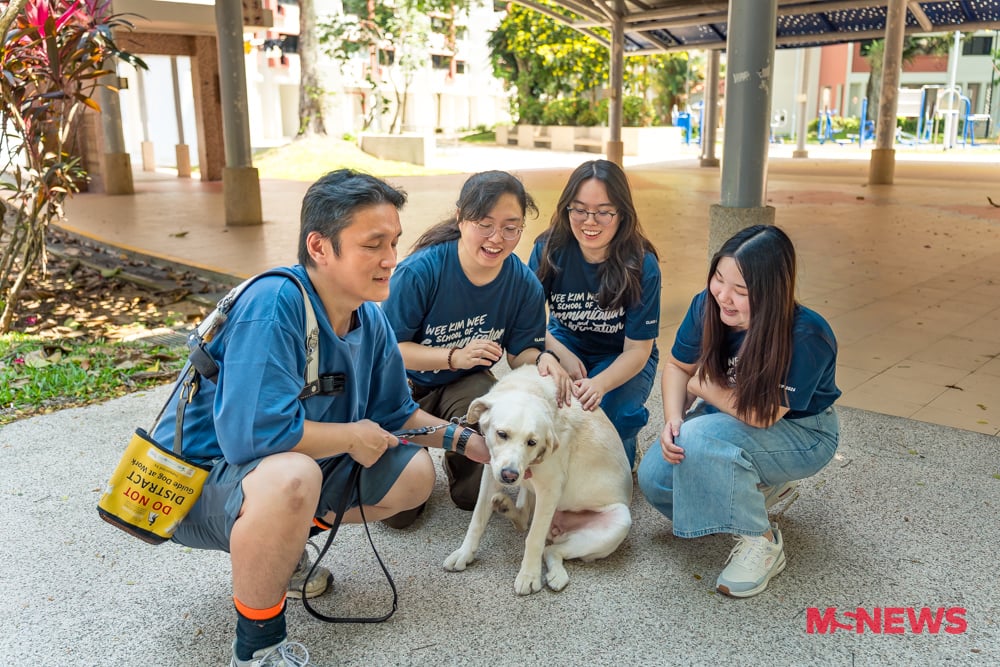
From left: Jaymee Tan, Jin Qiuhui, Tan Tze Wei, Ruth Loo.
Front: Thomas Chan & Eve.
In real-life, however, Eve helps her handler, 47-year-old IT executive Thomas Chan — who has lost all vision for more than 20 years — navigate around obstacles in his daily life.
As someone who is visually impaired, Thomas is all too familiar with the misconceptions surrounding guide dogs.
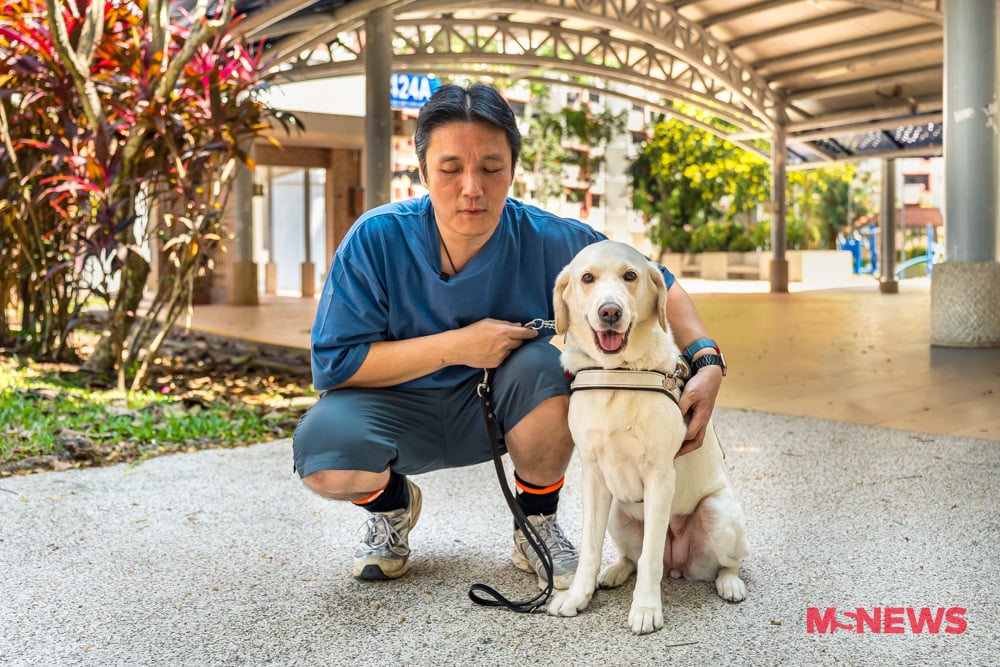
He recounted situations in the past where security guards of shopping malls stopped him from entering, shouting at him, “No dogs allowed!”.
Even when he showed them a card from Guide Dogs Singapore, they struggled to understand.
The Pawfessionals campaign thus seeks to address these gaps in knowledge.
Debunking the belief that assistance dogs are just pets
Through a survey of 204 respondents in Singapore, the NTU students identified four common misconceptions, all of which stemmed from the perception that assistance dogs are not professional.
Their study found there was a belief that assistance dogs are not well-trained and are just pets.
However, observing Eve and Thomas in action clearly debunks these misunderstandings.
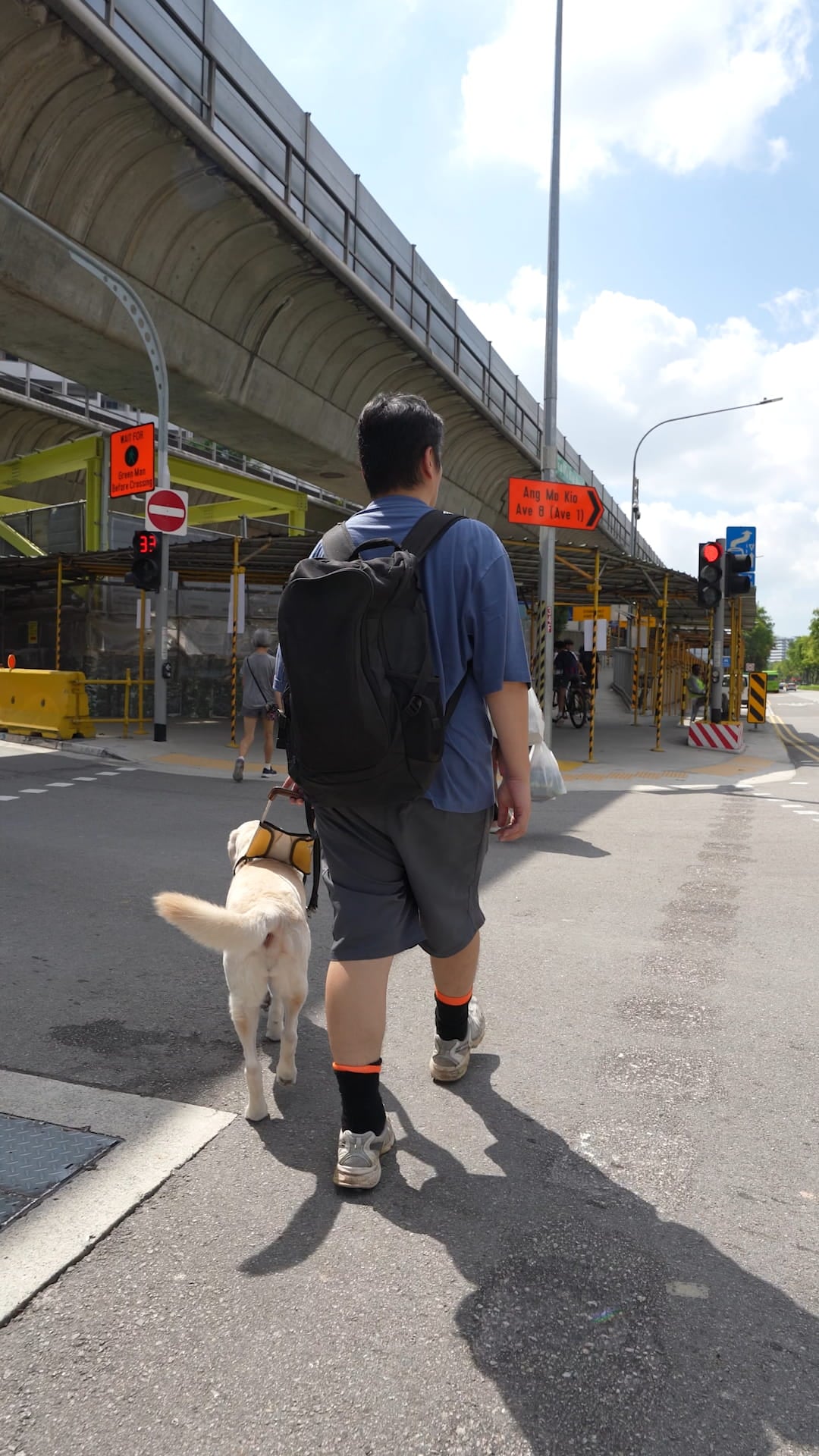
Image by MS News
Every day, Thomas goes jogging despite his total visual impairment, all thanks to Eve by his side.
At his verbal command, she can guide him to frequented locations, such as home, the MRT station, or the nearby coffeeshop.
“She will bring me behind the person to queue up,” Thomas told MS News.
Eve knows where to go by first learning the route together with Thomas and committing it to memory.
When crossing roads, Eve keeps an eye out for traffic that Thomas can’t hear. If there are oncoming vehicles, she will prevent him from crossing, even against orders.
On a trip through Ang Mo Kio Hub, Eve even led Thomas to escalators and could safely ride them up and down.
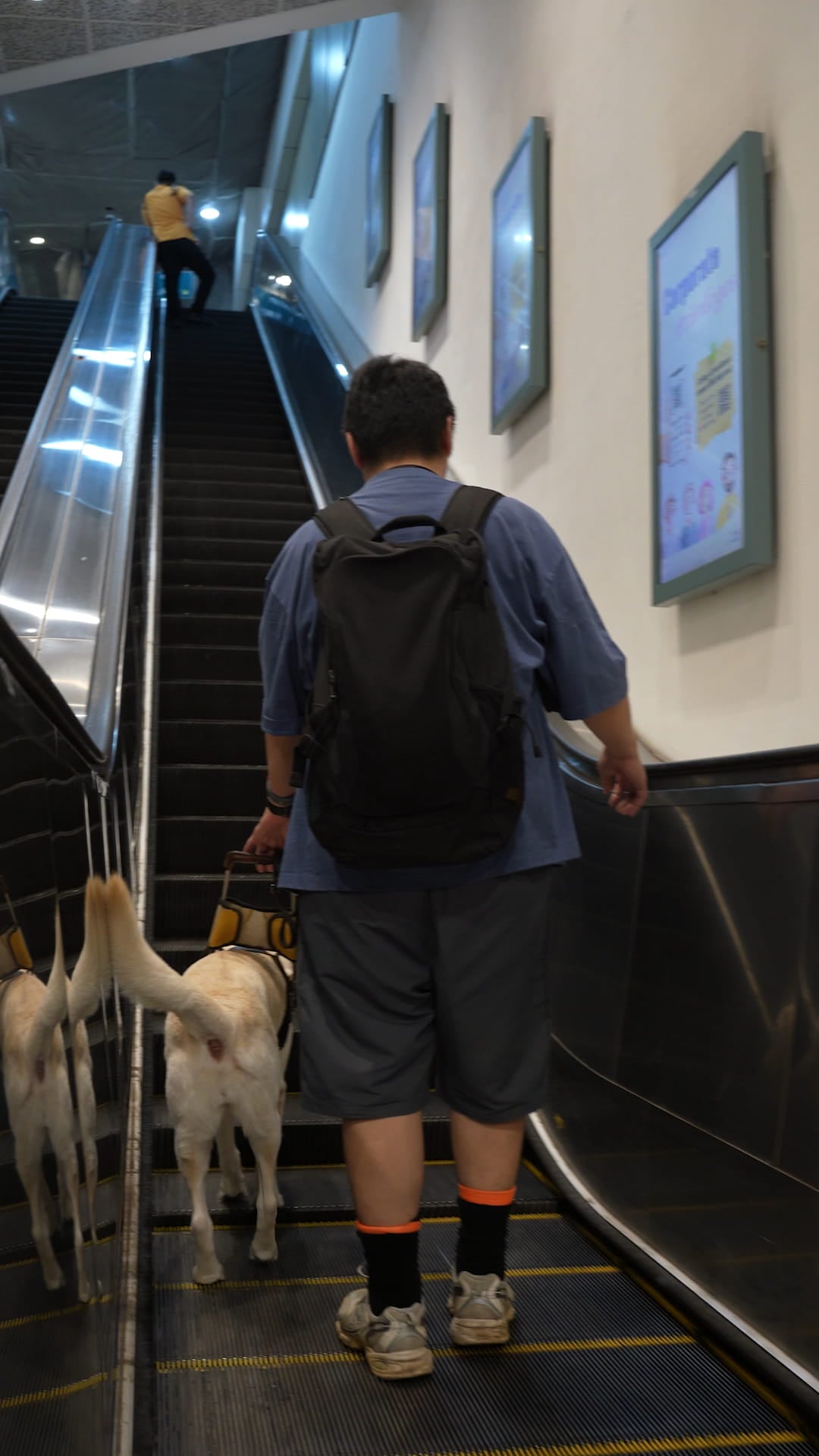
Image by MS News
He also said that once Eve has walked a route, she can perfectly bring him back the same way to the starting point.
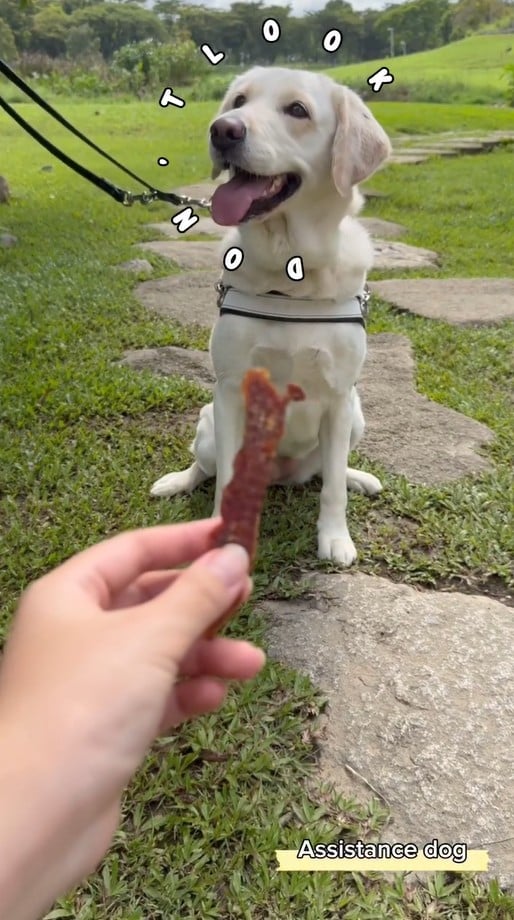
“All these assistance dogs go through very rigorous training processes and selections,” Qiuhui explained.
This thus allows them to help their handlers in situations where regular pet dogs would flounder.
Source: @hey.its.bark on Instagram
Assistance dogs are not aggressive, says handler
As a fear of dogs is a fairly common phobia, the instinctive reaction of many upon seeing an assistance dog nearby is to be concerned about being bitten.
Thomas directly cited this as one of the biggest misconceptions people have about guide dogs.
“They don’t bark, they don’t bite, they don’t growl,” he explained, owing to the rigorous training they went through.
Over half of dog trainees don’t meet the high standards required to become assistance dogs, but Eve is one of successful few.
When Eve is harnessed, she is on the job — her personality serious and focused.
But Thomas is a big supporter of work-life balance, and so Eve can ‘clock out’ once the harness is off.
In this freer state, she acts more like a regular pet dog.
Even then, the anti-aggression training is so ingrained that Eve still does not bark, growl, or bite anything other than her toys.
Guide dogs are allowed in food establishments
The last misconception is that having guide dogs in food establishments would affect hygiene standards, when in fact, these dogs are trained to only pee and poo on command.
Eve, for instance, uses the ‘restroom’ at the same spot near their home, so Thomas knows when she will go each time.
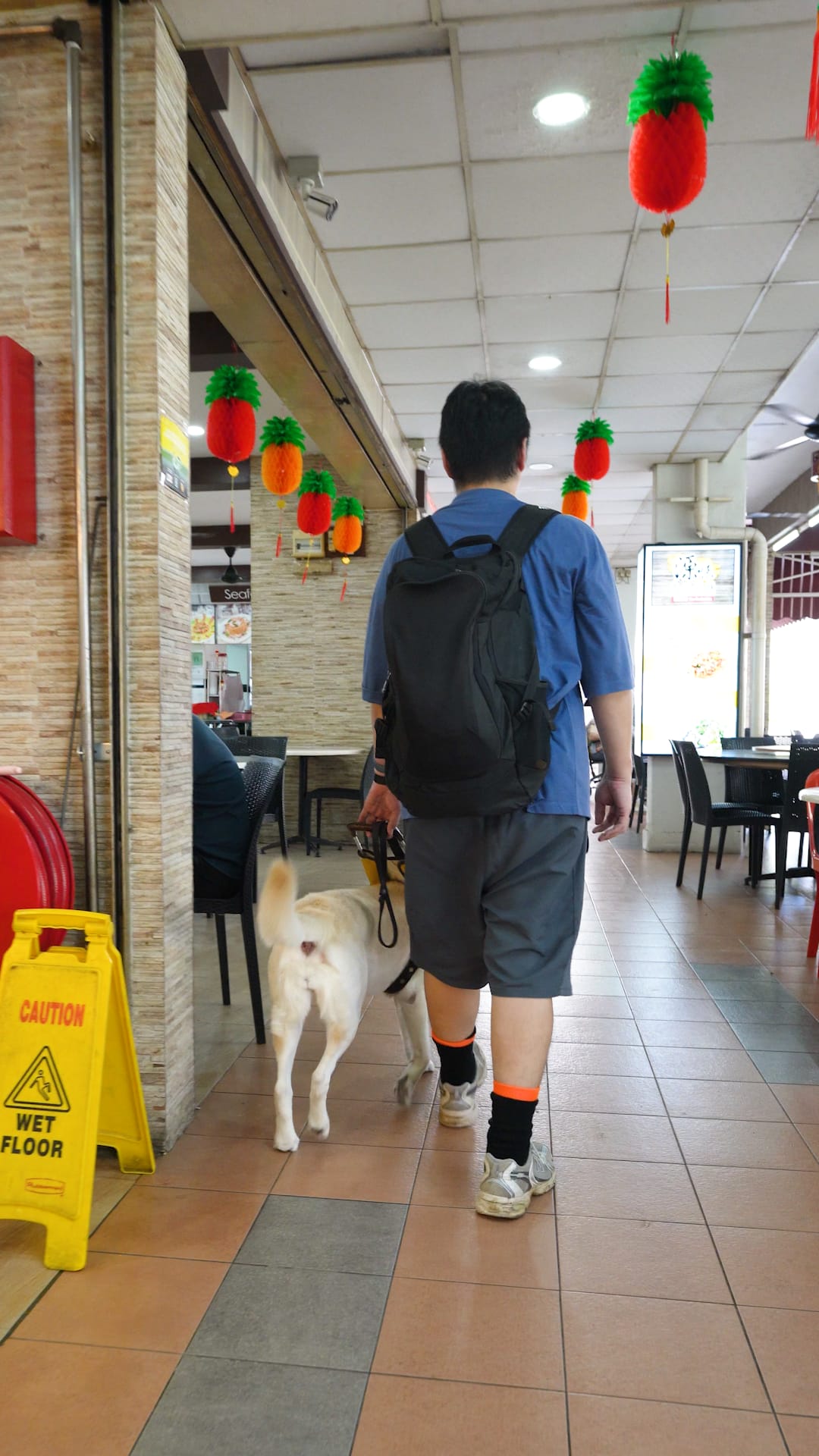
Image by MS News
The Pawfessionals survey also highlighted that 48% of respondents were unsure or unaware of the access rights of assistance dogs in Singapore.
Previously, the Singapore Food Agency (SFA) reminded food operators that guide dogs accompanying visually-impaired handlers are permitted entry so long as they are leashed.
Handlers also have to restrain the dogs from straying or causing annoyance.
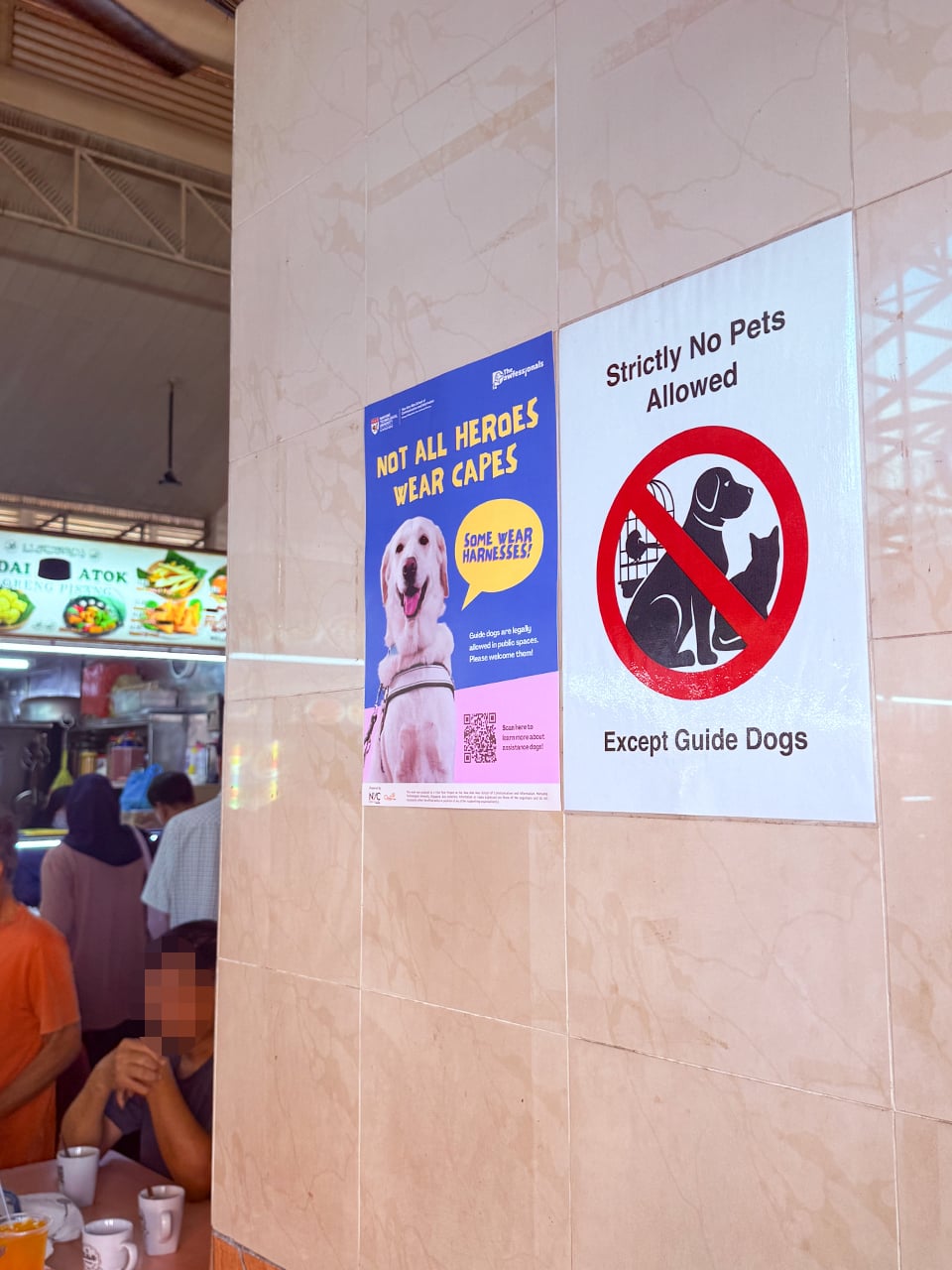
Image courtesy of The Pawfessionals
While authorities have allowed guide dogs on food premises, responsibility still lies with the handlers to keep their guide dogs clean and take them on regular vet visits.
Posters put up at 106 high-footfall areas like MRT stations
Since the start of their campaign, the Pawfessionals team has put up posters featuring Eve as ‘Bark’ at 106 high-traffic locations across Singapore, including hawker centres, malls, and MRT stations.
They told MS News that these areas were chosen as they were places that handlers frequent, and thus where the public would most likely encounter assistance dogs.
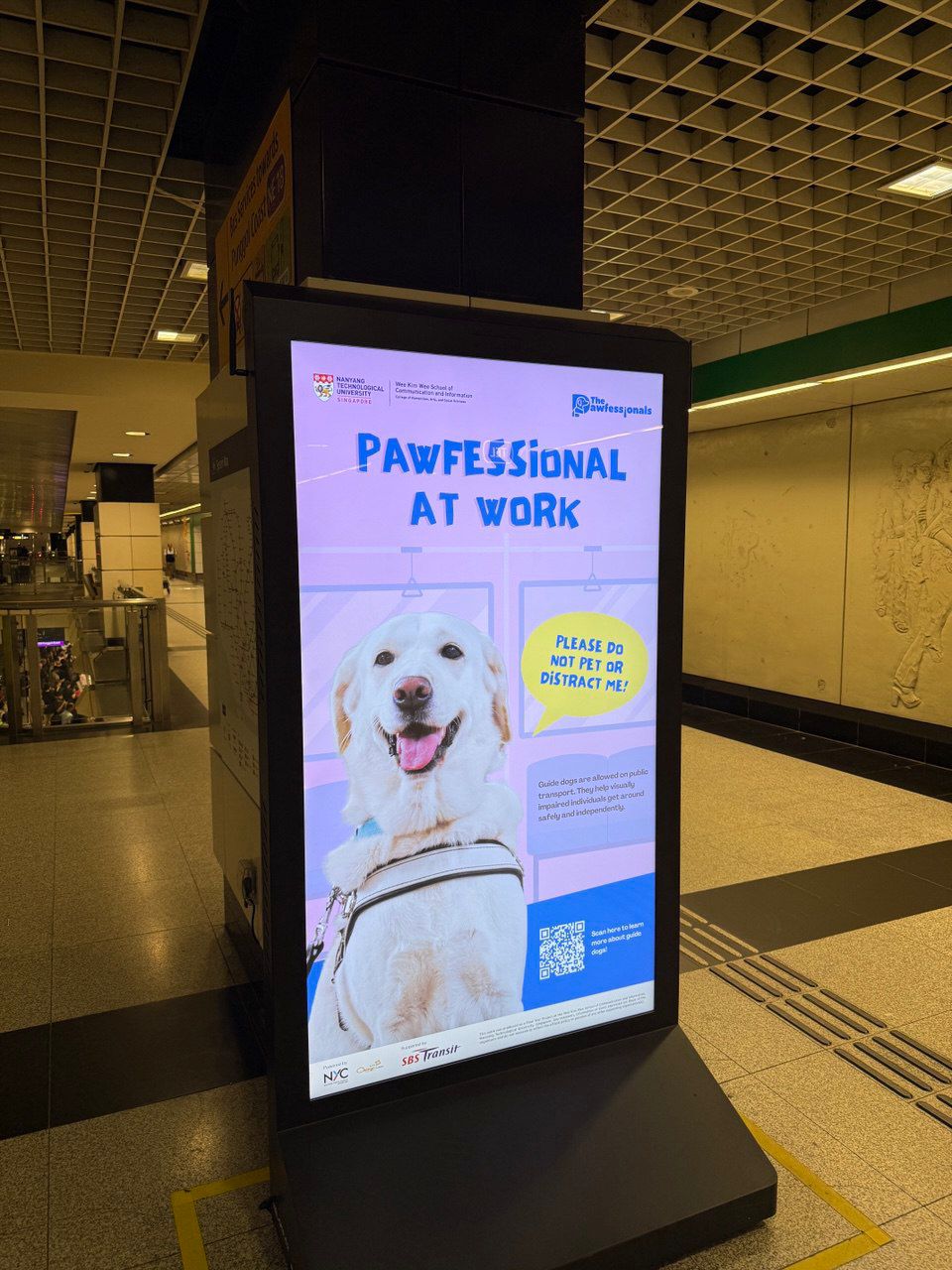
Image courtesy of The Pawfessionals
Qiuhui hoped that the campaign posters would remind the public that guide dogs were allowed in these places and normalise their presence.
Positive interactions gradually increasing for handlers and guide dogs
While Thomas has experienced cases where people have tried to pet and talk to Eve — distracting her from her duties — he chooses to focus on the positive interactions which he notes were becoming more common over time.
He talked about an incident about six months ago, where a route he and Eve were familiar with had been altered by construction work.
A nearby migrant worker then took the effort to walk over, held Thomas by the arm, and personally guided him safely across the road.
Elsewhere, there were MRT staff who always helped him, as well as supermarket employees who stepped in to defend his access rights.
These kind gestures left him deeply touched.
The Pawfessionals team seeks to make these inclusive, positive interactions the standard in Singapore, even if their campaign is just a small step towards the goal.
If our content manages to help even one Singaporean to know more about this topic and help handlers reduce chances of being denied access, it’s considered a success.
Also read: Visually Impaired Man Demos How Guide Dog Helps Him Board S’pore Bus Safely
Visually Impaired Man Demos How Guide Dog Helps Him Board S’pore Bus Safely
Have news you must share? Get in touch with us via email at news@mustsharenews.com.
Featured image courtesy of The Pawfessionals and by MS News.