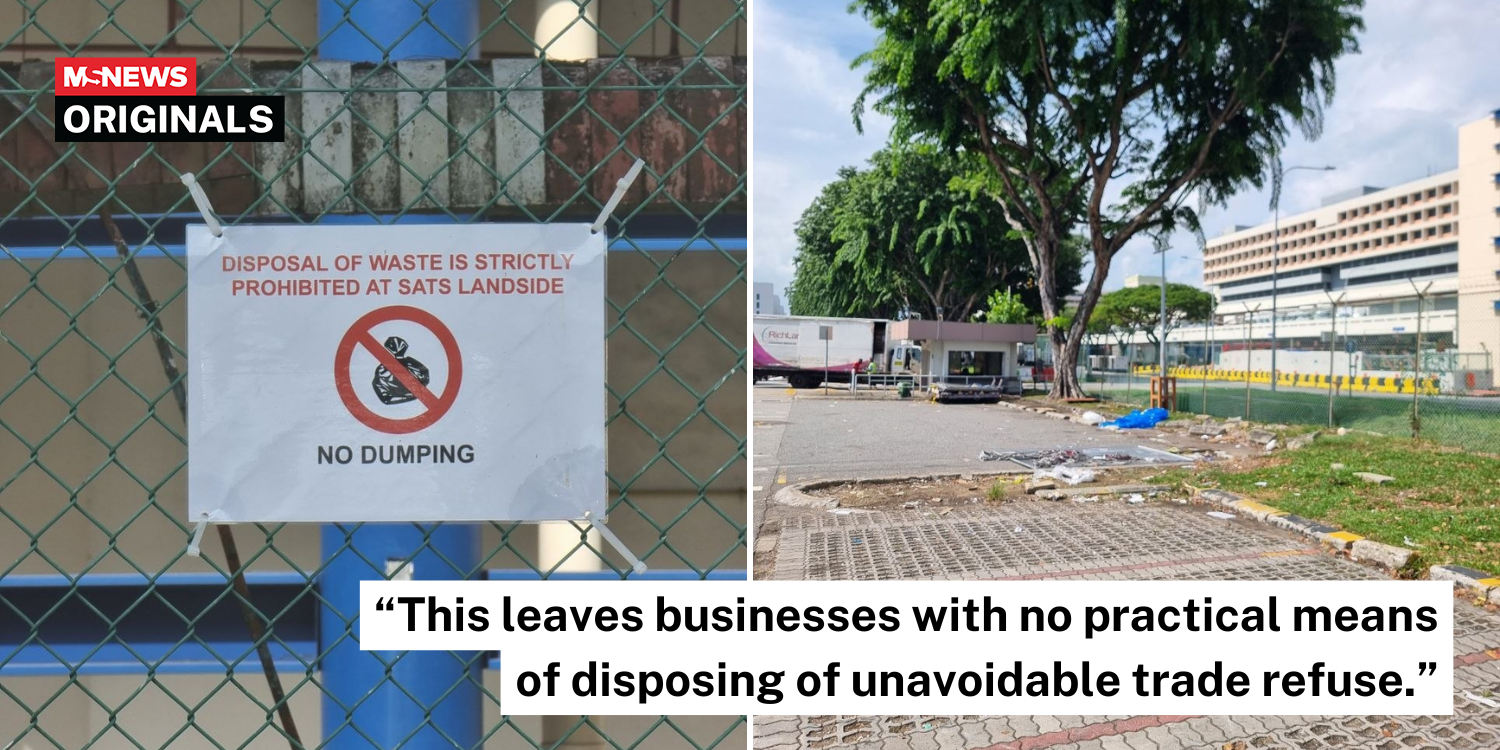

Business owner claims rubbish bins were removed from SATS Coolport
Recently, SATS Ltd allegedly removed all rubbish bins from SATS Coolport, a perishable handling centre within the Changi Airport premises.
It subsequently posted a notice instructing all parties collecting cargo from its Bulk Unitisation Programme (BUP) to “take ownership of waste generated from their operations”.
According to the advisory seen by MS News, SATS reminded all parties operating within its airfreight terminals to strictly comply with proper waste management, housekeeping, and cargo handling practices.
Following this, a business owner filed a complaint on behalf of other SATS Coolport users, saying this caused them “operational difficulties”.
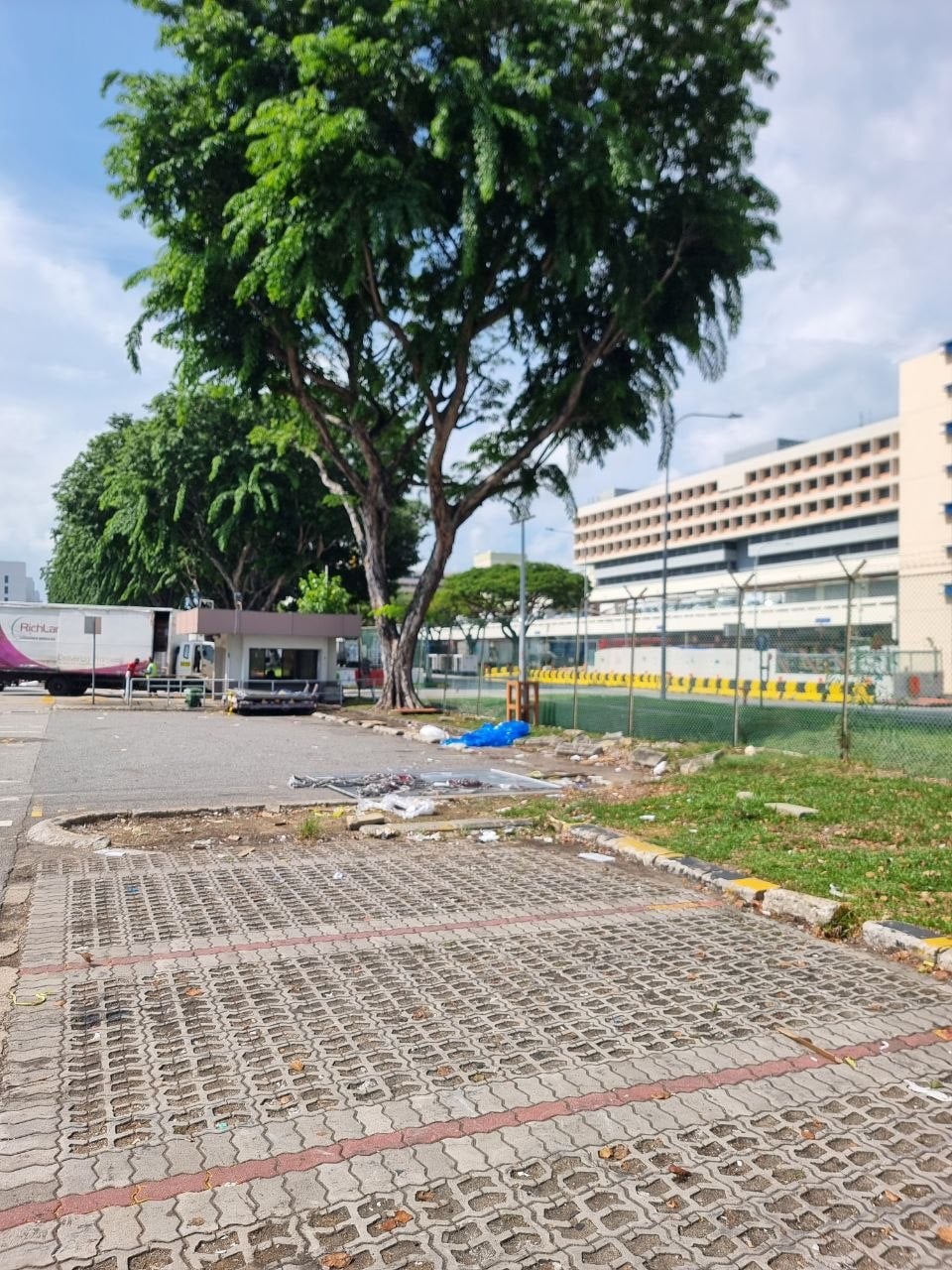
Image courtesy of Mr Liang.
Advisory on waste management
Kevin Liang, owner of the wholesale florist Floral Market, sent a formal complaint to Changi Airport on 8 July.
In the email seen by MS News, Mr Liang revealed that SATS’ notice further states that businesses using its premises are not to use its operational areas and refuse bins to dispose of waste from their cargo collection and handling activities unless permitted.
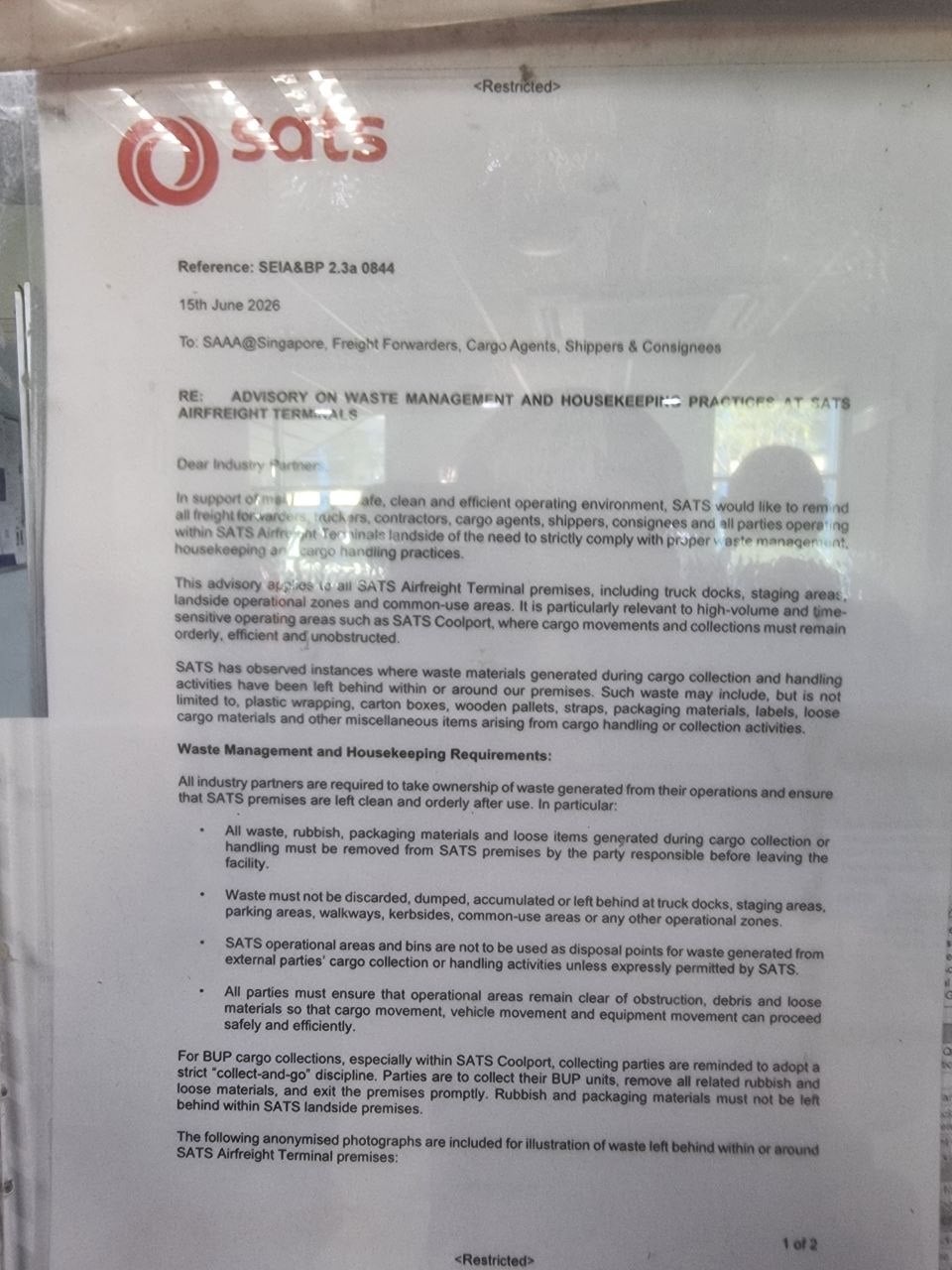
Image courtesy of Mr Liang.
“This leaves businesses with no practical means of disposing of unavoidable trade refuse while carrying out cargo collection activities,” he wrote.
The business owner, who regularly imports fresh flowers through SATS Coolport, explained that cargo collection inherently generates trade refuse.
These include cardboard cartons, plastic wrapping, straps, pallet wrapping and other packaging materials.
However, according to Mr Liang, the current arrangement expects users to remove all waste, without allowing use of any rubbish bins in or around the handling centre’s premises.
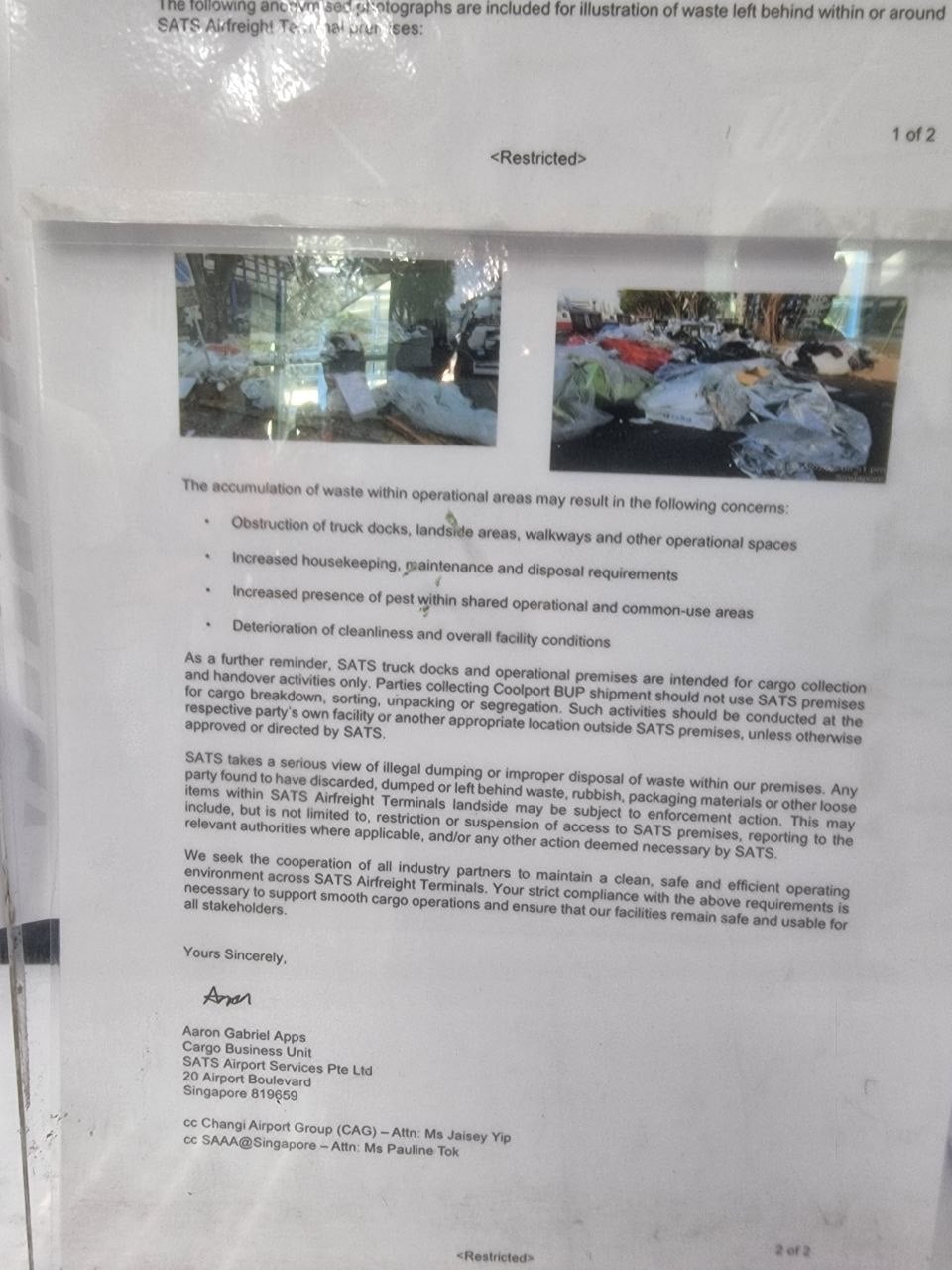
Image courtesy of Mr Liang.
Mr Liang said they support strict enforcement against littering and irresponsible waste disposal.
However, they also believe that “responsible businesses should not be denied access to basic hygiene facilities that enable proper waste disposal”.
What the law mentions
The Environmental Public Health (Public Cleansing) Regulations require occupiers of premises that generate trade refuse to provide suitable receptacles, Mr Liang noted.
They are prohibited from depositing any rubbish anywhere other than these receptacles, or causing or permitting these to be disposed of anywhere else.
The regulation states that if the premises are sublet, the chief tenant or the person receiving rent from the sub-tenants is legally considered the “occupier”.
In line with this, Mr Liang stressed that SATS’ new policy places responsible businesses in an “unnecessarily difficult position” when complying with good environmental and hygiene practices.
Business owners seek help from Changi Airport Group
Mr Liang said waste disposal facilities are basic operational necessities in commercial and logistics environments.
“Removing refuse bins does not prevent waste from being generated; it simply removes the means for users to dispose of it responsibly while on-site,” he wrote.
Mr Liang said they understand that Changi Airport Group wants to maintain a clean and safe airport environment.
However, he highlighted that the “current arrangement at SATS Coolport appears inconsistent with these objectives” as it discourages proper waste disposal by removing the facilities needed to support it.
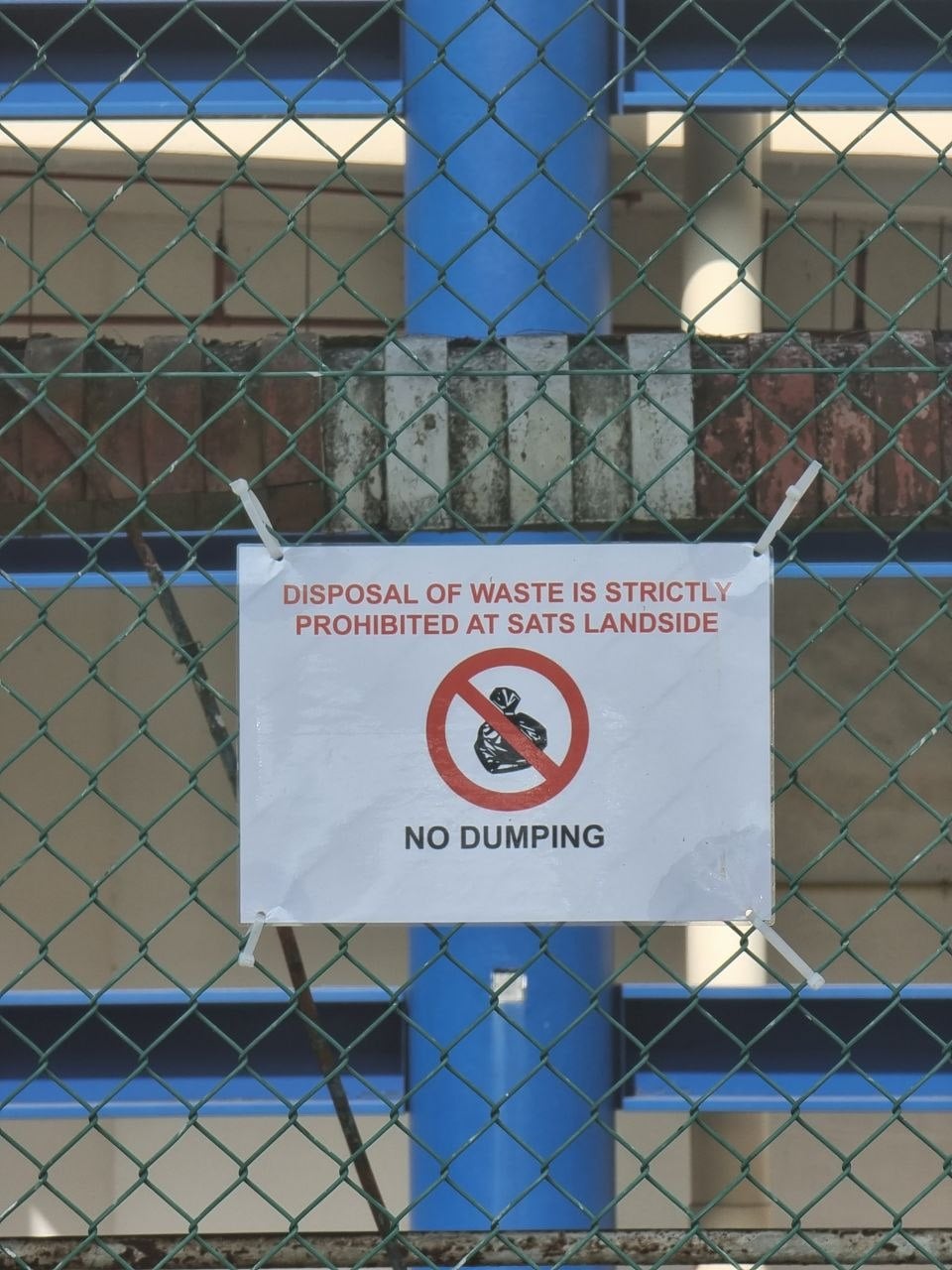
Image courtesy of Mr Liang.
Mr Liang said the new policy affected his business as well as many others.
This includes importers, exporters, freight forwarders and cargo agents who operate at the handling centre daily, some of whom he had spoken with regarding these concerns.
As such, they request that Changi Airport Group investigate this matter with SATS and review whether the prohibition on using on-site refuse bins is appropriate.
SATS responds, saying it continues to allow use of bins
In response to MS News‘ enquiries, a SATS spokesperson said they issued an advisory on 15 June to reinforce its existing waste management and housekeeping policy.
SATS has not removed or discontinued any waste disposal arrangements at SATS Coolport. We have continued to allow the use of designated Open Top Container or OTC bin areas while working with industry stakeholders on longer-term solutions.
They issued the advisory to protect the safety of everyone at the cargo terminal.
This comes after agents and consignees repeatedly broke down and sorted their cargo shipments at SATS Coolport facilities, which they are not permitted to do on the premises.
“This has generated significant waste, including packaging materials, cartons, pallets and straps, left behind at truck docks and common operational areas, posing obstruction, pest and safety risks in a high-traffic cargo environment,” SATS said.
Also read: trolleys abandoned at Changi Airport carpark spark debate, some blame parking fees
Luggage trolleys abandoned at Changi Airport carpark spark debate, some blame parking fees
Have news you must share? Get in touch with us via email at news@mustsharenews.com.
Featured image courtesy of Mr Liang.