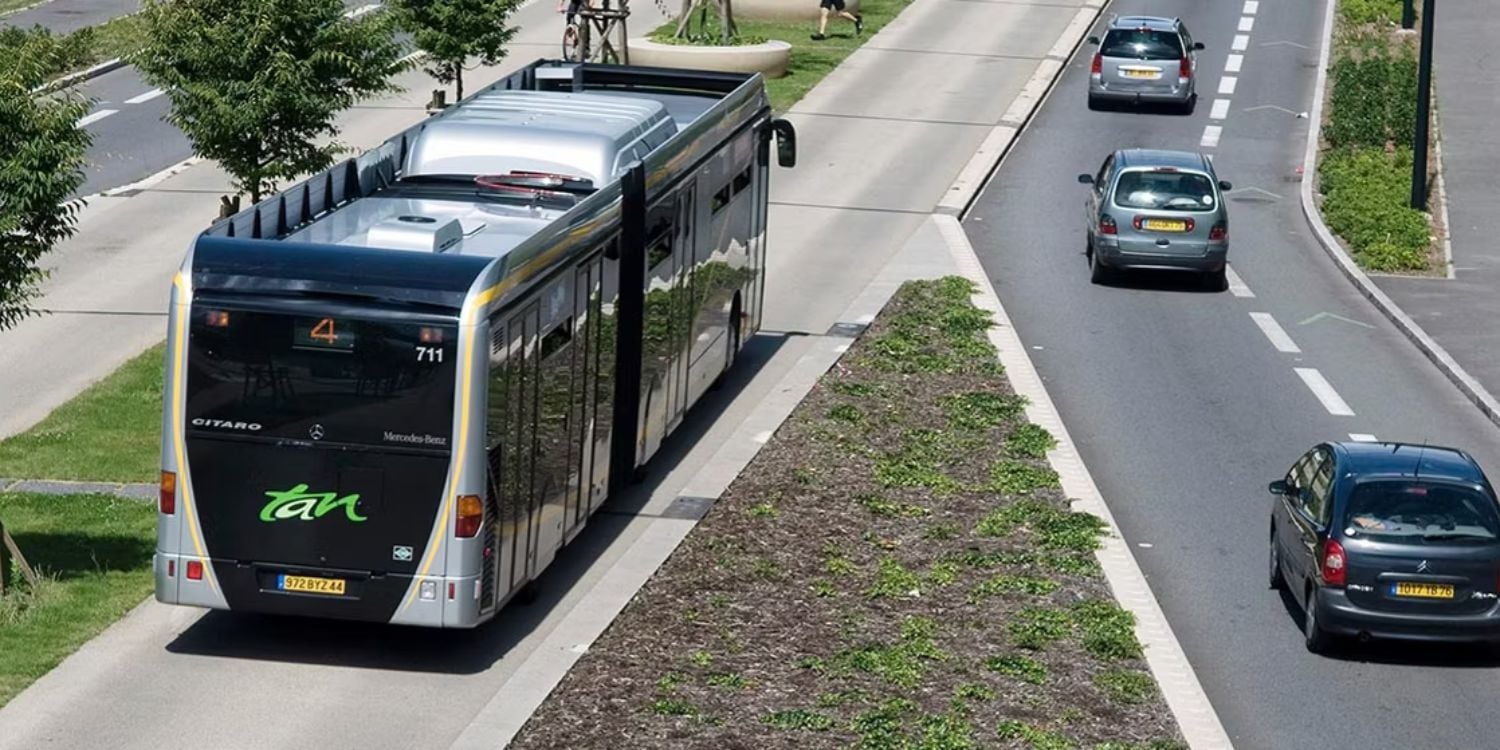

LTA exploring new Bus Rapid Transit system for Tuas South
The Land Transport Authority (LTA) is exploring the implementation of a Bus Rapid Transit (BRT) system in Tuas South.
The announcement was made via a Facebook post last Friday (31 July).
This new mode of public transport aims to provide workers in the area with more reliable connections from their workplaces to existing and future MRT stations.
“Tuas South has been selected for this study as it is home to major developments such as Tuas Port, and is expected to see further growth in the coming years,” an LTA Factsheet published on the same day stated.
Faster transport with bigger capacity
BRT is a mode of transport that can carry more passengers than conventional buses, which is useful during peak hours.
It typically operates on dedicated bus lanes equipped with traffic signal priority. This alters traffic light timings, allowing it to travel faster than traditional buses.
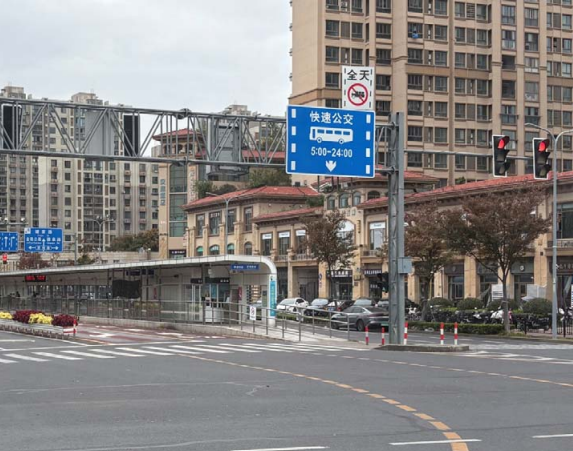
Dedicated lanes with traffic signal priority in Shanghai. Source: LTA
At the same time, it requires less dedicated infrastructure and provides more flexible route adjustments compared to MRT or LRT systems.
“This makes BRT a potentially cost-effective and scalable solution for suitable medium-density corridors like in Tuas South,” the LTA said.
LTA cites BRT systems in other cities
The LTA cited two types of BRT systems commonly adopted worldwide: the conventional bus and the tram-like BRT.
Conventional bus BRT uses buses of varying lengths, including accordion buses which feature two or more rigid sections connected by a pivoting joint.
These are seen in major cities including Shanghai, Seoul, Istanbul, and Brisbane.
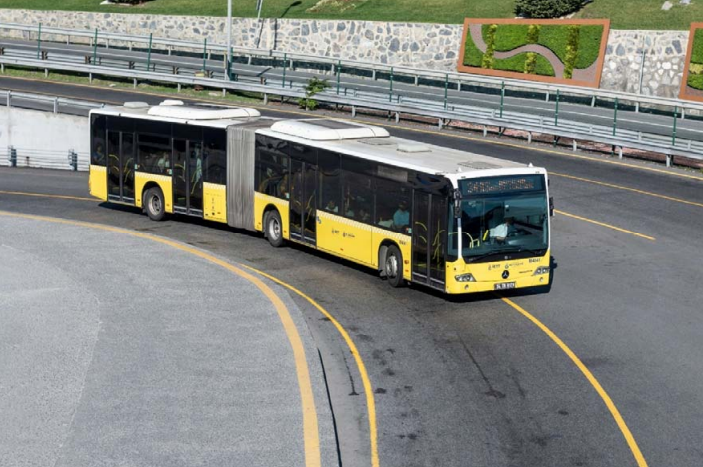
Articulated conventional BRT in Türkiye. Source: LTA
Meanwhile, the tram-like BRT is a longer vehicle that has driver’s cabins at one or both ends and may be self-driving.
These can be found in cities in China such as Zhuzhou and Yibin.
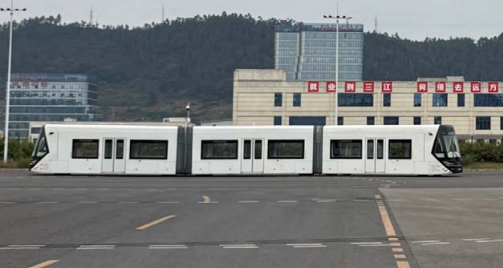
Tram-like BRT in Yibin. Source: LTA
LTA to assess if BRT would be suitable for Tuas South
Both BRT systems typically operate in dedicated bus lanes and have signal priority for faster travel.
These may also incorporate fare payment at stations and platforms that are the same height as the vehicle ground level to ensure boarding efficiency.
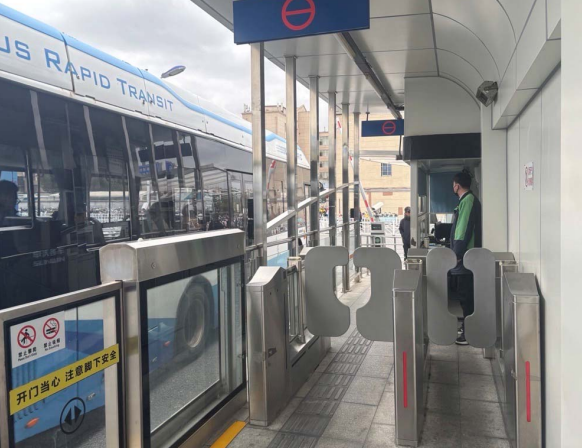
Fare payment at stations and platform-level boarding in Shanghai. Source: LTA
“LTA will evaluate the range of BRT options for Tuas South,” the statutory board said.
“It will study benefits and costs, and assess whether the BRT would be suitable for long-term implementation.”
More details will be shared with the public when available.
Netizens divided on implementation of BRT
The announcement has garnered mixed reactions from local netizens.
Some believe simply switching to double-decker buses would solve the capacity issue without needing to spend more on a new transport system.

Source: Reddit
One noted that, apart from signal priority, the BRT has no other advantage over traditional buses, as Singapore already has dedicated bus lanes.

Source: Facebook
However, another user welcomed the idea and said Tuas is the ideal place to establish a BRT system, as it is still underdeveloped.

Source: Reddit
Some users also called for trams to be introduced in mega towns such as Punggol, Yishun, and Jurong.
Also read: Woman confused by ‘green roads’ in Tiong Bahru, wonders if it’s ‘a new design’
Woman confused by ‘green roads’ in Tiong Bahru, wonders if it’s ‘a new design’
Have news you must share? Get in touch with us via email at news@mustsharenews.com.
Featured image adapted from Mercedes-Benz. For illustration purposes only.